HTML SitemapExplore
logo
Find Things to DoFind The Best Restaurants

Khewra Salt Mines — Attraction in Pind Dadan Khan Tehsil

Name
Khewra Salt Mines
Description
Nearby attractions
Nearby restaurants
Nearby hotels
Related posts
Keywords
Khewra Salt Mines tourism.Khewra Salt Mines hotels.Khewra Salt Mines bed and breakfast. flights to Khewra Salt Mines.Khewra Salt Mines attractions.Khewra Salt Mines restaurants.Khewra Salt Mines travel.Khewra Salt Mines travel guide.Khewra Salt Mines travel blog.Khewra Salt Mines pictures.Khewra Salt Mines photos.Khewra Salt Mines travel tips.Khewra Salt Mines maps.Khewra Salt Mines things to do.
Khewra Salt Mines things to do, attractions, restaurants, events info and trip planning
Khewra Salt Mines
PakistanPunjabPind Dadan Khan TehsilKhewra Salt Mines

Basic Info

Khewra Salt Mines

Khewra, Pakistan
4.5(2.6K)
Open 24 hours
Save
spot

Ratings & Description

Info

Cultural
Adventure
Scenic
Family friendly
Accessibility
attractions: , restaurants:
logoLearn more insights from Wanderboat AI.
Phone
+92 544 231137
Website
saltminekhewra.com

Plan your stay

hotel
Pet-friendly Hotels in Pind Dadan Khan Tehsil
Find a cozy hotel nearby and make it a full experience.
hotel
Affordable Hotels in Pind Dadan Khan Tehsil
Find a cozy hotel nearby and make it a full experience.
hotel
The Coolest Hotels You Haven't Heard Of (Yet)
Find a cozy hotel nearby and make it a full experience.
hotel
Trending Stays Worth the Hype in Pind Dadan Khan Tehsil
Find a cozy hotel nearby and make it a full experience.

Reviews

Get the Appoverlay
Get the AppOne tap to find yournext favorite spots!
Wanderboat LogoWanderboat

Your everyday Al companion for getaway ideas

CompanyAbout Us
InformationAI Trip PlannerSitemap
SocialXInstagramTiktokLinkedin
LegalTerms of ServicePrivacy Policy

Get the app

© 2025 Wanderboat. All rights reserved.
logo

Reviews of Khewra Salt Mines

4.5
(2,599)
avatar
5.0
37w

Khewra Salt Mines: A Natural Wonder of Pakistan

The Khewra Salt Mines, located in the Punjab province of Pakistan, are one of the largest and oldest salt mines in the world. The mines are a major tourist attraction and a significant contributor to Pakistan's economy. In this article, we will explore the history, geology, and attractions of the Khewra Salt Mines.

History of Khewra Salt Mines The Khewra Salt Mines have a long and fascinating history that dates back over 200 million years. The mines were formed during the Jurassic era, when the Indian subcontinent collided with the Eurasian plate, resulting in the formation of the Himalayan Mountains and the creation of a large salt deposit.

The salt deposits were first discovered by the armies of Alexander the Great in 326 BCE. However, it was not until the Mughal era that the mines were extensively excavated and salt production began on a large scale.

During the British colonial era, the Khewra Salt Mines were further developed, and modern mining techniques were introduced. Today, the mines are operated by the Pakistan Mineral Development Corporation (PMDC) and are a major source of revenue for the government.

Geology of Khewra Salt Mines The Khewra Salt Mines are located in the Salt Range, a hill system that stretches for over 300 kilometers across the Punjab province. The Salt Range is composed of a variety of rocks, including salt, gypsum, and limestone.

The salt deposits at Khewra are estimated to be over 600 million years old and are formed from the evaporation of ancient seas. The salt is extracted from the mines through a process known as room and pillar mining, where large caverns are created to extract the salt.

Attractions of Khewra Salt Mines The Khewra Salt Mines are a popular tourist destination, attracting visitors from all over the world. Some of the attractions of the mines include:

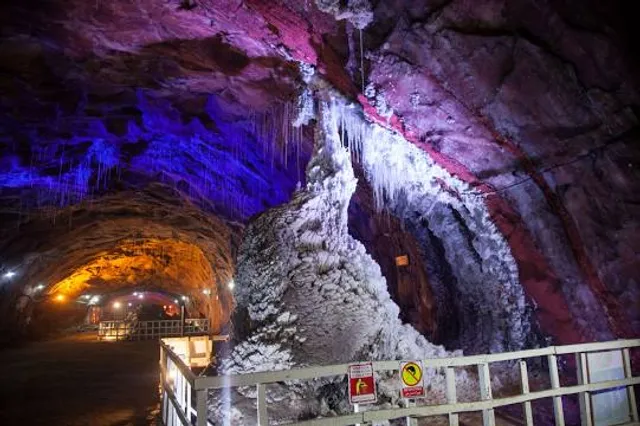
  1. Salt Caverns The salt caverns at Khewra are a breathtaking sight, with towering walls of salt that stretch up to 30 meters high. Visitors can walk through the caverns and marvel at the stunning formations.

  2. Salt Lake The salt lake at Khewra is a picturesque spot, where visitors can see the salt water sparkling in the sunlight. The lake is also home to a variety of birdlife.

  3. Salt Museum The salt museum at Khewra is a great place to learn about the history and geology of the mines. The museum features exhibits on the mining process, as well as artifacts and relics from the Mughal and British eras.

  4. Shopping Visitors to the Khewra Salt Mines can also shop for souvenirs, including salt lamps, salt crystals, and other handicrafts.

Economic Importance of Khewra Salt Mines The Khewra Salt Mines are a significant contributor to Pakistan's economy, generating millions of rupees in revenue each year. The mines provide employment to thousands of workers and support a range of industries, including textiles, leather, and food processing.

Challenges Facing Khewra Salt Mines Despite their economic importance, the Khewra Salt Mines face a number of challenges, including:

  1. Environmental Concerns The mining process at Khewra has raised concerns about the environmental impact of the mines. The extraction of salt has led to subsidence and land degradation in the surrounding area.

  2. Safety Concerns The Khewra Salt Mines have also raised concerns about worker safety. The mines are prone to accidents, and workers have been injured and killed in explosions and rockfalls.

  3. Declining Reserves The salt reserves at Khewra are declining, and the mines are expected to run out of salt in the next few decades. This has raised concerns about the long-term sustainability...

   Read more
avatar
5.0
7y

The Khewra Salt Mine is excavated within the base of a thick layer of highly folded, faulted, and stretched Ediacaran to early Cambrian evaporites of the Salt Range Formation. This geological formation consists of a basal layer of crystalline halite, which is intercalated with potash salts. This basal layer is overlain by gypsiferous marl, which is covered by interlayered beds of gypsum and dolomite with infrequent seams of oil shale. These strata are overlain by 200 to 500 meters (660 to 1,640 ft) of Neoproterozoic to Eocene sedimentary rocks that have been uplifted and eroded along with the Salt Range Formation to create the Salt Range at the southern edge of the Pothohar Plateau. The Ediacaran to early Cambrian evaporites of the Salt Range Formation have been thrust southward over Neoproterozoic to Eocene sedimentary rocks by many kilometers, which tectonically incorporated fragments of the underlying younger strata within these evaporites. The Salt Range is the southern edge of a well-described fold-and-thrust belt, which underlies the entire Pothohar Plateau and developed south of the Himalayas as a result of ongoing collision between India and Eurasia.

The Khewra Salt Mine is also known as Mayo Salt Mine, in honour of Lord Mayo, who visited it as Viceroy of India. The salt reserves at Khewra were discovered when Alexander the Great crossed the Jhelum and Mianwali region during his Indian campaign. The mine was discovered, however, not by Alexander, nor by his allies, but by his army's horses, when they were found licking the stones. Ailing horses of his army also recovered after licking the rock salt stones. During the Mughal era the salt was traded in various markets, as far away as Central Asia. On the downfall of the Mughal empire, the mine was taken over by Sikhs. Hari Singh Nalwa, the Sikh Commander-in-Chief, shared the management of the Salt Range with Gulab Singh, the Raja of Jammu. The former controlled the Warcha mine, while the latter held Khewra. The salt quarried during Sikh rule was both eaten and used as a source of revenue.

In 1872, some time after they had taken over the Sikhs' territory, the British developed the mine further. They found the mining to have been inefficient, with irregular and narrow tunnels and entrances that made the movement of labourers difficult and dangerous. The supply of water inside the mine was poor, and there was no storage facility for the mined salt. The only road to the mine was over difficult, rocky terrain. To address these problems the government levelled the road, built warehouses, provided a water supply, improved the entrances and tunnels, and introduced a better mechanism for excavation of salt. Penalties were introduced to control...

   Read more
avatar
5.0
2y

Rating: ⭐⭐⭐⭐⭐

I recently had the pleasure of visiting the awe-inspiring Khewra Salt Mine, and I must say it was an experience that exceeded all my expectations. This remarkable underground oasis is a true testament to the wonders that nature can create, and it left me absolutely mesmerized from start to finish.

From the moment I stepped foot into the mine, I was greeted by a cool and refreshing breeze that immediately transported me to a different world. The sheer magnitude of the cavernous chambers, adorned with glistening salt crystals, was a sight to behold. The stunning natural formations and intricate patterns carved by centuries of geological processes were simply breathtaking.

The guided tour was informative and engaging, providing a wealth of knowledge about the history and significance of the Khewra Salt Mine. Learning about the labor-intensive process of salt extraction and the rich cultural heritage associated with the mine added another layer of appreciation for its magnificence.

One of the highlights of the visit was the otherworldly beauty of the salt caves, which seemed straight out of a fairytale. The ethereal glow of the salt lamps scattered throughout the chambers cast a warm, inviting light, creating a surreal and enchanting atmosphere. I couldn't resist but take countless photographs to capture the sheer beauty of the surroundings.

Furthermore, the therapeutic benefits of the salt mine cannot be overstated. The air inside the mine is rich in negative ions, which are believed to have numerous health benefits, including stress reduction and improved respiratory health. I felt a sense of calm and tranquility envelop me as I explored the depths of this underground wonder.

The amenities provided were excellent, with well-maintained walkways and adequate lighting ensuring a safe and comfortable journey for visitors. The friendly and knowledgeable staff members were always available to answer any questions and enhance the overall experience.

In conclusion, the Khewra Salt Mine is an absolute gem that deserves every bit of praise it receives. Its unparalleled beauty, fascinating history, and therapeutic ambiance make it a must-visit destination for anyone seeking a unique and unforgettable adventure. I highly recommend a visit to this underground marvel, as it promises to be an experience that will leave you in awe of the wonders...

   Read more
Page 1 of 7
Previous
Next

Posts

Rana Waqas NazirRana Waqas Nazir
The Khewra Salt Mine is excavated within the base of a thick layer of highly folded, faulted, and stretched Ediacaran to early Cambrian evaporites of the Salt Range Formation. This geological formation consists of a basal layer of crystalline halite, which is intercalated with potash salts. This basal layer is overlain by gypsiferous marl, which is covered by interlayered beds of gypsum and dolomite with infrequent seams of oil shale. These strata are overlain by 200 to 500 meters (660 to 1,640 ft) of Neoproterozoic to Eocene sedimentary rocks that have been uplifted and eroded along with the Salt Range Formation to create the Salt Range at the southern edge of the Pothohar Plateau. The Ediacaran to early Cambrian evaporites of the Salt Range Formation have been thrust southward over Neoproterozoic to Eocene sedimentary rocks by many kilometers, which tectonically incorporated fragments of the underlying younger strata within these evaporites. The Salt Range is the southern edge of a well-described fold-and-thrust belt, which underlies the entire Pothohar Plateau and developed south of the Himalayas as a result of ongoing collision between India and Eurasia. The Khewra Salt Mine is also known as Mayo Salt Mine, in honour of Lord Mayo, who visited it as Viceroy of India. The salt reserves at Khewra were discovered when Alexander the Great crossed the Jhelum and Mianwali region during his Indian campaign. The mine was discovered, however, not by Alexander, nor by his allies, but by his army's horses, when they were found licking the stones. Ailing horses of his army also recovered after licking the rock salt stones. During the Mughal era the salt was traded in various markets, as far away as Central Asia. On the downfall of the Mughal empire, the mine was taken over by Sikhs. Hari Singh Nalwa, the Sikh Commander-in-Chief, shared the management of the Salt Range with Gulab Singh, the Raja of Jammu. The former controlled the Warcha mine, while the latter held Khewra. The salt quarried during Sikh rule was both eaten and used as a source of revenue. In 1872, some time after they had taken over the Sikhs' territory, the British developed the mine further. They found the mining to have been inefficient, with irregular and narrow tunnels and entrances that made the movement of labourers difficult and dangerous. The supply of water inside the mine was poor, and there was no storage facility for the mined salt. The only road to the mine was over difficult, rocky terrain. To address these problems the government levelled the road, built warehouses, provided a water supply, improved the entrances and tunnels, and introduced a better mechanism for excavation of salt. Penalties were introduced to control salt smuggling.
Mehran IqbalMehran Iqbal
Rating: ⭐⭐⭐⭐⭐ I recently had the pleasure of visiting the awe-inspiring Khewra Salt Mine, and I must say it was an experience that exceeded all my expectations. This remarkable underground oasis is a true testament to the wonders that nature can create, and it left me absolutely mesmerized from start to finish. From the moment I stepped foot into the mine, I was greeted by a cool and refreshing breeze that immediately transported me to a different world. The sheer magnitude of the cavernous chambers, adorned with glistening salt crystals, was a sight to behold. The stunning natural formations and intricate patterns carved by centuries of geological processes were simply breathtaking. The guided tour was informative and engaging, providing a wealth of knowledge about the history and significance of the Khewra Salt Mine. Learning about the labor-intensive process of salt extraction and the rich cultural heritage associated with the mine added another layer of appreciation for its magnificence. One of the highlights of the visit was the otherworldly beauty of the salt caves, which seemed straight out of a fairytale. The ethereal glow of the salt lamps scattered throughout the chambers cast a warm, inviting light, creating a surreal and enchanting atmosphere. I couldn't resist but take countless photographs to capture the sheer beauty of the surroundings. Furthermore, the therapeutic benefits of the salt mine cannot be overstated. The air inside the mine is rich in negative ions, which are believed to have numerous health benefits, including stress reduction and improved respiratory health. I felt a sense of calm and tranquility envelop me as I explored the depths of this underground wonder. The amenities provided were excellent, with well-maintained walkways and adequate lighting ensuring a safe and comfortable journey for visitors. The friendly and knowledgeable staff members were always available to answer any questions and enhance the overall experience. In conclusion, the Khewra Salt Mine is an absolute gem that deserves every bit of praise it receives. Its unparalleled beauty, fascinating history, and therapeutic ambiance make it a must-visit destination for anyone seeking a unique and unforgettable adventure. I highly recommend a visit to this underground marvel, as it promises to be an experience that will leave you in awe of the wonders of our planet.
Shahzaib Damn CruzeShahzaib Damn Cruze
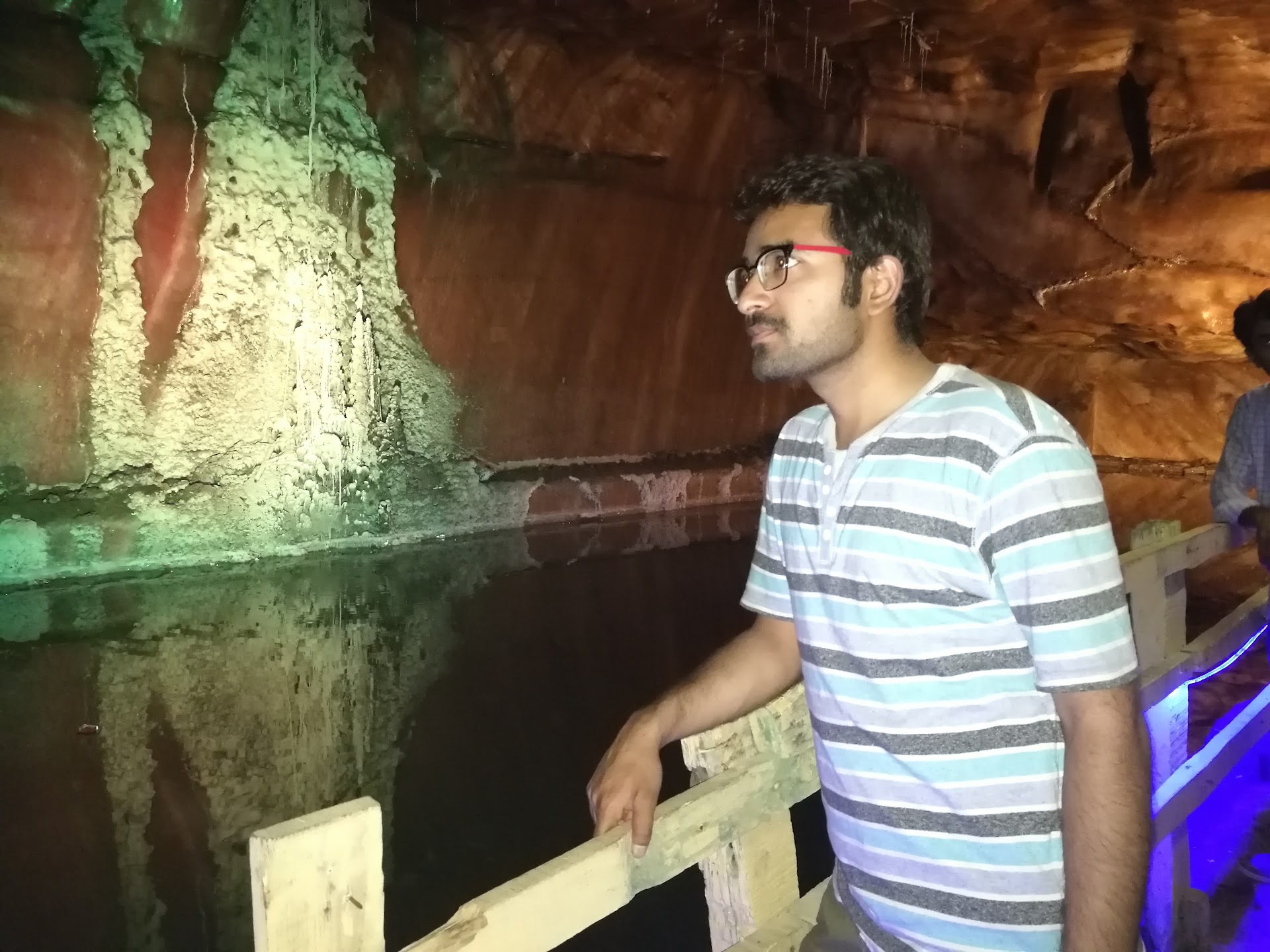
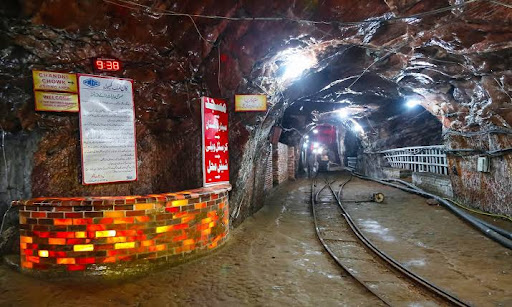
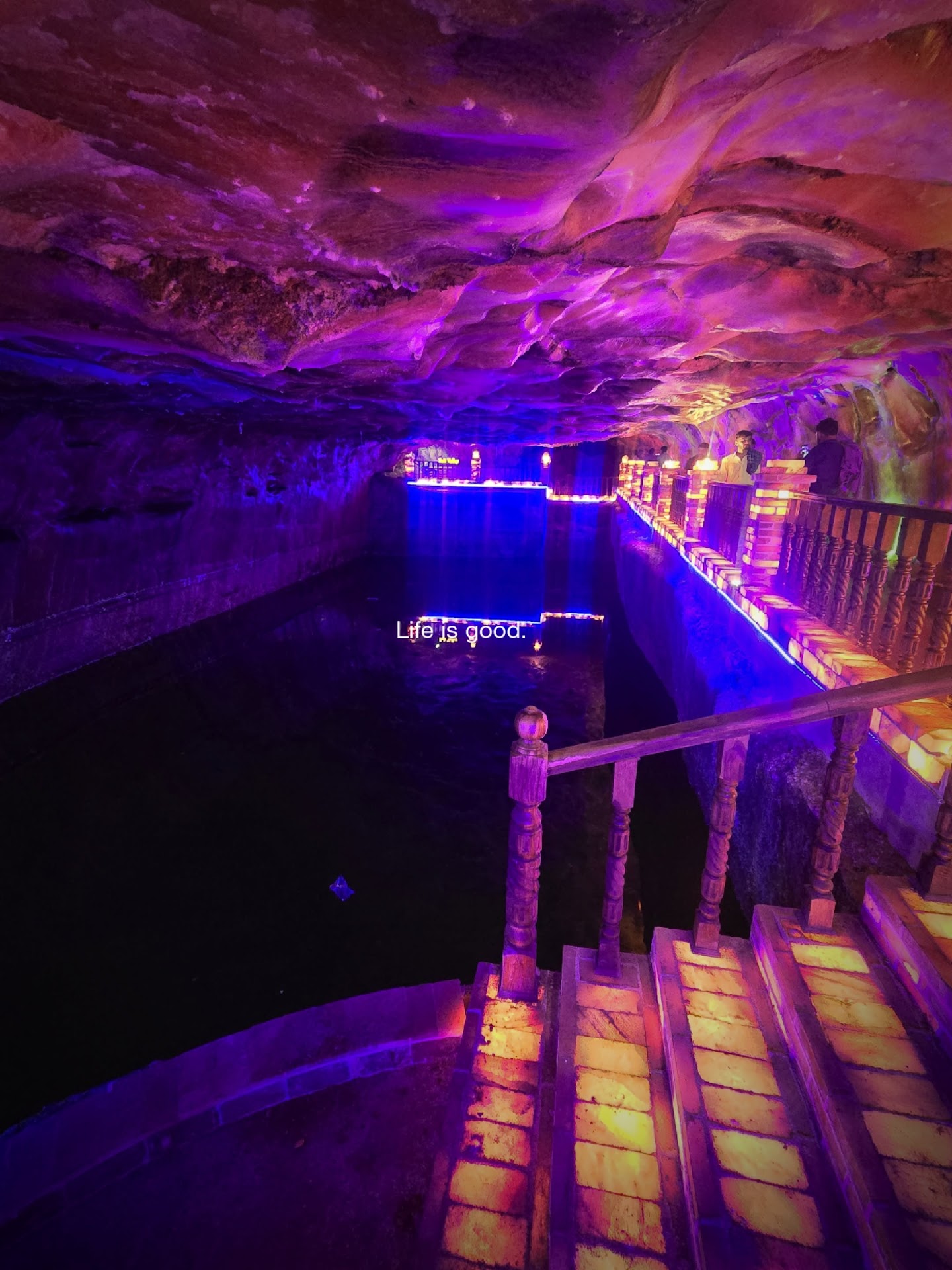
The Khewra Salt Mine is in Khewra, north of Pind Dadan Khan, Jhelum District, Punjab, Pakistan. The mine is in mountains that are part of a salt range, extending about 200 km from the Jhelum river south of Pothohar Plateau. Facts 1. The mine is second largest in the world & famous for its production of pink salt or Himalayan salt & is a major tourist attraction, drawing up to 250,000 visitors a year. 2. The mine was discovered by Alexander Army's horses, when they were found licking the stones in 326 B.C. 3. The main tunnel at ground level was developed by Dr. H. Warth, a mining engineer, in 1872 during British rule. After independence, The Pakistan Mineral Development Corporation took over the mine, which still remains the largest source of salt in the country, producing more than 350,000 tons per annum of about 99% pure halite. Estimates of Reserves vary from 82 to 600 million tons. 4. Covering an area of 110 sq. km, 228 meters deep (with 11 separate stories), has over 40 km of tunnels running some 730 meters, into the mountain. A total of 18 working levels where extraction takes place out of which 6 are below the surface. 5. It is home to a 6-bed hospital for people suffering from Asthma. This hospital is located at level 5. 6. It has a number of saltwater pools that give off beautiful colors when projected with light. A tunnel inside is named the crystal valley. It has rock salt crystals in the roof & walls & they shine when light falls upon them. The view is jaw-dropping. 7. There are replicas of Badshahi Masjid, Great Wall of China, Sheesh Mahal, Nathia Gali & Ayubia a model of Mall road of Lahore & Minar-e-Pakistan. It also has a 25-meter bridge called Pul-E-Saraat. 8. It’s cool 21°c year round because no Sunlight or Moonlight enters the mine. 9. To keep the huge space from collapsing, only 50% of the salt is mined, & remaining works as a prop (supporting pillars). 10. There are beautiful alternate bands of red & white color salt & don’t forget to take home a Khewra salt bedside lamp from the souvenir shop.
See more posts
See more posts
hotel
Find your stay

Pet-friendly Hotels in Pind Dadan Khan Tehsil

Find a cozy hotel nearby and make it a full experience.

The Khewra Salt Mine is excavated within the base of a thick layer of highly folded, faulted, and stretched Ediacaran to early Cambrian evaporites of the Salt Range Formation. This geological formation consists of a basal layer of crystalline halite, which is intercalated with potash salts. This basal layer is overlain by gypsiferous marl, which is covered by interlayered beds of gypsum and dolomite with infrequent seams of oil shale. These strata are overlain by 200 to 500 meters (660 to 1,640 ft) of Neoproterozoic to Eocene sedimentary rocks that have been uplifted and eroded along with the Salt Range Formation to create the Salt Range at the southern edge of the Pothohar Plateau. The Ediacaran to early Cambrian evaporites of the Salt Range Formation have been thrust southward over Neoproterozoic to Eocene sedimentary rocks by many kilometers, which tectonically incorporated fragments of the underlying younger strata within these evaporites. The Salt Range is the southern edge of a well-described fold-and-thrust belt, which underlies the entire Pothohar Plateau and developed south of the Himalayas as a result of ongoing collision between India and Eurasia. The Khewra Salt Mine is also known as Mayo Salt Mine, in honour of Lord Mayo, who visited it as Viceroy of India. The salt reserves at Khewra were discovered when Alexander the Great crossed the Jhelum and Mianwali region during his Indian campaign. The mine was discovered, however, not by Alexander, nor by his allies, but by his army's horses, when they were found licking the stones. Ailing horses of his army also recovered after licking the rock salt stones. During the Mughal era the salt was traded in various markets, as far away as Central Asia. On the downfall of the Mughal empire, the mine was taken over by Sikhs. Hari Singh Nalwa, the Sikh Commander-in-Chief, shared the management of the Salt Range with Gulab Singh, the Raja of Jammu. The former controlled the Warcha mine, while the latter held Khewra. The salt quarried during Sikh rule was both eaten and used as a source of revenue. In 1872, some time after they had taken over the Sikhs' territory, the British developed the mine further. They found the mining to have been inefficient, with irregular and narrow tunnels and entrances that made the movement of labourers difficult and dangerous. The supply of water inside the mine was poor, and there was no storage facility for the mined salt. The only road to the mine was over difficult, rocky terrain. To address these problems the government levelled the road, built warehouses, provided a water supply, improved the entrances and tunnels, and introduced a better mechanism for excavation of salt. Penalties were introduced to control salt smuggling.
Rana Waqas Nazir

Rana Waqas Nazir

hotel
Find your stay

Affordable Hotels in Pind Dadan Khan Tehsil

Find a cozy hotel nearby and make it a full experience.

Get the Appoverlay
Get the AppOne tap to find yournext favorite spots!
Rating: ⭐⭐⭐⭐⭐ I recently had the pleasure of visiting the awe-inspiring Khewra Salt Mine, and I must say it was an experience that exceeded all my expectations. This remarkable underground oasis is a true testament to the wonders that nature can create, and it left me absolutely mesmerized from start to finish. From the moment I stepped foot into the mine, I was greeted by a cool and refreshing breeze that immediately transported me to a different world. The sheer magnitude of the cavernous chambers, adorned with glistening salt crystals, was a sight to behold. The stunning natural formations and intricate patterns carved by centuries of geological processes were simply breathtaking. The guided tour was informative and engaging, providing a wealth of knowledge about the history and significance of the Khewra Salt Mine. Learning about the labor-intensive process of salt extraction and the rich cultural heritage associated with the mine added another layer of appreciation for its magnificence. One of the highlights of the visit was the otherworldly beauty of the salt caves, which seemed straight out of a fairytale. The ethereal glow of the salt lamps scattered throughout the chambers cast a warm, inviting light, creating a surreal and enchanting atmosphere. I couldn't resist but take countless photographs to capture the sheer beauty of the surroundings. Furthermore, the therapeutic benefits of the salt mine cannot be overstated. The air inside the mine is rich in negative ions, which are believed to have numerous health benefits, including stress reduction and improved respiratory health. I felt a sense of calm and tranquility envelop me as I explored the depths of this underground wonder. The amenities provided were excellent, with well-maintained walkways and adequate lighting ensuring a safe and comfortable journey for visitors. The friendly and knowledgeable staff members were always available to answer any questions and enhance the overall experience. In conclusion, the Khewra Salt Mine is an absolute gem that deserves every bit of praise it receives. Its unparalleled beauty, fascinating history, and therapeutic ambiance make it a must-visit destination for anyone seeking a unique and unforgettable adventure. I highly recommend a visit to this underground marvel, as it promises to be an experience that will leave you in awe of the wonders of our planet.
Mehran Iqbal

Mehran Iqbal

hotel
Find your stay

The Coolest Hotels You Haven't Heard Of (Yet)

Find a cozy hotel nearby and make it a full experience.

hotel
Find your stay

Trending Stays Worth the Hype in Pind Dadan Khan Tehsil

Find a cozy hotel nearby and make it a full experience.

The Khewra Salt Mine is in Khewra, north of Pind Dadan Khan, Jhelum District, Punjab, Pakistan. The mine is in mountains that are part of a salt range, extending about 200 km from the Jhelum river south of Pothohar Plateau. Facts 1. The mine is second largest in the world & famous for its production of pink salt or Himalayan salt & is a major tourist attraction, drawing up to 250,000 visitors a year. 2. The mine was discovered by Alexander Army's horses, when they were found licking the stones in 326 B.C. 3. The main tunnel at ground level was developed by Dr. H. Warth, a mining engineer, in 1872 during British rule. After independence, The Pakistan Mineral Development Corporation took over the mine, which still remains the largest source of salt in the country, producing more than 350,000 tons per annum of about 99% pure halite. Estimates of Reserves vary from 82 to 600 million tons. 4. Covering an area of 110 sq. km, 228 meters deep (with 11 separate stories), has over 40 km of tunnels running some 730 meters, into the mountain. A total of 18 working levels where extraction takes place out of which 6 are below the surface. 5. It is home to a 6-bed hospital for people suffering from Asthma. This hospital is located at level 5. 6. It has a number of saltwater pools that give off beautiful colors when projected with light. A tunnel inside is named the crystal valley. It has rock salt crystals in the roof & walls & they shine when light falls upon them. The view is jaw-dropping. 7. There are replicas of Badshahi Masjid, Great Wall of China, Sheesh Mahal, Nathia Gali & Ayubia a model of Mall road of Lahore & Minar-e-Pakistan. It also has a 25-meter bridge called Pul-E-Saraat. 8. It’s cool 21°c year round because no Sunlight or Moonlight enters the mine. 9. To keep the huge space from collapsing, only 50% of the salt is mined, & remaining works as a prop (supporting pillars). 10. There are beautiful alternate bands of red & white color salt & don’t forget to take home a Khewra salt bedside lamp from the souvenir shop.
Shahzaib Damn Cruze

Shahzaib Damn Cruze

See more posts
See more posts