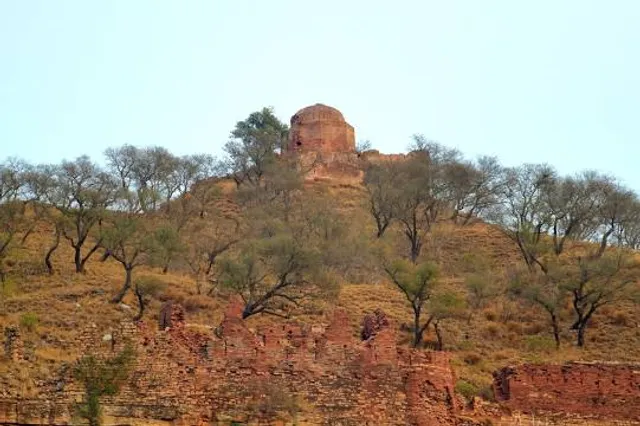
Kusuk Fort, nestled near Khewra in Pakistan's Punjab province, is a captivating historical site that offers visitors a glimpse into the region's storied past. This ancient fort, perched strategically on a hilltop, is a testament to the military and architectural ingenuity of its builders.
Dating back several centuries, Kusuk Fort served as a crucial defensive stronghold, reflecting the turbulent history of the region. Its thick stone walls, well-preserved battlements, and strategically placed watchtowers exemplify the fortification techniques used to protect against invasions. Walking through the fort, visitors can imagine the fort's role in historical battles and the lives of those who once inhabited it.
The panoramic views from Kusuk Fort are one of its most striking features. The elevation provides sweeping vistas of the surrounding landscape, including the nearby Khewra Salt Mines and the lush, rolling hills. This makes it an excellent spot for photographers and nature lovers seeking to capture the natural beauty of Punjab.
Despite its historical significance, Kusuk Fort remains relatively undiscovered by mass tourism, adding to its charm. The tranquility of the site, coupled with its rugged beauty, offers a peaceful retreat for visitors. Reaching the fort involves a moderately challenging hike, making the journey as rewarding as the destination.
In summary, Kusuk Fort near Khewra is a hidden gem that offers a unique combination of historical intrigue and natural splendor. It is a must-visit for history enthusiasts, adventurers, and anyone looking to explore the lesser-known treasures...
Read moreKusak Fort, also known as Kusk Qila in Urdu, is an ancient fort situated in Chakwal District, Punjab, Pakistan. It holds historical significance dating back to the 11th century and is associated with the Janjua dynasty, particularly under the reign of Raja Jodh, son of Raja Mall Khan Janjua, who founded the nearby Malot Fort.
History Kusak Fort was constructed on approximately 13 acres of land near Jodh Mountain. It was built using red stone and local soil, typical of the region's architecture. The fort housed not only defensive structures but also a palace for the ruling king and around seventy houses for its small military contingent.
During the 13th century, Kusak Fort faced an attack by Jalal-ud Din Khilji and his army, which tested its defenses and resilience.
In the 19th century, specifically in 1810, Ranjit Singh, the Sikh ruler, launched an assault on the area, compelling Sultan Fateh Muhammad and his family to vacate the fort. Subsequently, the Janjua family migrated to Haranpur.
Ownership Presently, Kusak Fort is owned by the Mehwish Azmat Hayat family, maintaining its historical legacy within the...
Read moreKusak Fort is a hidden historical treasure. Although in ruins, it offers stunning views from its hilltop location and a glimpse into the region's rich past. The fort is easily accessible by bike, and it's highly recommended to take this route due to the scenic views and lush greenery along the way. While lacking modern facilities or preservation efforts, Kusak Fort provides a peaceful and authentic experience for adventurous visitors. Route from Choa Saidan Shah and Whatli village is...
Read more