The real name of Lal Shahbaz Qalandar was Syed Muhammad Usman who was born in 1177 AD in Marwand, Iran. His father, Syed Ibrahim Kabiruddin, was a virtuous and pious dervish, and his mother was a high-ranking princess. His ancestors migrated from Iraq and settled down in Meshed, from where they again migrated to Marwand. During the Medieval period, Meshed and other cities of that region were renowned centers of learning and civilization.
Even as a young boy, Shahbaz Qalandar showed strong religious leanings. He learnt the Holy Quran by heart just at age of seven, and at twenty embraced the Qalandar order of Sufism. Qalandar is a type of dervish who is generally dressed in beggars clothes, likes poverty and austerity and has no permanent dwelling. Lal Shahbaz Qalandar wandered throughout Middle East and came to Sind from Baghdad via Dasht-i-Makran. In 1263, he arrived in Multan, which at that time was at the height of glory and splendor. The people of Multan besought him to stay but he continued his journey southward and eventually settled down in Sehwan, then a famous center of learning and popular place of worship for Hindus, in the southern part of Sindh, where he lived in the trunk of a tree on the outskirts of the town. He stayed at Sehwan for six years and during this period he disseminated the light of Islam, providing guidance to thousands of people.
Sehwan is probably the town with the oldest continuous existence in Sind.It rises on the top of a conical hill, and nearby lie the ruins of a huge fort believed to have been founded by Alexander the Great. Some coins of Alexanders time are reported to have been found here. Sehwan was the capital of a Buddhist ruler who was brother of Chandragupta II, the third of the Guptan dynasty in the 4th century AD. From the time of Arab invasion in 712, Sehwan was very important in the history of Sind since it commanded the route from the Upper to the Lower Indus, through which all invaders from either north or south had to pass. And possession of the fort was essential to the success of every campaign.
Lal Shahbaz Qalandar is an overwhelmingly popular patron saint cherished and adored alike by Hindus and Muslims of Sind. He was a great missionary, mystic, scholar, philologist and poet. Several books in Persian and Arabic on philology and poetry are attributed to him. He was Lal (red) because of his red attire, Shahbaz due to his noble and divine spirit that soared like a falcon higher and higher in the boundless heavens and Qalandar since he belonged to Qalandria order of Sufism and was saintly, exalted and intoxicated with love for eternal being of God. The legend goes that the incumbent fakirs in Sewhan sent him a bowl of milk filled to the brim indicating that there was no room for anything more. But surprisingly, he returned the bowl with a beautiful flower floating on the top. This legend spread far and wide by the time of his death in 1274, after living a good span for 97 years.
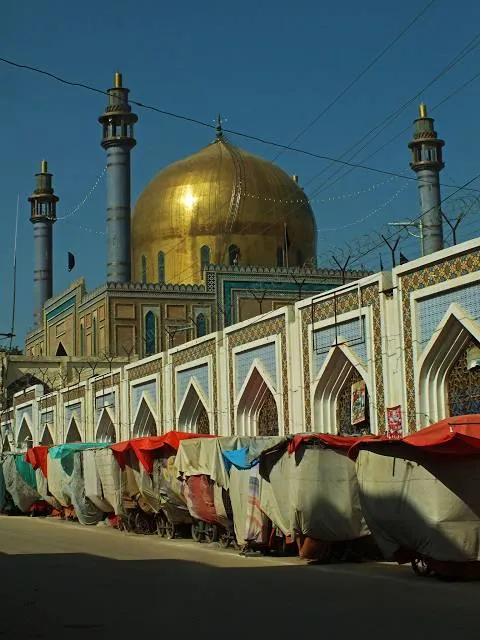
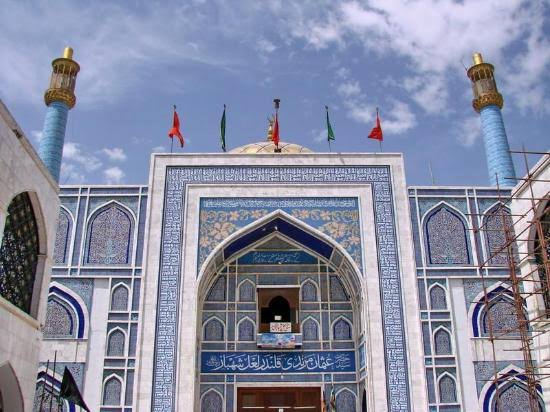
The shrine around his tomb, built in 1356, gives a dazzling look with its Sindhi kashi tiles, mirror work and two gold-plated doors ??? one donated by the late Shah of Iran, the other by the late Prime Minister Zulfikar Ali Bhutto. The inner sanctum is about 100 yards square with the silver canopied grave in the middle. On one side of the marble floor is a row of about 12 inch high folding wooden stands on which are set copies of Quran for devotees to read. On the other side, beside a bundle of burning agarbattis (joss sticks), are rows of diyas (small oil lamps) lighted by Hindu devotees. The Hindus regarded him as the incarnation of Bhartihari, the saintly brother of King Vikramaditya, who is believed to have worshipped Shiva at the venue where Lal Shahbaz???s shrine is situated with all its grandeur and glory.
I like the Sufi whirillings & dance of the...
Read moreHazrat Lal Shehbaz Qalandar
[1177- 1274 AD]
Real Name:
Syed Mohammad Usman Marwandi R.A (Given by His Father)
Syed Shah Hussain R.A (Given by People)
Known as:
Lal (Red) Shahbaz (Falcon) Qalandar (Free of boundaries)
Family Tree:
Hazrat Syed Shah Hussain a.k.a. Hazrat Lal Shahbaz Qalandar ibne Hazrat Syed Ibrahim Kabir u Din Mujab ibne Hazrat Syed Shams-ud-Din ibne Hazrat Syed Noor Shah ibne Hazrat Syed Muhammad Shah ibne Hazrat Syed Ahmed Shah ibne Hazrat Syed Hadi Shah ibne Hazrat Syed Mehdi Shah ibne Hazrat Syed Muntakhib Shah ibne Hazrat Syed Ghalib Shah ibne Hazrat Syed Mansoor Shah ibne Hazrat Syed Ismail Shah ibne Imam – e – Jafer – e – Sadiq (A.S.)
“ibne” means “Son Of”
Birth:
Hazrat Syed Shah Hussain a.k.a. Hazrat Lal Shahbaz Qalandar was born late in the twelfth century in 1177 in Marwand (Iran), now Afghanistan, to a noble Makhdum, Syed Ibrahim Kabir-ud-Din Mujab, and his mother was a high-ranking princess. He was born in the month of Sha’aban, 8th month in Islamic calendar.
Hazrat Syed Ibrahim Kabir was caretaker of the Holy Shrine of Imam-e-Hussain (A.S.) and is buried inside the Holy Shrine.
Background:
Syed Ibrahim Kabir-ud-Din Mujab used to talk to the King of Martyrs Imam-e-Hussain (A.S.) and used to get a reply in return, hence the name Mujab “The one who is Answered” (or whose prayers are answered). One day he was foretold, by Imam-e-Hussain (A.S.) in a lucid dream, that you are devoted and have looked after our Shrine in a very good manner, Imam-e-Hussain (A.S.) ordered Syed Ibrahim Kabir-ud-Din Mujab to get married, and said we will gift you a “Baaz” (Falcon) which was gifted by Allah to our Grandfather Prophet Mohammad (P.B.U.H) on “Me’raj” (the ascension of Prophet Mohammad (P.B.U.H.)).
Hence Syed Ibrahim Kabir-ud-Din Mujab got married (at the age of 75 according to some sayings). On the occasion of Marriage Ceremony of Syed Ibrahim Kabir-ud-Din Mujab, all of the Iraq celebrated and it was like festival during his wedding throughout Iraq. (According to some sayings he got married in Marwand).
After the birth of Hazrat Lal Shahbaz Qalandar it is said that there was a festival held for 40 days.
Name:
The name Shah Hussain was given to Hazrat Lal Shahbaz Qalandar because of his family’s attachment to the King of Martyrs Imam-e-Hussain (A.S.)
Education:
“He showed from his infancy, signs of a deep spiritual nature. It is said that even when very young he had developed occult powers. He knew Quran by heart at the age of seven, and at twenty he was initiated into the Qalandar order.”
At first Hazrat Lal Shahbaz Qalandar was taught by his mother, and then he went on to Medina (KSA) and spent some time there. From medina he went on to Karbala (Iraq) where he used to look after the Holy Shrine of the King of Martyrs Imam-e-Hussain (A.S.)
Reason for leaving Karbala and Arrival in Sindh:
One day Hazrat Lal Shahbaz Qalandar saw the King of Martyrs Imam-e-Hussain (A.S.), Imam-e-Hussain (A.S.) ordered Hazrat Lal Shahbaz Qalandar to go to Hindustan (Indo-Pak Subcontinent).
After receiving orders Hazrat Lal Shahbaz Qalandar left for Indo-Pak subcontinent. He went to Mashad, stayed there for a short time then went on to Indo-Pak Subcontinent. It is said that he entered through Makran and went on to Karachi. Then went on and stayed at the mausoleum of Syed Sadr-ud-din, Sukher (Sindh) and from there went on to stay with Surkh Syed Jalal-ud-din Bukhari of Uch sharif – Bahawalpur (Punjab)...
Read moreA Spiritual Wonderland – Lal Shahbaz Qalandar Shrine
If there’s one place in Pakistan that radiates divine energy, it’s the Lal Shahbaz Qalandar Shrine in Sehwan Sharif. Stepping into this sacred site is like stepping into a realm of love, unity, and endless spirituality.
✨ A Place of Miracles and Blessings
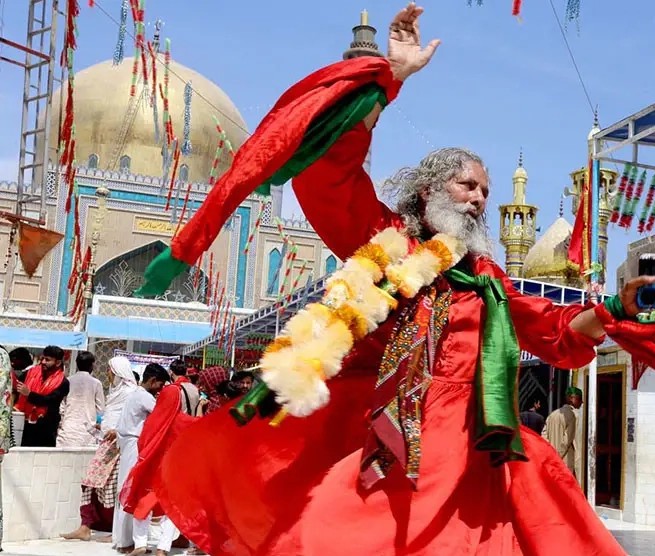
The moment you enter, a wave of peace, devotion, and mysticism embraces you. The shrine is alive with faith, where the rhythmic Dhamaal (Sufi dance), the powerful Qawwali melodies, and the deep prayers of thousands create an atmosphere that transcends time and space.
✅ A sanctuary for the soul – You don’t just visit; you feel every moment. ✅ A place of healing – Many believe their wishes come true here. ✅ A symbol of unity – People from all backgrounds and beliefs come together in love and devotion.
🏛️ Mesmerizing Architecture & Spiritual Aura
The shrine itself is a work of art, reflecting the rich cultural and historical heritage of Sindh: 🌟 A golden dome that shines like a beacon of light. 🌟 Exquisite tile work and Persian calligraphy that tell a story of devotion. 🌟 Intricately designed entrance doors, symbolizing an opening to divine love and peace.
Every part of this shrine holds centuries of prayers, love, and spiritual energy that can be felt in the very air.
🎶 Dhamaal & Urs Festival – An Unforgettable Experience
The daily Dhamaal at the shrine is something that words cannot describe—you have to feel it. But if you want to witness the ultimate celebration of Sufi devotion, visit during the Urs of Lal Shahbaz Qalandar (his annual death anniversary).
🌺 Qawwali and spiritual chants fill the air. 🌺 Pilgrims and mystics from all over the world come together in harmony. 🌺 Langar (free food for everyone) and unmatched hospitality make you feel at home.
It’s a once-in-a-lifetime experience that stays with you forever.
❤️ The People, The Culture, The Hospitality
Sehwan Sharif isn’t just about the shrine—it’s about the people who make this place even more special. The warmth and generosity of the locals will touch your heart.
💖 Welcoming smiles everywhere – You’ll feel like part of the family. 💖 Delicious Sindhi food – Don’t miss the local biryanis, kebabs, and chaats. 💖 Unique handicrafts – Take home an Ajrak, Sindhi topi, or a beautiful souvenir.
🌟 Final Thoughts – A Must-Visit for Everyone!
Whether you are looking for blessings, spiritual enlightenment, or simply an unforgettable experience, Lal Shahbaz Qalandar’s shrine is a place like no other. The energy, love, and devotion you’ll experience here will stay with you for a lifetime.
🕌 A place beyond words, beyond time, beyond beauty. 🌍 A journey that transforms the heart. 💯 A must-visit...
Read more