HTML SitemapExplore

Taxila Museum — Attraction in Taxila Tehsil

Name
Taxila Museum
Description
Nearby attractions
Nearby restaurants
Nearby hotels
Related posts
【Islamabad】One-Week Business Trip + Travel Guide 💼✨Day 4: Chasing Gandhara's Ghosts(part 1)
Keywords
Taxila Museum tourism.Taxila Museum hotels.Taxila Museum bed and breakfast. flights to Taxila Museum.Taxila Museum attractions.Taxila Museum restaurants.Taxila Museum travel.Taxila Museum travel guide.Taxila Museum travel blog.Taxila Museum pictures.Taxila Museum photos.Taxila Museum travel tips.Taxila Museum maps.Taxila Museum things to do.
Taxila Museum things to do, attractions, restaurants, events info and trip planning
Taxila Museum
PakistanPunjabTaxila TehsilTaxila Museum

Basic Info

Taxila Museum

Shahpur Rd, Bhir Mound City Walls, Taxila, Pakistan
4.5(2.9K)
Open 24 hours
Save
spot

Ratings & Description

Info

Cultural
Family friendly
Accessibility
attractions: , restaurants:
logoLearn more insights from Wanderboat AI.
Phone
+92 300 4610062
Website
facebook.com

Plan your stay

hotel
Pet-friendly Hotels in Taxila Tehsil
Find a cozy hotel nearby and make it a full experience.
hotel
Affordable Hotels in Taxila Tehsil
Find a cozy hotel nearby and make it a full experience.
hotel
The Coolest Hotels You Haven't Heard Of (Yet)
Find a cozy hotel nearby and make it a full experience.
hotel
Trending Stays Worth the Hype in Taxila Tehsil
Find a cozy hotel nearby and make it a full experience.

Reviews

Get the Appoverlay
Get the AppOne tap to find yournext favorite spots!
Wanderboat LogoWanderboat

Your everyday Al companion for getaway ideas

CompanyAbout Us
InformationAI Trip PlannerSitemap
SocialXInstagramTiktokLinkedin
LegalTerms of ServicePrivacy Policy

Get the app

© 2025 Wanderboat. All rights reserved.

Reviews of Taxila Museum

4.5
(2,892)
avatar
5.0
1y

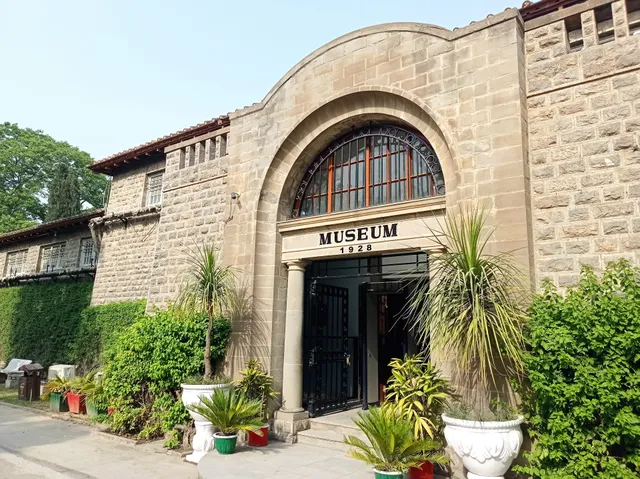
The Taxila Museum, situated in the ancient city of Taxila in Pakistan, is a premier institution dedicated to the preservation and exhibition of the rich cultural heritage of the Gandhara civilization. This civilization thrived from the 1st to the 7th centuries CE and is known for its unique blend of Indian, Persian, and Greco-Roman influences, particularly in art and architecture. The museum plays a crucial role in safeguarding and promoting this heritage, making it a significant site for historians, archaeologists, and tourists alike.

The museum was established in the early 20th century, with construction commencing in 1918. The foundation stone was laid by Lord Chelmsford, the then Viceroy of India. The museum was officially opened to the public in 1928, under the auspices of Sir Muhammad Habibullah, who served as the Minister for Education. The establishment of the museum was largely driven by the discoveries made during extensive excavations in the region, particularly those led by Sir John Marshall, who was the Director-General of Archaeology in India. His efforts brought to light numerous artifacts that illustrated the region's historical significance.

The museum's architecture reflects a blend of modern and traditional styles, designed to complement the historical context of the artifacts it houses. The structure is spacious, allowing for the display of large sculptures and intricate artifacts. The layout of the museum is designed to guide visitors through various periods of Gandharan art and culture, providing an immersive experience.

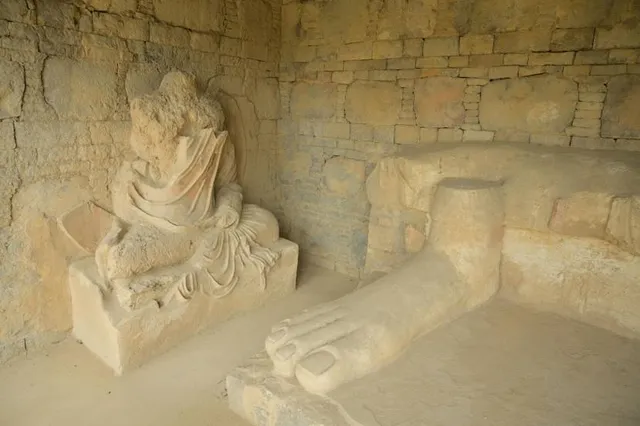
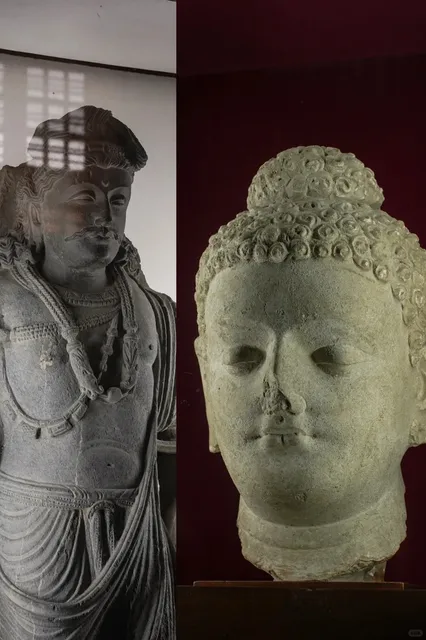
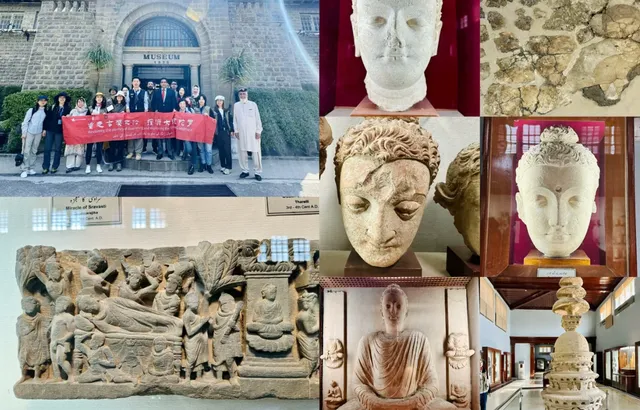
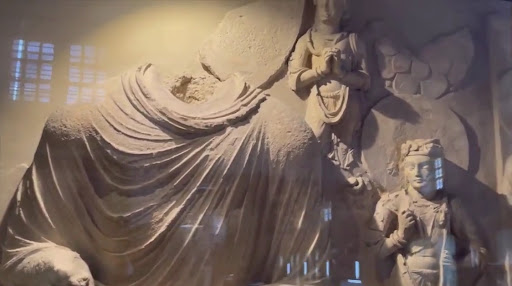
The Taxila Museum boasts an impressive collection of over 4,000 artifacts, showcasing the artistic and cultural achievements of the Gandhara civilization. Key highlights include exquisite stone and stucco sculptures, many of which depict Buddhist figures, including the Buddha, Bodhisattvas, and various deities. The artworks display intricate details and a high level of craftsmanship that reflects the artistic techniques of the time. The museum also features a range of terracotta items, including figurines, pottery, and decorative pieces that provide insight into the daily lives and beliefs of the people of Gandhara.

Additionally, the museum houses a significant numismatic collection, featuring coins from various periods, including the Indo-Greek and Kushan eras. This collection is invaluable for understanding the economic history and trade practices of the region. The artifacts on display highlight the religious diversity of Gandhara, showcasing influences from Buddhism, Hinduism, and Jainism, reflecting the region's role as a crossroads of various cultures and religions.

The Taxila Museum is strategically located near several important archaeological sites, enhancing its significance as a cultural hub. Bhir Mound, an ancient site, features the remains of one of the earliest settlements in the region, providing crucial insights into early urban life. The Dharmarajika Stupa, located a few kilometers east of the museum, is another significant site that contains relics of the Buddha and showcases the architectural grandeur of the time. The Jaulian Monastery, known for its beautiful stucco reliefs of Buddha and Bodhisattvas, is also nearby and attracts many visitors interested in Buddhist art and culture.

Visitors to the Taxila Museum can easily access it from Islamabad and Rawalpindi, with various transportation options available, including road and rail. The museum operates from 9:00 AM to 4:00 PM during winter and has extended hours in summer, closing on the first Monday of each month.

In conclusion, the Taxila Museum serves as a vital link to understanding the historical and cultural significance of the Gandhara civilization, making it a must-visit destination for history enthusiasts and tourists alike. Its extensive collections, combined with the proximity to important archaeological sites, provide a comprehensive overview of the region's rich heritage, ensuring that the legacy of Gandhara continues to be appreciated and studied by future...

   Read more

avatar
4.0
3y

The archeological site of Taxila is just 40 kilometers away from Islamabad. It is the most important site of Gandhara civilization housing about 50 archeological remains from the second century BC to 6th century AD. • Taxila was designated a UNESCO World Heritage Site in 1980. • Taxila was discovered in 1911 - 1922 by Sir John Marshal who has been regarded as the discoverer of many other archeological. The main ruins of Taxila are divided into three major cities, each belonging to a distinct time period. The nearby sites are: ° BHIR MOUND. ° SIRKAP 2nd CITY ( 2BC- 2AD) ° SIRSUKH 3rd City • Construction of Taxila museum started in 1918 and its foundation stone was laid by Lord Chelmsford, Viceroy of India, to display the important relics discovered from Texila archeological sites. • Taxila museum has one of the most significant and comprehensive collections of stone Buddhist sculpture from the first to the seventh centuries in Pakistan known as Gandharan art. T• he core of the collection comes from excavated sites in the Taxila valley, particularly the excavations of Sir John Marshall. Other objects come from excavated sites elsewhere in Gandhanra. • There are around 24 stories about Buddha carved in stones which are on display in the museum. The life stories of Buddha were written in Gandhara and in their light the sculptors carved them in stones. • There are two dozen Buddhist Stupas in the museum; in the same condition as they were discovered during the digging process except few repaired to give the touch of reality. • The museum contains a large collection of coins from the period of the Indo-Greeks to the late Kushans. • There are around 24 stories about Buddha carved in stones which are on display in the museum. The life stories of Buddha were written in Gandhara and in their light the sculptors carved them in stones.. • The artifacts found in Taxila have shown many cultures to have lived in the city. These cultures include the following: Scythian Greek Kushan Han Hindu Indo-Greek Mauryan Achaemenid Parthian Muslim Important Places to Visit in Gandhara Civilization Taxila, the hub of Gandhara civilization, has many sites with remains of the past. Khanpur Cave This cave contains artifacts from four different settlements: Buddhists, Muslims, Greeks, and Hindus. Bhir Mound This site shows the earliest remnants left by the Achaemenians in the 6th Century. It has walls made of stones, leftover housing foundations, and street bases. This area represents the urban side of the city. Sirkap The area of Sirkap was also a fortified area, created in the 2nd Century. The city shows remnants of houses and temples. The architecture shows a classic Western influence on the Gandhara civilization. Saraikala This site represents the prehistoric associations of the city. It has evidence that tells tales about the Bronze Age and the Iron Age. Buddhist Sites There are abundant sites in Taxila, representing Buddhist history and Gandhara architecture. Hence, history lovers enjoy coming to this place. Historical sites include the following places in the city: Takht Bahi Khader Mohra Kalawan Giri Monasteries Kunala Jandial Lalchack Dharmarajika Badalpur Mohra...

   Read more
avatar
4.0
3y

Taxila Museum holds one of the most significant and comprehensive collection of stone and stucco sculptures from the Buddhist Art of the Gandhara Civilization. The museum is located in the middle of the numerous archaeological sites scattered around the Taxila region and boasts a rich collection of Gandharan artifacts.

The Museum’s core collection was discovered from the excavated sites of Taxila Valley, such as the settlement sites (capitals) of Bhir Mound, Sirkap and Sirsukh, as well as from the Buddhist stupas and monasteries at Dharmarajika; Mohra Moradu, Jaulian, Kalawan, Bhamala, Tofkian, Bajran and Giri to name a few.

Currently, approximately 7000 artifacts are displayed at the Taxila Museum and around 30,000 are preserved in the reserve collection. The collection includes sacred relics of Buddha, stone and stucco sculptures, stupas, relic caskets, inscriptions, beads, jewelry, coins, tools, pottery, utensils, and numerous other architectural and household objects.

Gandhara Civilization

Gandhara, literally meaning the land of fragrance, was an ancient civilization that existed from the middle of the 1st millennium BCE to the beginning of the 2nd millennium CE on the west of River Indus in what is now the northern bounds of Pakistan, namely Peshawar, Swat, Dir, Bajaur, Buner, Mardan and Swabi. The boundaries of Greater Gandhara spread from the Kabul Valley in Afghanistan to the Pothohar (Potwar) Plateau in Pakistan, near the modern city of Islamabad. The civilization consisted of a series of dynasties who ruled over the same region and were mainly connected by their patronage of Buddhism as a religion.

Gandhara was originally a province of the Achaemenid Empire until the conquest of Alexander the Great in 327 BCE. The region became prominent under the Mauryan Empire by Chandragupta Maurya, and was introduced to Buddhism by his grandson, Emperor Ashoka. During Ashoka’s rule, the people of Gandhara accepted Buddhism and spread it across the borders, to China and other regions. The Mauryan Empire declined after Ashoka’s death. For the next four hundred years, Gandhara remained under Bactrian Greeks, Sakas, Parthians and Kushans respectively. Although Buddhism was introduced to Gandhara as early as by Ashoka, it was only after the arrival of the Kushans that the region reached its peak in the history of Buddhism and Gandharan Art.

The decline of the Kushan Empire witnessed a series of short-lived dynasties taking control over Gandhara, and the region was constantly raided and invaded. After its decline, Hinduism revived itself and the Buddhist Gandharan Civilization...

   Read more
Page 1 of 7
Previous
Next

Posts

【Islamabad】One-Week Business Trip + Travel Guide 💼✨
Beau LukeBeau Luke
【Islamabad】One-Week Business Trip + Travel Guide 💼✨
Day 4: Chasing Gandhara's Ghosts(part 1)
Phoenix Wright Phoenix Wright
Day 4: Chasing Gandhara's Ghosts(part 1)
Awais Aleem (Sheikh)Awais Aleem (Sheikh)
The Taxila Museum, situated in the ancient city of Taxila in Pakistan, is a premier institution dedicated to the preservation and exhibition of the rich cultural heritage of the Gandhara civilization. This civilization thrived from the 1st to the 7th centuries CE and is known for its unique blend of Indian, Persian, and Greco-Roman influences, particularly in art and architecture. The museum plays a crucial role in safeguarding and promoting this heritage, making it a significant site for historians, archaeologists, and tourists alike. The museum was established in the early 20th century, with construction commencing in 1918. The foundation stone was laid by Lord Chelmsford, the then Viceroy of India. The museum was officially opened to the public in 1928, under the auspices of Sir Muhammad Habibullah, who served as the Minister for Education. The establishment of the museum was largely driven by the discoveries made during extensive excavations in the region, particularly those led by Sir John Marshall, who was the Director-General of Archaeology in India. His efforts brought to light numerous artifacts that illustrated the region's historical significance. The museum's architecture reflects a blend of modern and traditional styles, designed to complement the historical context of the artifacts it houses. The structure is spacious, allowing for the display of large sculptures and intricate artifacts. The layout of the museum is designed to guide visitors through various periods of Gandharan art and culture, providing an immersive experience. The Taxila Museum boasts an impressive collection of over 4,000 artifacts, showcasing the artistic and cultural achievements of the Gandhara civilization. Key highlights include exquisite stone and stucco sculptures, many of which depict Buddhist figures, including the Buddha, Bodhisattvas, and various deities. The artworks display intricate details and a high level of craftsmanship that reflects the artistic techniques of the time. The museum also features a range of terracotta items, including figurines, pottery, and decorative pieces that provide insight into the daily lives and beliefs of the people of Gandhara. Additionally, the museum houses a significant numismatic collection, featuring coins from various periods, including the Indo-Greek and Kushan eras. This collection is invaluable for understanding the economic history and trade practices of the region. The artifacts on display highlight the religious diversity of Gandhara, showcasing influences from Buddhism, Hinduism, and Jainism, reflecting the region's role as a crossroads of various cultures and religions. The Taxila Museum is strategically located near several important archaeological sites, enhancing its significance as a cultural hub. Bhir Mound, an ancient site, features the remains of one of the earliest settlements in the region, providing crucial insights into early urban life. The Dharmarajika Stupa, located a few kilometers east of the museum, is another significant site that contains relics of the Buddha and showcases the architectural grandeur of the time. The Jaulian Monastery, known for its beautiful stucco reliefs of Buddha and Bodhisattvas, is also nearby and attracts many visitors interested in Buddhist art and culture. Visitors to the Taxila Museum can easily access it from Islamabad and Rawalpindi, with various transportation options available, including road and rail. The museum operates from 9:00 AM to 4:00 PM during winter and has extended hours in summer, closing on the first Monday of each month. In conclusion, the Taxila Museum serves as a vital link to understanding the historical and cultural significance of the Gandhara civilization, making it a must-visit destination for history enthusiasts and tourists alike. Its extensive collections, combined with the proximity to important archaeological sites, provide a comprehensive overview of the region's rich heritage, ensuring that the legacy of Gandhara continues to be appreciated and studied by future generations.
See more posts
See more posts
hotel
Find your stay

Pet-friendly Hotels in Taxila Tehsil

Find a cozy hotel nearby and make it a full experience.

【Islamabad】One-Week Business Trip + Travel Guide 💼✨
Beau Luke

Beau Luke

hotel
Find your stay

Affordable Hotels in Taxila Tehsil

Find a cozy hotel nearby and make it a full experience.

Get the Appoverlay
Get the AppOne tap to find yournext favorite spots!
Day 4: Chasing Gandhara's Ghosts(part 1)
Phoenix Wright

Phoenix Wright

hotel
Find your stay

The Coolest Hotels You Haven't Heard Of (Yet)

Find a cozy hotel nearby and make it a full experience.

hotel
Find your stay

Trending Stays Worth the Hype in Taxila Tehsil

Find a cozy hotel nearby and make it a full experience.

The Taxila Museum, situated in the ancient city of Taxila in Pakistan, is a premier institution dedicated to the preservation and exhibition of the rich cultural heritage of the Gandhara civilization. This civilization thrived from the 1st to the 7th centuries CE and is known for its unique blend of Indian, Persian, and Greco-Roman influences, particularly in art and architecture. The museum plays a crucial role in safeguarding and promoting this heritage, making it a significant site for historians, archaeologists, and tourists alike. The museum was established in the early 20th century, with construction commencing in 1918. The foundation stone was laid by Lord Chelmsford, the then Viceroy of India. The museum was officially opened to the public in 1928, under the auspices of Sir Muhammad Habibullah, who served as the Minister for Education. The establishment of the museum was largely driven by the discoveries made during extensive excavations in the region, particularly those led by Sir John Marshall, who was the Director-General of Archaeology in India. His efforts brought to light numerous artifacts that illustrated the region's historical significance. The museum's architecture reflects a blend of modern and traditional styles, designed to complement the historical context of the artifacts it houses. The structure is spacious, allowing for the display of large sculptures and intricate artifacts. The layout of the museum is designed to guide visitors through various periods of Gandharan art and culture, providing an immersive experience. The Taxila Museum boasts an impressive collection of over 4,000 artifacts, showcasing the artistic and cultural achievements of the Gandhara civilization. Key highlights include exquisite stone and stucco sculptures, many of which depict Buddhist figures, including the Buddha, Bodhisattvas, and various deities. The artworks display intricate details and a high level of craftsmanship that reflects the artistic techniques of the time. The museum also features a range of terracotta items, including figurines, pottery, and decorative pieces that provide insight into the daily lives and beliefs of the people of Gandhara. Additionally, the museum houses a significant numismatic collection, featuring coins from various periods, including the Indo-Greek and Kushan eras. This collection is invaluable for understanding the economic history and trade practices of the region. The artifacts on display highlight the religious diversity of Gandhara, showcasing influences from Buddhism, Hinduism, and Jainism, reflecting the region's role as a crossroads of various cultures and religions. The Taxila Museum is strategically located near several important archaeological sites, enhancing its significance as a cultural hub. Bhir Mound, an ancient site, features the remains of one of the earliest settlements in the region, providing crucial insights into early urban life. The Dharmarajika Stupa, located a few kilometers east of the museum, is another significant site that contains relics of the Buddha and showcases the architectural grandeur of the time. The Jaulian Monastery, known for its beautiful stucco reliefs of Buddha and Bodhisattvas, is also nearby and attracts many visitors interested in Buddhist art and culture. Visitors to the Taxila Museum can easily access it from Islamabad and Rawalpindi, with various transportation options available, including road and rail. The museum operates from 9:00 AM to 4:00 PM during winter and has extended hours in summer, closing on the first Monday of each month. In conclusion, the Taxila Museum serves as a vital link to understanding the historical and cultural significance of the Gandhara civilization, making it a must-visit destination for history enthusiasts and tourists alike. Its extensive collections, combined with the proximity to important archaeological sites, provide a comprehensive overview of the region's rich heritage, ensuring that the legacy of Gandhara continues to be appreciated and studied by future generations.
Awais Aleem (Sheikh)

Awais Aleem (Sheikh)

See more posts
See more posts