HTML SitemapExplore

Bijnot Fort — Attraction in Yazman Tehsil

Name
Bijnot Fort
Description
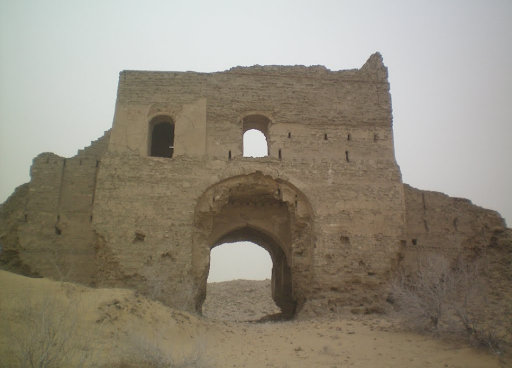
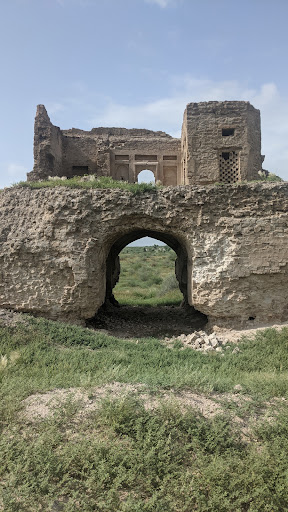
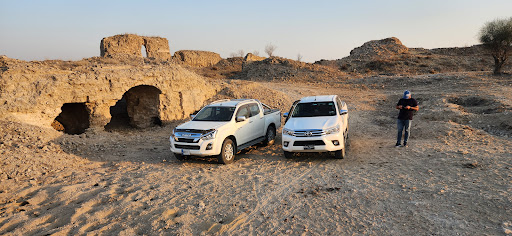
Bijnot Fort, is a ruined fortress located in Bahawalpur District of Punjab, Pakistan, 23 kilometres west of Indo-Pakistani border in Cholistan Desert.
Nearby attractions
Nearby restaurants
Nearby local services
Nearby hotels
Related posts
Keywords
Bijnot Fort tourism.Bijnot Fort hotels.Bijnot Fort bed and breakfast. flights to Bijnot Fort.Bijnot Fort attractions.Bijnot Fort restaurants.Bijnot Fort local services.Bijnot Fort travel.Bijnot Fort travel guide.Bijnot Fort travel blog.Bijnot Fort pictures.Bijnot Fort photos.Bijnot Fort travel tips.Bijnot Fort maps.Bijnot Fort things to do.
Bijnot Fort things to do, attractions, restaurants, events info and trip planning
Bijnot Fort
PakistanPunjabYazman TehsilBijnot Fort

Basic Info

Bijnot Fort

3MQJ+XRC, Bijnot, Pakistan
4.3(42)
Open 24 hours
Save
spot

Ratings & Description

Info

Bijnot Fort, is a ruined fortress located in Bahawalpur District of Punjab, Pakistan, 23 kilometres west of Indo-Pakistani border in Cholistan Desert.

attractions: , restaurants: , local businesses:
logoLearn more insights from Wanderboat AI.
Phone
+92 300 7809586

Plan your stay

hotel
Pet-friendly Hotels in Yazman Tehsil
Find a cozy hotel nearby and make it a full experience.
hotel
Affordable Hotels in Yazman Tehsil
Find a cozy hotel nearby and make it a full experience.
hotel
The Coolest Hotels You Haven't Heard Of (Yet)
Find a cozy hotel nearby and make it a full experience.
hotel
Trending Stays Worth the Hype in Yazman Tehsil
Find a cozy hotel nearby and make it a full experience.

Reviews

Get the Appoverlay
Get the AppOne tap to find yournext favorite spots!
Wanderboat LogoWanderboat

Your everyday Al companion for getaway ideas

CompanyAbout Us
InformationAI Trip PlannerSitemap
SocialXInstagramTiktokLinkedin
LegalTerms of ServicePrivacy Policy

Get the app

© 2025 Wanderboat. All rights reserved.

Posts

Zamir Hussain AbbasiZamir Hussain Abbasi
The sun set and the blue welkin above turned a nameless colour – the same as the dunes around us. The lowing of cattle and the dong-dong of their bells died down. And so too the bleating of the goats. Only the occasional harsh bray of an ass broke the silence. But even an hour after sundown, it did not go completely dark for the stars above shone with a passion as though this was the last night they were ever going to shine. In the flat, featureless (low dunes are hardly features) desert the stars became visible just as they cleared the eastern horizon. And if one had the patience, one could sit through the night to chart each star's arc clear across the velvet dome above. As evening progressed, spotted owls began to sound their churring calls as they swooped about after the various kinds of insects that prowl the desert at night. Still later, the little yelps of foxes, muted by the distance, could also be heard. Earlier, on the drive through the desert, we had surprised a couple of sand-coloured foxes en route. But without my Roberts' book of mammals, I was unable to identify them. Above us, the wind soughed through the kundi tree under which our charpoys lay. The crisp evening turned even cooler and due east the horizon glowed with the lights of some Indian town across the border. We had motored a hundred and twenty kilometres southeast across the Cholistan Desert from Derawar Fort to Bijnot. The Indian frontier was another twenty-five kilometres away and a hundred and fifty kilometres to the east lay Bikaner. Someone said the glow on the horizon was from the lights of that city. But that obviously was not true or we could also have seen the lights of Bahawalpur an equal distance to the north. Outside the little compound where we were bedded down, rose the ruined turrets and shattered walls of Bijnot Fort – one of the dozen or more dotted across the grey dunes of Cholistan. The annals of Jaisalmer, as recorded by James Tod, tell the story of a Bhatti prince called Tunno. In the course of his various adventures that do not concern this tale, Tunno acquired a vast hidden treasure with which he built a fort. Since the goddess Beejaseni had led him to the treasure, he called his fortress Beejnot after her. The year of construction is recorded in the annals as CE 757. The fort was held by the Rajputs for a full one thousand years until the 18th century. That was when the rising power of the Abbasi chieftains of Bahawalpur, began to eclipse that of the Rajputs in Cholistan. One by one, the fortresses of the desert fell to this doughty clan that claimed Arab descent. Bijnot was one among the last of the many that were taken by the Abbasis. Like the magnificent Derawar, Bijnot too must have been a mud-brick fort when it was built in the 8th century. Indeed, many ruined hulks sprinkled across the desert show that was how they built them in those long ago days.
Afzal ChoudharyAfzal Choudhary
1300 years old fort still have some symptoms near India Pakistan Border in Pakistan between Bahawal pur n Bikanir region a carpet road leads to this place an airport established by Abu Dahbi King here.
Ali MoazzamAli Moazzam
It is a historic Fort that the sands of time and Cholistan have taken a deadly toll on. As many other historical places unfortunately this fort will soon be lost in time.
hotel
Find your stay

Pet-friendly Hotels in Yazman Tehsil

Find a cozy hotel nearby and make it a full experience.

The sun set and the blue welkin above turned a nameless colour – the same as the dunes around us. The lowing of cattle and the dong-dong of their bells died down. And so too the bleating of the goats. Only the occasional harsh bray of an ass broke the silence. But even an hour after sundown, it did not go completely dark for the stars above shone with a passion as though this was the last night they were ever going to shine. In the flat, featureless (low dunes are hardly features) desert the stars became visible just as they cleared the eastern horizon. And if one had the patience, one could sit through the night to chart each star's arc clear across the velvet dome above. As evening progressed, spotted owls began to sound their churring calls as they swooped about after the various kinds of insects that prowl the desert at night. Still later, the little yelps of foxes, muted by the distance, could also be heard. Earlier, on the drive through the desert, we had surprised a couple of sand-coloured foxes en route. But without my Roberts' book of mammals, I was unable to identify them. Above us, the wind soughed through the kundi tree under which our charpoys lay. The crisp evening turned even cooler and due east the horizon glowed with the lights of some Indian town across the border. We had motored a hundred and twenty kilometres southeast across the Cholistan Desert from Derawar Fort to Bijnot. The Indian frontier was another twenty-five kilometres away and a hundred and fifty kilometres to the east lay Bikaner. Someone said the glow on the horizon was from the lights of that city. But that obviously was not true or we could also have seen the lights of Bahawalpur an equal distance to the north. Outside the little compound where we were bedded down, rose the ruined turrets and shattered walls of Bijnot Fort – one of the dozen or more dotted across the grey dunes of Cholistan. The annals of Jaisalmer, as recorded by James Tod, tell the story of a Bhatti prince called Tunno. In the course of his various adventures that do not concern this tale, Tunno acquired a vast hidden treasure with which he built a fort. Since the goddess Beejaseni had led him to the treasure, he called his fortress Beejnot after her. The year of construction is recorded in the annals as CE 757. The fort was held by the Rajputs for a full one thousand years until the 18th century. That was when the rising power of the Abbasi chieftains of Bahawalpur, began to eclipse that of the Rajputs in Cholistan. One by one, the fortresses of the desert fell to this doughty clan that claimed Arab descent. Bijnot was one among the last of the many that were taken by the Abbasis. Like the magnificent Derawar, Bijnot too must have been a mud-brick fort when it was built in the 8th century. Indeed, many ruined hulks sprinkled across the desert show that was how they built them in those long ago days.
Zamir Hussain Abbasi

Zamir Hussain Abbasi

hotel
Find your stay

Affordable Hotels in Yazman Tehsil

Find a cozy hotel nearby and make it a full experience.

Get the Appoverlay
Get the AppOne tap to find yournext favorite spots!
1300 years old fort still have some symptoms near India Pakistan Border in Pakistan between Bahawal pur n Bikanir region a carpet road leads to this place an airport established by Abu Dahbi King here.
Afzal Choudhary

Afzal Choudhary

hotel
Find your stay

The Coolest Hotels You Haven't Heard Of (Yet)

Find a cozy hotel nearby and make it a full experience.

hotel
Find your stay

Trending Stays Worth the Hype in Yazman Tehsil

Find a cozy hotel nearby and make it a full experience.

It is a historic Fort that the sands of time and Cholistan have taken a deadly toll on. As many other historical places unfortunately this fort will soon be lost in time.
Ali Moazzam

Ali Moazzam

create-post
Turn your ideas into a post and inspire others!
Create

Reviews of Bijnot Fort

4.3
(42)
avatar
5.0
7y

The sun set and the blue welkin above turned a nameless colour – the same as the dunes around us. The lowing of cattle and the dong-dong of their bells died down. And so too the bleating of the goats. Only the occasional harsh bray of an ass broke the silence. But even an hour after sundown, it did not go completely dark for the stars above shone with a passion as though this was the last night they were ever going to shine. In the flat, featureless (low dunes are hardly features) desert the stars became visible just as they cleared the eastern horizon. And if one had the patience, one could sit through the night to chart each star's arc clear across the velvet dome above. As evening progressed, spotted owls began to sound their churring calls as they swooped about after the various kinds of insects that prowl the desert at night. Still later, the little yelps of foxes, muted by the distance, could also be heard. Earlier, on the drive through the desert, we had surprised a couple of sand-coloured foxes en route. But without my Roberts' book of mammals, I was unable to identify them. Above us, the wind soughed through the kundi tree under which our charpoys lay. The crisp evening turned even cooler and due east the horizon glowed with the lights of some Indian town across the border.

We had motored a hundred and twenty kilometres southeast across the Cholistan Desert from Derawar Fort to Bijnot. The Indian frontier was another twenty-five kilometres away and a hundred and fifty kilometres to the east lay Bikaner. Someone said the glow on the horizon was from the lights of that city. But that obviously was not true or we could also have seen the lights of Bahawalpur an equal distance to the north. Outside the little compound where we were bedded down, rose the ruined turrets and shattered walls of Bijnot Fort – one of the dozen or more dotted across the grey dunes of Cholistan. The annals of Jaisalmer, as recorded by James Tod, tell the story of a Bhatti prince called Tunno. In the course of his various adventures that do not concern this tale, Tunno acquired a vast hidden treasure with which he built a fort. Since the goddess Beejaseni had led him to the treasure, he called his fortress Beejnot after her. The year of construction is recorded in the annals as CE 757. The fort was held by the Rajputs for a full one thousand years until the 18th century. That was when the rising power of the Abbasi chieftains of Bahawalpur, began to eclipse that of the Rajputs in Cholistan. One by one, the fortresses of the desert fell to this doughty clan that claimed Arab descent. Bijnot was one among the last of the many that were taken by the Abbasis. Like the magnificent Derawar, Bijnot too must have been a mud-brick fort when it was built in the 8th century. Indeed, many ruined hulks sprinkled across the desert show that was how they built them in those...

   Read more

avatar
5.0
8y

Amazing place and good time to spent .

Bijnot Fort (Urdu: قِلعہ بِجنوٹ ‬‎), is a ruined fortress located in Bahawalpur District of Punjab, Pakistan, 23 kilometres (14 miles) west of Indo-Pakistani border in Cholistan Desert. It was destroyed during Indo-Pakistani War of 1971.

Show all Alternative name Winjhrot Location Bahawalpur District, Punjab, Pakistan Region Cholistan Desert Coordinates 28°5′22″N 71°40′55″E Type Fortification History Founded 8th century AD See also

Derawar, another fort in Cholistan References

^ Imperial Gazetteer2 of India, Imperial Gazetteer of India -- Digital South Asia Library (Volume 8 ed.). p. 202. Retrieved 22 May 2017. ^ a b Salman Rashid (20 June 2014). "Bijnot Fort". Retrieved 22 May 2017.

Stub icon This Pakistan-related article is a stub....

   Read more
avatar
4.0
6y

Also known as ‘Winjhrot’, it was built by Raja Winjha in 757, but in 1167 Shahbuddin Muhammad Ghori had it taken down.  Although in ruins, most of its original features survive. The structure is made from blocks of limestone, set in local lime mortar.  It is nearly square covering an area of 300 feet. While the outer  wall encapsulates an inner area which is 155 feet, with three semi-circle bastions which are at the corners. On the north there is an 11 feet wide entrance, on which three...

   Read more
Page 1 of 4
Previous
Next