Derawar Fort OR Desert Forts of Cholistan (Bahawalpur)
The Cholistan Desert, or Rohi, is the western part of the Thar desert of the sub-continent which lies in modern Pakistan. There is archaeological evidence that this area was once watered by the Hakra river and was home to an Indus Valley culture based on agriculture. This river, the bed of which can be seen clearly etched into the desert landscape, supported settlements from ca. 4000 BC until around 600 B.C. when the river changed its flow and subsequently vanished underground. Since then the Cholistan area has been a stark and inhospitable desert environment at the edge of empires.
The medieval forts of the Cholistan desert landscape are a group of up to a dozen structures, some standing and some deteriorated. Derawar fort is the best surviving example of this series of historic forts, some dating from pre-Mughal times, but all restored and expanded from the 16th to 18th century by powerful local clans. Other forts include (roughly from north to south) Meergarh, Jaangarh, Marotgarh, Maujgarh, Dingarh, Khangarh, Khairgarh, Bijnotgarh and Islamgarh.These structures form a network across the desert landscape. They served to protect and enable the desert caravan routes; mercantile routes from central Asia to the heartland of the sub-continent and pilgrimage routes between Mecca and India.
Derawar fort was built in the 9th c. by Rai Jajja Bhatti. a Rajput ruler of Bhatti clan. The fort was taken over by the Nawab of Bahawalpur, Sadeq Mohammad Khan I, in 1733 They in turn lost control of the fort in 1747 but took the stronghold back in 1804 and it remained as the desert abode of the Nawabs of Bahawalpur until the 1970s. The fort survived intact due to this constant occupation where many of the others built as part of the medieval desert defence have perished.
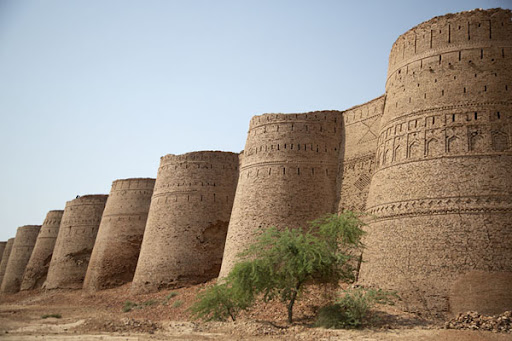
The fort is a massive and visually stunning square structure built of clay bricks. The walls have a length of 1500 meters and stand up to thirty meters high. There are forty circular bastions, ten on each side, which stand 30 m high and are visible across the desert for many miles. Each is decorated with intricate patterns in cut brick work. There are remains of structures inside the fort, may richly decorated with tile and fresco work; the Moti or Pearl Mosque stands nearby and the cemetery of the Nawabs of Bahawalpur filled with ornate and elaborate graves.
Derawar and the other forts illustrate the variety of the forms found from square brick structures with circular corner bastions, to square walls completely faced with semi-circular towers, to rectangular and even hexagonal shaped enclosures with angle bastions and square enclosures within an outer wall with multiple bastions. All of these varied forms date from the 16th to late 18th centuries, although many are renovations of previous buildings from as early as the 9th c. Despite this variation in form, all these forts are clustered within an area of only. 250 km N-S and 100 km E-W to the east of the historic cities of Bahawalpur and Yazman.
The explanation for this group of fortifications across the flat sands of the Rohi is presumed to be access to water, protection and control of these important water resources and their relationship to the caravan routes across the desert. Derawar, for example, is located at a critical point in the desert where it is possible to access deep water deposits which are all that remains of the ancient Hakra River. As a result, for many centuries Derawar has been an essential stopping and watering point for all caravans entering the great desert on...
Read moreDerawar Fort – The Majestic Guardian of the Cholistan Desert
Rising proudly from the heart of the Cholistan Desert near Bahawalpur, Pakistan, the Derawar Fort stands as one of the most magnificent and historically significant landmarks in South Punjab. Its towering walls, visible for miles across the golden sands, tell stories of power, glory, and heritage that span over eight centuries.
A Glimpse into History
Derawar Fort was originally built in the 9th century by a Hindu Rajput ruler of the Bhatti clan. It was later taken over and rebuilt in its present form in the 18th century by Nawab Sadeq Muhammad Khan I, the founder of the Abbasi dynasty of Bahawalpur. The fort became the royal family’s pride and a key military stronghold, guarding the ancient trade routes that once passed through the Cholistan Desert.
Architectural Grandeur
The fort is a marvel of desert architecture. Its massive square structure measures about 1,500 meters in circumference and features 40 towering bastions, each rising nearly 30 meters high. The symmetrical beauty of these bastions, glowing in shades of ochre and red under the desert sun, makes Derawar an unforgettable sight.
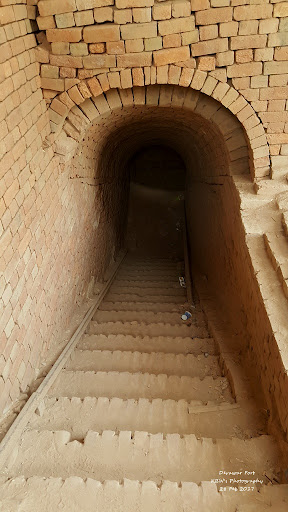
The walls, built from baked bricks and mud, demonstrate both strength and artistry — standing resilient against centuries of wind and sand. Inside the fort once stood royal quarters, a mosque, armories, and storerooms, many of which now lie in ruins but still whisper tales of the grandeur that once was.
Cultural and Historical Significance
Derawar Fort served as the seat of power for the Nawabs of Bahawalpur, symbolizing their authority and cultural influence in the region. The Abbasi royal family maintained the fort as part of their legacy, and even today, it remains under their ownership.
Nearby lies the Abbasi Royal Necropolis, where the Nawabs and their families are buried in beautifully carved marble tombs — a stunning example of Islamic architecture inspired by Multani craftsmanship.
A Desert Wonder
Surrounded by endless dunes, Derawar Fort is not just a monument — it’s an experience. Each year, the fort attracts travelers, photographers, and history enthusiasts eager to explore its mystery and majesty. During the Cholistan Desert Jeep Rally, held annually, Derawar Fort serves as the central hub for the event, bringing the desert to life with excitement and adventure.
Preserving the Past
Despite its grandeur, Derawar Fort faces challenges of neglect and erosion due to harsh desert conditions. Conservation efforts are underway, but the structure still needs dedicated preservation to protect this priceless piece of Pakistan’s cultural heritage for future generations.
A Timeless Symbol of Strength
Standing tall against the shifting sands and passing centuries, Derawar Fort remains a timeless symbol of strength, history, and pride. It embodies the spirit of the desert and the legacy of those who once ruled it — a majestic reminder of Pakistan’s rich and...
Read moreDerawar Fort is a located in Ahmadpur East Tehsil of Bahawalpur District in the Punjab. Approximately 20 km south of the city of Ahmedpur East, the forty bastions of Derawar are visible for many miles in the Cholistan Desert. The walls have a perimeter of 1500 metres and stand up to thirty metres high.
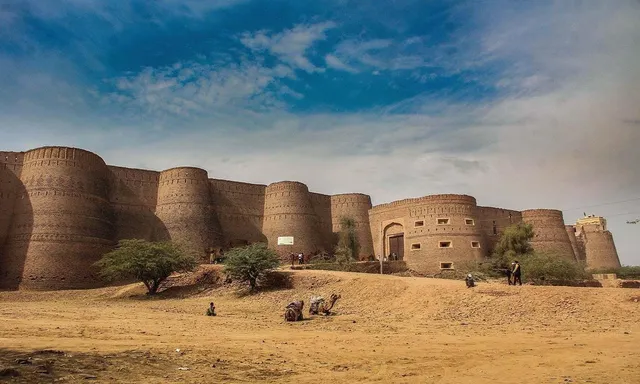
Derawar Fort is the best surviving structure of the remaining ruins.
Derawar fort was built in the 9th century AD by Rai Jajja bhati, a Hindu Rajput(Gurjar Pratihar) ruler of the Bhati clan. The fort was initially known as Dera Rawal, and later referred to as Dera Rawar, which with the passage of time came to be pronounced Derawar, its present name.
In the 18th century, the fort was taken over by Muslim Nawabs of Bahawalpur from the Shahotra tribe. It was later renovated in its current form in 1732 by the Abbasi ruler Nawab Sadeq Muhammad, but in 1747 the fort slipped from their hands owing to Bahawal Khan's preoccupations at Shikarpur. Nawab Mubarak Khan took the stronghold back in 1804. 1,000 year-old catapult shells were found in the debris near a decaying wall in the fort.
Nawab Sadeq Muhammad Khan Abbasi V, the 12th and last ruler of Bahawalpur state, was born in the fort in 1904.
Derawar is just one example of the wide variety of forms derived from square brick. These particular forms date back to between the 16th and 18th centuries, though some renovations date as early as the 9th century.
Renovation The Fort was later renovated in its current form in 1732 by the Abbasi ruler Nawab Sadeq Muhammad.
Each year a jeep rally is held in the Cholistan Desert that is attended by people from all over the world. Due to its popularity, it is estimated to be visited by more than 70,000 people. The rally passes through three districts in the desert.
UNESCO tentative list Derawar and the Desert Forts of Cholistan was submitted by the Pakistan Government in 2016 to be considered as a World Heritage Site. The structures are reminiscent of ancient stops during trading routes in a desert largely lacking water. Derawar especially allowed access to water, while providing defense and shelter. The site is important due to its role in identifying political and social factors relating to Afghanistan, Pakistan, and India trading routes.
Derawar is being considered under criterion (iii) which has to do with providing an important example of infrastructure designed to meet the environmental circumstances of the hostile desert while providing insight into ancient trade and culture, as well criterion (v) that claims Derawar is an exceptional example of the interaction of architecture with the limited...
Read more