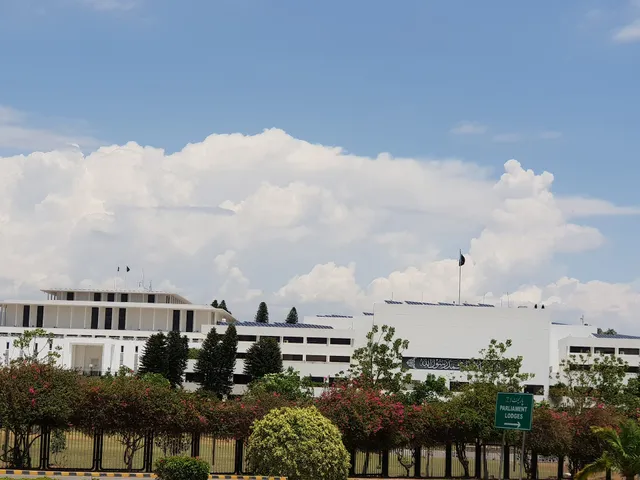
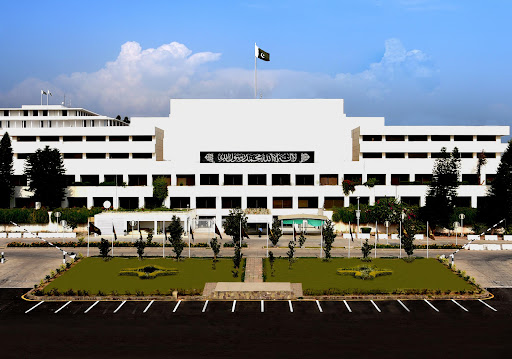
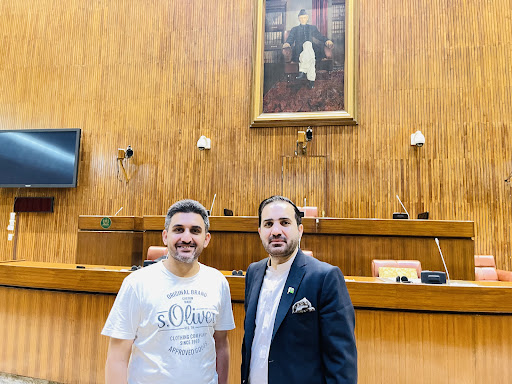
Parliament House Pakistan, also known as the Majlis-e-Shoora, is the national assembly building of Pakistan. It is located in Islamabad, the capital city of Pakistan, and is a prominent landmark of the country. The building is the meeting place of the National Assembly and the Senate, the two houses of the Pakistani parliament.
The Parliament House Pakistan was designed by the famous architect Edward Durell Stone, who was also responsible for designing other iconic buildings such as the Kennedy Center in Washington D.C. The construction of the building began in 1977 and was completed in 1986. The building was inaugurated by General Zia-ul-Haq, the then-President of Pakistan.
The design of the building is unique and modern, yet it blends well with the surrounding environment. The Parliament House Pakistan is built on a vast expanse of land and covers an area of 200,000 square feet. The building is made of white marble and is surrounded by beautifully landscaped gardens. The façade of the building is adorned with intricate carvings and designs, which add to the beauty of the structure.
The main entrance of the Parliament House Pakistan is through a grand staircase that leads to the lobby of the building. The lobby is a spacious area that is adorned with beautiful chandeliers and marble columns. The walls of the lobby are decorated with calligraphy and paintings that depict the rich cultural heritage of Pakistan. The lobby leads to the main hall of the National Assembly, which is the largest hall in the building.
The National Assembly hall is a circular-shaped room that can accommodate up to 342 members of parliament. The hall is equipped with modern technology, including audio and video systems, to facilitate the proceedings of the parliament. The Speaker's chair is located at the center of the hall, and the members sit in a circular arrangement around it. The hall is adorned with beautiful carpets and curtains, which add to the grandeur of the space.
The Senate hall is also located within the Parliament House Pakistan and is a smaller chamber than the National Assembly hall. The Senate hall can accommodate up to 100 members of parliament, and it is also equipped with modern technology to facilitate the proceedings of the parliament.
Apart from the main halls, the Parliament House Pakistan also has various committee rooms, lounges, and offices for the members of parliament. The building also has a library, which houses a vast collection of books and documents related to the history and politics of Pakistan.
The Parliament House Pakistan is not only a symbol of the country's democracy but also a center of power and decision-making. It is a place where the elected representatives of the people come together to discuss and debate issues that are crucial for the development and progress of the country.
In conclusion, the Parliament House Pakistan is a beautiful and impressive building that symbolizes the democratic values of the country. The building is a testament to the country's commitment to democracy and serves as a reminder of the power of the people to shape their...
Read more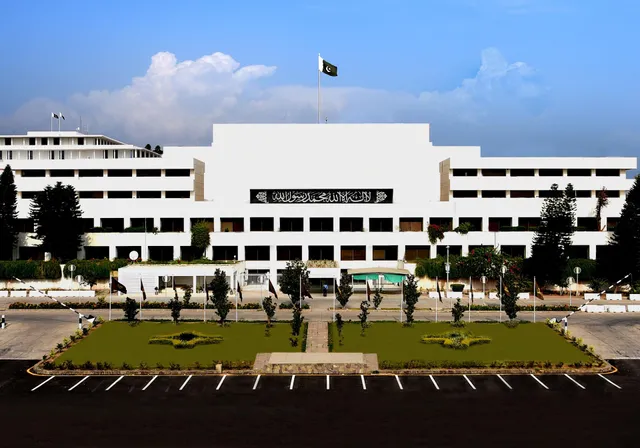
 Learn more insights from Wanderboat AI.