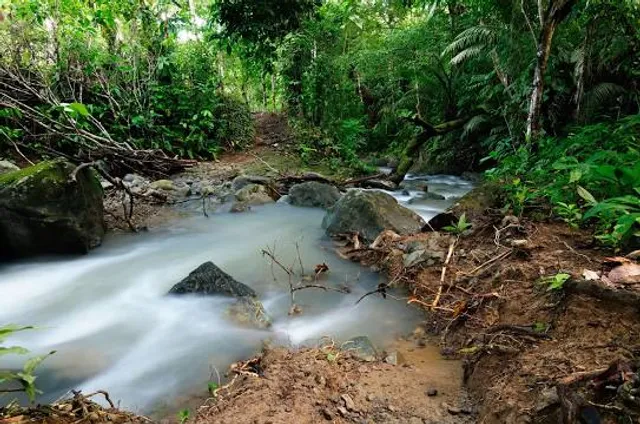
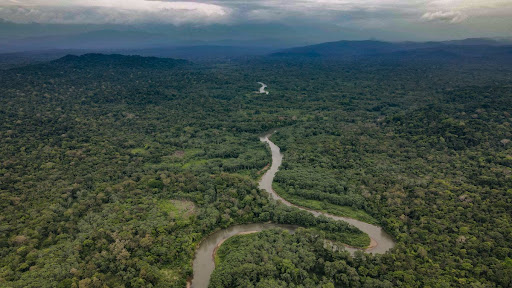
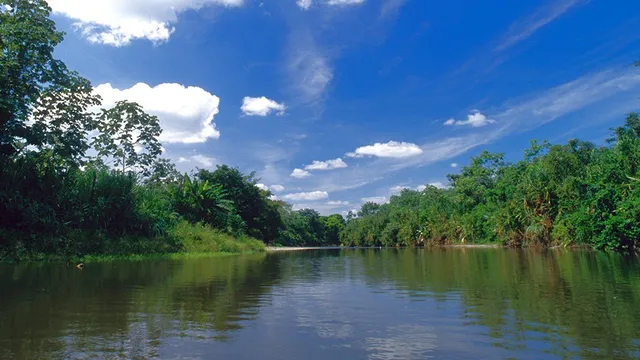
Darien National Park is the largest national park in Panamá, and the largest protected area in Central America and the Carribean—not to mention one of Central America’s most untamed regions. This extensive jungle features endless virgin rainforests, premontane and montane forests, cloud forests and dwarf forests, as well as large mangroves. You’ll also find meandering rivers such as the Tuira or the Chucunaque, an astounding array of unique wildlife, including the jaguar and the harpy eagle, plus mountain ranges that reach more than 2,500 meters in elevation. As one of the most important UNESCO World Heritage Sites in Central America, Darien is a Biosphere Reserve and the focus of many conservation efforts in Panamá. In fact, after the Amazon rainforest, Darien National Park is considered the most important “natural lung” in the Americas.
Recommended for true adventurers only, the park is rainy, humid and extremely remote, with two popular areas to visit. One of them is Santa Cruz de Cana, or Cana. Located in the middle of the park along the eastern slope of Cerro Pirre (or Pirre Hill), the area was once a mining town where the Spanish discovered gold in 1665. Today, it’s one of the most pristine outdoor areas in Panamá, and among the top locations in the country for birdwatching. Look out for colorful macaws, tanagers, manakins, eagles and hummingbirds, as well as other wildlife such as howler and spider monkeys, white-lipped peccaries and Baird’s Tapirs. Explore the jungle on one of five hiking trails in the area, which offer views of the forest and the old mining operations.
On the other side of Cerro Pirre, you’ll find Pirre Station—another hiking destination inside the great jungle. Also known as Rancho Frío, this area is replete with lush nature and an abundance of wildlife that includes woodpeckers, monkeys, tamarins and sloths. When you get to Pirre Station, you’ll find a basic dormitory, outhouse and kitchen, but you’ll have to bring your own gear for...
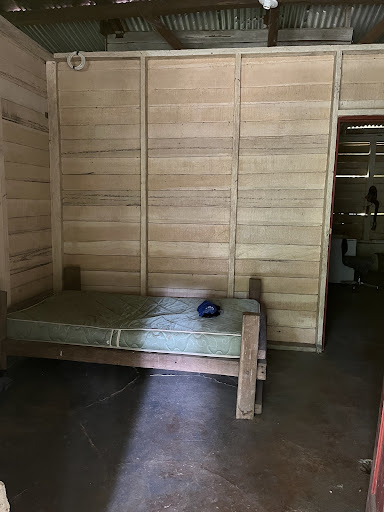
Read moreThis is the worst run park in South/Central America that I’ve encountered in 10 months of my travels. I traveled through Yaviza, and nobody can you provide you with complete information there. You have to learn everything the hard way. Not even in the direction of the park (ministry of environment, where you have to obtain a permit) do they know basic facts. One of the ladies open-heartedly told me she has never been to the park. Obligatory guides (30-50$ per day) expect you to have all gear, including tent, rubber boots, etc., and also food for you and for them. I was asked even to buy salt. Don’t expect much help from them or information either: mine didn’t know the distance between the points on our route, the heights, etc. There are some facilities on the trail (so called Ranch Frio, with solar panels), but they are kept in terrible condition (and you have to pay to stay there, see pictures). Rooms were last cleaned at the time of conquista. I slept outside in a hammock which was by far the best option. Oh, and of course they dump all the plastic garbage in a pit just next to where you live, inside the park. Worst of all, there is a higher chance to meet UFO than a jaguar here. Local indigenous tribes have hunted out jaguars, tapirs, etc., long ago and park authorities hardly care (in fact we hardly saw any rangers). My guide NEVER saw a jaguar or a tapir...
Read moreDarien National Park extends across some 575.000 hectares in the Darien Province of Southeastern Panama. The largest protected area in Panama, Darien is also among the largest and most valuable protected areas in Central America. The property includes a stretch of the Pacific Coast and almost the entire border with neighbouring Colombia. Among the impressive 169 documented species of mammals are the critically endangered Brown-headed Spider Monkey, the endangered Central American Tapir, the vulnerable Giant Anteater and near-threatened species like Jaguar, Bush Dog and White-lipped Peccary. The many other charismatic species include Puma, Ocelot, Margay and Jaguarundi. The avifauna is particularly rich with 533 recorded species, for instance the endangered Great Green Macaw, the vulnerable Great Curassow and a major population of the near-threatened...
Read more