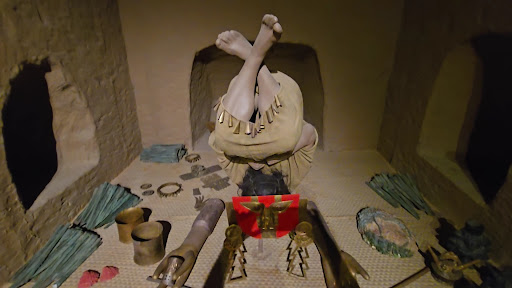
Visited the Sicán National Museum on Friday, June 27, 2025. We arrived a bit past lunchtime, so admittedly we were a bit rushed and slightly museum-fatigued after visiting several archaeological sites recently. Still, this place offered a unique glimpse into a culture I had never heard of before—the Sicán, who succeeded the Moche and thrived in the La Leche River area between roughly 750–1375 AD, and were succeeded by the Chimor or Chimú culture.
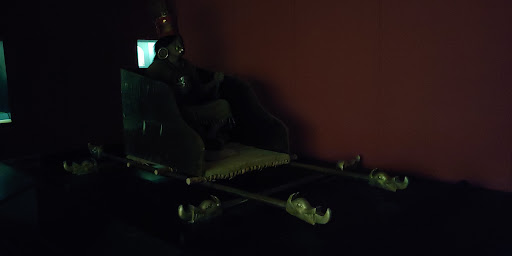
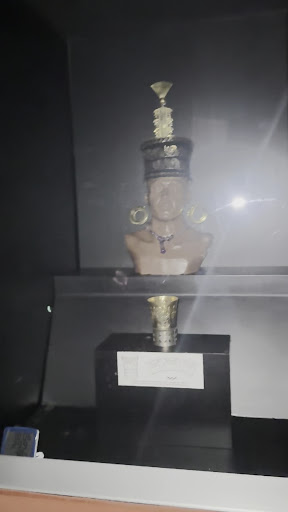
The exhibits are rich with symbolism and feature striking imagery: a recurring figure resembling the fanged deity (but fangless), holding a tumi knife in the left hand and a decapitated head in the right hand, often with snakes and claws. The collection includes an impressive array of gold artifacts, which were a highlight.
Be aware: all signage and information is in Spanish, and no English-speaking guides were available during our visit. Fortunately, my Peruvian wife translated a few of the exhibits for us, but non-Spanish speakers might find it harder to engage deeply without a translator. Still, at just 8 soles for admission, it’s a very affordable stop for anyone interested in lesser-known pre-Columbian cultures.
Also, note that we pretty much had the museum to ourselves. We only encountered one other small group at the end...
Read moreA very good museum but only if you are really into understanding the old cultures. This museum isn't about flashy artifacts like the two museums in Lambayeque. Instead it focuses more on how things were done. The displays are a bit dated and the museum feels somewhat neglected. However, they are in the process of adding an addition so maybe the displays will get a makeover, too. In sum, this is out of the way and probably not of interest to the more casual tourist. But if you have a serious interest in archaeology it may be worth the...
Read moreInteresante en lo que es salas de exhibición es solo en el segundo piso y solo hay 6 salas.El tour dura.muy poco. En ellas se puede apreciar toda la evolución de la cultura Sican. Su vida cotidiana y como vivían en aquel entonces. Se exhibe piezas originales encontradas en el lugar en el bosque de Pomac,lugar donde se encontró el "Tumi de Oro". Según las fotos y maquetas como dan la idea como fueron saqueadas hasta los últimos años . y luego ya correctamente fueron excavando y sacar las valiosas piezas,para después de ser procesadas ,estudiadas y luego su exhibición al público. Este museo se creo ,el 20 de Marzo de 2001,se sitúa en la ciudad de Ferreñafe camino a Pitipo. La cultura Sican se desarrolla en Lambayeque es una cultura arqueológica ,que se manifestó entre los siglos VII y XIV D.C. En la época de transición cultural en la que se evidencia la decadencia del orden Mochica y la influencia de varios estilos culturales especialmente del Huari.Se destacan las botellas globulares con rasgos ornitomorfos que son consideradas antecedentes del célebre "Huaco Rey" Sican significa casa o templo de la luna. Se desarrolla en los valles de Motupe,la leche, Lambayeque y Zaña. El Dios de la cultura Sican,fue el mismo Nombre es "Naylamp" con ojos alados, el cual está representado en los cuchillos ceremoniales en las máscaras funerarias y en otros de orfebrería así como los cerámicos. Su idioma era " Mochica" y su...
Read more