HTML SitemapExplore
Find Things to DoFind The Best Restaurants

Parque Nacional del Manu — Attraction in Manu

Name
Parque Nacional del Manu
Description
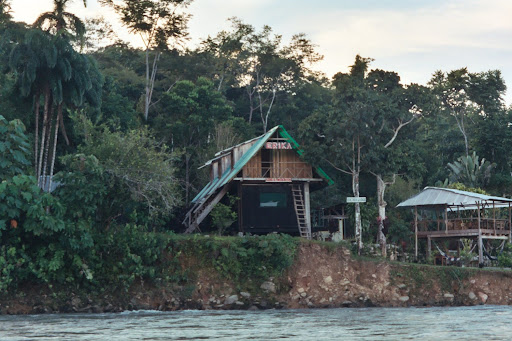
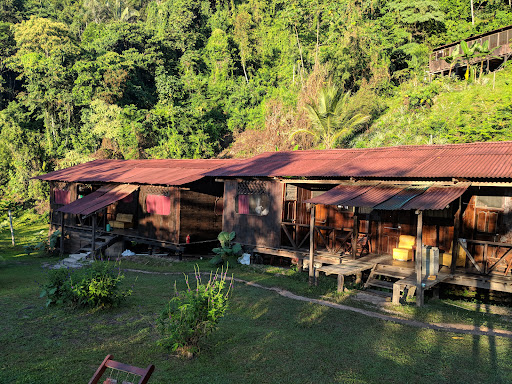
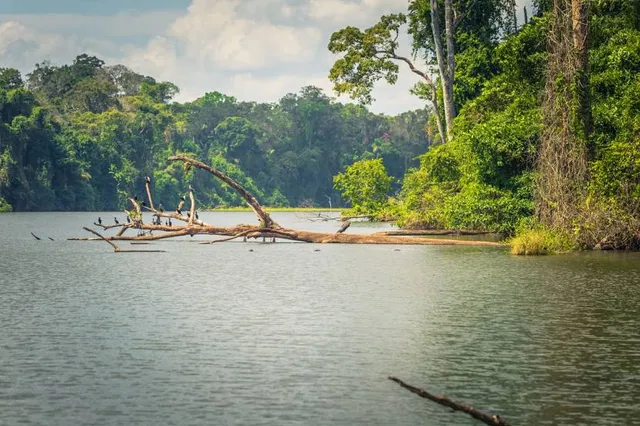
Manu Biosphere Reserve is a sprawling national park in southeastern Peru, spanning Andean highlands, cloud forest and lowland jungle. It's known for its rich biodiversity, notably hundreds of bird species, including macaws, which feed at clay licks at sites such as Blanquillo. Boats run along the Manu River, past dense Amazonian jungle that is home to jaguars, black caimans and spider monkeys.
Nearby attractions
Nearby restaurants
Nearby hotels
Related posts
Keywords
Parque Nacional del Manu tourism.Parque Nacional del Manu hotels.Parque Nacional del Manu bed and breakfast. flights to Parque Nacional del Manu.Parque Nacional del Manu attractions.Parque Nacional del Manu restaurants.Parque Nacional del Manu travel.Parque Nacional del Manu travel guide.Parque Nacional del Manu travel blog.Parque Nacional del Manu pictures.Parque Nacional del Manu photos.Parque Nacional del Manu travel tips.Parque Nacional del Manu maps.Parque Nacional del Manu things to do.
Parque Nacional del Manu things to do, attractions, restaurants, events info and trip planning
Parque Nacional del Manu
PeruMadre de DiosManuParque Nacional del Manu

Basic Info

Parque Nacional del Manu

Peru
4.5(243)
Open 24 hours
Save
spot

Ratings & Description

Info

Manu Biosphere Reserve is a sprawling national park in southeastern Peru, spanning Andean highlands, cloud forest and lowland jungle. It's known for its rich biodiversity, notably hundreds of bird species, including macaws, which feed at clay licks at sites such as Blanquillo. Boats run along the Manu River, past dense Amazonian jungle that is home to jaguars, black caimans and spider monkeys.

Outdoor
Adventure
Scenic
Family friendly
Off the beaten path
attractions: , restaurants:
logoLearn more insights from Wanderboat AI.
Phone
+51 84 274509
Website
sernanp.gob.pe

Plan your stay

hotel
Pet-friendly Hotels in Manu
Find a cozy hotel nearby and make it a full experience.
hotel
Affordable Hotels in Manu
Find a cozy hotel nearby and make it a full experience.
hotel
The Coolest Hotels You Haven't Heard Of (Yet)
Find a cozy hotel nearby and make it a full experience.
hotel
Trending Stays Worth the Hype in Manu
Find a cozy hotel nearby and make it a full experience.

Reviews

Get the Appoverlay
Get the AppOne tap to find yournext favorite spots!
Wanderboat LogoWanderboat

Your everyday Al companion for getaway ideas

CompanyAbout Us
InformationAI Trip PlannerSitemap
SocialXInstagramTiktokLinkedin
LegalTerms of ServicePrivacy Policy

Get the app

© 2025 Wanderboat. All rights reserved.

Reviews of Parque Nacional del Manu

4.5
(243)
avatar
5.0
6y

Parque Nacional del Manu y su gran biodiversidad Área natural protegida se ubica en Madre de Dios El Parque Nacional del Manu, ubicado en las regiones de Cusco y Madre de Dios, es una de las áreas naturales protegidas más importantes del país y cuenta con una megadiversidad reconocida en el ámbito internacional por su gran diversidad biológica del planeta. El Manu es uno de los pocos espacios territoriales que comprenden desde frígidas punas, que sobrepasan los 4,000 metros sobre el nivel del mar, agrestes montañas boscosas que dan origen a una multitud de pequeñas quebradas y valles, hasta bosques nublados de selva alta para finalmente llegar al llano amazónico.

En 1973 se estableció el Parque Nacional del Manu como Área Natural Protegida. Posteriormente, en 1977 la Unesco lo designó además de los territorios destinados a la colonización que colindaban con el Parque y la Zona Reservada del Manu, como Reserva de Biósfera. Diez años después de su reconocimiento como tal, el Parque Nacional del Manu fue declarado como un Patrimonio Natural de la Humanidad por su valor universal extraordinario. Esta designación fue un reconocimiento por la Unesco de su programa Convención de Patrimonio Mundial, cuyo propósito es catalogar, preservar y dar a conocer sitios de importancia cultural o natural excepcional para la herencia común de la humanidad.

El Parque está rodeado por la Reserva Territorial de los grupos étnicos Kugapakori y Nahua, el Santuario Nacional Megantoni y la Reserva Comunal Amarakaeri, territorios que, junto a los de la cuenca del río Mapacho, pretenden ser integrados a la Reserva de Biosfera del Manu. Los pueblos que habitan adentro o alrededor del Parque tienen patrones culturales de asentamientos diversos, y algunos son poblaciones en aislamiento voluntario o contacto inicial. En la zona núcleo del Parque Nacional de Manu se ubica la Estación Biológica de Cocha Cashu, en la que se realizan investigaciones ecológicas y antropológicas. Por su parte, en su zona de amortiguamiento y transición se realizan actividades de desarrollo sostenible y manejo de recursos, recreación, turismo y educación ambiental. Paraíso de anfibios El Parque Nacional del Manu posee también nuevo récord mundial: es el área natural protegida con la mayor diversidad de anfibios y reptiles del planeta. Así lo destacó un estudio publicado en la revista científica "Biota Neotropica". El Parque Nacional del Manu y su zona de amortiguamiento protegen 155 especies de anfibios y 132 especies de reptiles, precisa Rudolf von May, uno de los autores de la investigación.

Los anfibios incluyen a las ranas, sapos, salamandras y cecilias. Los reptiles incluyen a las serpientes, lagartijas, tortugas y caimanes. El Parque Nacional del Manu es reconocido también por tener los récords mundiales de especies de mariposas diurnas (más de 1,200 especies) y aves (más de 1,000 especies) viviendo en un área natural protegida.

Asimismo, el área tiene gran importancia cultural porque protege el territorio de varios grupos étnicos incluyendo los Matsiguenka, Harakmbut y Yine, así como grupos indígenas viviendo en aislamiento voluntario tales como los Mashco-Piro. Esta nueva investigación es además notable si se considera que el Parque Nacional del Manu representa sólo el 0.01 por ciento de la superficie terrestre mundial, pero alberga 2.2 por ciento de todos los anfibios y 1.5 por ciento de todos los reptiles conocidos...

   Read more
avatar
1.0
7y

We booked with Bio Manu Expeditions and had a horrible experience. They lied about what was in the intenarary and our time was wasted inside the National Park by our guide taking a siesta all day. I got food poisoning on the 2nd night and they didn’t have a medical or first aid kit so I had to starve myself for two days to lessen the symptoms. Our boat was terribly unsafe and never wore life jackets only for the park entrance officials. We found out there were massive price discrepancies, we paid $900 each and the other couple paid $600 each. This company didn’t have that much animal knowledge and didn’t stop when we saw animals along the side of the river. They also would torture the spiders and insects for the amusement of guests sticking sticks in their holes and poking and prodding them. Bio Manu Expeditions gives Manu National Park a bad name. Plus the park guides said they didn’t have a licence to operate but they bribed the officials to continue on operating which is...

   Read more
avatar
1.0
7y

We went to Manu National Park with Bio Manu Expeditions and had a terrible experience. My girlfriend got food poisoning and no care was given by our guide or the cook or the manager of Bio Manu Expeditions. We also spent 3 nights in a lodge in a banana plantation. This place was not the jungle experience we were after. We also had our time wasted in the reserve, with which we were only given one day. We were promised two days in the reserve, but the whole itinerary was changed from day one. The guide rushed the boat trip down the river and missed the wildlife. He also rushed the walks and took two siestas that day. We also witnessed animal cruelty on a night walk, where he killed a tarantula and tore its log home to pieces in order to get it out and show us. This was a terrible piece of animal cruelty and we had to walk away. Avoid this company...

   Read more
Page 1 of 7
Previous
Next

Posts

Dave BleekerDave Bleeker
The amazon basin in peru, stretching into Bolivia and Brazil, is a truly untouched piece of the planet where you could trek for days without any signs of human life. Wild life is plenty, from all kinds of insects, to jaguars, snakes, crocodiles and massive butterflies to immense large trees and flowers that can be only found this part of the planet. To see wildlife you might want to spend 1 to 2 weeks at minimum. Besides walking you can go by boat on the river as no other forms of transport will be going here. As long as this is still there, and as long as you are phycapable of doing this, you definitely should. You can and should only go with a team including a guide. Treks can be organized from bigger cities in Peru.
Ghislain DionneGhislain Dionne
Went on a 4d/3n tour in Manu National Park it felt fairly authentic and you got to spend a lot of time in the jungle. The food at the lodges were great and well crafted with little resources. The guides were very knowledgeable and accommodating to specific wants. The activities are good, you can hike up a mountain for a couple hours to see monkeys or take a motor canoe to a good hiking spot with balsam rafts and get lucky and see a white cayman. Overall I was happy with my time in Manu but be aware it is a 10+ hour bus ride from Cusco.
Adam MateAdam Mate
A truly unique and interesting part of our beautiful world. Reaching the national park is an 8-10 hours if drive, mostly on gravel and dirt roads. As you descend from the higher elevation levels of the park, you will see different rainforests and different wildlife. Manu is the most diverse rainforest ecosystem: they have the complete animal food-chain, not simply great quantity of certain spieces as other part of the Amazonas. A trip to Manu is eye-opening and challenging, and might not be for the week-hearthed.
See more posts
See more posts
hotel
Find your stay

Pet-friendly Hotels in Manu

Find a cozy hotel nearby and make it a full experience.

The amazon basin in peru, stretching into Bolivia and Brazil, is a truly untouched piece of the planet where you could trek for days without any signs of human life. Wild life is plenty, from all kinds of insects, to jaguars, snakes, crocodiles and massive butterflies to immense large trees and flowers that can be only found this part of the planet. To see wildlife you might want to spend 1 to 2 weeks at minimum. Besides walking you can go by boat on the river as no other forms of transport will be going here. As long as this is still there, and as long as you are phycapable of doing this, you definitely should. You can and should only go with a team including a guide. Treks can be organized from bigger cities in Peru.
Dave Bleeker

Dave Bleeker

hotel
Find your stay

Affordable Hotels in Manu

Find a cozy hotel nearby and make it a full experience.

Get the Appoverlay
Get the AppOne tap to find yournext favorite spots!
Went on a 4d/3n tour in Manu National Park it felt fairly authentic and you got to spend a lot of time in the jungle. The food at the lodges were great and well crafted with little resources. The guides were very knowledgeable and accommodating to specific wants. The activities are good, you can hike up a mountain for a couple hours to see monkeys or take a motor canoe to a good hiking spot with balsam rafts and get lucky and see a white cayman. Overall I was happy with my time in Manu but be aware it is a 10+ hour bus ride from Cusco.
Ghislain Dionne

Ghislain Dionne

hotel
Find your stay

The Coolest Hotels You Haven't Heard Of (Yet)

Find a cozy hotel nearby and make it a full experience.

hotel
Find your stay

Trending Stays Worth the Hype in Manu

Find a cozy hotel nearby and make it a full experience.

A truly unique and interesting part of our beautiful world. Reaching the national park is an 8-10 hours if drive, mostly on gravel and dirt roads. As you descend from the higher elevation levels of the park, you will see different rainforests and different wildlife. Manu is the most diverse rainforest ecosystem: they have the complete animal food-chain, not simply great quantity of certain spieces as other part of the Amazonas. A trip to Manu is eye-opening and challenging, and might not be for the week-hearthed.
Adam Mate

Adam Mate

See more posts
See more posts