Nazca Lines
The mysterious Nazca lines are an unusual sight that will leave you with a sense of awe. These huge images on the desert floor were relatively undiscovered until planes flying over the area in the 1920s saw the lines from the air and realized they formed distinct patterns and images.
Until that time there was some recognition of the hillside drawings near Nazca and Paracas, which can be seen from ground level. However, the huge drawings on the flat desert floor are so large that it requires an aerial view to be appreciated.
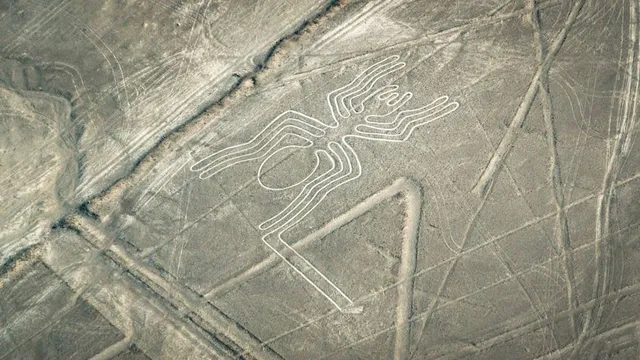
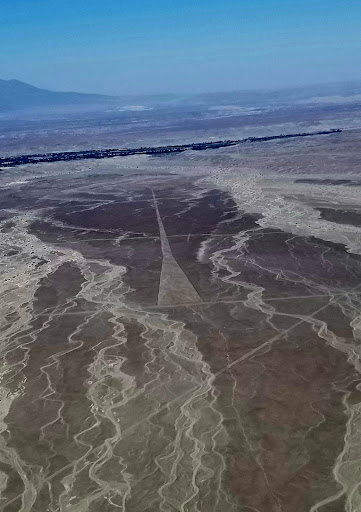
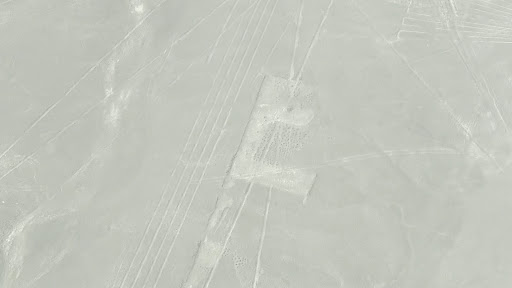
From the air, it is possible to see 70 different plant and animal drawings as well as hundreds of lines and other geometrical shapes. Some of these lines stretch as long as 10 kilometers, and they are spread over hundreds of square kilometers. Most notable among the figures are a lizard measuring 180 meters long, a condor with a 130-meter wingspan, and several others that include a monkey, hummingbird, killer whale, and spider.
Although it is not known exactly who created the lines or how and why, theories hold that the lines were the product of the Paracas and Nazca cultures sometime between 900 BC and AD 600. Why they were created is the subject of much debate. Some of the theories put forward suggest the lines were a type of astronomical calendar for agriculture, an alien landing pad, a running track, walkways joining ceremonial sites, or part of a water cult.
The lines were created by removing the dark surface layer of stones and piling them at the sides of the lines, creating a contrast between the dark stones and the exposed lighter soil below. Flights can be booked in advance or on a walk-in, first-come first-serve basis.
Approximately four kilometers outside of Nazca are the Cantalloc Aqueducts. Built around AD 300 to 600, the aqueducts were designed to provide a year-round water source for the area. They conduct water from the mountain springs down to Nazca by means of underground canals. Some of the Cantalloc Aqueducts are still used by farmers in the area.
Also of interest in the area is the Cemetery of Chauchilla, which contains Nazca remains and mummies. It's a...
Read moreThe mysterious Nazca lines are an unusual sight that will leave visitors with a sense of awe. These huge images on the desert floor were relatively undiscovered until planes flying over the area in the 1920s saw the lines from the air and realized they formed distinct patterns and images. Until that time there was some recognition of the hillside drawings near Nazca and Paracas, which can be seen from ground level. However, the huge drawings on the flat desert floor are so large that it requires an aerial view to be appreciated. From the air, it is possible to see 70 different plant and animal drawings as well as hundreds of lines and other geometrical shapes. Some of these lines stretch as long as 10 kilometers, and they are spread over hundreds of square kilometers. Most notable among the figures are a lizard measuring 180 meters long, a condor with a 130-meter wingspan, and several others that include a monkey, hummingbird, killer whale, and spider. Although it is not known exactly who created the lines or how and why, theories hold that the lines were the product of the Paracas and Nazca cultures sometime between 900 BC and AD 600. Why they were created is the subject of much debate. Some of the theories put forward suggest the lines were a type of astronomical calendar for agriculture, an alien landing pad, a running track, walkways joining ceremonial sites, or part of a water cult. The lines were created by removing the dark surface layer of stones and piling them at the sides of the lines, creating a contrast between the dark stones and the exposed lighter soil below. Flights can be booked in advance or on a walk-in, first-come first-serve basis. Approximately four kilometers outside of Nazca are the Cantalloc Aqueducts. Built around AD 300 to 600, the aqueducts were designed to provide a year-round water source for the area. They conduct water from the mountain springs down to Nazca by means of underground canals. Some of the Cantalloc Aqueducts are still used by farmers in the area. Also of interest in the area is the Cemetery of Chauchilla, which contains Nazca...
Read moreThis is an ANCIENT World Heritage Site. Don't expect everything to be spiffed up. The terraglyphs aren't all in perfect shape. Some of the oldest are 'deteriorated' because they're (like) ANCIENT, (man). Catch my drift? You'll meet every type of psycho-tourist and teeny-bopper wanna-be here. Some tour guides have their pet theories about the Nazca which they love to repeat over and over in really cool sunglasses. Want to know the main ideas researchers have about the lines and the people? There's a great movie that runs repeatedly at the airport for FREE. It tells the story of what is known along with some competing ideas that are disputed. Not everything is cut-and-dried. Book a flight with a reputable air transport company. Saving a few Soles on a taxi in town is great, but don't do that in the air. Research the Nazca and the airlines BEFORE you come. See the movie while you wait for your flight with a reputable company on your first day in Nazca, and get INSPIRED! This is an amazing place. One of the most amazing in the world. Enjoy it now before it's destroyed by so-called eco-tourism. NOTE: So your photos 'come out,' edit them by turning down the brightness and turning up the contrast. (AFTER the flight!) Postnote: I've read some of the reviews. These are not Incan; they are Nazcan, pre-Incan! If you went to Nazca, stood on a tower by the road, and complained you couldn't see anything, you're a fool. You have to go up in a plane. Skip breakfast! Some people posted the lines were made by aliens. Some posted they definately weren't. Question: How do you know? Go see. Post a description of what you see and learn. No one cares about your opinion. Also, Google has the lines blocked. I don't know why, but you have to actually GO THERE to see the lines. Don't post...
Read more