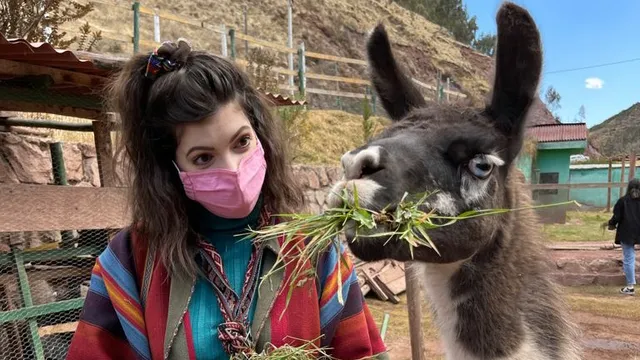
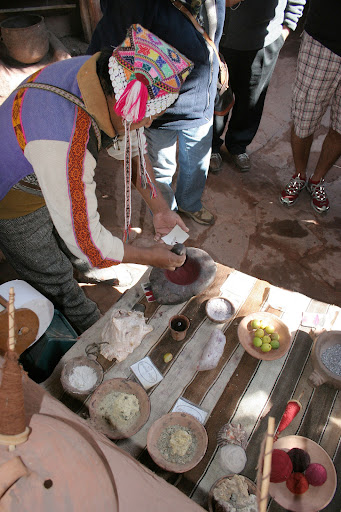
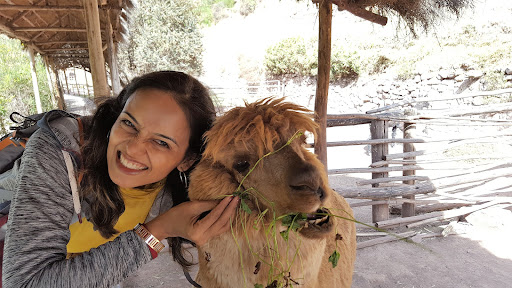
Awanakancha: Alpaca, Art & Andes You can’t travel to Peru without taking time to see animals native to the Andes. And, unless you plan on heading deep into the countryside, the very best (and easiest place) to see them is at Awanakancha, a small camelid farm dedicated to the animals and intricate textiles produced from their wool. Find out why you should take some time to visit! What to see On arrival at the farm, you will have the opportunity to meet the resident animals; alpaca, llama and Vicuña. Separated by species and sex in large pens, the friendly animals are keen to meet visitors in the hope of receiving a tasty grassy snack. After getting to know the animals, you can take some time to visit some of the small onsite exhibits, where you can understand how the animals wool is refined and naturally dyed, before finally being expertly woven into fabrics, tapestry’s, clothing or a variety of other products. Women from native communities offer live examples of traditional (and intricate) weaving techniques, using basic tools and wooden looms. Of-course as you would expect there is also an onsite shop selling the products that have been made at the farm. However, unlike most other markets and shops in Cusco and the Sacred Valley, the items up for sale are unique, very different from the standard things you find elsewhere and often very beautiful. If you are not tempted to buy anything, do take some time to wonder around the shop, as some of the items for sale are quite impressive. Look out for the large hand woven telas (weavings) that cost upwards of US$ 7,000 ea, and are crafted by one artist taking 6-7 months to complete. There are no onsite guides to show you around, as most people arrive at the farm as part of a pre-arranged guided tour of the Sacred Valley. However, do take some time to talk with the workers and animal keepers at the farm, as their insight is just as good if not more rewarding than listening to a guide. Where is it?
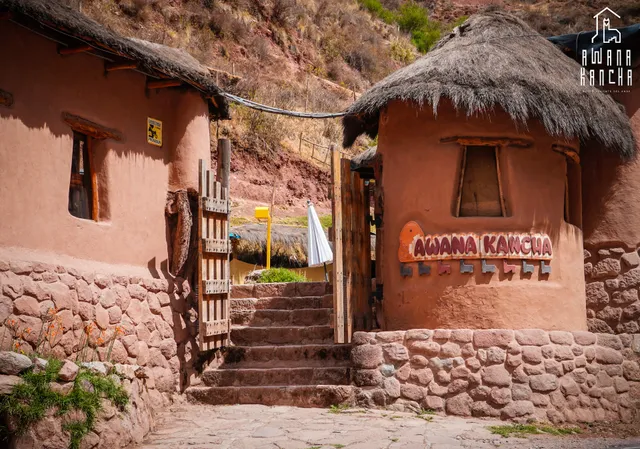
Awanakancha is located about two-thirds of the way to the Sacred Valley on the Cusco to Pisac road. From Cusco it takes about 30-40 minutes to get there, and from Pisac about 20 minutes. The compound of the farm is surrounded by a long brown adobe (mud) wall, which although would seem very obvious at the outset, can easily be missed if you are not familiar with the area. If you are on a bus, ask to be dropped off at Km. 23 on the Cusco – Pisac road. The official address is Km. 23 Pista Cusco- Pisac....
Read moreMUST VISIT FOR ANIMAL LOVERS!
Ohhh, we fell in love with this place!!! Originally planned to spend an hour, turned out to be almost half a day! It's totally worth it. The Llamas & Aplacas are so cute that you would wanna take back a bunch of them home :-) This is the most underrated place of interest near Cuzco, and you have to go there to believe it exists. Lot of historical information about the species, and you can watch locals weaving and play with their cute kids. You can also purchase local hand made stuff made from the Llama and Alpaca fur, and also there is a nice cute cafe to hang out. We took public transport which was pretty convenient though on the way back we were standing in the bus. We didnt mind one bit at all, as this was the best high light of our trip to Cuzco (after Machu Picchu of course!) Last word of caution - Preferably go on your own and avoid guided tours, as they will not allow you spend time feeding the Alpacas and Llamas. They will allow you to be here only for few minutes, and you would completely miss the local experience and the feeding and petting experience! You can feed them all for a small tip to the care taker, and he will provide you with bunch of grass that the Llamas and Alpacas love to feed on. Go and explore like a local - especially if you are an animal...
Read moreTook a s/3 bus trip heading toward Pisaq and got off early at Awana Kancha. First thing when we walked in a nice gentleman came up and asked us of we would like a guide. We said no and he kindly let us proceed pointing us in the direction of the museum first.
The museum is nicely set up and has the history and culture of Alpacas and Llamas in Spanish and English. The gentleman who asked to be our guide popped back up and was a pleasant surprise as he narrated the history as we went along in the museum (I think he also showed us around because a lot of items on display are in the open and it was an extra security measure). Regardless he was awesome.
Afterwards we fed the Alpacas and Llamas, took the typical selfies and went into the gift shop and bought s/20 worth of souvenirs as guilt purchases as the ranch survives completely off shop sales and donations. (Nobody was pushy about donations or purchases)
The items in the gift shop were the most authentic, but also the most expensive items I saw in Peru.
Definitely worth a stop!
*Side note: cost us s/50 to get back to Cusco by taxi, but our lack of patients for a combi and lack of Peruvian negotiating skills may have played a role...
Read more