San Guillermo Parish Church: A Testimonial to Resilience and Faith in Pampanga
To speak of the San Guillermo Parish Church in Bacolor, Pampanga, is to tell a story of profound resilience, unwavering faith, and the indelible mark of nature's raw power. It's not just a church; it's a living monument to the indomitable spirit of the Kapampangan people, a place steeped in history and countless personal memories.
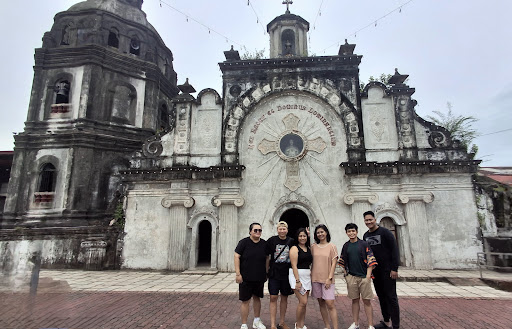
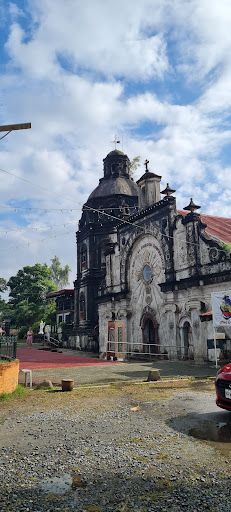
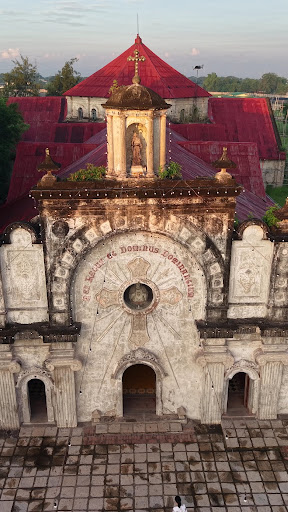
My first encounter with San Guillermo was in the early 2000s, long after the devastating eruption of Mount Pinatubo in 1991. Even then, the sight was striking. The church, originally a grand and imposing structure, stood with its lower half buried under meters of solidified lahar. It was surreal – windows that were once high above ground now served as entryways, and the once-soaring ceiling felt suddenly within arm's reach. It felt like stepping into a half-submerged world, a poignant reminder of the catastrophe that reshaped the landscape and the lives of those in Bacolor.
The church's history predates the Pinatubo eruption by centuries. Founded by Augustinian friars in 1576, it stands on land once owned by Don Guillermo Manabat, a wealthy landlord believed to be the founder of Bacolor. For centuries, it served as the spiritual heart of the town, witnessing countless baptisms, weddings, and funerals. It bore witness to the ebb and flow of colonial rule, surviving earthquakes and other natural calamities, only to be rebuilt each time, a testament to its enduring significance. I recall reading about its Baroque architecture, the intricate designs, and the once-gilded altars, all contributing to its former grandeur.
But it was the 1991 Pinatubo eruption, and the subsequent lahar flows in 1995, that truly cemented San Guillermo's place in history and memory. The stories I heard from locals were harrowing – tales of families fleeing, of homes being swallowed by the mud, and of the desperate efforts to save precious religious artifacts from the church. Yet, amidst the despair, there was also an incredible display of community and faith. The fact that the people meticulously excavated the beautiful main and side altars, along with centuries-old statues, and painstakingly reassembled them within the remaining space of the church, speaks volumes. They didn't abandon their church; they adapted to its new reality.
For many, San Guillermo is more than just a place of worship; it's a symbol of hope. I've seen wedding ceremonies held there, the couples exchanging vows in a space that embodies overcoming adversity. The sight of faithful devotees kneeling in prayer, their voices echoing in the truncated nave, is always deeply moving. It reminds you that faith can literally move mountains – or in this case, continue to thrive despite a mountain's fury.
The small museum next door, detailing the church's extraordinary journey through photographs and artifacts, is a powerful complement to the visit. It helps to contextualize the scale of the disaster and the sheer determination of the community to reclaim their heritage.
Visiting San Guillermo Parish Church today is a deeply reflective experience. It forces you to confront the power of nature, but more importantly, it showcases the immense strength of human spirit and belief. It's a place where history isn't just read in books, but is felt in the very ground beneath your feet, a poignant reminder that even when buried, faith and memory find a way to rise again. It truly is a unique and unforgettable landmark in the heart...
Read more
 Learn more insights from Wanderboat AI.