AVOID AT ALL COST. SHOULD BE CLOSED TO THE PUBLIC
I went here with my sister and a friend. The whole system is rigged to trap tourists from top down.
In all honesty nothing moves here without money. Every 200 feet or so, one has to spill out money to get to your uphill destination.
Bring lots of change with you as you would need it
There is a 50 pesos admission fee for the Philippine government officer at the building entrance however this agency does absolutely nothing other than collect the money and the office condone the behavior of the natives.
Avoid at all cost. We had to pay so much tips to everyone from landing to reaching the top of the mountain. By the time you reach the top you had to spill hundreds and hundreds of pesos. Everybody's hands were out to our face for money. we will NEVER EVER COME BACK HERE AGAIN.
Also the "GUIDE" that you pay (500 pesos) to be with you is NOT A GUIDE at all. He is FAKE. He does not speak English, in fact he does not SPEAK AT ALL. They have no knowledge of the mountain and no oral facts to mutter. They should call them something else but not def not guide. When you reach the top you had to pay your "guide" for drinks and/or food (more money).
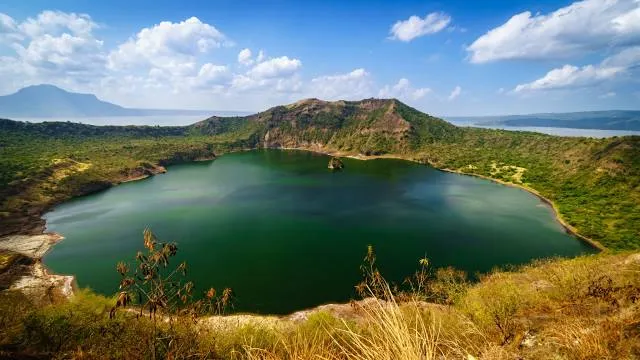
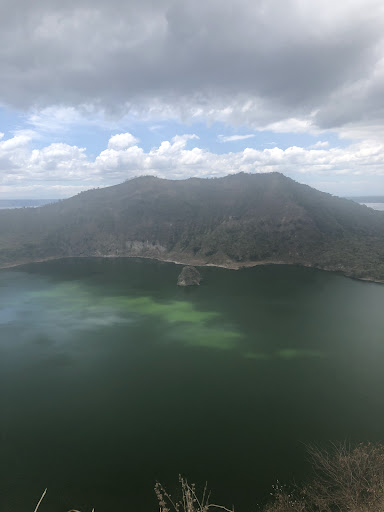
At the top view when you think it's going to be pristine, we were rewarded with peasants with shacks selling items to tourists (more money). They even encourage you to play golf into the crater for more money and pollute the volcano (ok with the government to do this?). I was not happy to see how polluted the top of the volcano was with heavy humans and dogs infestations. Any natural flora and fauna usually found on volcanoes have been wiped out by the presence of these people. Where is the agency that is suppose to protect this place?
On your way down they sell you your photograph taken secretly without your knowledge (more money).
Now let me talk about the horses. They are abused, malnourished and have open wound bloody sores with flies. I decided NOT TO RIDE a horse because of that pure ETHICAL AND MORAL concern period! Money was not an object but OMG these animals are small and are forced to carry fattened humans uphill. They need to stop this really.
WOULD NOT RECOMMEND THIS. I felt sorry for the foreign tourists visiting this messy place with lack of environmental concerns to the place (why destroy the place that feeds you? They need a real biologist and geologist (not a barrio official) to teach these self run self taught indigenous tribe on BASIC PARK MANAGEMENT)
Shame on the Philippine Interior Department for not implementing laws that are on the books, for not posting brown information posts for tourists to read, shame on them for not educating the locals in proper ways of protecting what could be an awesome place to visit, shame on them for lack of animal welfare, shame on them for not educating the masses to stop putting out their hands to tourists for money every step of the way
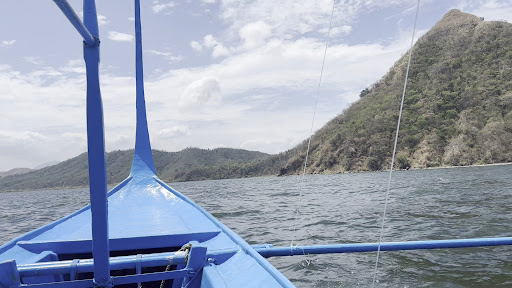
When we were leaving the place, we walked to our boat to finally leave this miserable island but the boat driver told us we can't leave unless we pay his cousin money to push our boat into the water. That was my final straw and I lost it and told them that this culture of asking for money non stop was like being in the slums of Manila with peasants asking you for money non stop. The place was NOT...
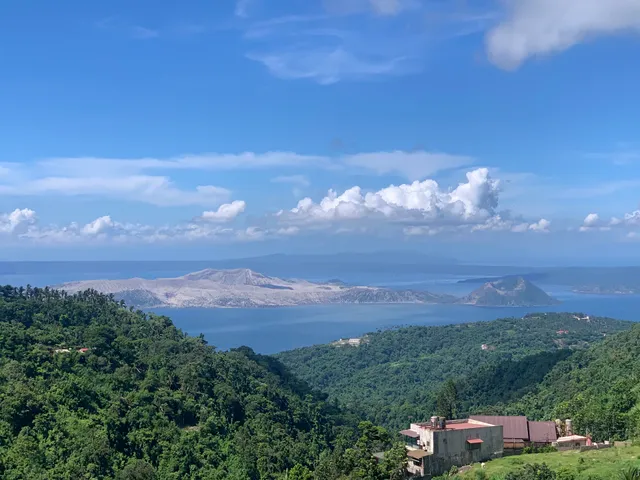
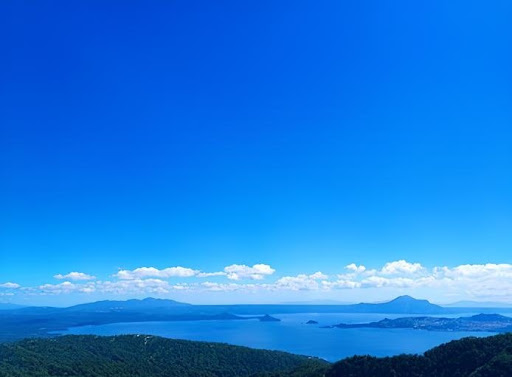
Read moreFebruary 2012 I made a Taxi Journey to this Volcano. It was a bit of a disaster because the taxi driver ( who was recommended to me by the hotel was just wanting to make extra money on the trip by taking me his favourite restaurant ( so he said ) who then tried to get me to take a boat trip at some extortionate rate which I declined so I never actually got to visit the Island that the volcano was on. Taal Volcano is a volcano located on the island of Luzon in the Philippines. It is the second most active volcano in the Philippines with 33 historical eruptions. All of these eruptions are concentrated on the Volcano Island, an island near the middle of Taal Lake. The lake partially fills Taal Caldera, which was formed by prehistoric eruptions. If viewed from Tagaytay Ridge, Taal Volcano and the Lake presents one of the most picturesque and attractive views in the Philippines. It is located about 50 kilometres ( 31 miles ) south of the capital of the country the city of Manila. The volcano had several violent eruptions in the past causing loss of life in the island and the populated areas surrounding the lake, with the death toll estimated at around 5,000 to 6,000 people. Because of its proximity to populated areas and its eruptive history, the volcano was designated a Decade Volcano, worthy of close study to prevent future natural disasters. All volcanoes of the Philippines are part of the Pacific Ring of Fire. Thirty three eruptions have been recorded since 1572 at Taal Volcano, mostly on Volcano Island. Occasional violent activity, however such as the 1754 plinian eruption, affected the entire region, including what is now the Metro Manila area with substantial fallout. Some activity, such as the 1749 eruption, were accompanied by crustal disturbance and strong earthquakes, which generated ground fissures and pronounced subsidence that extended across Taal lake. Taal Volcano ( 2½ hours from Manila ) is regarded the world’s smallest active volcano and one of its deadliest. It also has the unusual distinction of being the world's only volcano within a lake within a volcano within a lake within a volcano. The largest lake is inside a large volcanic caldera that was produced hundreds of thousands of years ago by a catastrophic eruption by a super volcano that was thousands of times larger than Krakatoa, or Krakatau, which is a volcanic island situated in the Sunda Strait between the islands of Java and Sumatra in the Indonesian province of Lampung. Inside the lake is a smaller volcano and lake with a small island topped by a relatively new...
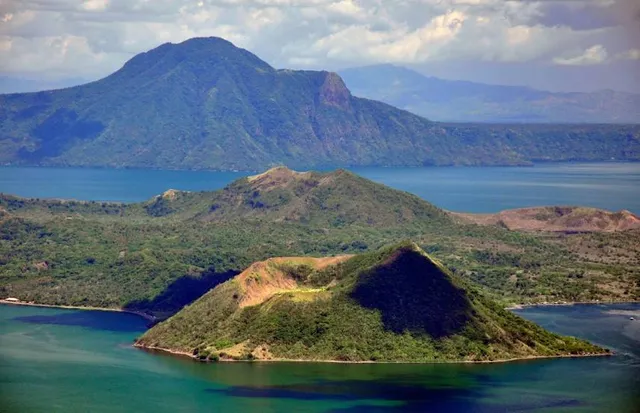
Read moreActually the volcano itself and the view from up there were worth the trip. However, keep in mind that you can only reach the inner island and therewith the top of the volcano by a boat ride (10 minutes) followed by a 30 minute walk.
Don‘t be shocked by what awaits you at Taal island. Unfortunately somehow people there are trying to make their living by taking the tourists money for ‚guided tours’ to the top. If you wish, you can even take one of the approximately 500 horses that are kept on the island to offer unsuspecting tourists a ‚unique’ experience. However, taking a ride to the top might, in fact, leave you feeling pity for the poor donkey–like animals, that don‘t make the healthiest impression as they have to climb up and down a trodden path at temperatures as high as 37 degrees celsius.
For your visit at Taal you will, however, have to bring quite some money as you have to pay several fees: a resort fee (that is most certainly not used for retaining a healthy environment or for other ecological purposes), a fee for an extra guide ... of course horsebackriding will also cost you and don’t forget to bring some extra money as you will get the possibility to buy your horseguide something to drink, a framed picture of your exciting ride, souvenirs, fruit and softdrinks.
Thus, I could not complain that I did not get enough possibilities to spend my money at Taal volcano - nontheless this experience left me feeling bad for nature, animals and people, and, after all, it made me regret my choice going to Taal... Supporting the desperate attempt of making money from exploiting people, animals and nature is definitely not the right way helping a country develop its tourism industry. The experience from Taal gets once more negatively effected when you know that the Philippines and its people have so much more to offer that has to be discovered - especially when you are over for a short holiday visit only.
What might make a trip to Taal more enjoyable/worthwhile is going there on your own (of course you still depend on someone who gives you a boat ride to get there). Passing by the aggressive ‚salesmen‘ and taking a walk up to the top by yourself is neither risky nor excessively exhausting if you bring some physical condition and don‘t suffer from aches or pain in your...
Read more