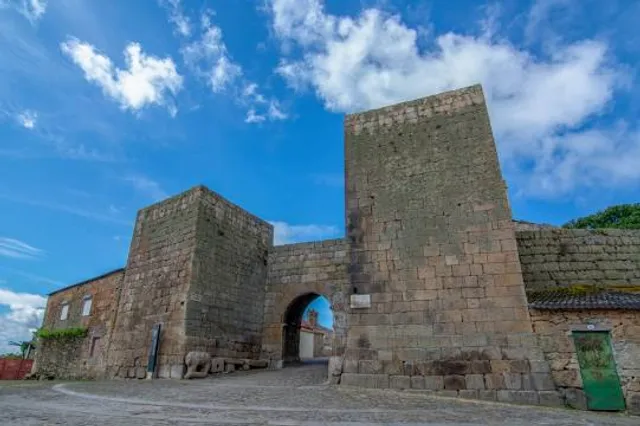
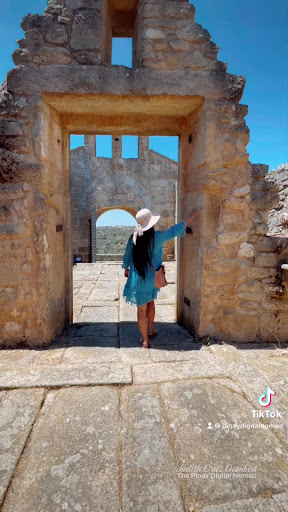
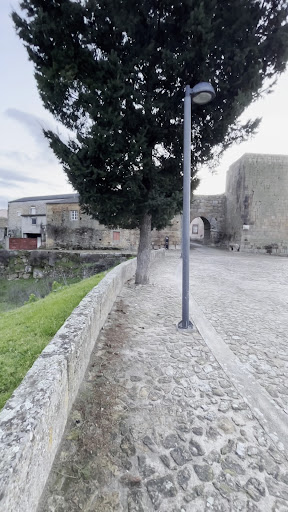
Castelo Mendo is part of Portuguese historic villages. First of all, there is no castle, at least not anymore. There was a castle once, and this can be deduced as soon as you see the outer walls, which surround the village. At the top, where the castle used to be, there is a terrace where you can still see the magnificent ruin of a small and old christian church, the same one that would be inside the castle. Still on the terrace, some gigantic raw granite stones would be part of the floor inside the castle, and one must understand there was no concept of a flat floor inside many Portuguese castles, so people were tough in those times.
Chatting with the owner of a nearby coffee shop, I understood the reason for so many closed habitacional houses in the village since there has been a steady population decline over decades, that is, less and less people live there, about 50, he said.
Anyway, the surrounding are beautiful and worth to be admired and, depending on the daylight falling into the valleys, there are many nuances that fill our eyes. A very nice place to visit indeed, just don't go there with very high...
Read moreI love history so much i think this is my top favourite medieval village, its well preserved and i felt like im in a movie set. This is super underrated place… i only see one tourist. If you want a calm place this is one of them.
For Virtual Travel Video of this place search for my youtube channel “WORLD NATURE VIDEO”
For BTS search for “ THE PINAY...
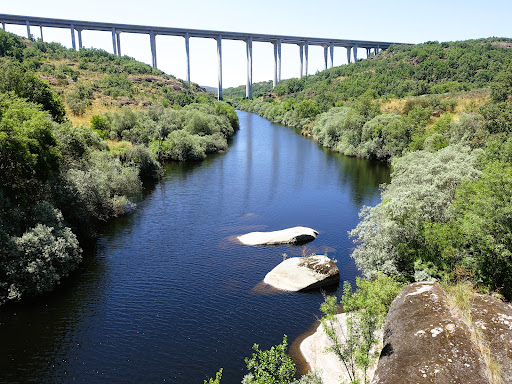
Read morePor a N16 que une Castelo Mendo con Castelo Bom atravesamos, a medio camiño, a ponte de São Roque sobre o río Côa e, por riba dela, o viaduto da autoestrada que visto desde abaixo é impresionante con case 40 metros de altura. Entretecendo as súas rúas empedradas nun outeiro rochoso, entre restos dun recinto gótico con porta principal flanqueada por dúas torres, a vila de Castelo Mendo conserva vestixios dun pasado florecente: algúns edificios renacentistas ou da época da dominación española e unha igrexa do século XVIII fronte da que destaca a picota máis alta da provincia (7 m.) do século XVI, octogonal e coroada por unha gaiola de seis pequenas columnas. Na porta principal, vemos dous magníficos exemplares de Verracos vetones (estatuas deste pobo celta). Dende o alto, onde accedemos ás torres da muralla e ás antigas ruínas da igrexa do castelo, a vista esténdese cara ao sur sobre o estreito val do río Côa. Tamén observamos os antiquísimos túmulos (como a sepultura do Fidalgo), as cisternas para almacenar augas da choiva e o “penedo...
Read more