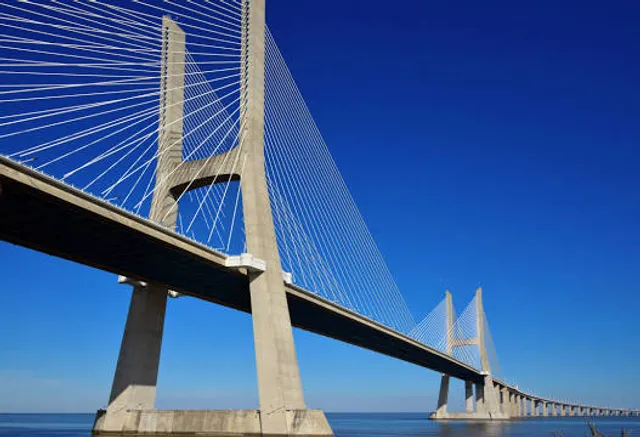
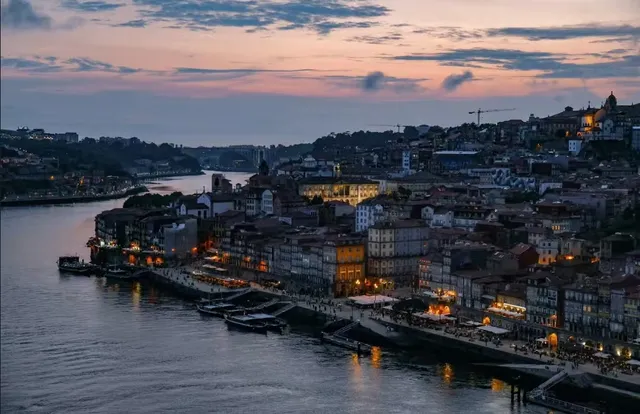
The Vasco da Gama Bridge, located in Lisbon, Portugal, is an impressive feat of modern engineering and one of the largest bridges in Europe. Straddling the Tagus River, it stretches for 17 kilometres (10.5 miles) and serves as a vital link between Lisbon and its surroundings, particularly with the southern part of the country. Driving across the bridge provides a unique experience, as the view of the river and Lisbon's skyline changes dramatically as you cross. On a clear day, you can glimpse the Atlantic Ocean and the extensive Portuguese coastline. It is particularly fascinating during sunset, when the golden light reflects on the water, creating a picturesque scene.
Functionally, the Vasco da Gama Bridge is crucial to reducing traffic congestion in Lisbon, providing an alternative route to the traditional 25 de Abril Bridge. It efficiently facilitates both local traffic and international connections, contributing to the economic development of the region.
In terms of construction, the bridge is an engineering marvel, with its completion in 1998 marking a significant milestone for Portugal's infrastructure. It is known for its resilience and ability to withstand adverse weather conditions, as well as its architectural importance.
In short, the Vasco da Gama Bridge is not only a vital piece of infrastructure, but also a visual and engineering landmark. It is worth a try for those who appreciate the practical and aesthetic value of modern bridges. Whether you are a local or a visitor, crossing this bridge offers a memorable and scenic journey across one of Portugal's most...
Read moreThe Vasco da Gama Bridge (Portuguese: Ponte Vasco da Gama; pronounced ˈpõt(ɨ) ˈvaʃku dɐ ˈɡɐmɐ]) is a cable-stayed bridge flanked by viaducts and rangeviews that spans the Tagus River in Parque das Nações in Lisbon, the capital of Portugal.
It is the second longest bridge in Europe after transcontinental the Crimean Bridge[6], and the longest bridge entirely within Europe, the third longest including viaducts,[7 with a total length of 12.3 kilometres (7.6 mi), including 0.8 kilometres (0.50 mi) for the main bridge and 11.5 kilometres (7.1 mi) in viaducts.[3] The Bridge is served by 4.8 kilometres (3.0 mi) of dedicated access roads.[3] It was built to alleviate the congestion on Lisbon's 25 de Abril Bridge, and eliminate the need for traffic between the country's northern and southern regions to pass through the capital city.[9]
Construction began on February 1995; the bridge was opened to traffic on 29 March 1998, just in time for Expo 98, the World's Fair that celebrated the 500th anniversary of the discovery by Vasco da Gama of the sea route from...
Read moreA place to admire engineering minds, river, sky and freedom :)
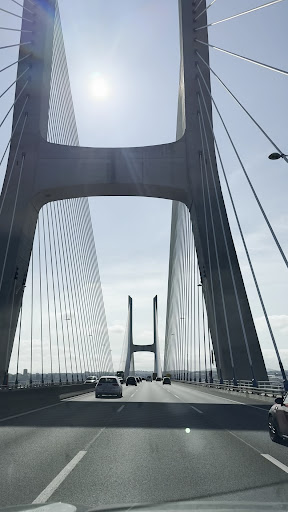
Since we had a two-week tour around the whole country and were accompanied by our rented road friend Seat Ibiza we were completely free in planning our itinerary and follow our schedule :). This bridge was travelled through by us three times when we went to Evora, Estremoz and finally, to Faro. Every time we admired how magnificent is the atmosphere all around there, even when there was some outcast - no matter :). Very transparent almost airy constructive elements, visibility is nearly infinite and your perception of freedom is just close to your wheels :). Definitely, brilliant engineering minds worked on that. Every time you drive over it you could see that everything is clean and well-maintained - many thanks to all supportive staff :). Genuine enjoyment to drive over it - try by your own but be careful with your desires to take off...
Read more