HTML SitemapExplore
logo
Find Things to DoFind The Best Restaurants

Crișan-Vaca Monastery — Attraction in Ribița

Name
Crișan-Vaca Monastery
Description
Nearby attractions
Nearby restaurants
Nearby hotels
Related posts
Keywords
Crișan-Vaca Monastery tourism.Crișan-Vaca Monastery hotels.Crișan-Vaca Monastery bed and breakfast. flights to Crișan-Vaca Monastery.Crișan-Vaca Monastery attractions.Crișan-Vaca Monastery restaurants.Crișan-Vaca Monastery travel.Crișan-Vaca Monastery travel guide.Crișan-Vaca Monastery travel blog.Crișan-Vaca Monastery pictures.Crișan-Vaca Monastery photos.Crișan-Vaca Monastery travel tips.Crișan-Vaca Monastery maps.Crișan-Vaca Monastery things to do.
Crișan-Vaca Monastery things to do, attractions, restaurants, events info and trip planning
Crișan-Vaca Monastery
RomaniaHunedoaraRibițaCrișan-Vaca Monastery

Basic Info

Crișan-Vaca Monastery

DJ760, Crișan 337400, Romania
4.8(482)
Open 24 hours
Save
spot

Ratings & Description

Info

Cultural
Scenic
Relaxation
Family friendly
Off the beaten path
attractions: , restaurants:
logoLearn more insights from Wanderboat AI.
Phone
+40 254 683 742
Website
episcopiadevei.ro

Plan your stay

hotel
Pet-friendly Hotels in Ribița
Find a cozy hotel nearby and make it a full experience.
hotel
Affordable Hotels in Ribița
Find a cozy hotel nearby and make it a full experience.
hotel
The Coolest Hotels You Haven't Heard Of (Yet)
Find a cozy hotel nearby and make it a full experience.
hotel
Trending Stays Worth the Hype in Ribița
Find a cozy hotel nearby and make it a full experience.

Reviews

Get the Appoverlay
Get the AppOne tap to find yournext favorite spots!
Wanderboat LogoWanderboat

Your everyday Al companion for getaway ideas

CompanyAbout Us
InformationAI Trip PlannerSitemap
SocialXInstagramTiktokLinkedin
LegalTerms of ServicePrivacy Policy

Get the app

© 2025 Wanderboat. All rights reserved.
logo

Reviews of Crișan-Vaca Monastery

4.8
(482)
avatar
5.0
1y

The icon of Holy Mother with... three hands.

The Crișan Monastery is a new monastery, rebuilt in year 1992 on the site of the former old monastery called Vaca (Vaca means "Cow" in romanian language.

The monastery is located between 2 hills and there are two roads from the main road to the monastery: the first is closed to traffic, it is only for pilgrims and ends in 100 stairs before the monastery and the second, about 100 meters further down from the first, it is newly paved and has some very steep and quite dangerous sections.

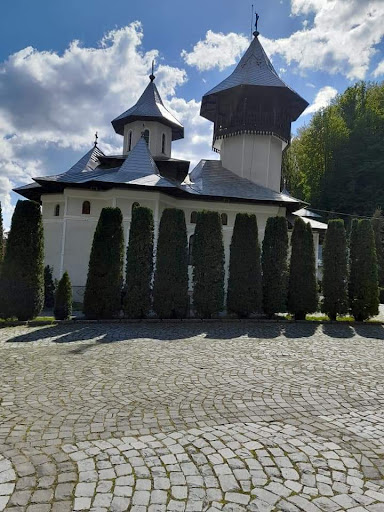
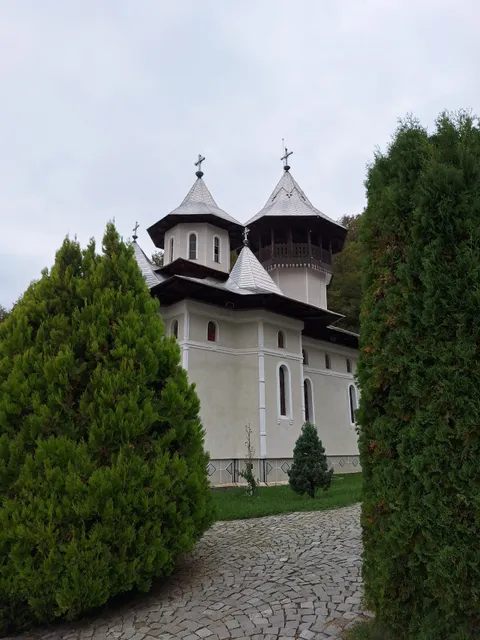
The monastery parking lot is large, and can accommodate about 100 cars and a few coaches. The monastery complex consists of 4 buildings: the first building, next to the parking lot, I assume is intended for monks - so it is a monastery of monks as you find out just now - , the second building contains the dining room where they can feed about 80 mouths at once and has rooms, on the first floor, probably also for pilgrims; the third building is the church of the monastery and the fourth building is the bell tower, the belfry, at the base of which is the shop with holy things for sale and the place to put diptyches and light candles.

We got there on an autumn Sunday morning, quite chilly, but the monastery courtyard was full of parishioners listening to the service. At first, I thought they were staying outside intentionally and I went in, I mean we wanted to enter the church. Although, from the outside, the church seems quite big, inside it cannot "crowde" more than 200 souls, if they stick to each other, like fish in a can.

It was the same when we tried to enter: the people were sitting in the small church, soul to soul, not body to body, and when we opened the door to enter, we were greeted by several angry faces that we were going to crowd them in even more. But we were lucky that 3 "believers" came out and so we managed to get 5 "sinners" in.

The church is very nicely painted, in typical Orthodox style, using dark colors which makes it not too bright. There is a box in the church with 40 relics, arranged in groups of 4 on a small disc, the size of a coat button, from old style, visible to senior parishioners only with the help of glasses. But the main thing is to worship and believe, it doesn't matter how big or small the relics are, in my opinion.

The icon with the Holy Mother is on the right side in the church, and the third hand in the icon is painted at the bottom. This is the hand of a believer, saint John Damascene, who was punished for his faith by cutting off his hand and the legend says that the Holy Mother put her hand on him back. That's the reason why that 3-rd hand appears in the painting.

In the front of the church is a lake with many water lilies. The recommendation is not to jump into the lake, even if you see that the water is turbid, because you will not escape alive from diseases or sins, but maybe fate will be against you and the end will be unhappy gor you. It is by no means a wonderful or healing lake, although it is quite beautiful, full of water lilies and surrounded by flowers.

The souvenir shop is quite big and the holy ones displayed are much less than the available space but you can find almost everything you want, from books to bracelets and myrrh. Next to the gift shop is where the candles are lit, mislabeled DEADS instead of SLEEPINGS as if judgment has already been done.

Behind the church there are some of the ruins of the old monastery and the toilets wich are - very clean. Also there is the alley with the many stairs that lead to the main entrance of the monastery, to the main road. The landscape is beautiful and if it is sunny, the church of the monastery may resemble a bride, painted in bright white bathed by the sun's rays.

Almost every Sunday pilgrims come by coach or coaches and that is why, that days it is very crowded. If you want to visit the monastery in peace, to meditate on the holy things in the silence of the place, which is very beautiful, avoid visiting the monastery on Sunday mornings or on holidays.

Have...

   Read more

avatar
5.0
3y

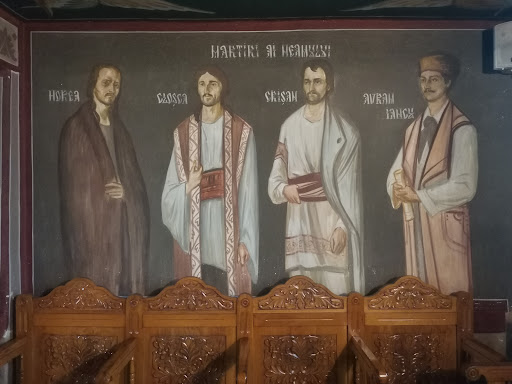
Mănăstirea Crișan datează din jurul anului 1450, fiind singura mănăstire din Țara Zarandului cu atestare documentară. A fost numită de-a lungul timpului „Vaca”, după numele satului din apropiere în care s-a născut căpitanul Gheorghe Crișan, unul dintre cei trei eroi ai răscoalei țărănești din anul 1784, condusă de Horea, Cloșca și Crișan. Moții fiind români foarte patrioți și mari luptători pentru drepturi sociale și naționale, au pictat și în biserica de aici pe cei trei conducători ai Răscoalei de la 1784, Horea, Cloșca și Crișan, dar și pe Crăișorul Munților, Avram Iancu. Biserica, ridicată din piatră și cărămidă, trecând de-a lungul vremii prin mai multe faze de distrugere, la ultima menționare a mănăstirii, din anul 1772, e amintită doar ca ruina. Ieromonahul Visarion Neag, născut pe aceste meleaguri, a luat inițiativa reînființării mănăstirii, reluând după o întrerupere de peste două secole, viața monahală a...

   Read more
avatar
1.0
3y

Nu sunt poate cel mai mare credincios insa experienta mea ca și om fata de acest loc mie personal mia lăsat de dorit.

Pe scurt: Am ajuns în același timp cu un grup care venise cu autocarul acolo și sa nimerit sa mergem în același timp (într-o duminica)... ce nu mia plăcut a fost interacțiunea cu oameni... adică cei 2 preoți sau ce or fi fost ei în loc sa ne spună și noua câteva cuvinte despre loc, mănăstire și asa mai departe sau dus direct în căsuța cu suveniruri și pomelnice unde ne așteptau ca pe niște vaci care merg în ciurda. Ma așteptăm la altceva din partea lor... totuși ca și loc, peisaj, îngrijire arata foarte bine. Recomand ca și peisaj cât despre interacțiunea cu oameni... am impresia ca am fost doar niște donatori.

Repet... am fost în același timp cu un grup care a coborât dintr-un autocar nu am fost doar 5-10 persoane.

Meritam și noi putina atenție nu sa fim doar plătitori de pomelnic...

   Read more
Page 1 of 7
Previous
Next

Posts

Eddy BEddy B
The icon of Holy Mother with... three hands. The Crișan Monastery is a new monastery, rebuilt in year 1992 on the site of the former old monastery called Vaca (Vaca means "Cow" in romanian language. The monastery is located between 2 hills and there are two roads from the main road to the monastery: the first is closed to traffic, it is only for pilgrims and ends in 100 stairs before the monastery and the second, about 100 meters further down from the first, it is newly paved and has some very steep and quite dangerous sections. The monastery parking lot is large, and can accommodate about 100 cars and a few coaches. The monastery complex consists of 4 buildings: the first building, next to the parking lot, I assume is intended for monks - so it is a monastery of monks as you find out just now - , the second building contains the dining room where they can feed about 80 mouths at once and has rooms, on the first floor, probably also for pilgrims; the third building is the church of the monastery and the fourth building is the bell tower, the belfry, at the base of which is the shop with holy things for sale and the place to put diptyches and light candles. We got there on an autumn Sunday morning, quite chilly, but the monastery courtyard was full of parishioners listening to the service. At first, I thought they were staying outside intentionally and I went in, I mean we wanted to enter the church. Although, from the outside, the church seems quite big, inside it cannot "crowde" more than 200 souls, if they stick to each other, like fish in a can. It was the same when we tried to enter: the people were sitting in the small church, soul to soul, not body to body, and when we opened the door to enter, we were greeted by several angry faces that we were going to crowd them in even more. But we were lucky that 3 "believers" came out and so we managed to get 5 "sinners" in. The church is very nicely painted, in typical Orthodox style, using dark colors which makes it not too bright. There is a box in the church with 40 relics, arranged in groups of 4 on a small disc, the size of a coat button, from old style, visible to senior parishioners only with the help of glasses. But the main thing is to worship and believe, it doesn't matter how big or small the relics are, in my opinion. The icon with the Holy Mother is on the right side in the church, and the third hand in the icon is painted at the bottom. This is the hand of a believer, saint John Damascene, who was punished for his faith by cutting off his hand and the legend says that the Holy Mother put her hand on him back. That's the reason why that 3-rd hand appears in the painting. In the front of the church is a lake with many water lilies. The recommendation is not to jump into the lake, even if you see that the water is turbid, because you will not escape alive from diseases or sins, but maybe fate will be against you and the end will be unhappy gor you. It is by no means a wonderful or healing lake, although it is quite beautiful, full of water lilies and surrounded by flowers. The souvenir shop is quite big and the holy ones displayed are much less than the available space but you can find almost everything you want, from books to bracelets and myrrh. Next to the gift shop is where the candles are lit, mislabeled DEADS instead of SLEEPINGS as if judgment has already been done. Behind the church there are some of the ruins of the old monastery and the toilets wich are - very clean. Also there is the alley with the many stairs that lead to the main entrance of the monastery, to the main road. The landscape is beautiful and if it is sunny, the church of the monastery may resemble a bride, painted in bright white bathed by the sun's rays. Almost every Sunday pilgrims come by coach or coaches and that is why, that days it is very crowded. If you want to visit the monastery in peace, to meditate on the holy things in the silence of the place, which is very beautiful, avoid visiting the monastery on Sunday mornings or on holidays. Have a nice visit!
Şerban - Claudiu BistriceanuŞerban - Claudiu Bistriceanu
Mănăstirea Crișan (sau „Vaca”), situată în satul Crișan, comuna Ribița, județul Hunedoara, este un așezământ ortodox cu tradiție seculară. Înființată în secolul al XVI‑lea prin eforturile localnicilor și cu sprijinul lui Mihai Viteazul și al Mănăstirii Prislop, a rezistat timp de aproape două secole până a fost părăsită și ruinată în secolul XVIII. Reconstruită din 1992 de ieromonahul Visarion Neag, reînviind viața monahală după peste două secole de întrerupere, ansamblul cuprinde o biserică din zid în formă de cruce, chilii, trapeză și un lac artificial cu nuferi ce adaugă liniște și frumusețe spațiului. Mănăstirea este un refugiu spiritual, unde slujbele atrag pelerini, iar picturile interioare prezintă figuri istorice ca Horea, Cloșca și Crișan.
Roxana Victoria DeaconescuRoxana Victoria Deaconescu
Manastirea Crisan, cunoscuta si sub denumirea de Manastirea Vaca, este o manastire ortodoxa situata in satul Crisan al comunei Ribita, judetul Hunedoara. Manastirea cu obste de calugari, intemeiata in secolul al XVI-lea, este situata la o distanta de aproximativ 7 km nord de Brad si la 46 km nord de Deva. Ansamblul monahal este situat pe deal, cu diferenta de nivel, si de aceea a fost necesar pentru constructia cladirilor sa se sparga si sa se niveleze malul dealului. Manastirea este o marturie a ortodoxiei romanesti pe atat de zbuciumatul pamant al Transilvaniei Ortodoxe. Biserica manastirii poarta hramul "Nasterea Maicii Domnului”.
See more posts
See more posts
hotel
Find your stay

Pet-friendly Hotels in Ribița

Find a cozy hotel nearby and make it a full experience.

The icon of Holy Mother with... three hands. The Crișan Monastery is a new monastery, rebuilt in year 1992 on the site of the former old monastery called Vaca (Vaca means "Cow" in romanian language. The monastery is located between 2 hills and there are two roads from the main road to the monastery: the first is closed to traffic, it is only for pilgrims and ends in 100 stairs before the monastery and the second, about 100 meters further down from the first, it is newly paved and has some very steep and quite dangerous sections. The monastery parking lot is large, and can accommodate about 100 cars and a few coaches. The monastery complex consists of 4 buildings: the first building, next to the parking lot, I assume is intended for monks - so it is a monastery of monks as you find out just now - , the second building contains the dining room where they can feed about 80 mouths at once and has rooms, on the first floor, probably also for pilgrims; the third building is the church of the monastery and the fourth building is the bell tower, the belfry, at the base of which is the shop with holy things for sale and the place to put diptyches and light candles. We got there on an autumn Sunday morning, quite chilly, but the monastery courtyard was full of parishioners listening to the service. At first, I thought they were staying outside intentionally and I went in, I mean we wanted to enter the church. Although, from the outside, the church seems quite big, inside it cannot "crowde" more than 200 souls, if they stick to each other, like fish in a can. It was the same when we tried to enter: the people were sitting in the small church, soul to soul, not body to body, and when we opened the door to enter, we were greeted by several angry faces that we were going to crowd them in even more. But we were lucky that 3 "believers" came out and so we managed to get 5 "sinners" in. The church is very nicely painted, in typical Orthodox style, using dark colors which makes it not too bright. There is a box in the church with 40 relics, arranged in groups of 4 on a small disc, the size of a coat button, from old style, visible to senior parishioners only with the help of glasses. But the main thing is to worship and believe, it doesn't matter how big or small the relics are, in my opinion. The icon with the Holy Mother is on the right side in the church, and the third hand in the icon is painted at the bottom. This is the hand of a believer, saint John Damascene, who was punished for his faith by cutting off his hand and the legend says that the Holy Mother put her hand on him back. That's the reason why that 3-rd hand appears in the painting. In the front of the church is a lake with many water lilies. The recommendation is not to jump into the lake, even if you see that the water is turbid, because you will not escape alive from diseases or sins, but maybe fate will be against you and the end will be unhappy gor you. It is by no means a wonderful or healing lake, although it is quite beautiful, full of water lilies and surrounded by flowers. The souvenir shop is quite big and the holy ones displayed are much less than the available space but you can find almost everything you want, from books to bracelets and myrrh. Next to the gift shop is where the candles are lit, mislabeled DEADS instead of SLEEPINGS as if judgment has already been done. Behind the church there are some of the ruins of the old monastery and the toilets wich are - very clean. Also there is the alley with the many stairs that lead to the main entrance of the monastery, to the main road. The landscape is beautiful and if it is sunny, the church of the monastery may resemble a bride, painted in bright white bathed by the sun's rays. Almost every Sunday pilgrims come by coach or coaches and that is why, that days it is very crowded. If you want to visit the monastery in peace, to meditate on the holy things in the silence of the place, which is very beautiful, avoid visiting the monastery on Sunday mornings or on holidays. Have a nice visit!
Eddy B

Eddy B

hotel
Find your stay

Affordable Hotels in Ribița

Find a cozy hotel nearby and make it a full experience.

Get the Appoverlay
Get the AppOne tap to find yournext favorite spots!
Mănăstirea Crișan (sau „Vaca”), situată în satul Crișan, comuna Ribița, județul Hunedoara, este un așezământ ortodox cu tradiție seculară. Înființată în secolul al XVI‑lea prin eforturile localnicilor și cu sprijinul lui Mihai Viteazul și al Mănăstirii Prislop, a rezistat timp de aproape două secole până a fost părăsită și ruinată în secolul XVIII. Reconstruită din 1992 de ieromonahul Visarion Neag, reînviind viața monahală după peste două secole de întrerupere, ansamblul cuprinde o biserică din zid în formă de cruce, chilii, trapeză și un lac artificial cu nuferi ce adaugă liniște și frumusețe spațiului. Mănăstirea este un refugiu spiritual, unde slujbele atrag pelerini, iar picturile interioare prezintă figuri istorice ca Horea, Cloșca și Crișan.
Şerban - Claudiu Bistriceanu

Şerban - Claudiu Bistriceanu

hotel
Find your stay

The Coolest Hotels You Haven't Heard Of (Yet)

Find a cozy hotel nearby and make it a full experience.

hotel
Find your stay

Trending Stays Worth the Hype in Ribița

Find a cozy hotel nearby and make it a full experience.

Manastirea Crisan, cunoscuta si sub denumirea de Manastirea Vaca, este o manastire ortodoxa situata in satul Crisan al comunei Ribita, judetul Hunedoara. Manastirea cu obste de calugari, intemeiata in secolul al XVI-lea, este situata la o distanta de aproximativ 7 km nord de Brad si la 46 km nord de Deva. Ansamblul monahal este situat pe deal, cu diferenta de nivel, si de aceea a fost necesar pentru constructia cladirilor sa se sparga si sa se niveleze malul dealului. Manastirea este o marturie a ortodoxiei romanesti pe atat de zbuciumatul pamant al Transilvaniei Ortodoxe. Biserica manastirii poarta hramul "Nasterea Maicii Domnului”.
Roxana Victoria Deaconescu

Roxana Victoria Deaconescu

See more posts
See more posts