Experts are still unable to determine the exact age of the lake - supposedly 25-35 million years, which is another mystery since lakes exist for about 10-15 thousand years and then turn into a swamp or dry out completely. Baikal, however, is not aging - on the contrary, researchers note that the process of formation of the unique lake is not yet finished. The banks of the lake diverge at a rate of 2 cm per year, which is why many experts hypothesize that Baikal is a nascent ocean. Another widely-discussed theory, developed by doctor of Geological-Mineralogical Sciences A. Tatarinov, suggests that the lake could be relatively young. And there is evidence, albeit indirect, that confirms it. After studying the material composition of the sediments and physicochemical processes in them, the researchers came to the conclusion that the shoreline of the lake is about 8000 years old, while the lake's deep-water area is about 150,000 years old.
There is still speculation about the lake’s origin.
Some believe that it was formed as an ancient rift valley when three individual basins united in the Precambrian period. In the initial stages of formation, the basins represented three bays of a Cambrian sea. The sea later retreated, which turned the bays into closed-off bodies of water. Over the subsequent years, erosion destroyed the barriers between them, resulting in the formation of a large basin. Others suggest that the Baikal basin was formed as a result of subsidence which is still ongoing. Many scientists explain the formation of Baikal by its location in the zone of an ancient tectonic fault; others assume there must be a giant fault in the Earth mantle below the lake; and others believe that the formation of the basin is connected with the tectonic processes (phenomena, such as earthquakes, that take place during crustal movements) resulted from the continental drift of Eurasia. Recent results obtained by the method of seismic tomography in the Laboratory of Geodynamics and Paleomagnetism of the Institute of Geology, Siberian Branch of RAS, allowed scientists to take a fresh look at this problem and propose a scheme of formation and evolution of the Baikal region. Thus, there is still no accurate data on the time of formation of Lake Baikal. There is also no evidence to suggest that it did not already exist in the Cenozoic era. The lake is located right in the heart of the Baikal rift zone - a fault in the earth's crust of the continental Eurasia. One of the consequences is high seismic activity, and the local heat flow anomalies within the limits of the Baikal basin are likely to be related to thermal dykes penetrating to different depths in the subsurface layer, deforming and breaking it. The process may have led to the formation of the mountain range...
Read moreLake Baikal, located in southern Siberia, Russia, is a UNESCO World Heritage Site renowned as the world's deepest and oldest freshwater lake. Estimated to be 25–30 million years old, it holds about 20% of the world’s unfrozen freshwater and reaches a depth of approximately 1,620 meters. Its ancient origins and exceptional biodiversity make it one of the most extraordinary natural wonders on Earth.
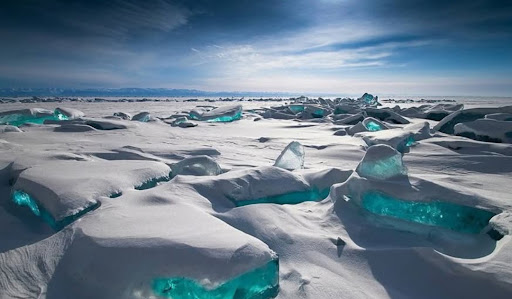
The lake is celebrated for its crystal-clear waters, offering remarkable visibility and showcasing a surreal underwater landscape. This pristine environment supports a unique ecosystem, with thousands of endemic species, including the iconic Baikal seal. In winter, the lake transforms into a mesmerizing spectacle of transparent ice formations, further enhancing its otherworldly beauty.
Surrounded by snow-capped mountains, dense taiga forests, and dramatic cliffs, Lake Baikal offers breathtaking scenery that shifts with the seasons. Summer invites visitors to hike scenic trails through Baikal National Park, with panoramic views of the lake and surrounding landscapes. In winter, activities like snowshoeing and ice exploration become popular.
Among its many attractions is Olkhon Island, the largest island within the lake. Known for its stunning natural beauty and cultural importance, the island provides insights into the traditions of the indigenous Buryat people, who have long revered Lake Baikal as a sacred site. Visitors can also explore the Baikal Museum in Listvyanka, which highlights the lake's unique ecosystem and rich history.
The lake's tranquil waters and diverse marine life make it an ideal destination for activities like boat tours, snorkeling, and diving. Nearby villages and towns, including Listvyanka, offer accommodations ranging from eco-friendly lodges to cozy guesthouses. Local restaurants serve traditional Siberian cuisine, including fresh fish caught from the lake.
Despite its remote location, Lake Baikal faces challenges from pollution, climate change, and unsustainable development, making conservation efforts crucial to preserving its natural and cultural heritage. In conclusion, Lake Baikal stands as a testament to the beauty and power of nature, offering a captivating blend of breathtaking landscapes, unique wildlife, and enriching cultural experiences for...
Read moreLake Baikal, located in Siberia, Russia, is the deepest and oldest freshwater lake in the world, known for its remarkable biodiversity and stunning natural beauty. It is a UNESCO World Heritage site and a key destination for nature lovers and adventurers.
Activities:
• Hiking and Trekking: • The surrounding Baikal National Park offers numerous trails, with opportunities for hiking in the summer and snowshoeing in the winter, providing stunning views of the lake and surrounding mountains. • Boat Tours: • Visitors can take boat tours to explore the lake’s unique features, including the picturesque Olkhon Island and the famous “Listvyanka” village. • Diving and Snorkeling: • Baikal is home to unique freshwater seals and diverse marine life, making it an intriguing spot for diving and snorkeling, particularly in the summer months.
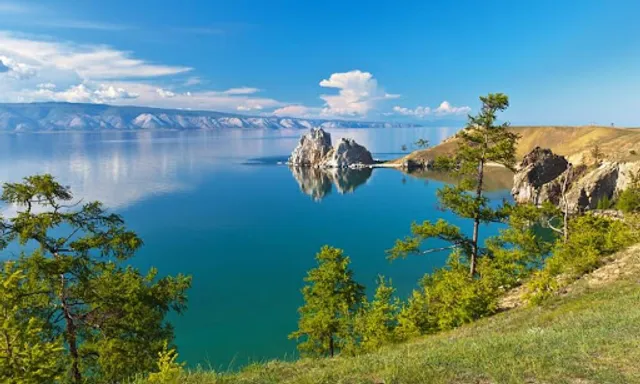
Scenery: Lake Baikal is famous for its breathtaking landscapes, featuring crystal-clear waters, rugged cliffs, and beautiful sunsets. The lake is surrounded by snow-capped mountains and dense forests, creating a serene and majestic atmosphere.
Cultural Attractions:
• Olkhon Island: The largest island in the lake, Olkhon is rich in cultural significance and offers a glimpse into local Buryat traditions, along with stunning natural scenery. • Baikal Museum: Located in Listvyanka, this museum provides insights into the lake’s unique ecosystem and history.
Visitor Amenities: The area around Lake Baikal features a variety of accommodations, from guesthouses and hotels to eco-lodges. Local restaurants serve traditional Siberian cuisine, including fresh fish from the lake.
Conclusion: Lake Baikal is a remarkable destination that offers a unique blend of natural beauty, adventure, and cultural experiences. Whether hiking its trails, exploring its depths, or enjoying the serene landscapes, it provides an unforgettable experience in one of the world’s most...
Read more