HTML SitemapExplore
logo
Find Things to DoFind The Best Restaurants

Kola Superdeep Borehole — Attraction in Murmansk Oblast

Name
Kola Superdeep Borehole
Description
The Kola Superdeep Borehole SG-3 is the result of a scientific drilling project of the Soviet Union in the Pechengsky District, near the Russian border with Norway, on the Kola Peninsula. The project attempted to drill as deep as possible into the Earth's crust.
Nearby attractions
Nearby restaurants
Nearby hotels
Related posts
Keywords
Kola Superdeep Borehole tourism.Kola Superdeep Borehole hotels.Kola Superdeep Borehole bed and breakfast. flights to Kola Superdeep Borehole.Kola Superdeep Borehole attractions.Kola Superdeep Borehole restaurants.Kola Superdeep Borehole travel.Kola Superdeep Borehole travel guide.Kola Superdeep Borehole travel blog.Kola Superdeep Borehole pictures.Kola Superdeep Borehole photos.Kola Superdeep Borehole travel tips.Kola Superdeep Borehole maps.Kola Superdeep Borehole things to do.
Kola Superdeep Borehole things to do, attractions, restaurants, events info and trip planning
Kola Superdeep Borehole
RussiaMurmansk OblastKola Superdeep Borehole

Basic Info

Kola Superdeep Borehole

Murmansk Oblast, Russia, 184430
4.5(346)
Open 24 hours
Save
spot

Ratings & Description

Info

The Kola Superdeep Borehole SG-3 is the result of a scientific drilling project of the Soviet Union in the Pechengsky District, near the Russian border with Norway, on the Kola Peninsula. The project attempted to drill as deep as possible into the Earth's crust.

Cultural
Adventure
Scenic
Off the beaten path
attractions: , restaurants:
logoLearn more insights from Wanderboat AI.

Plan your stay

hotel
Pet-friendly Hotels in Murmansk Oblast
Find a cozy hotel nearby and make it a full experience.
hotel
Affordable Hotels in Murmansk Oblast
Find a cozy hotel nearby and make it a full experience.
hotel
The Coolest Hotels You Haven't Heard Of (Yet)
Find a cozy hotel nearby and make it a full experience.
hotel
Trending Stays Worth the Hype in Murmansk Oblast
Find a cozy hotel nearby and make it a full experience.

Reviews

Get the Appoverlay
Get the AppOne tap to find yournext favorite spots!
Wanderboat LogoWanderboat

Your everyday Al companion for getaway ideas

CompanyAbout Us
InformationAI Trip PlannerSitemap
SocialXInstagramTiktokLinkedin
LegalTerms of ServicePrivacy Policy

Get the app

© 2025 Wanderboat. All rights reserved.
logo

Reviews of Kola Superdeep Borehole

4.5
(346)
avatar
5.0
4y

IT HAS BEEN SAID THAT the human race knows more about certain distant galaxies than it does about the ground that lies beneath its very feet. In fact, while it took the famous Voyager 1 satellite 26 years to exit our Solar System (relaying measurements to Earth from 16.5 billion km away), it took about the same amount of time for humanity to penetrate a mere 12 km into the Earth’s surface.

While the U.S. and U.S.S.R. vied for space exploration supremacy during the Space Race, a different, less-publicized race took place between the two nation’s greatest drillers. In the late 1950s and early 1960s Americans and Soviets began planning separate efforts to drill as deep as possible into the Earth’s crust, the rocky shell that comprises the outer 30-50 km of the 6730 km distance to our planet’s core.

The American “Project Mohole,” stationed off the Pacific coast of Mexico, was cut short in 1966 due to lack of funding but set an important precedent for future off-shore drilling programs. The Soviets, thanks to the planning of the Interdepartmental Scientific Council for the Study of the Earth’s Interior and Superdeep Drilling, had greater success. From 1970 to 1994 their drill on the Kola Peninsula chipped slowly away to create a Earth-shattering record at the time: the deepest hole in the world.

In actuality, the Kola Superdeep Borehole consists of several holes branching from one central hole. The deepest hole is called “SG-3,” and though just nine inches in diameter, it extends down a staggering 7.5 miles. That’s roughly a third of the way through the Baltic continental crust.

To meet scientific objectives and provide a nearly continuous look at the crust’s profile, the Soviets even developed instruments to take direct physical measurements at the bottom of the borehole. The drilling apparatus thus allowed for greater measurement integrity since rock samples would deform under their incredible internal pressure when brought to the surface. Needless to say, the project produced enormous amounts of geological data, most of which elucidated how little we know about our planet.

The study of the Earth is often largely limited to surface observations and seismic studies, but the Kola borehole allowed a direct look at the structure of the crust and put geologist’s theories to the test. One of the most surprising findings was the absence of the transition from granite to basalt, which scientists had long expected to exist between three and six kilometers below the surface. Known to geologists as the “Conrad discontinuity,” this transition in rock type was reasoned to exist due to the results of seismic-reflection surveys.

Though the discontinuity has been detected beneath all of the continents, the drill at Kola never encountered the proposed layer of basalt. Instead, the granitic rock was found to extend beyond the twelve kilometer point. This led to scientists’ realization that the seismic-reflection results were due to a metamorphic change in the rock (i.e. from intense heat and pressure), and not a change in rock type as they had previously anticipated.

But the most intriguing discovery made by the Kola borehole researchers is undoubtedly the detection of biological activity in rocks more than two billion years old. The clearest evidence of life came in the form of microscopic fossils encased in organic compounds that remained surprisingly intact despite the extreme pressures and temperatures of the surrounding rock.

While data produced by the Kola drilling project continues to be analyzed, the drilling itself was forced to stop in the early 1990s when unexpectedly high temperatures were encountered. While the temperature gradient conformed to predictions down to a depth of about 10,000 feet, temperatures after this point increased at a higher rate until they reached 180 °C (or 356 °F) at the bottom of the hole. This was a drastic difference from the expected 100 °C (212 °F). Also unexpected was a decrease in rock density after the first 14,800 feet. Beyond this point the rock had greater porosity and...

   Read more

avatar
5.0
1y

Everyone who is fond of scientific tourism has to see it. Unfortunately little is left there. Well anyway that site still has its own atmosphere. Did you know that scientists there in mid 80ss discovered that the Earth crust at the deep of about 6 km is identical to the lunar regolite? That was identified there alond with insuring the theory of the Moon being produced by an impacty event in very distant past. And it's the deepest human made hole in Earth's crust with an exact depth of 12262m. The path and entrance to the site remains free as of August 7th 2024. I hightly recommend this place to those who are interested in geology and the...

   Read more
avatar
5.0
7y

Corría el año 1970, cuando los científicos de la Unión Soviética empezaron a perforar el Kola Superdeep Borehole (Pozo súper profundo de Kola) en Murmansk, Rusia. El objetivo era aprender más cosas sobre la corteza terrestre y vencer así a los científicos estadounidenses que abandonaron el Proyecto Mohole en 1966.

Pasados 24 años de excavaciones y después de una serie de ramificaciones en el agujero, la sección de mayor profundidad de la Kola Superdeep Borehole se detuvo en 1994 a 12,262 metros. Cuenta con solo 22 centímetros de diámetro en la parte inferior.

Continúa siendo el agujero de más profundidad del planeta y el proceso para perforarlo fue de lo más complicado. Eso sí, no es el agujero de mayor longitud, pues en mayo de 2008, un pozo de petróleo le arrebató el record, pero no es tan subterráneo.

¿Qué encontraron los científicos?

Lo primero, mucha agua ahí abajo, aunque estaba formada por oxígeno extraño y átomos de hidrógeno extraídos de minerales rocosos. Se encontraron también fósiles de plancton a la sorprendente profundidad de 6700 metros.

Era un lugar muy caliente, alcanzando temperaturas de más de 176 ° centígrados. A pesar de todo el esfuerzo y décadas de trabajo, este agujero sólo supuso el 0,2% del camino que hay hacia el centro de la Tierra.

Se detuvieron los trabajos en 1992. El motivo fue que se hizo imposible técnicamente, el profundizar más en la corteza pues la temperatura de unos 180ºC , hacían fluir continuamente una masa de fango e hidrógeno.

En 2005 el proyecto se canceló por no tener más fondos y desde 2008 está abandonado. Existe una leyenda urbana que dice que los ruidos que a veces se escuchaban de su interior eran lloros y gritos. Todo esto dio lugar a muchas leyendas.  Entre ellas se decía que el Pozo Superprofundo de Kola llegaba hasta el mismo infierno y que los sonidos eran los lamentos de aquellos que estaban pagando por su penitencia en el infierno. Algo...

   Read more
Page 1 of 7
Previous
Next

Posts

Nikolay OsetskiyNikolay Osetskiy
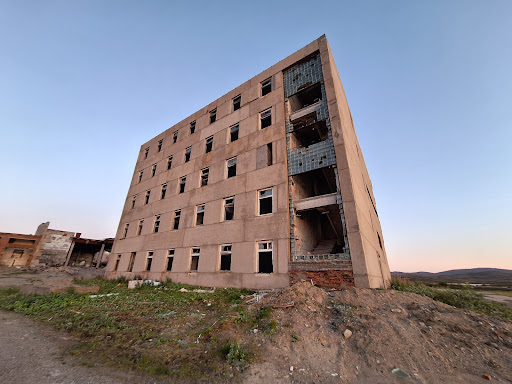
Everyone who is fond of scientific tourism has to see it. Unfortunately little is left there. Well anyway that site still has its own atmosphere. Did you know that scientists there in mid 80ss discovered that the Earth crust at the deep of about 6 km is identical to the lunar regolite? That was identified there alond with insuring the theory of the Moon being produced by an impacty event in very distant past. And it's the deepest human made hole in Earth's crust with an exact depth of 12262m. The path and entrance to the site remains free as of August 7th 2024. I hightly recommend this place to those who are interested in geology and the history of science.
Владимир Кирик (V.A.K.)Владимир Кирик (V.A.K.)
Научный туризм - рекомендую всем, кто увлекается историей науки. Невозможно побывать на Кольском полуострове и не совершить сталкер-тур к руинам Кольской сверхглубокой скважины - грандиозного объекта советской научной отрасли. Проект КСГ позволил человечеству проникнуть в земную кору на более чем 12 км, так глубоко, как никогда прежде, обогатив новым научным знанием целый ряд отраслей. Там, где раньше велись исследования, теперь руины и запустение, там, где было установлено научное оборудование, сквозь бетонные плиты пробивается трава. Атмосферно, но понимаешь, что ты фактически на руинах более развитой цивилизации. Это урок каждому поколению - именно научный поиск лежит в основе процветания государства и общества. Попечение о делах науки должно быть всенародным и общегосударственным! Об этом можно размышлять, совершая атмосферную прогулку по пустынным руинам и наблюдая следы былого.
Роман БорляковРоман Борляков
Из хорошего, природа, прогулка, приятные ощущения от того, что находишься около знаменательного места. Минусов конечно гора. Но это больше связано с нашей страной, которая давно превратилась в днище. Нет бы сделать музей, показать людям, как все было и заработать и показать труд людей и их быт. По дороге скажу одно, добраться можно только проехав немного от Заполярного, в сторону Никеля, выйти у насыпи и где стоит ЛЭП, которая собственно указывает дорогу до скважины. Пешком только там и по старой трассе электропередач, которая ведёт прямо до нужного вам места. Всем удачной прогулки.
See more posts
See more posts
hotel
Find your stay

Pet-friendly Hotels in Murmansk Oblast

Find a cozy hotel nearby and make it a full experience.

Everyone who is fond of scientific tourism has to see it. Unfortunately little is left there. Well anyway that site still has its own atmosphere. Did you know that scientists there in mid 80ss discovered that the Earth crust at the deep of about 6 km is identical to the lunar regolite? That was identified there alond with insuring the theory of the Moon being produced by an impacty event in very distant past. And it's the deepest human made hole in Earth's crust with an exact depth of 12262m. The path and entrance to the site remains free as of August 7th 2024. I hightly recommend this place to those who are interested in geology and the history of science.
Nikolay Osetskiy

Nikolay Osetskiy

hotel
Find your stay

Affordable Hotels in Murmansk Oblast

Find a cozy hotel nearby and make it a full experience.

Get the Appoverlay
Get the AppOne tap to find yournext favorite spots!
Научный туризм - рекомендую всем, кто увлекается историей науки. Невозможно побывать на Кольском полуострове и не совершить сталкер-тур к руинам Кольской сверхглубокой скважины - грандиозного объекта советской научной отрасли. Проект КСГ позволил человечеству проникнуть в земную кору на более чем 12 км, так глубоко, как никогда прежде, обогатив новым научным знанием целый ряд отраслей. Там, где раньше велись исследования, теперь руины и запустение, там, где было установлено научное оборудование, сквозь бетонные плиты пробивается трава. Атмосферно, но понимаешь, что ты фактически на руинах более развитой цивилизации. Это урок каждому поколению - именно научный поиск лежит в основе процветания государства и общества. Попечение о делах науки должно быть всенародным и общегосударственным! Об этом можно размышлять, совершая атмосферную прогулку по пустынным руинам и наблюдая следы былого.
Владимир Кирик (V.A.K.)

Владимир Кирик (V.A.K.)

hotel
Find your stay

The Coolest Hotels You Haven't Heard Of (Yet)

Find a cozy hotel nearby and make it a full experience.

hotel
Find your stay

Trending Stays Worth the Hype in Murmansk Oblast

Find a cozy hotel nearby and make it a full experience.

Из хорошего, природа, прогулка, приятные ощущения от того, что находишься около знаменательного места. Минусов конечно гора. Но это больше связано с нашей страной, которая давно превратилась в днище. Нет бы сделать музей, показать людям, как все было и заработать и показать труд людей и их быт. По дороге скажу одно, добраться можно только проехав немного от Заполярного, в сторону Никеля, выйти у насыпи и где стоит ЛЭП, которая собственно указывает дорогу до скважины. Пешком только там и по старой трассе электропередач, которая ведёт прямо до нужного вам места. Всем удачной прогулки.
Роман Борляков

Роман Борляков

See more posts
See more posts