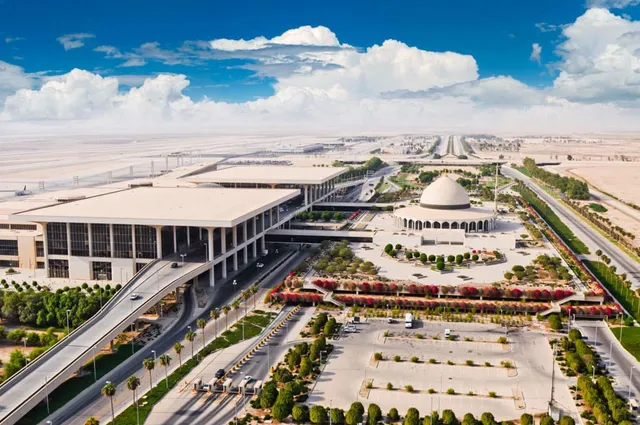
King Fahd International Airport (IATA: DMM, ICAO: OEDF), also known by the acronym KFIA, is a Saudi international airport near Dammam. It is the largest airport in the world in terms of area.The airport is an airline hub for the national carrier, Saudia.Design started in 1976. The site master plan was created by architecture company Yamasaki & Associates and Boeing Aerosystems International. This plan was completed in 1977. Construction began in 1983. The airport opened for business in November 1999.The airport's basic infrastructure was complete by the end of 1990. The General Authority of Civil Aviation of Saudi Arabia finally opened the new Dammam King Fahd International Airport on November 28, 1999 to commercial traffic. All airlines transferred their operations from Dhahran International Airport, which had been in use until then.KFIA is northwest of Dammam. It serves the entire Eastern Region of Saudi Arabia and the growing urban complex made up of Dammam, Dhahran, Al Khobar, Qatif, Ras Tanura and Jubail with a total population of about 2 million. The airport, in the Eastern Province of the country, is located between Qatif and Dammam, about 25 km (16 mi) away from Dammam. It is linked to population areas by two major roads. The northern exit links the airport with Qatif as a 4-lane highway. The southern exit links the Airport with Dammam as a 6-lane highway to King Fahd Road which is now considered as the main road to the airport. Abu Hadriyah Highway serves as the airport's eastern border whileThe Royal Terminal is reserved for the Saudi Royal Family, government , and official guests. The terminal was built on an area of 16,400 m² (176,528 ft²) and has four bridges connecting the terminal and aircraft. It is luxuriously furnished and decorated, and includes extensively landscaped exteriors and grounds. Despite its specialized purpose, the terminal is rarely used by the Royal Family, who generally prefer to utilize a similar special terminal at King Abdulaziz Air Base. Dammam-Riyadh Highway serves as a southern border.On the airport's southern border, Saudi Aramco occupies an area of 250 km² (97 mi²) which is used for oil drilling and transportation facilities.The airport has two parallel runways with a length of 4,000 m (13,123 ft) each, with taxiways parallel to the runways and a cross taxiway to connect the two runways. A distance of 2,146 m (7,041 ft) separates the two runways to facilitate simultaneous takeoff and landing operations. For more convenience and shorter taxiing durations, the east runway is usually used by Saudi Aramco while commercial airlines use the west one. Space has been set aside for the construction of a third parallel runway.The total area of the car park is 176,752 m² (1,902,543 ft²), distributed among three covered floors. The parking area accommodates 4,930 cars. Cars enter the car park through a roadway that leads to the second floor. There is direct access to the passenger terminal from the parking on the first floor which lies under the access road with exits leading to the main roads. Parking charges are 1 Saudi Riyal per hour, which is a flat rate regardless how long you stay. There are no special long term parking rates. Two open parking areas are available beside the rental car parking area to accommodate additional cars.King Fahd International Airport has its own plant nursery with a total area of 215,579 square metres (2,320,470 sq ft) which encompasses three greenhouses and 36,400 square metres (392,000 sq ft) of green fields. The nursery supplies the airport gardens and planted areas with trees and plants.This building is a 17,287 m² (186,075 ft²), single-story in-flight catering facility, capable of producing 8,000 aircraft meals a day plus 1,000 meals for staff and 300 for the Royal Pavilion kitchen.Saudi Aramco is responsible for supplying fuel and maintaining fuel installations. These include six large tanks with a capacity of 40,000 barrels each, in addition to pumping equipment, filters, loading stations, and the distribution...
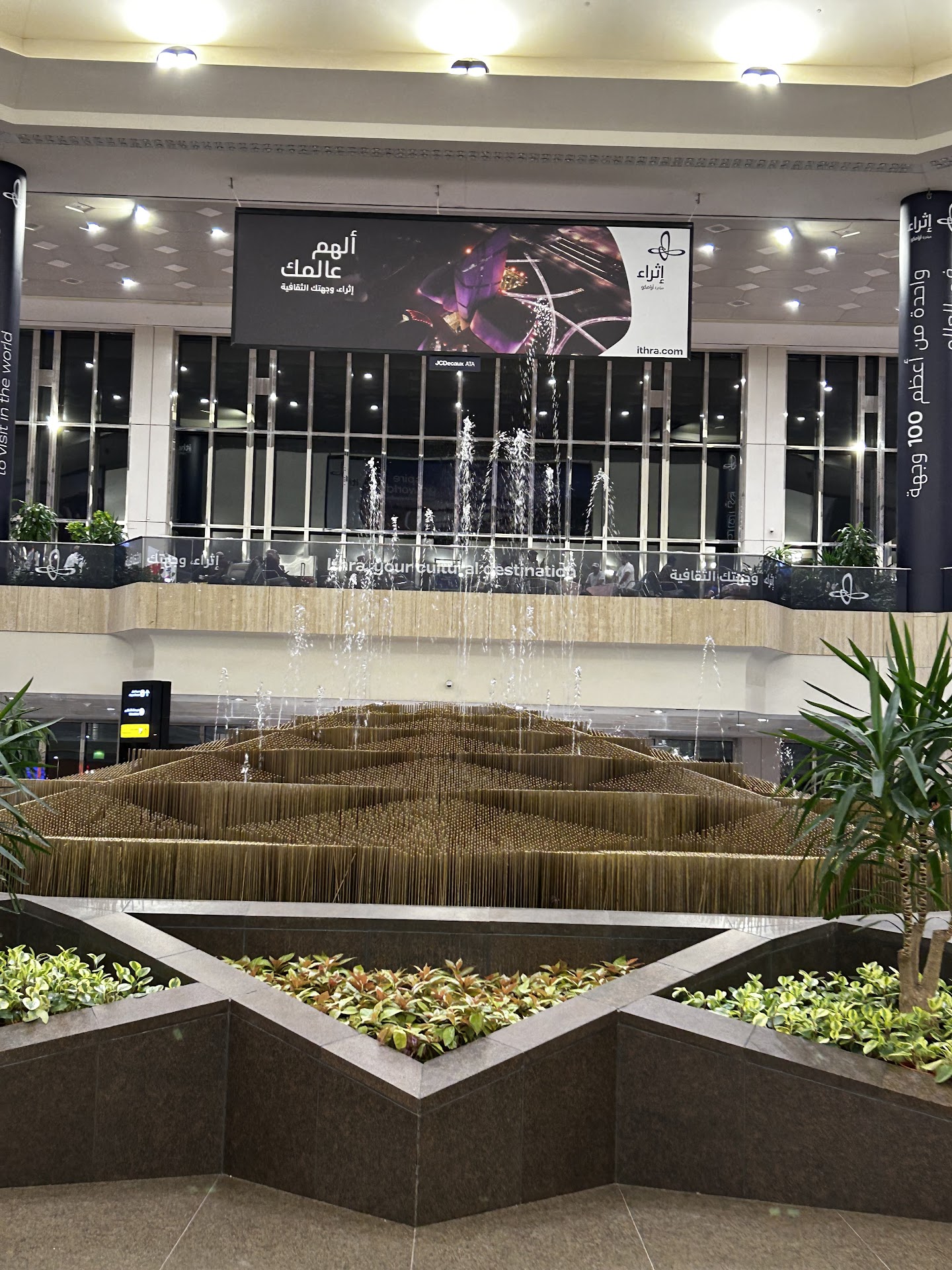
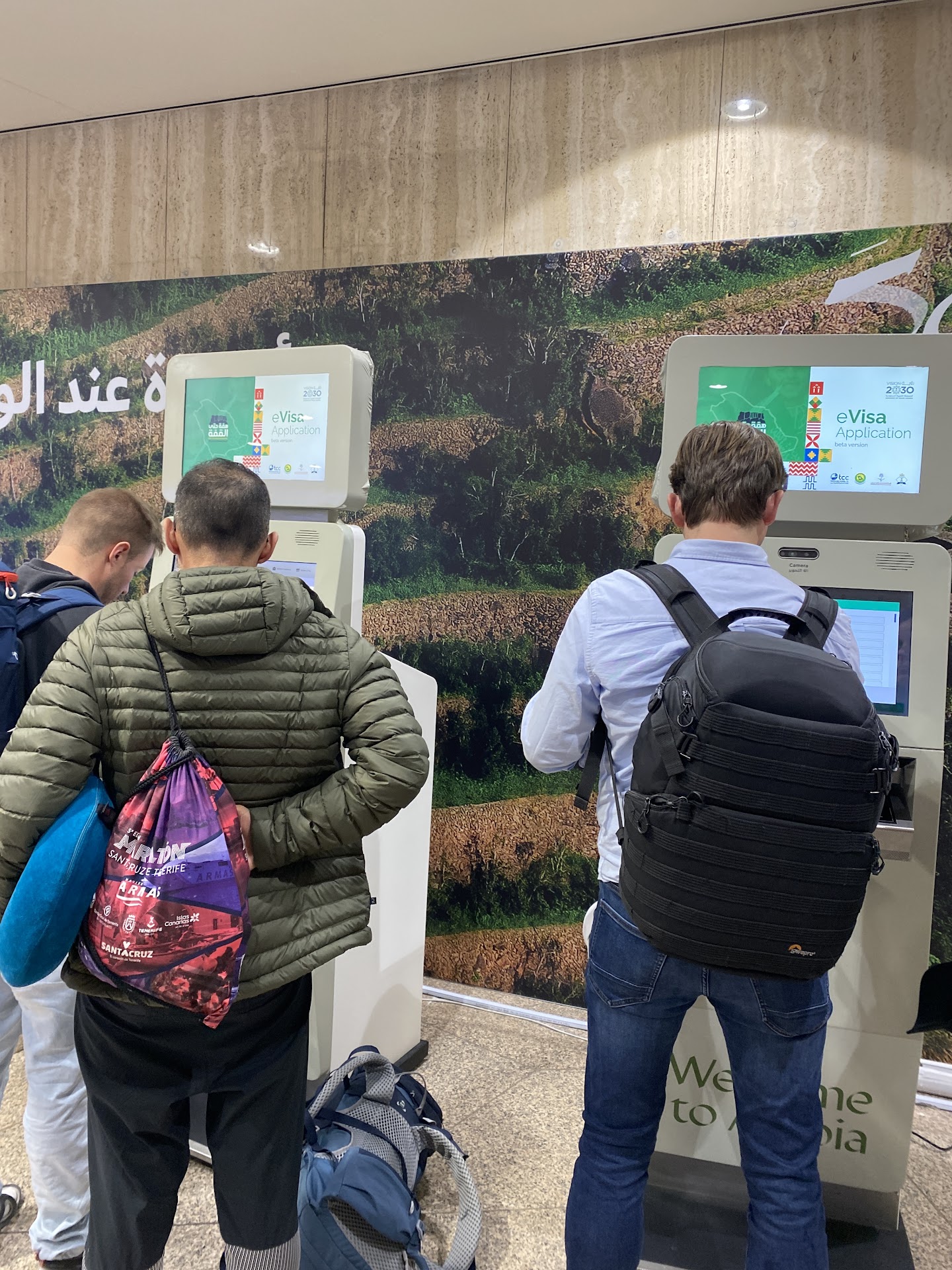
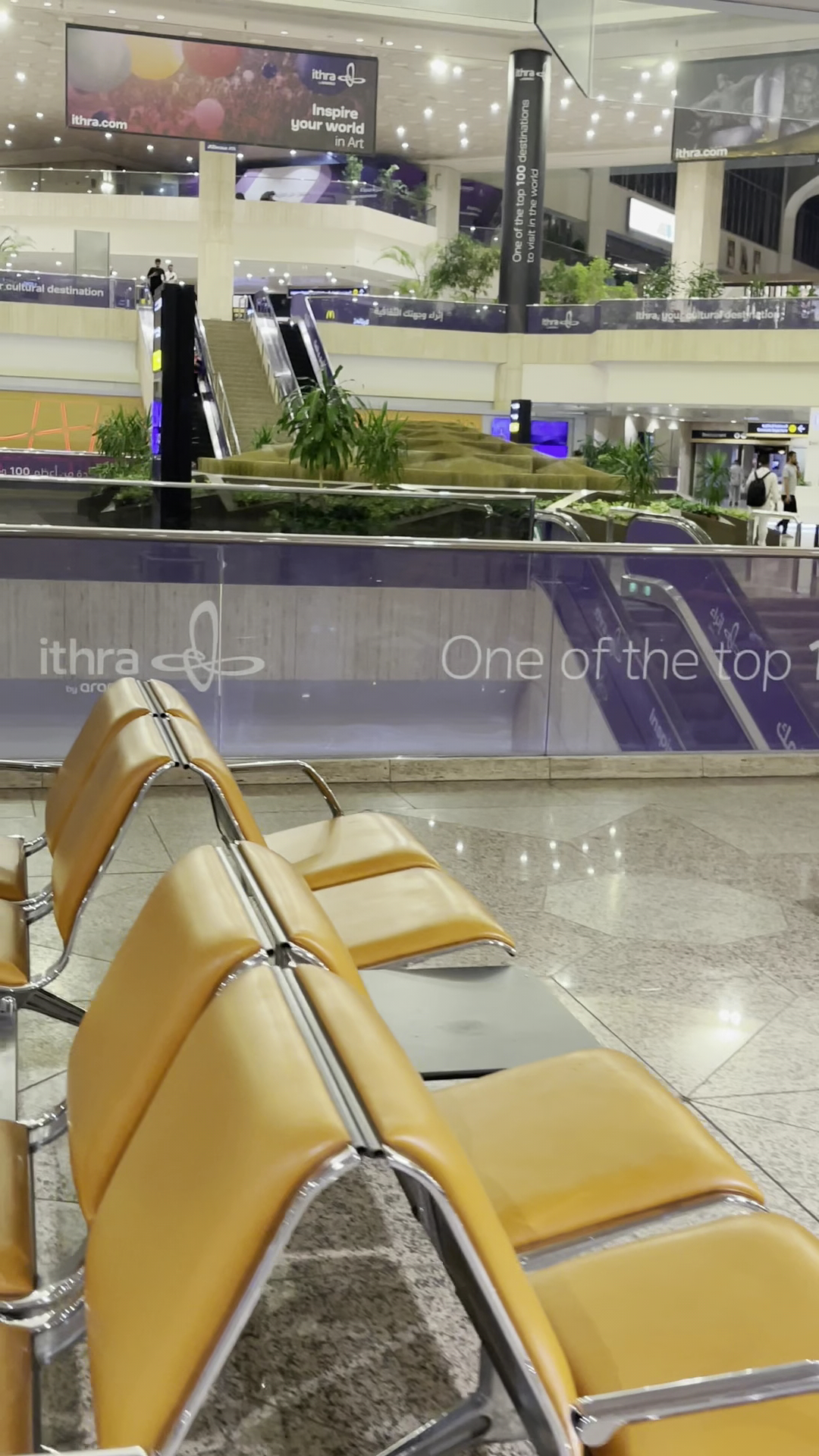
Read moreKing Fahd International Airport (KFIA) in Dammam, Saudi Arabia, is a significant gateway for travelers in the Eastern Province and the largest airport in the world by land area. King Fahd International Airport is well-connected to the city of Dammam and surrounding areas through a network of highways. The airport is about 20 kilometers northwest of Dammam and is easily accessible by car, taxi, or bus. The ample parking facilities, including short-term and long-term options, cater to both local and international travelers. The airport offers a wide range of facilities to ensure a comfortable experience for passengers. KFIA houses numerous retail outlets offering a variety of products, from duty-free goods to local souvenirs. The dining options range from international fast-food chains to local cuisine, catering to diverse tastes.There are several lounges available, including ones for first-class and business-class passengers, offering a quiet and luxurious environment to relax before flights. Free Wi-Fi is available throughout the airport, ensuring travelers can stay connected, but unfortunately I didn’t get t from there. Charging stations are also conveniently located. As expected in Saudi Arabia, the airport provides well-maintained prayer rooms for men and women, reflecting the country’s cultural and religious Staff at King Fahd International Airport are generally known for their professionalism and courtesy. The check-in and security procedures are efficient, although peak times can sometimes lead to longer waits. The signage is clear, and the layout of the airport is straightforward, making it easy for passengers The airport is well-maintained, with regular cleaning schedules ensuring that all areas, including restrooms and waiting lounges, are kept in pristine condition. The modern architecture and spacious design contribute to a pleasant and airy atmosphere. Baggage handling at KFIA is typically efficient, with luggage delivery times being reasonable. The airport also offers baggage wrapping services and has sufficient trolleys available for passenger convenience. Immigration and customs procedures are relatively smooth, with multiple counters to handle the flow of passengers. King Fahd International Airport provides a modern, efficient, and comfortable experience for travelers. Its extensive facilities, clean environment, and professional staff make it a commendable international airport. While it may not be as bustling as some of the other major hubs...
Read moreDammam, a city in the Eastern Province of Saudi Arabia, is served by King Fahd International Airport (IATA: DMM). Here’s some information about Dammam Airport:
Location: King Fahd International Airport is located about 20 kilometers (12 miles) northwest of the city center of Dammam. It is the largest airport in the Eastern Province and one of the busiest in Saudi Arabia.
Facilities: The airport offers a wide range of facilities and services for travelers, including duty-free shops, restaurants, cafes, car rental services, currency exchange, and lounges for premium passengers. The airport’s terminals are modern and well-maintained.
Terminals: King Fahd International Airport has three passenger terminals: Terminal 1 for international flights, Terminal 2 for domestic flights, and a separate terminal for the arrival of pilgrims performing Hajj and Umrah.
Airlines: The airport serves as a major gateway for both domestic and international flights. Several airlines, including Saudia (Saudi Arabian Airlines), Emirates, Qatar Airways, and others, operate from this airport, connecting Dammam to destinations around the world.
Runways: King Fahd International Airport has two parallel runways, each approximately 4,000 meters (about 13,123 feet) in length, capable of accommodating large and long-haul aircraft.
Transportation: Various transportation options are available to and from the airport, including taxis, airport shuttles, limousines, and ride-sharing services like Uber and Lyft. The airport is well-connected to the city and the Eastern Province by road.
Cargo Operations: In addition to passenger services, the airport has a significant cargo operation, handling a wide range of cargo, including oil and petrochemical products due to the region’s industrial importance.
Expansion and Development: King Fahd International Airport has seen expansion and development projects to enhance its capacity and services. These projects are aimed at accommodating the growing number of passengers and ensuring a smooth travel experience.
Please note that airport information can change over time, so it’s advisable to check the latest information and any travel advisories if you plan to visit Dammam and use King Fahd...
Read more