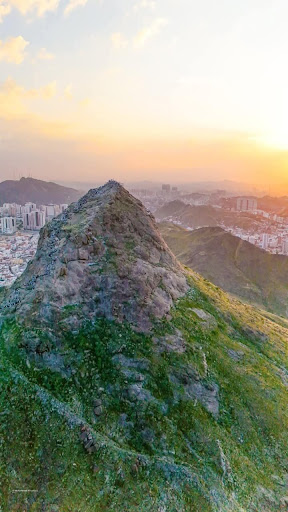
Jabal An Noor, also known as the Mountain of Light, holds immense historical and spiritual significance in Islam. Located near Mecca in Saudi Arabia, it is revered as the site where the Prophet Muhammad received the first divine revelation.
This event, which took place in the Cave of Hira at the summit, marked the beginning of the Islamic message and the Prophet’s prophethood.
The Cave of Hira remains a place of quiet reflection, where pilgrims from around the world visit to connect with their faith and contemplate the profound spiritual energy of the site.
The journey to Jabal An Noor is relatively accessible, with public transportation, such as the number 10 bus, stopping at the base of the mountain. Many visitors opt for taxis, often negotiating fares before settling on a price.
It is advisable to ensure the driver drops passengers off at the farthest point accessible by car, as walking the additional distance to the base can be exhausting.
The best time for the ascent is between Asr and Maghrib prayers, when temperatures are more tolerable. Pilgrims and visitors are encouraged to bring ample water, electrolytes, and snacks, as the climb can be strenuous even for those in good health.
Vendors along the path sell refreshments such as lemon water, providing relief to those who may not have brought enough supplies.
Initially, the climb appears manageable, but it takes at least 45 minutes to an hour to reach the top, depending on one's pace.
The old route is steep, with difficult steps, though a new path has been developed with a gentler slope to ease the journey. As the ascent progresses, stairs begin to appear, but the climb remains challenging and requires caution, especially for those traveling with children. Despite these difficulties, the experience is deeply rewarding.
Upon reaching the summit, the view of Mecca is breathtaking, with the city sprawling below and the iconic clock tower visible in the distance.
The Cave of Hira itself is small and unassuming, yet profoundly significant. It was within this cave that the angel Gabriel Alaihis Salam first appeared to the Prophet Muhammad ﷺ and revealed the opening five verses of Surah Al-Alaq. These verses, which emphasize knowledge and learning, mark the commencement of the Quranic revelations.
These are the First Five Quranic Ayat revealed here. The Translation as done by Ahmed Raza Khan is also given aside:
اقْرَأْ بِاسْمِ رَبِّكَ الَّذِي خَلَقَ○ "Read with the name of your Lord Who created"
خَلَقَ الْإِنسَانَ مِنْ عَلَقٍ○ "Created man from a clot"
اقْرَأْ وَرَبُّكَ الْأَكْرَمُ○ "Read, and your Lord is the Most Beneficent"
الَّذِي عَلَّمَ بِالْقَلَمِ○ "The One Who taught to write with the pen"
عَلَّمَ الْإِنسَانَ مَا لَمْ يَعْلَمْ○ "The One Who taught man all what he did not know"
Many visitors choose to pray or recite Quranic verses inside the cave, while others simply sit in quiet contemplation.
The historical significance of this site extends beyond the moment of revelation. The Prophet Muhammad ﷺ frequently visited the cave in solitude, reflecting on the divine truth, while his daughter Fatima Raziyallahu Anha would bring him food during his stay up in the Cave.
The journey to this sacred place serves as a powerful reminder of the Prophet’s dedication and perseverance.
With ongoing efforts by the Saudi government, a road is being constructed to facilitate easier access for visitors. Despite these modern developments, the essence of Jabal An Noor remains unchanged. It is a beacon of faith and reflection.
The climb may be arduous, but the spiritual fulfillment it provides leaves a lasting impression on those who undertake the journey.
For Muslims seeking to connect with their faith, as well as for travelers interested in Islamic history, Jabal An Noor offers an unforgettable experience that resonates deeply with...
Read moreJabal al-Nur, meaning the Mountain of Light, is a significant landmark located near the city of Mecca in Saudi Arabia. As an avid traveler and a person with a deep appreciation for historical and spiritual sites, visiting Jabal al-Nur was an unforgettable experience.
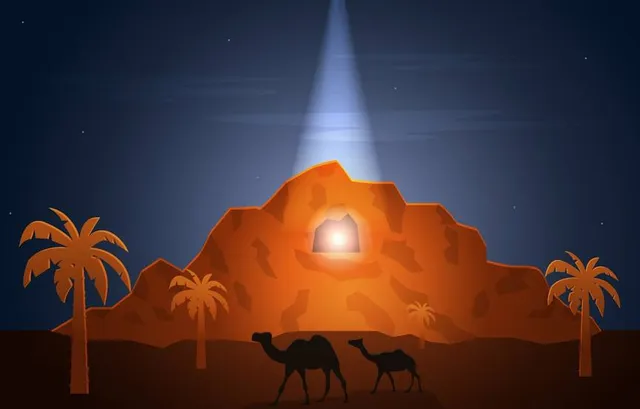
First and foremost, the journey to Jabal al-Nur is an adventure in itself. The mountain is located approximately 5 kilometers from the Grand Mosque in Mecca, and reaching the summit requires a steep climb. The trail is well-marked, but it does require a moderate level of fitness and proper footwear. The ascent can be challenging, especially during the hot summer months, so it's essential to carry enough water and take regular breaks along the way.
Once you reach the top, the panoramic view is simply breathtaking. Standing at an elevation of approximately 642 meters, Jabal al-Nur provides a stunning vantage point from which you can see the vast expanse of the surrounding landscape. The sight of the holy city of Mecca, with the Kaaba and the Great Mosque at its center, is awe-inspiring. The sense of serenity and spirituality that engulfs you is truly remarkable.
One of the main attractions of Jabal al-Nur is the famous Hira Cave, which is located near the summit. This cave holds immense religious significance for Muslims worldwide, as it is the place where Prophet Muhammad (peace be upon him) received his first revelations from Allah through the angel Gabriel. Stepping inside the small and humble cave, you can't help but feel a sense of reverence and connection to the history that unfolded within its walls.
The natural beauty surrounding Jabal al-Nur adds to its allure. The rugged terrain, dotted with rocks and shrubs, creates a unique and picturesque landscape. The silence and tranquility of the mountain make it an ideal place for reflection and contemplation. Whether you are a believer or not, there is a profound sense of spirituality that permeates the air, making Jabal al-Nur a place of introspection and inner peace.
It's important to note that visiting Jabal al-Nur requires respect and adherence to local customs and regulations. As a religious site, modest dress is expected, and visitors should be mindful of their behavior and maintain a reverent atmosphere. Additionally, during peak pilgrimage seasons, the mountain can get crowded, so it's advisable to plan your visit accordingly to avoid large crowds.
In conclusion, a visit to Jabal al-Nur is an unforgettable experience that combines natural beauty, spirituality, and a deep connection to history. Standing on the summit and taking in the magnificent view, you can't help but feel a sense of awe and wonder. It's a place that offers a glimpse into the beginnings of Islam and allows you to reflect on your own beliefs and spirituality. Whether you are a religious pilgrim or an enthusiast of historical landmarks, Jabal al-Nur is a must-visit destination that will leave a lasting impression on your...
Read moreJabal an-Nour (Arabic: جَـبَـل ٱلـنُّـوْر, romanized: Jabal an-Nūr, lit. 'Mountain of the Light' or 'Hill of the Illumination') is a mountain near Mecca in the Hejazi region of Saudi Arabia.1] The mountain houses the famed Grotto/Cave of Hira (Arabic: غَـار حِـرَاء, romanized: Ġār Ḥirāʾ). The mountain and its cave hold tremendous significance for Muslims throughout the world, as the Islamic Nabī (Prophet) Muhammad is said to have spent a great deal of time in the cave meditating, and it is widely believed that it was here that he received his first revelation, which consisted of the first five ayats of Surah Al-Alaq from the angel Jibrā’īl (as is pronounced in certain Quran recitation schools and some Arab tribes; also known as Gabriel).[2] It is one of the most popular tourist attractions in Makkah. The mountain itself is barely 640 m (2,100 ft) tall; nonetheless one to two hours are needed to make the strenuous hike to the cave. Its 1750 steps to the top, which can take anywhere between 25 minutes to 1hr 30 minutes. Taking 1750 walking steps to reach, the cave itself is about 3.7 m (12 ft) in length and 1.60 m (5 ft 3 in) in width.[2] The cave is situated at a height of 270 m (890 ft).[8] During the season of Ḥajj ('Pilgrimage'), an estimated five thousand visitors climb to the cave daily to see the place where Muhammad is believed to have received the first revelation of the Quran on the Night of Power by the angel Jibreel.[8] The majority of Muslims do not consider visiting the cave as an integral part of the Hajj. Nonetheless many visit it for reasons of personal pleasure and spirituality, and though some consider it a place of worship, this view conflicts with Salafist interpretations of Islamic ritual. While the cave plays an important role in As-Sīrah an-Nabawiyyah (The Prophetic Biography), it is not considered as holy as other sites in Mecca, such as Al-Haram Mosque, and so under most interpretations of Islam, the same reward is received for praying here as any other place in Mecca.[citation needed]
Before Muhammad's first revelation, he was said to have pleasant dreams. Among these dreams were signs that his Prophethood was starting to appear, and signs that the stones in Mecca would greet him with the Salaam. These dreams lasted for six months.[4]
An increasing need for solitude led Mohammed to seek seclusion and meditation in the rocky hills which surrounded Mecca.[9] There he would retreat to the cave for one month, each year, engaging in taḥannuth (Arabic: الـتَـحَـنُّـث).[b[12] He would take provisions along with him during this retreat, and would feed the poor that would come to him. Then before returning home to his family for more provisions he would circumambulate the Kaaba seven times, or however many times Allah willed; then he would...
Read more