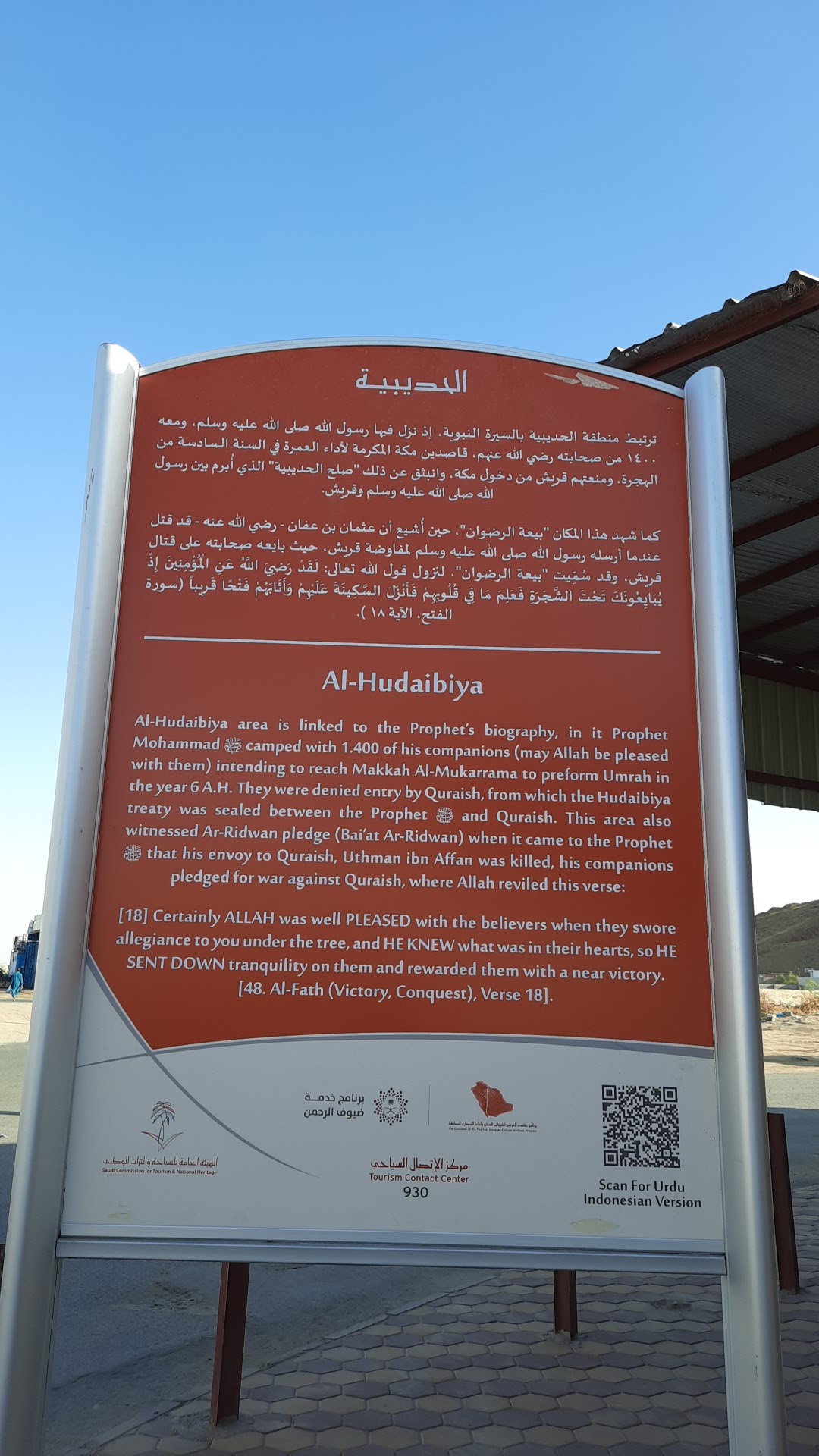
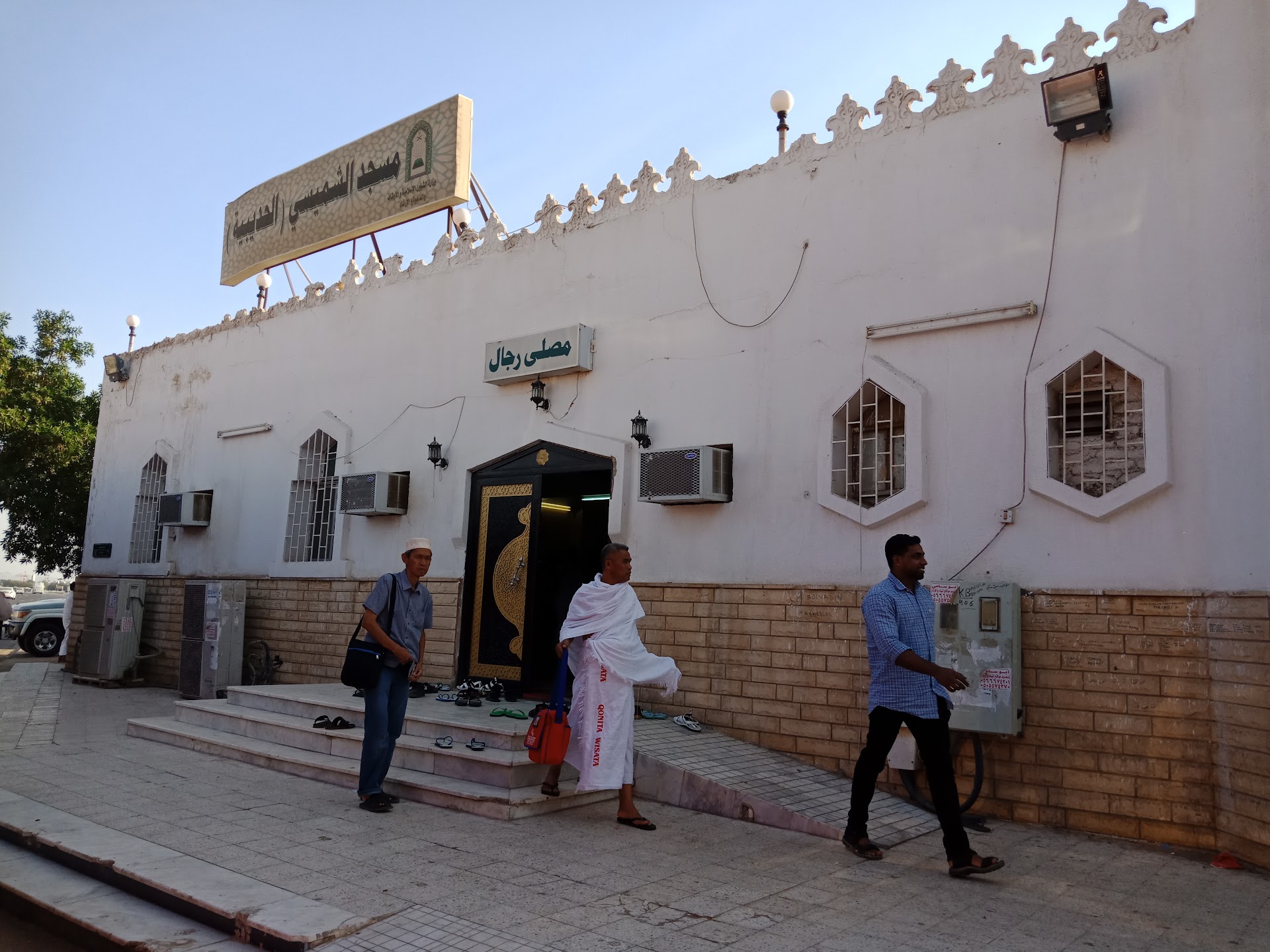
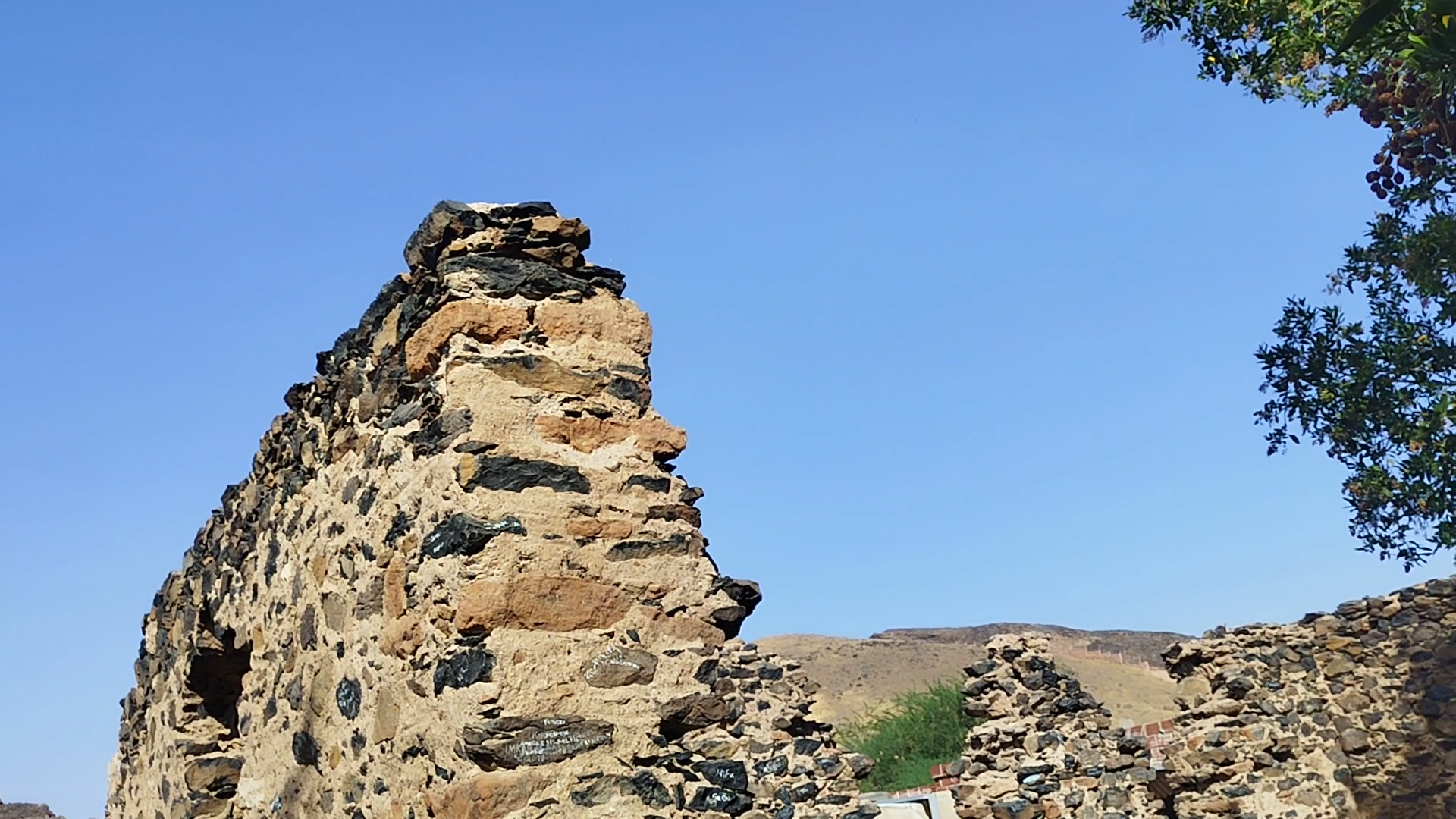
(This was the place Hudaibiya treaty was written under the tree and later this was the Masjid without roof, Sahabah used to pray.)
Bukhari :: Book 5 :: Volume 59 :: Hadith 486. Narrated Iyas bin Salama bin Al‐Akwa: My father, who was amongst those who had given the Pledge of allegiance to the Prophet ﷺ beneath the Tree, said to me, "We used to offer the Jum’ua prayer with the Prophet ﷺ and then depart at a time when the walls had no shade for us to take shelter in."
(Like this Khalifa Abu Bakr Siddique رضی الله عنہ period has passed. Later people forgotten the exact tree location and gave preference to other trees, started praying at near by the trees. So during Umar bin Khattab رضی الله عنہ khilafat period it was ordered to cut all the trees).
Narrated Said bin Al-Musaiyab: That his father said, "I saw the Tree (of the Ar‐Ridhwan) Pledge of allegiance and when I returned to it later, I was unable to recognize it. (The sub‐‐narrator Mahmijd said, Al‐Musaiyab said, 'Then; forgot it (i.e., the Tree)".
Bukhari :: Book 5 :: Volume 59 :: Hadith 481. Narrated Tariq bin 'Abdur-Rahman: When I set out for Hajj, I passed by some people offering a prayer, I asked, "What is this mosque?"
They said, "This is the Tree where Allaah's Apostle took the Ar‐Ridhwan Pledge of allegiance.
Then I went to Sa'id bin Musaiyab and informed him about it. Sa'id said, "My father said that he was amongst those who had given the Pledge of allegiance to Allaah's Apostle ﷺ beneath the Tree. He (i.e. my father) said, "When we set out the following year, we forgot the Tree and were unable to recognize it.” Then Said (perhaps ironically) " The companions of the Prophet (ﷺ) could not recognize it; nevertheless, you do recognize it; therefore you have a...
Read moreMasjid e Hudabia is Place where Suleh Hudabia Done Agreement of Hudabia
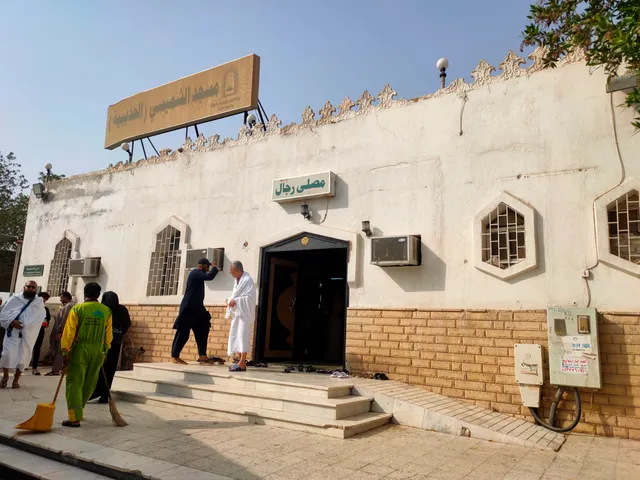
The Treaty of Hudaybiyyah صلح الحديبية) was an event that took place during the formation of Islam. It was a pivotal treaty between the Islamic Prophet Muhammad صلی اللہ علیہ وسلم, representing the state of Medina, and the Quraysh tribe of Mecca in March 628 (corresponding to Dhu al-Qi'dah, 6 AH). It helped to decrease tension between the two cities, affirmed a 10-year peace, and authorised Muhammad's صلی اللہ علیہ وسلم followers to return the following year in a peaceful pilgrimage, later known as The First Pilgrimage
The Treaty of Hudaybiyyah was, and still is, very important in Islam. After the signing of the treaty, the Quraysh of Mecca no longer considered Muhammad to be a rebel or a fugitive from Mecca. They also recognized the Islamic state in Medina by signing the treaty. The treaty also allowed the Muslims who were still in Mecca to practice Islam publicly. Further, as there was no longer a constant struggle between the Muslims and the polytheists, many people saw Islam in a new light, which led to many more people accepting Islam. In addition, the Treaty of Hudaybiyyah paved the way for many other tribes to make treaties with the Muslims. The treaty also serves as an example that Islam was not merely spread with the sword, as Muhammad had an army that could have attacked Mecca, but Muhammad chose to make a treaty instead of attacking.
A verse of the Quran was revealed about the treaty, which translates to, "Verily we have granted thee a manifest victory"...
Read moreThe treaty of Hudaybiyyah also known as Sulah Hudaibiya was one of the events that took place during the initial stages of Islam. It was a treaty between Madina, represented by Prophet Muhammad PBUH and Makkah, Quraish tribe on March 628 (as per Islamic date, Dhu Al Qudah 6th AH).
This treaty helped to resolve the conflict between two cities, Makkah and Madinah, ensuring a 10 years peace clause which was authorized by Muhammad PBUH’s followers to come back following years in peaceful pilgrimage, which is also known as The First Pilgrimage of Islam.
In 628, Prophet Muhammad PBUH along with 1,400 other Muslims went to Makkah to perform Umrah, without carrying arms and to respect the treaty of Hudaybiah between Makkah and Madinah. They were dressed as pilgrims having sacrificial animals along with them, hoping Quraish tribe would give them a warm welcome. Muslims were in Ihram, which means there was no sign of arms or anything. Prophet Muhammad PBUH with his fellow Muslims camped outside Makkah. Later, Prophet Muhammad PBUH met Makkan emissaries who restricted the pilgrims to enter Makkah. After long negotiations, both parties decided to resolve the matter without any war but with diplomacy. It was the time when the Treaty of Hudaybiah was founded. And it was Ali (RA) was the person who wrote it for Prophet Muhammad PBUH. and Prophet Muhammad PBUH signed the...
Read more