Mada'en Saleh (مدائن صالح), also known as Al Hijr I (ٱلْحِجْر), is located amid a series of interlocking mountains and rocky cliffs and surrounded by a ring of sandy mountains. Al Hijr was mentioned in the Holy Qur'an, and described as the home of the Thamud. Located today in Al Ula governorate a subdivision of al Madinah al Munawarah Province of Saudi Arabia, the Mada’in Saleh (“the cities of Salih”) are the remains of the once wealthy and powerful Nabataean kingdom.
Madain Saleh is considered to be the most important settlement of the Nabataeans, second only to Petra. Its most significant cultural role dates back to the first two centuries BCE and first century CE, i.e., during the flourishing Nabataean state and before its fall at the hands of the Roman Emperor in 106 CE Al Hijr continued to be a source of cultural energy and intellectual interaction probably until the 4th century CE These are said to be the tombs of Qom e Thamud, as are considered cursed by the Muslims.
Jabl al Ahmar (جبل الاحمر) also known as the Area C is an outcrop in the southeastern part of Mada’in Saleh that contains numerous tombs, dating to 16-61 CE. It is located in the southeastern portion of Madain Saleh and features three tombs with drawings dating to between CE 16 and CE 61. The tombs are burial chambers without special adornments. Consists of a single isolated outcrop containing 19 cut tombs, and no ornamentations were carved on the façades.
al-Diwan (ديوان) is a square chamber containing three stone benches that served as a triclinium for sacred feasts. Today, the chamber is known as al-Diwan (court). Its large entrance suggests that the feasts extended into the open space before it. The Diwan itself was a place reserved for religious gatherings and consisted of a rectangular room carved in the rock measuring 12.8 x 9.9 metres and 8 metres in height.
al-Siq (آل السيق) is a narrow passageway (reminiscent of the Siq in Petra), running south from Al Diwan, measures about 40m wide between two rock faces lined with more small altars. The jagged cliff walls of the siq, the natural passageway leading to Jabal Ithlib, had decorated votive niches to Nabatean gods carved into the rock and petroglyphs of camels and traders.
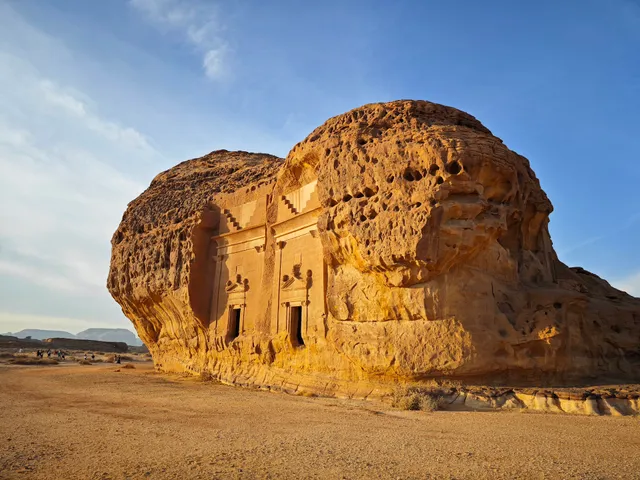
Qasr al Bint (قصر البنت), “Palace of the Daughter or Maiden,” is the largest tomb façade at Mada’in Saleh, with a height of 16 m. It lends its name to the group of adjacent tombs as well. The portal is raised above ground. Above the doorway an inscription plaque indicates that it dates to circa 31 CE. It consists of a wonderful row of facades that makes for dramatic viewing from across Madain Saleh. The east face has two particularly well-preserved tombs.
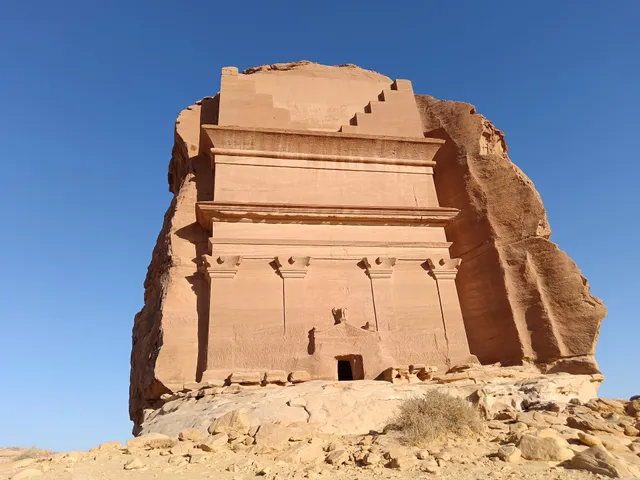
Qasr al-Farid (قصر الفريد), an unfinished tomb that stands alone. The facade was never finished, so the heavily chiseled surface of the lower third documents how the tombs were fashioned from the top down. It is the most photogenic and most iconic symbol of Mada’in Saleh, a single tomb carved into a small dome that stands alone in the open. The façade was never finished, so the heavily chiseled surface of the lower third documents how the tombs were fashioned from the top down.
Qasr al-Sanea (قصر الصانع), was one of the first tombs to be carved in the al-Hijr area. It served as a prelude to the other Nabataean architectural style tombs. It is one of the best preserved tombs in Madain Saleh. It represents an introduction to the key elements of the style of the Nabatean’s tombs. It has a great facade, with five stepped crow-steps, and the inscriptions at the top of the door and the niches inside the structure into which the dead bodies were placed.
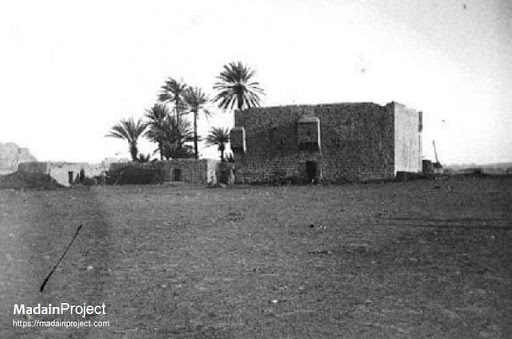
Between 1744 and 1757, a fort was built at al-Hijr (Madain Saleh) on the orders of the Ottoman governor of Damascus, As'ad Pasha al-Azm. A cistern supplied by a large well within the fort was also built, and the site served as a one-day stop for Hajj pilgrims where they could purchase goods such as dates, lemons and oranges. It was part of a series of fortifications built to protect the pilgrimage...
Read more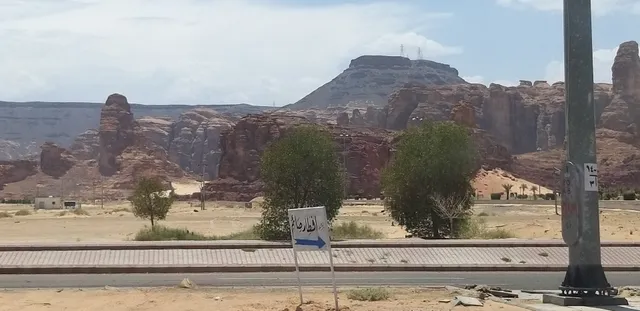
 Learn more insights from Wanderboat AI.