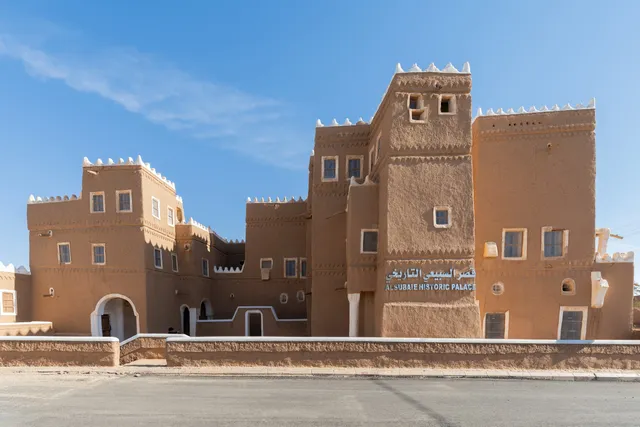
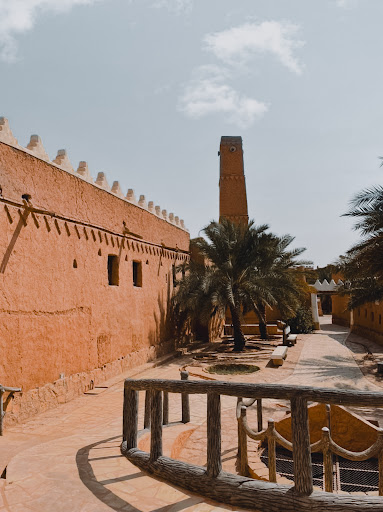
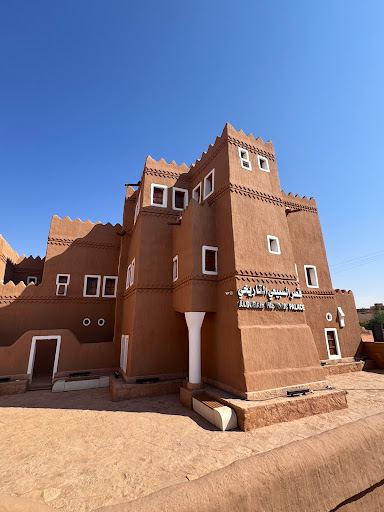
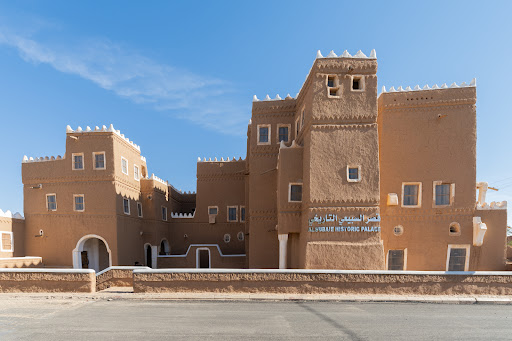
Al-Subaie Palace is located in Shaqra Governorate, which is approximately 200 km away from Riyadh. It was built by Sheikh Abdul Rahman bin Abdullah Al-Subaie, who was the agent of the Bait Al-Mal in the year 1358 AH. It took 4 years to build. It was built in the year 1327 AH, and it was the headquarters of the Bait Al-Mal during the reign of His Majesty the Founding King. The palace was considered an official headquarters during that historical period to receive His Majesty King Abdulaziz as he passed through Shaqra, or when he went to the holy places to perform Hajj rituals. The house was a site for equipping the armies passing through Shaqra during the unification phase, in addition to receiving official delegations. Al-Subaie Heritage Palace in the historic center of Shaqra is considered one of the most prominent heritage landmarks in Shaqra Governorate, especially after the completion of its restoration work and rehabilitation as a museum of Shaqra’s history. The palace is located in the southwestern side of the old city, and His Majesty King Abdulaziz - may God forgive him - used to reside there when he passed by Shaqra. Al-Subaie Palace was built in the Andalusian Islamic style. The palace consists of two floors, contains a large group of rooms and sitting areas, and has balconies that clearly appear through the upper parts of the walls on the external and internal facades inlaid with Arabic and Islamic decorations and inscriptions. It has an open courtyard surrounded by corridors on the ground and first floors. It is supported by mud bricks, and the facades of the palace were decorated with an extended frame of prominent and inverted triangles in order to push rainwater away from the walls. The wooden veins in the facades of the windows and doors were decorated with colorful hand-carvings, which consisted of geometric and floral units across circles, straight and intersecting lines, and quadrilateral shapes. And bunches of grapes. The palace also contains columns that are considered one of its most important architectural elements. They are stone columns made of flat cylindrical beads, while the ceilings consist of beams of tamarisk trunks, covered with palm leaves and fronds, then a layer of clay and a layer of plaster. It was restored under the supervision of the Authority. General Authority for Tourism and...
Read moreIt was built by Sheikh Abdul Rahman bin Abdullah Al-Subaie, who was the agent of the Treasury in the year 1358 AH, and its construction took 4 years. The palace is located in the southwestern part of the old town, and His Majesty King Abdulaziz - may God have mercy on him - used to stay in it when passing through Shaqra. The palace consists of two floors, containing a large group of rooms and sitting rooms, and has balconies that appear clearly through the upper parts of the walls in the external and internal facades inlaid with Arabic and Islamic decorations and engravings. It has an open courtyard surrounded by corridors on the ground and first floors, supported by mud bricks. The palace facades are decorated with an extended frame of prominent and inverted triangles to push rainwater away from the walls. The wooden veins in the facades of the windows and doors are decorated with colorful hand-carvings, which consist of geometric and plant units through circles, straight and intersecting lines, quadrilateral shapes, and grape clusters. The palace also contains columns that are considered one of its most important architectural elements. They are stone columns made of flat cylindrical beads, while the ceilings consist of tamarisk trunk beams covered with palm fronds and palm leaves, then a layer of clay and a layer of plaster. It was restored under the supervision of the General Authority for Tourism and National Heritage.
I had the privilege of visiting the Al Subaie Palace in Shaqra, and it was an extraordinary journey into the rich history of the region.
The palace is a stunning example of traditional Najdi architecture, with its intricate designs and beautifully preserved structure reflecting the heritage and craftsmanship of the past.
Walking through its halls felt like stepping back in time.
The attention to detail in maintaining this historical site is truly commendable, and it provides a wonderful insight into the lifestyle and culture of Saudi Arabia’s ancestors.
The serene atmosphere of the palace and its surroundings adds to its charm, making it a perfect destination for history lovers and cultural enthusiasts alike.
This visit was an enriching experience, and I highly recommend Al Subaie Palace to anyone exploring Shaqra.
It’s a must-see site that highlights the beauty of...
Read more