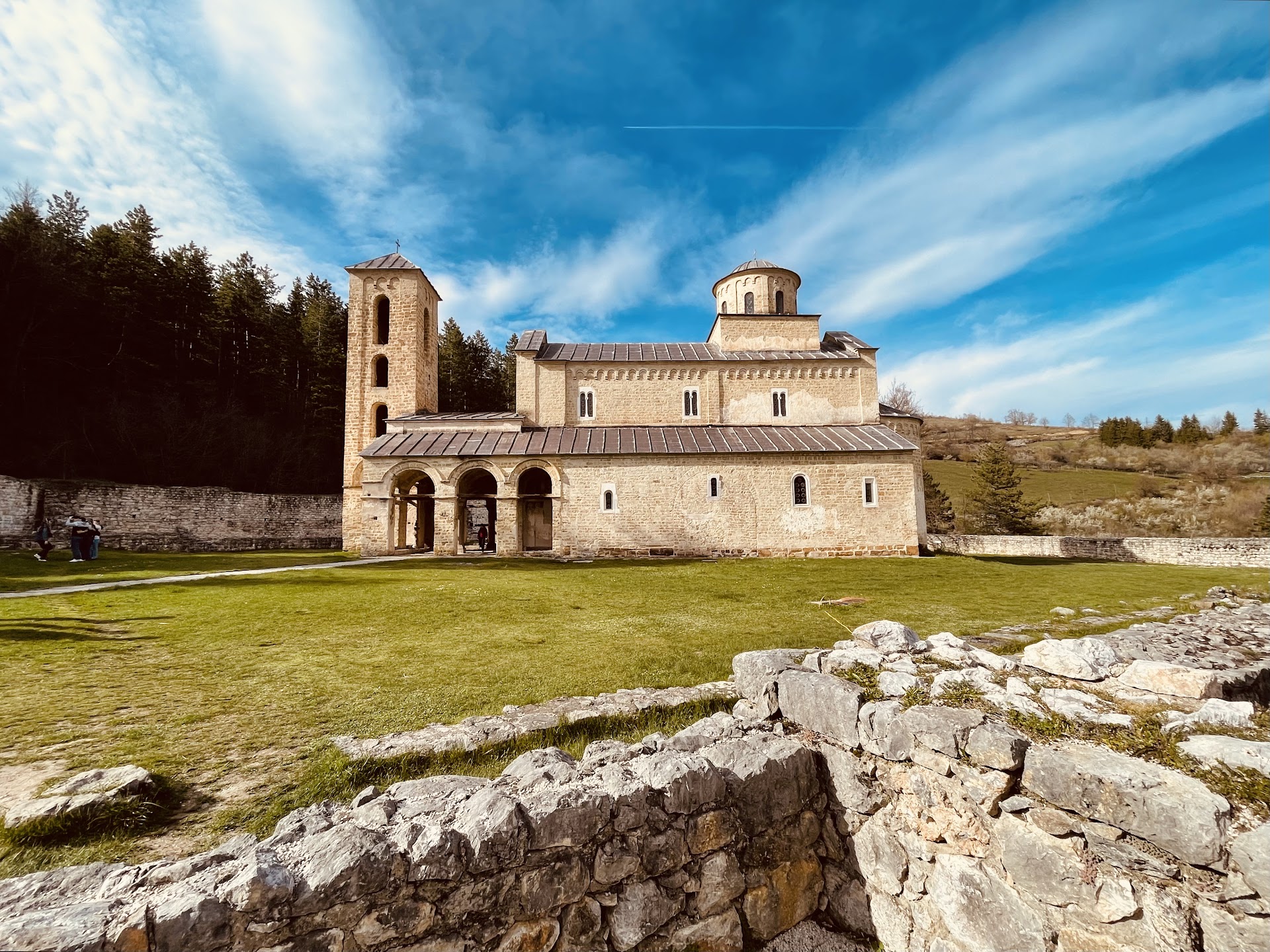
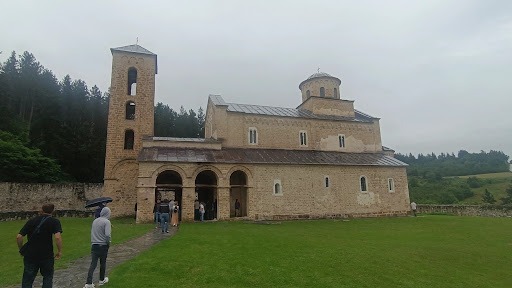
The Sopoćani Monastery (Serbian: Манастир Сопоћани / Manastir Sopoćani, pronounced [sǒpotɕani]), an endowment of King Stefan Uroš I of Serbia, was built from 1259 to 1270, near the source of the Raška River in the region of Ras, the centre of the Serbian medieval state. It is a designated World Heritage Site, added in 1979 with Stari Ras. The monastery is located 15 kilometers (9.3 mi) west of the town of Novi Pazar.
The frescoes in Sopoćani were painted in a similar style to that of Byzantine artists, however the origins of the artists themselves remain unknown. There was a rigid set of steps (setting of plaster, designing with charcoal, application of opsis in various layers, etc.) that were usually followed by these artists. However, there were exceptions to this method, as is the case with the Dormition, which was painted over visible division lines that are usually erased. Some historians believe this to be the result of an oversight on the part of the artist. Sopoćani was declared Monument of Culture of Exceptional Importance in 1979, and it is protected by Republic of Serbia.
The church is dedicated to the Holy Trinity.
Outstanding Universal Value
Brief synthesis
Stari Ras and Sopoćani is a serial property consisting of four separate components located in the Raška region of southern Serbia: Sopoćani Monastery, Djurdjevi Stupovi Monastery, Holy Apostles St Peter and St Paul Church (St Peter’s Church), and the archaeological site of the Medieval Town of Ras. The impressive collection of three ecclesiastical monuments dating from the 10th to the 13th centuries eminently illustrates the birth of artistic activity in medieval Serbia, which attained the highest standards in the art and culture of the Byzantine Empire and the regions of Central and Southeastern Europe. The unique architectural complex formed by numerous structures in Stari Ras (Old Ras), situated at a crossroads of eastern and western influences,testifies to the period from 12th to the early 14th centuries when the ancient town was the first capital of the Serbian state.
The frescoes in the Sopoćani Monastery church, dating from about 1270-1276, are among the finest in Byzantine and Serbian medieval art. These exceptional paintings represent the work of the best artists of that period who were unable to work in the territory of the Byzantine Empire and found refuge at the court of the Serbian king. At Sopoćani these artists introduced a refined spirit of antiquity to the prevailing medieval conventions. St George’s Church in the Djurdjevi Stupovi Monastery, founded in 1170-1171, is the earliest example of a distinctive new regional architecture that blended Romanesque and Byzantine styles. Known as the Raška School, this style came to dominate architecture in this area for almost a century and a half. The church also features two layers of preserved frescoes dating from 1175 and 1282-1283 that are among the finest from that period in the Balkans. The preserved frescoes in St Peter’s Church, built in the 10th century on the foundations of a 6thcentury baptistery and now the oldest surviving Christian church in the Balkans, also present evidence of the developments that took place in pictorial art between the 10th and...
Read more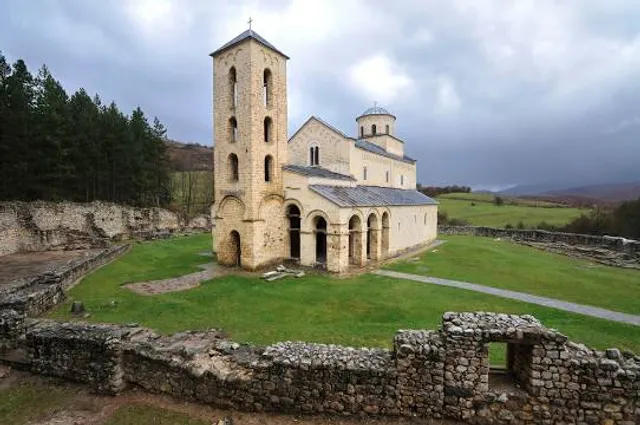
 Learn more insights from Wanderboat AI.