HTML SitemapExplore
logo
Find Things to DoFind The Best Restaurants

Manasija Monastery — Attraction in Despotovac Municipality

Name
Manasija Monastery
Description
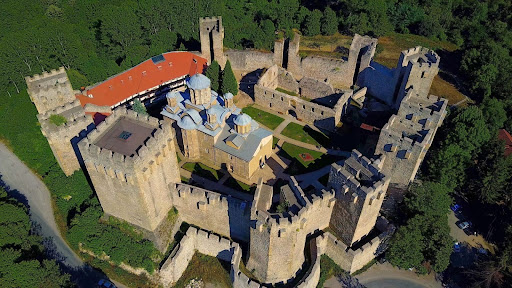
The Manasija Monastery also known as Resava, is a Serbian Orthodox monastery near Despotovac, Serbia founded by Despot Stefan Lazarević between 1406 and 1418. The church is dedicated to the Holy Trinity. It is one of the most significant monuments of medieval Serbian culture and it belongs to the "Morava school".
Nearby attractions
Nearby restaurants
Nearby hotels
Related posts
Keywords
Manasija Monastery tourism.Manasija Monastery hotels.Manasija Monastery bed and breakfast. flights to Manasija Monastery.Manasija Monastery attractions.Manasija Monastery restaurants.Manasija Monastery travel.Manasija Monastery travel guide.Manasija Monastery travel blog.Manasija Monastery pictures.Manasija Monastery photos.Manasija Monastery travel tips.Manasija Monastery maps.Manasija Monastery things to do.
Manasija Monastery things to do, attractions, restaurants, events info and trip planning
Manasija Monastery
SerbiaCentral SerbiaDespotovac MunicipalityManasija Monastery

Basic Info

Manasija Monastery

Despota Stefana Lazarevića бб, 35213, Despotovac, Serbia
4.9(3.4K)
Open 24 hours
Save
spot

Ratings & Description

Info

The Manasija Monastery also known as Resava, is a Serbian Orthodox monastery near Despotovac, Serbia founded by Despot Stefan Lazarević between 1406 and 1418. The church is dedicated to the Holy Trinity. It is one of the most significant monuments of medieval Serbian culture and it belongs to the "Morava school".

Cultural
Family friendly
attractions: , restaurants:
logoLearn more insights from Wanderboat AI.
Phone
+381 35 611290

Plan your stay

hotel
Pet-friendly Hotels in Despotovac Municipality
Find a cozy hotel nearby and make it a full experience.
hotel
Affordable Hotels in Despotovac Municipality
Find a cozy hotel nearby and make it a full experience.
hotel
The Coolest Hotels You Haven't Heard Of (Yet)
Find a cozy hotel nearby and make it a full experience.
hotel
Trending Stays Worth the Hype in Despotovac Municipality
Find a cozy hotel nearby and make it a full experience.

Reviews

Get the Appoverlay
Get the AppOne tap to find yournext favorite spots!
Wanderboat LogoWanderboat

Your everyday Al companion for getaway ideas

CompanyAbout Us
InformationAI Trip PlannerSitemap
SocialXInstagramTiktokLinkedin
LegalTerms of ServicePrivacy Policy

Get the app

© 2025 Wanderboat. All rights reserved.
logo

Reviews of Manasija Monastery

4.9
(3,383)
avatar
5.0
2y

The Manasija also known as Resava, is a Serbian Orthodox monastery near Despotovac, Serbia, founded by Despot Stefan Lazarević between 1406 and 1418. The church is dedicated to the Holy Trinity. It is one of the most significant monuments of medieval Serbian culture and it belongs to the "Morava school". The monastery is surrounded by massive walls and towers. Immediately following its foundation, the monastery became the cultural centre of the Serbian Despotate. Its School of Resava was well known for its manuscripts and translations throughout the 15th and 16th centuries, even after the fall of the Despotate to the Ottoman Turks. Manasija complex was declared Monument of Culture of Exceptional Importance in 1979, and it is protected by Republic of Serbia, and monastery have entered a UNESCO Tentative List Process in 2010. Construction of the monumental mausoleum and the fortified town lasted about a decade, with breaks. During this period, a church, large refectory, lodgings, adjacent buildings, towers and walls, fortifications with protective walls and trenches were constructed. Monastery founder Despot Stefan built Manasija to serve as his mausoleum; in its grandeur, his resting place surpassed everything ever built in the Pomoravlje. The monumental and imposing Church of Manasija, together with the contemporary monuments Ravanica, Ljubostinja, Kalenić, Gornjak, Pavlica, bear witness to the last great artistic achievement of Morava's Serbia. The refectory was built parallel to the church, and is one of the largest known structures in medieval Serbia, which was completely covered in frescoes. The monastery compound was encircled and protected by strong walls with eleven towers and trenches. The Church of Manasija Monastery was consecrated on the Feast of Pentecost in 1418, after about 2,000 square metres of frescoes had been painted. Only a quarter of the paintings survived, but even these are among the most beautiful in the outstandingly rich treasure of old Serbian painting. During the five centuries of Ottoman presence, the monastery was abandoned and wrecked several times. The lead roof was removed from the church, and so for over a century the frescoes inside were subject to damage by rainfall. As a result, about two-thirds of them were irremediably lost. In the 18th century, the western part of the church - the narthex - was heavily damaged in an explosion and was later rebuilt. The mosaic floor of that part of the church was preserved. Architecturally, the church belongs to the Morava school. The ground plan is in the form of a floral inscribed cross, combined with a trefoil. The twelve-sided dome above the central space rests on four free-standing pillars. At the eastern end, there are one large and two small apses, whereas two large choir conches flank the altar. Above the corners of the church, there are four little octagonal domes. The narthex consists of nine bays. Above the central bay, there is yet another dome that rests on four pillars. On the inside, the original floor has been preserved in the narthex, made of marble tiles in various colours. Nearly half of the frescoes have been destroyed. Despot Stefan is portrayed with the church model on the left-hand wall. The lower register of the north choir depicts warrior-saints in armour with swords and lances, as an authentic representation of contemporaneous soldiers. There are also 24 portraits of the Old Testament prophets and patriarchs in the spacious dome. The Monastery fortress, made up to defend the monastery, consists of 11 towers linked with huge walls and once, with trenches. An archaeological team from the UK led by Marin Brmbolićlocated the remains of a person whom some claim to be Despot Stefan Lazarević in the southwestern part of the monastery floor. DNA comparison with the remains of his father, Knez Lazar, confirmed that the remains belong to two closely related individuals. However, there is no doubt that Stefan's brother Vuk was buried in Manasija and the remains could as well...

   Read more
avatar
5.0
1y

Manasija Monastery is located in the Resava river gorge, about 135km south-east of Belgrade. As an endowment of Despot Stefan Lazarević, the monastery was built in the hard times after the Battle at Kosovo (1389) and its construction lasted from 1406/7 to 1418. Its special feature is its fortification, capable of defending and protecting the monastery settlement.

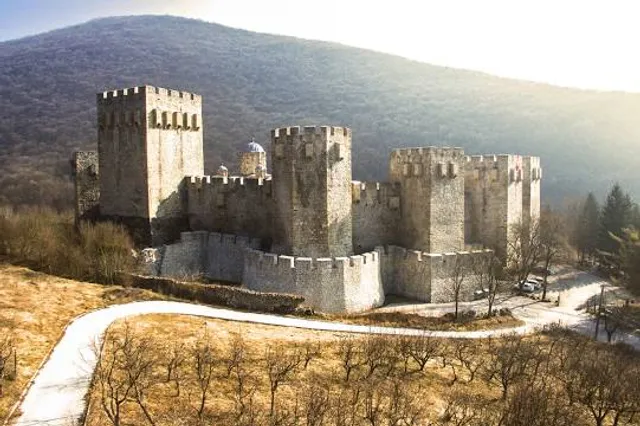
The Manasija fortification has eleven towers and a specially defended section at its east end with the twelfth tower. In their defence and architectural features, the towers are identical to each other - all having the ground level, six storeys and the passageway with merlons. They are connected by defensive walls - the ramparts, also with merlon crenelation. Between the towers and the ramparts a connection is made through special passages on the fourth storey of each tower, allowing the defenders to move around all the time, as well as a good monastery defence. Only a donjon was not built in the same way.

The towers and the ramparts have machicolations - defensive galleries, quite rare in Serbian military architecture. Actually, it came indirectly into use in Serbia - as a result of Byzantine influence, whereas the crusading campaigns to the Holy Land brought them to Byzantium from the West.

In front of the main wall with the towers, there was a lower rampart with a sloping scarp, today mostly in ruins, and in one section there was a ditch with the counterscarp. Such a defence concept allowed two level of the monastery defence, and with the implemented solutions on the Belgrade fortifications, it became a model for constructing the Smederevo double ramparts in the later period.

The donjon had its special place in the monastery defence system, today recognised and the Despot's Tower. It is the most massive and the only closed tower, with the ground level 11m elevated from the monastery yard level. The tower interior is partitioned with wooden structures between the five storeys. On the fifth level there are defensive galleries - machicolations, having a significant role in the safety of the donjon. The Despot's Tower of Manasija is one of the most successful structures in the Serbian military architecture and can compared with the crusade fortifications along the Asia Minor coast, but also with the towers of the Mount Athos monasteries.

In its special and general architectural arrangement and its numerous details, the monastery church belongs to the Morava School style in the Serbian sacral architecture. It consists of two clearly separated sections - the nave and the narthex. The nave is of a rectangular cruciform ground plan, with five cupolas combined with a triconch. It was built of sandstone blocks and the exterior decoration is made by combining the Byzantine and...

   Read more
avatar
5.0
7y

Saint Despot Stefan Lazarevic, 1377 Krusevac, July 19 ,1427 Crkvine-Mladenovac, the son of Saint Knez Lazar Hrebeljanovic (The Kosovo field battle 1389 )

Manasija is a Serbian Orthodox monastery near Despotovac, Serbia, founded by Despot Stefan Lazarević between 1406 and 1418. The church is dedicated to the Holy Trinity. It is one of the most significant monuments of medieval Serbian culture and it belongs to the "Morava school". The monastery is surrounded by massive walls and towers. Immediately following its foundation, the monastery became the cultural centre of the Serbian Despotate. Its School of Resava was well known for its manuscripts and translations throughout the 15th and 16th centuries, even after the fall of the Despotate to the Ottoman Turks. Manasija complex was declared Monument of Culture of Exceptional Importance in 1979, and it is protected by Republic of Serbia, and monastery have entered a UNESCO Tentative List Process in 2010

The Manasija Monastery, also known as Resava, was built two kilometres northwest from the town of Despotovac, in the picturesque ravine. Construction of the monumental mausoleum and the fortified town lasted about a decade, with breaks. During this period, a church, large refectory, lodgings, adjacent buildings, towers and walls, fortifications with protective walls and trenches were constructed.

…across hills and fields and deserts he went looking for a place on which to build the desired family, the silent home. Having found the most suitable and the best site to build the home and having said a prayer, he approached the task and laid the foundations in the name of the Holy Trinity, universal Divinity…" (Constantine the Philosopher, 1433)

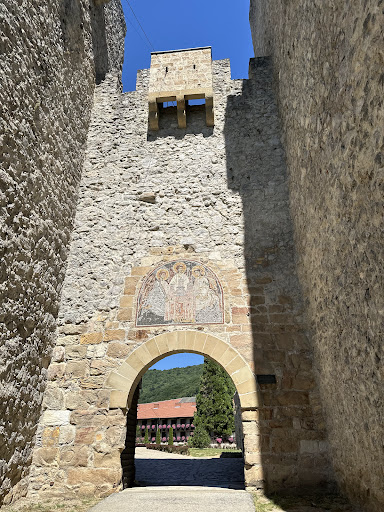
Despot Stefan Lazarević (founder's portrait (Fresco) on the left-hand wall in monastery church to the Holy Trinity (1413—1418).

Monastery founder Despot Stefan built Manasija to serve as his mausoleum; in its grandeur, his resting place surpassed everything ever built in the Pomoravlje. The monumental and imposing Church of Manasija, together with the contemporary monuments (Ravanica, Ljubostinja, Kalenić, Gornjak, Pavlica…), bear witness to the last great artistic achievement of Morava's Serbia.

The refectory was built parallel to the church, and is one of the largest known structures in medieval Serbia, which was completely covered in frescoes. The monastery compound was encircled and protected by strong walls with eleven towers...

   Read more

Page 1 of 7
Previous
Next

Posts

Jovan Hadzi-RisticJovan Hadzi-Ristic
The Manasija also known as Resava, is a Serbian Orthodox monastery near Despotovac, Serbia, founded by Despot Stefan Lazarević between 1406 and 1418. The church is dedicated to the Holy Trinity. It is one of the most significant monuments of medieval Serbian culture and it belongs to the "Morava school". The monastery is surrounded by massive walls and towers. Immediately following its foundation, the monastery became the cultural centre of the Serbian Despotate. Its School of Resava was well known for its manuscripts and translations throughout the 15th and 16th centuries, even after the fall of the Despotate to the Ottoman Turks. Manasija complex was declared Monument of Culture of Exceptional Importance in 1979, and it is protected by Republic of Serbia, and monastery have entered a UNESCO Tentative List Process in 2010. Construction of the monumental mausoleum and the fortified town lasted about a decade, with breaks. During this period, a church, large refectory, lodgings, adjacent buildings, towers and walls, fortifications with protective walls and trenches were constructed. Monastery founder Despot Stefan built Manasija to serve as his mausoleum; in its grandeur, his resting place surpassed everything ever built in the Pomoravlje. The monumental and imposing Church of Manasija, together with the contemporary monuments Ravanica, Ljubostinja, Kalenić, Gornjak, Pavlica, bear witness to the last great artistic achievement of Morava's Serbia. The refectory was built parallel to the church, and is one of the largest known structures in medieval Serbia, which was completely covered in frescoes. The monastery compound was encircled and protected by strong walls with eleven towers and trenches. The Church of Manasija Monastery was consecrated on the Feast of Pentecost in 1418, after about 2,000 square metres of frescoes had been painted. Only a quarter of the paintings survived, but even these are among the most beautiful in the outstandingly rich treasure of old Serbian painting. During the five centuries of Ottoman presence, the monastery was abandoned and wrecked several times. The lead roof was removed from the church, and so for over a century the frescoes inside were subject to damage by rainfall. As a result, about two-thirds of them were irremediably lost. In the 18th century, the western part of the church - the narthex - was heavily damaged in an explosion and was later rebuilt. The mosaic floor of that part of the church was preserved. Architecturally, the church belongs to the Morava school. The ground plan is in the form of a floral inscribed cross, combined with a trefoil. The twelve-sided dome above the central space rests on four free-standing pillars. At the eastern end, there are one large and two small apses, whereas two large choir conches flank the altar. Above the corners of the church, there are four little octagonal domes. The narthex consists of nine bays. Above the central bay, there is yet another dome that rests on four pillars. On the inside, the original floor has been preserved in the narthex, made of marble tiles in various colours. Nearly half of the frescoes have been destroyed. Despot Stefan is portrayed with the church model on the left-hand wall. The lower register of the north choir depicts warrior-saints in armour with swords and lances, as an authentic representation of contemporaneous soldiers. There are also 24 portraits of the Old Testament prophets and patriarchs in the spacious dome. The Monastery fortress, made up to defend the monastery, consists of 11 towers linked with huge walls and once, with trenches. An archaeological team from the UK led by Marin Brmbolićlocated the remains of a person whom some claim to be Despot Stefan Lazarević in the southwestern part of the monastery floor. DNA comparison with the remains of his father, Knez Lazar, confirmed that the remains belong to two closely related individuals. However, there is no doubt that Stefan's brother Vuk was buried in Manasija and the remains could as well easily be his.
Tamara ŽivkovićTamara Živković
Manasija Monastery is located in the Resava river gorge, about 135km south-east of Belgrade. As an endowment of Despot Stefan Lazarević, the monastery was built in the hard times after the Battle at Kosovo (1389) and its construction lasted from 1406/7 to 1418. Its special feature is its fortification, capable of defending and protecting the monastery settlement. The Manasija fortification has eleven towers and a specially defended section at its east end with the twelfth tower. In their defence and architectural features, the towers are identical to each other - all having the ground level, six storeys and the passageway with merlons. They are connected by defensive walls - the ramparts, also with merlon crenelation. Between the towers and the ramparts a connection is made through special passages on the fourth storey of each tower, allowing the defenders to move around all the time, as well as a good monastery defence. Only a donjon was not built in the same way. The towers and the ramparts have machicolations - defensive galleries, quite rare in Serbian military architecture. Actually, it came indirectly into use in Serbia - as a result of Byzantine influence, whereas the crusading campaigns to the Holy Land brought them to Byzantium from the West. In front of the main wall with the towers, there was a lower rampart with a sloping scarp, today mostly in ruins, and in one section there was a ditch with the counterscarp. Such a defence concept allowed two level of the monastery defence, and with the implemented solutions on the Belgrade fortifications, it became a model for constructing the Smederevo double ramparts in the later period. The donjon had its special place in the monastery defence system, today recognised and the Despot's Tower. It is the most massive and the only closed tower, with the ground level 11m elevated from the monastery yard level. The tower interior is partitioned with wooden structures between the five storeys. On the fifth level there are defensive galleries - machicolations, having a significant role in the safety of the donjon. The Despot's Tower of Manasija is one of the most successful structures in the Serbian military architecture and can compared with the crusade fortifications along the Asia Minor coast, but also with the towers of the Mount Athos monasteries. In its special and general architectural arrangement and its numerous details, the monastery church belongs to the Morava School style in the Serbian sacral architecture. It consists of two clearly separated sections - the nave and the narthex. The nave is of a rectangular cruciform ground plan, with five cupolas combined with a triconch. It was built of sandstone blocks and the exterior decoration is made by combining the Byzantine and Romanesque elements.
M MM M
Manasija Monastery, also known as Resava Monastery, is a significant medieval Serbian Orthodox monastery located near Despotovac in central Serbia. Established between 1407 and 1418 by Despot Stefan Lazarević, a revered Serbian ruler and poet, the monastery stands as a testament to the resilience and cultural flourishing of medieval Serbia. The monastery complex is renowned for its impressive fortifications, which include eleven towering defensive walls and robust battlements, reflecting the turbulent times during which it was built. These defensive structures were essential for protecting the monastery and its inhabitants from Ottoman invasions and other external threats. At the heart of Manasija Monastery is the Church of the Holy Trinity, a striking example of the Morava architectural style, which blends Byzantine and Gothic elements. The church’s exterior features elaborate stone carvings and decorative brickwork, while the interior is adorned with some of the most exquisite frescoes of the Serbian medieval period. These frescoes, created by skilled artists of the time, depict a variety of religious scenes, saints, and biblical narratives with remarkable detail and vibrant colors. Among the most notable are the portraits of Despot Stefan Lazarević and his family, showcasing the monastery's historical and dynastic significance. Manasija Monastery also housed a renowned scriptorium, where manuscripts were meticulously copied and illuminated, contributing to the preservation and dissemination of medieval Serbian literature and culture. The monastery became a vital spiritual and cultural center, fostering learning and religious devotion during a period of significant political upheaval. Today, Manasija Monastery remains an active religious site and a popular destination for visitors interested in history, art, and architecture. Its well-preserved fortifications and stunning artistic heritage make it a valuable cultural landmark, reflecting the enduring legacy of Serbia’s medieval past.
See more posts
See more posts
hotel
Find your stay

Pet-friendly Hotels in Despotovac Municipality

Find a cozy hotel nearby and make it a full experience.

The Manasija also known as Resava, is a Serbian Orthodox monastery near Despotovac, Serbia, founded by Despot Stefan Lazarević between 1406 and 1418. The church is dedicated to the Holy Trinity. It is one of the most significant monuments of medieval Serbian culture and it belongs to the "Morava school". The monastery is surrounded by massive walls and towers. Immediately following its foundation, the monastery became the cultural centre of the Serbian Despotate. Its School of Resava was well known for its manuscripts and translations throughout the 15th and 16th centuries, even after the fall of the Despotate to the Ottoman Turks. Manasija complex was declared Monument of Culture of Exceptional Importance in 1979, and it is protected by Republic of Serbia, and monastery have entered a UNESCO Tentative List Process in 2010. Construction of the monumental mausoleum and the fortified town lasted about a decade, with breaks. During this period, a church, large refectory, lodgings, adjacent buildings, towers and walls, fortifications with protective walls and trenches were constructed. Monastery founder Despot Stefan built Manasija to serve as his mausoleum; in its grandeur, his resting place surpassed everything ever built in the Pomoravlje. The monumental and imposing Church of Manasija, together with the contemporary monuments Ravanica, Ljubostinja, Kalenić, Gornjak, Pavlica, bear witness to the last great artistic achievement of Morava's Serbia. The refectory was built parallel to the church, and is one of the largest known structures in medieval Serbia, which was completely covered in frescoes. The monastery compound was encircled and protected by strong walls with eleven towers and trenches. The Church of Manasija Monastery was consecrated on the Feast of Pentecost in 1418, after about 2,000 square metres of frescoes had been painted. Only a quarter of the paintings survived, but even these are among the most beautiful in the outstandingly rich treasure of old Serbian painting. During the five centuries of Ottoman presence, the monastery was abandoned and wrecked several times. The lead roof was removed from the church, and so for over a century the frescoes inside were subject to damage by rainfall. As a result, about two-thirds of them were irremediably lost. In the 18th century, the western part of the church - the narthex - was heavily damaged in an explosion and was later rebuilt. The mosaic floor of that part of the church was preserved. Architecturally, the church belongs to the Morava school. The ground plan is in the form of a floral inscribed cross, combined with a trefoil. The twelve-sided dome above the central space rests on four free-standing pillars. At the eastern end, there are one large and two small apses, whereas two large choir conches flank the altar. Above the corners of the church, there are four little octagonal domes. The narthex consists of nine bays. Above the central bay, there is yet another dome that rests on four pillars. On the inside, the original floor has been preserved in the narthex, made of marble tiles in various colours. Nearly half of the frescoes have been destroyed. Despot Stefan is portrayed with the church model on the left-hand wall. The lower register of the north choir depicts warrior-saints in armour with swords and lances, as an authentic representation of contemporaneous soldiers. There are also 24 portraits of the Old Testament prophets and patriarchs in the spacious dome. The Monastery fortress, made up to defend the monastery, consists of 11 towers linked with huge walls and once, with trenches. An archaeological team from the UK led by Marin Brmbolićlocated the remains of a person whom some claim to be Despot Stefan Lazarević in the southwestern part of the monastery floor. DNA comparison with the remains of his father, Knez Lazar, confirmed that the remains belong to two closely related individuals. However, there is no doubt that Stefan's brother Vuk was buried in Manasija and the remains could as well easily be his.
Jovan Hadzi-Ristic

Jovan Hadzi-Ristic

hotel
Find your stay

Affordable Hotels in Despotovac Municipality

Find a cozy hotel nearby and make it a full experience.

Get the Appoverlay
Get the AppOne tap to find yournext favorite spots!
Manasija Monastery is located in the Resava river gorge, about 135km south-east of Belgrade. As an endowment of Despot Stefan Lazarević, the monastery was built in the hard times after the Battle at Kosovo (1389) and its construction lasted from 1406/7 to 1418. Its special feature is its fortification, capable of defending and protecting the monastery settlement. The Manasija fortification has eleven towers and a specially defended section at its east end with the twelfth tower. In their defence and architectural features, the towers are identical to each other - all having the ground level, six storeys and the passageway with merlons. They are connected by defensive walls - the ramparts, also with merlon crenelation. Between the towers and the ramparts a connection is made through special passages on the fourth storey of each tower, allowing the defenders to move around all the time, as well as a good monastery defence. Only a donjon was not built in the same way. The towers and the ramparts have machicolations - defensive galleries, quite rare in Serbian military architecture. Actually, it came indirectly into use in Serbia - as a result of Byzantine influence, whereas the crusading campaigns to the Holy Land brought them to Byzantium from the West. In front of the main wall with the towers, there was a lower rampart with a sloping scarp, today mostly in ruins, and in one section there was a ditch with the counterscarp. Such a defence concept allowed two level of the monastery defence, and with the implemented solutions on the Belgrade fortifications, it became a model for constructing the Smederevo double ramparts in the later period. The donjon had its special place in the monastery defence system, today recognised and the Despot's Tower. It is the most massive and the only closed tower, with the ground level 11m elevated from the monastery yard level. The tower interior is partitioned with wooden structures between the five storeys. On the fifth level there are defensive galleries - machicolations, having a significant role in the safety of the donjon. The Despot's Tower of Manasija is one of the most successful structures in the Serbian military architecture and can compared with the crusade fortifications along the Asia Minor coast, but also with the towers of the Mount Athos monasteries. In its special and general architectural arrangement and its numerous details, the monastery church belongs to the Morava School style in the Serbian sacral architecture. It consists of two clearly separated sections - the nave and the narthex. The nave is of a rectangular cruciform ground plan, with five cupolas combined with a triconch. It was built of sandstone blocks and the exterior decoration is made by combining the Byzantine and Romanesque elements.
Tamara Živković

Tamara Živković

hotel
Find your stay

The Coolest Hotels You Haven't Heard Of (Yet)

Find a cozy hotel nearby and make it a full experience.

hotel
Find your stay

Trending Stays Worth the Hype in Despotovac Municipality

Find a cozy hotel nearby and make it a full experience.

Manasija Monastery, also known as Resava Monastery, is a significant medieval Serbian Orthodox monastery located near Despotovac in central Serbia. Established between 1407 and 1418 by Despot Stefan Lazarević, a revered Serbian ruler and poet, the monastery stands as a testament to the resilience and cultural flourishing of medieval Serbia. The monastery complex is renowned for its impressive fortifications, which include eleven towering defensive walls and robust battlements, reflecting the turbulent times during which it was built. These defensive structures were essential for protecting the monastery and its inhabitants from Ottoman invasions and other external threats. At the heart of Manasija Monastery is the Church of the Holy Trinity, a striking example of the Morava architectural style, which blends Byzantine and Gothic elements. The church’s exterior features elaborate stone carvings and decorative brickwork, while the interior is adorned with some of the most exquisite frescoes of the Serbian medieval period. These frescoes, created by skilled artists of the time, depict a variety of religious scenes, saints, and biblical narratives with remarkable detail and vibrant colors. Among the most notable are the portraits of Despot Stefan Lazarević and his family, showcasing the monastery's historical and dynastic significance. Manasija Monastery also housed a renowned scriptorium, where manuscripts were meticulously copied and illuminated, contributing to the preservation and dissemination of medieval Serbian literature and culture. The monastery became a vital spiritual and cultural center, fostering learning and religious devotion during a period of significant political upheaval. Today, Manasija Monastery remains an active religious site and a popular destination for visitors interested in history, art, and architecture. Its well-preserved fortifications and stunning artistic heritage make it a valuable cultural landmark, reflecting the enduring legacy of Serbia’s medieval past.
M M

M M

See more posts
See more posts