Serbian Monastery Crna Reka - XIII century
Ribarice, Zubin Potok – Serbia
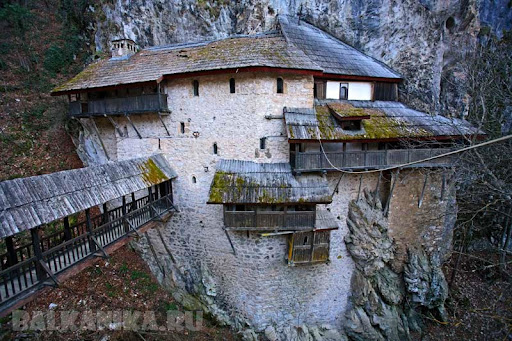
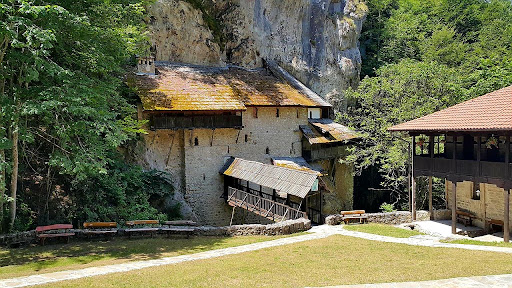
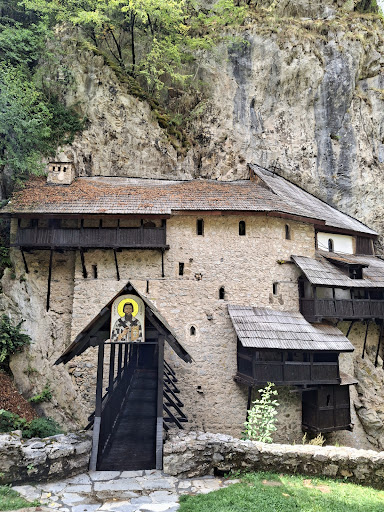
Monastery Crna Reka (Black River) is a monastic house in the middle of the mountains of the southern part of Central Serbia, Ribarici, ZubinPotok, located in the Black River gorge. It belongs to the Diocese of the Rashka-Prizren Serbian Orthodox Church. As a whole, it represents an immovable cultural asset as a cultural monument of great importance
It dates back to the thirteenth century when the church was built by a church devoted to St. Archangel Michael in a large cave above the Black River beds. Soon, the monks of the monks erected their cells around the church, tended the cave, and raised a small wooden bridge over the dry riverbed. The river sinks directly above the monastery and re-emerges from the earth after several hundred meters of its underwater stream. In the fifteenth century in the monastery lived the famous sculptor of St. Joan the Devic with his monks. The saint later moved to the area of Drenica, where he is still preserved to the Devic Monastery. The venerable Petar Korishki was in the monastery for a short time
The Black River has been abandoned for a long time. It was only in 1979 that the hieromonk Artemije, the later bishop of Rashka and Prizren, settled in a desolate monastery and soon gathered a young brotherhood around him. After his election for the bishop, Bishop Artemije gradually renewed the other male monasteries of the Raska-Prizren diocese with the help of black monks. At the time of Igumen Nikolai, the monastery brotherhood numbered up to 28 members. Since June 2010, the Iguman Monastery is Archimandrite Jovan (Jelenkov). At the beginning of 2012, the brotherhood counts thirteen monks. It is interesting that in Arandjelovdan in 1960, he was born, indicating, on the very day of his birth, the archangel's fervor in service and love for God, the novice Hariton Crnorechki, who was a monk of the monastery for a...
Read moreМанастир Црна Река представља јединствену архитектонску целину и редак драгуљ српске средњовековне културе. Посвећен је Светим Архангелима Михаилу и Гаврилу. Налази се на самој тромеђи Косовске Митровице, Тутина и Новог Пазара, а у атару села Рибариће, три километра од магистралног пута који једним краком води ка Црној Гори, а други крак пута ка Ибарском Колашину односно Космету. Манастир Црна Река је био духовно просветно жариште овог кутка српске земље. У другој деценији 15. века у манастиру је постојала школа за свештенике и монахе, а радила је и преписивачка радионица. Када се прође мост преко Ибра, одакле почиње језеро Газиводе, испод масива Мокре Горе и окружен столетњом буковом шумом, налази се манастир. Манастир Црна Река је попут ластавичијег гнезда приљубљен уз стрму стену, високо изнад реке понорнице Совара. О прошлости манастира мало се зна, а и ктитор је непознат. По једном предању настао је у 13. веку, а друго предање казује да је подигнут после Косовске битке. Манастир никад није рушен, те је сачувао свој првобитни изглед са изгубљеним келијама у пећини. Турски зулуми забележени су 1731. год. и о Божићу 1763. год. када је подметнут пожар, а било је и жртава. Тада је манастир запустео. Манастир је био духовно и просветно жариште овог кутка српске земље. У другој деценији 18. века у манастиру је постојала школа за свештенике и монахе, а радила је и преписивачка радионица. У тешким временима за манастир Студеницу, мошти Светог Стефана Првовенчаног и остале драгоцености пренете су 1687. године у Црну Реку, да би 1696. године биле поново враћене у Студеницу. Почетком рата 1945. године манастир је запустео, а бригу о овој духовној оази преузели су свештеници из околних места и мештани села Црна Река, Тутина и...
Read moreCrna Reka (Karaca) kelimesi Sırpça'da "Kara Nehir" anlamına geliyor. Crna Reka Manastırı: Sırbistan'ın güneybatısında, Novi Pazar ve Tutin şehirleri arasında, Crna Reka nehrinin kayalık bir kanyonunda yer alan bir manastır. Bu manastır, özellikle kendine özgü konumu ve tarihi önemiyle biliniyor. Manastırın ana kilisesi, nehrin üzerindeki bir mağaranın içine oyulmuş. Bu gizli konumu sayesinde yüzyıllar boyunca saldırılardan ve yağmalardan korunmuş. Tarih ve Mimari: Manastırın tam olarak ne zaman inşa edildiği bilinmese de, 13. yüzyıla kadar uzanan bir geçmişe sahip olduğu düşünülüyor. 16. yüzyıldan kalma değerli fresklere ev sahipliği yapıyor. En önemli kutsal emanetlerinden biri, 13. yüzyıl Sırp çilecisi Aziz Petar Koriški'nin kalıntılarıdır. Spiritüel Önemi: Manastır, Ortodoks Hristiyanlar için önemli bir hac merkezi. İyileştirici güçlere sahip olduğuna inanılan Aziz Petar Koriški'nin kalıntıları için hem Ortodoks hem de Müslüman inançlarından ziyaretçiler buraya geliyor. Erişim: Manastıra ulaşım biraz zorlu çünkü yol engebeli ve dar bir güzergahtan geçiyor. Ancak bu zorlu yolculuk, videoda da görüldüğü üzere ziyaretçilere doğayla iç içe, mistik ve huzurlu bir...
Read more