HTML SitemapExplore
logo
Find Things to DoFind The Best Restaurants

Waterfall Kozjak — Attraction in Kobarid

Name
Waterfall Kozjak
Description
Nearby attractions
Nearby restaurants
Nearby hotels
Camping Lazar
Trnovo ob Soči 1b, 5222 Kobarid, Slovenia
Apartmaji pri Jakobu Janja Novosel s.p.
Magozd 6, 5222 Kobarid, Slovenia
Apartma Logar
Magozd 1, 5222 Kobarid, Slovenia
Apartment Šavli
Magozd 5a, 5222 Kobarid, Slovenia
Related posts
Keywords
Waterfall Kozjak tourism.Waterfall Kozjak hotels.Waterfall Kozjak bed and breakfast. flights to Waterfall Kozjak.Waterfall Kozjak attractions.Waterfall Kozjak restaurants.Waterfall Kozjak travel.Waterfall Kozjak travel guide.Waterfall Kozjak travel blog.Waterfall Kozjak pictures.Waterfall Kozjak photos.Waterfall Kozjak travel tips.Waterfall Kozjak maps.Waterfall Kozjak things to do.
Waterfall Kozjak things to do, attractions, restaurants, events info and trip planning
Waterfall Kozjak
SloveniaKobaridWaterfall Kozjak

Basic Info

Waterfall Kozjak

5222 Kobarid, Slovenia
4.6(2.3K)
Open 24 hours
Save
spot

Ratings & Description

Info

Outdoor
Adventure
Pet friendly
attractions: , restaurants:
logoLearn more insights from Wanderboat AI.
Phone
+386 5 380 04 90
Website
dolina-soce.com

Plan your stay

hotel
Pet-friendly Hotels in Kobarid
Find a cozy hotel nearby and make it a full experience.
hotel
Affordable Hotels in Kobarid
Find a cozy hotel nearby and make it a full experience.
hotel
The Coolest Hotels You Haven't Heard Of (Yet)
Find a cozy hotel nearby and make it a full experience.
hotel
Trending Stays Worth the Hype in Kobarid
Find a cozy hotel nearby and make it a full experience.

Reviews

Things to do nearby

Arte e Vino a Le Pipine Winebar
Thu, Dec 11 • 8:00 PM
Piazza marconi, 4, 33040 Premariacco
View details
STAGE Liceo Classico CNPD 26-27
Fri, Dec 12 • 8:00 AM
Foro Giulio Cesare, 11, 33043 Cividale del Friuli
View details
Scuole Aperte Liceo Scienze Umane CNPD 26-27
Sun, Dec 14 • 10:00 AM
199 Via Alpe Adria, 33049 San Pietro Al Natisone
View details
Get the Appoverlay
Get the AppOne tap to find yournext favorite spots!
Wanderboat LogoWanderboat

Your everyday Al companion for getaway ideas

CompanyAbout Us
InformationAI Trip PlannerSitemap
SocialXInstagramTiktokLinkedin
LegalTerms of ServicePrivacy Policy

Get the app

© 2025 Wanderboat. All rights reserved.
logo

Reviews of Waterfall Kozjak

4.6
(2,288)
avatar
5.0
23w

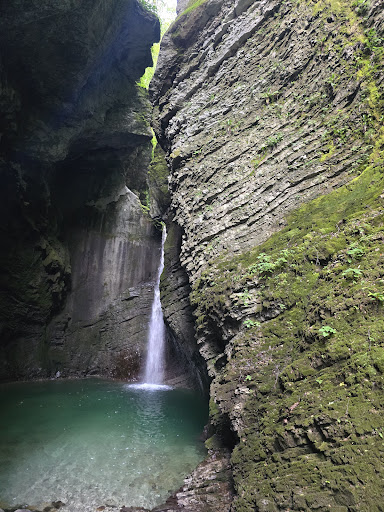
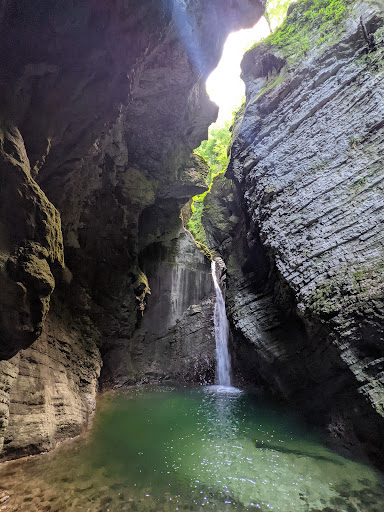
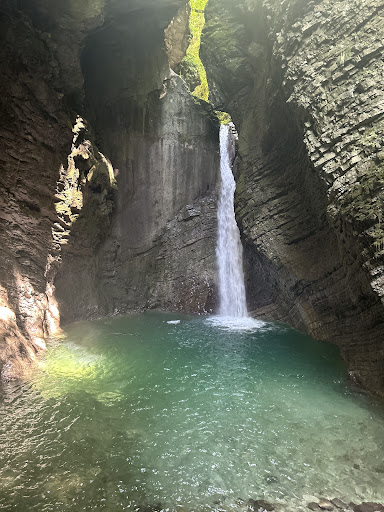
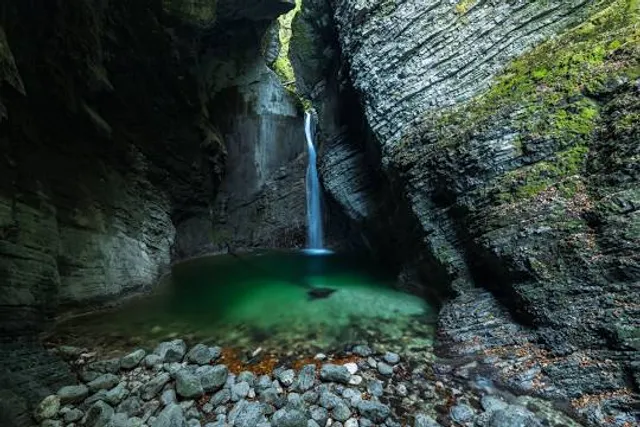
The Kozjak Waterfall (Slap Kozjak), located near Kobarid in western Slovenia, is not only visually stunning but also geologically fascinating. It's nestled in a narrow limestone canyon, and the geology around it tells a much older story than the waterfall itself.

🏞️ Geology of Kozjak Waterfall

Rock type: The canyon and surrounding area are predominantly composed of Upper Triassic to Lower Jurassic limestones, especially micritic limestones, which formed in shallow marine environments around 200 million years ago.

Formation of the canyon: Over time, the Kozjak stream eroded its way through the carbonate rock, carving out a narrow gorge. The soft, soluble nature of limestone, combined with tectonic uplift and high water flow, makes the area ideal for karstic erosion (i.e., caves, sinkholes, and gorges).

The waterfall: Kozjak Waterfall itself formed due to differential erosion—harder rock layers resisted erosion, while softer layers were worn down by water. The water plunges 15 meters into a dark, cave-like amphitheater—almost like a natural cathedral.

🪨 Stratigraphy and the Canyon's Layers

The canyon walls show visible stratification, horizontal to slightly inclined bedding planes, and occasional fault lines or fractures.

In some places, the layered appearance may include dark bands (sometimes rich in organic material or clays), which could be interpreted as markers of significant geological events, including:

Anoxic events (periods with little to no oxygen in oceanic environments)

Volcanic ash layers or other sedimentary signals

Possible links to mass extinction horizons, particularly the Triassic–Jurassic extinction (~201 million years ago)

While no specific extinction layer is marked or officially studied in the Kozjak canyon itself, similar formations in the Southern Alps and Dinarides region do include geochemical or fossil evidence of the end-Triassic mass extinction, one of the five major extinction events in Earth’s history.

🔍 Possible Geological Indicators of Mass Extinction:

If you're seeing distinctive stripes, they could be:

Black shales or marl layers: Indicative of low-oxygen conditions.

Clay-rich layers: From rapid climate shifts or volcanic activity.

Fossil-poor vs. fossil-rich layers: Extinction events often lead to abrupt changes in fossil presence.

Conodont or ammonite zones: Used globally for biostratigraphy across the Triassic-Jurassic boundary.

You might be onto something if the Kozjak canyon indeed exposes transitional layers from the Upper Triassic to Lower Jurassic, as Slovenia is well-known for having excellent exposures of this time period in other regions.

🧭 Extra Fun Fact:

The Soča River basin, where Kozjak lies, was shaped by both tectonic activity (due to the collision of the African and Eurasian plates) and Pleistocene glacial meltwater, which also contributed to...

   Read more

avatar
3.0
1y

My guidebook said this was a 90-minute hike, I was back in my car in less than 45-minutes. Nice hike, cool bridge. Area got too crowded as I left. When you’re about 5-minutes from the waterfall, there’s a wooden booth that looks like it could be selling ice cream or post cards and there’s a sign that says Kozjak Waterfall Entrance. I walked up to the booth to see what they had and realized it was tickets to continue the hike. As I paid, a staff member left the booth and told a group that they had to buy tickets and added: “come on, it’s obvious.” I thought that was unnecessary and rude. It is not obvious. I told them it wasn’t obvious. Instead, saying: “Excuse me. Sorry, but there’s an entrance fee” is more friendly and polite. The ticket price info is attached to the booth wall and most people are going to be looking at nature, not a tiny sign that isn’t parallel with the trail. Installing a visible sign below the entrance sign that says: ‘Buy Tickets at the Booth” or “5€ Adult __€ kid fee” would communicate there’s a charge. I was surprised that after the booth the hike is only about 5 more minutes and the waterfall was much smaller than I expected, the platform was too small and crowded for the number of people. I enjoyed the free portion of the hike. Not sure the waterfall with a fee...

   Read more
avatar
5.0
3y

A great place to visit. More by luck we got there early and there was no one else there which made it really nice. The viewing platform is well placed so even if there are other people they will not get in your photos. However photos don't do this place justice, it's one of those places you visit because of a nice picture but it's so much better in real life. Water level was low when we went, getting along the path when the water level rises would add a whole new experience as you go along the ledge. You should wear descent shoes on the last bit. The walk from the carpark to the pay hut is quite long and we encountered people who thought they had gone the wrong way but from the pay hut to the waterfall it's not far. The walk starts in hay meadows, then on a path above the river with some great views looking up the river, old tunnels (only go in a short distance) and a lovely wooded side valley. Portable toilets are just a few minutes from the carpark on the way to...

   Read more
Page 1 of 7
Previous
Next

Posts

Your browser does not support the video tag.
tripscouttripscout
A call for all adrenaline junkies, here are the best Cliff Jumping Spots In Slovenia. 🇸🇮 Share this with someone who needs to jump from this bridge!🤩 🎥 @psalm1.0 📍 1. Kanal ob Soci 2. Napoleon’s Bridge 3. Slap ob Idriici 3. Slap Kozjak
Petra HusPetra Hus
The Kozjak Waterfall (Slap Kozjak), located near Kobarid in western Slovenia, is not only visually stunning but also geologically fascinating. It's nestled in a narrow limestone canyon, and the geology around it tells a much older story than the waterfall itself. 🏞️ Geology of Kozjak Waterfall Rock type: The canyon and surrounding area are predominantly composed of Upper Triassic to Lower Jurassic limestones, especially micritic limestones, which formed in shallow marine environments around 200 million years ago. Formation of the canyon: Over time, the Kozjak stream eroded its way through the carbonate rock, carving out a narrow gorge. The soft, soluble nature of limestone, combined with tectonic uplift and high water flow, makes the area ideal for karstic erosion (i.e., caves, sinkholes, and gorges). The waterfall: Kozjak Waterfall itself formed due to differential erosion—harder rock layers resisted erosion, while softer layers were worn down by water. The water plunges 15 meters into a dark, cave-like amphitheater—almost like a natural cathedral. 🪨 Stratigraphy and the Canyon's Layers The canyon walls show visible stratification, horizontal to slightly inclined bedding planes, and occasional fault lines or fractures. In some places, the layered appearance may include dark bands (sometimes rich in organic material or clays), which could be interpreted as markers of significant geological events, including: Anoxic events (periods with little to no oxygen in oceanic environments) Volcanic ash layers or other sedimentary signals Possible links to mass extinction horizons, particularly the Triassic–Jurassic extinction (~201 million years ago) While no specific extinction layer is marked or officially studied in the Kozjak canyon itself, similar formations in the Southern Alps and Dinarides region do include geochemical or fossil evidence of the end-Triassic mass extinction, one of the five major extinction events in Earth’s history. 🔍 Possible Geological Indicators of Mass Extinction: If you're seeing distinctive stripes, they could be: Black shales or marl layers: Indicative of low-oxygen conditions. Clay-rich layers: From rapid climate shifts or volcanic activity. Fossil-poor vs. fossil-rich layers: Extinction events often lead to abrupt changes in fossil presence. Conodont or ammonite zones: Used globally for biostratigraphy across the Triassic-Jurassic boundary. You might be onto something if the Kozjak canyon indeed exposes transitional layers from the Upper Triassic to Lower Jurassic, as Slovenia is well-known for having excellent exposures of this time period in other regions. 🧭 Extra Fun Fact: The Soča River basin, where Kozjak lies, was shaped by both tectonic activity (due to the collision of the African and Eurasian plates) and Pleistocene glacial meltwater, which also contributed to canyon carving.
A SnailA Snail
A great place to visit. More by luck we got there early and there was no one else there which made it really nice. The viewing platform is well placed so even if there are other people they will not get in your photos. However photos don't do this place justice, it's one of those places you visit because of a nice picture but it's so much better in real life. Water level was low when we went, getting along the path when the water level rises would add a whole new experience as you go along the ledge. You should wear descent shoes on the last bit. The walk from the carpark to the pay hut is quite long and we encountered people who thought they had gone the wrong way but from the pay hut to the waterfall it's not far. The walk starts in hay meadows, then on a path above the river with some great views looking up the river, old tunnels (only go in a short distance) and a lovely wooded side valley. Portable toilets are just a few minutes from the carpark on the way to the waterfall.
See more posts
See more posts
hotel
Find your stay

Pet-friendly Hotels in Kobarid

Find a cozy hotel nearby and make it a full experience.

A call for all adrenaline junkies, here are the best Cliff Jumping Spots In Slovenia. 🇸🇮 Share this with someone who needs to jump from this bridge!🤩 🎥 @psalm1.0 📍 1. Kanal ob Soci 2. Napoleon’s Bridge 3. Slap ob Idriici 3. Slap Kozjak
tripscout

tripscout

hotel
Find your stay

Affordable Hotels in Kobarid

Find a cozy hotel nearby and make it a full experience.

Get the Appoverlay
Get the AppOne tap to find yournext favorite spots!
The Kozjak Waterfall (Slap Kozjak), located near Kobarid in western Slovenia, is not only visually stunning but also geologically fascinating. It's nestled in a narrow limestone canyon, and the geology around it tells a much older story than the waterfall itself. 🏞️ Geology of Kozjak Waterfall Rock type: The canyon and surrounding area are predominantly composed of Upper Triassic to Lower Jurassic limestones, especially micritic limestones, which formed in shallow marine environments around 200 million years ago. Formation of the canyon: Over time, the Kozjak stream eroded its way through the carbonate rock, carving out a narrow gorge. The soft, soluble nature of limestone, combined with tectonic uplift and high water flow, makes the area ideal for karstic erosion (i.e., caves, sinkholes, and gorges). The waterfall: Kozjak Waterfall itself formed due to differential erosion—harder rock layers resisted erosion, while softer layers were worn down by water. The water plunges 15 meters into a dark, cave-like amphitheater—almost like a natural cathedral. 🪨 Stratigraphy and the Canyon's Layers The canyon walls show visible stratification, horizontal to slightly inclined bedding planes, and occasional fault lines or fractures. In some places, the layered appearance may include dark bands (sometimes rich in organic material or clays), which could be interpreted as markers of significant geological events, including: Anoxic events (periods with little to no oxygen in oceanic environments) Volcanic ash layers or other sedimentary signals Possible links to mass extinction horizons, particularly the Triassic–Jurassic extinction (~201 million years ago) While no specific extinction layer is marked or officially studied in the Kozjak canyon itself, similar formations in the Southern Alps and Dinarides region do include geochemical or fossil evidence of the end-Triassic mass extinction, one of the five major extinction events in Earth’s history. 🔍 Possible Geological Indicators of Mass Extinction: If you're seeing distinctive stripes, they could be: Black shales or marl layers: Indicative of low-oxygen conditions. Clay-rich layers: From rapid climate shifts or volcanic activity. Fossil-poor vs. fossil-rich layers: Extinction events often lead to abrupt changes in fossil presence. Conodont or ammonite zones: Used globally for biostratigraphy across the Triassic-Jurassic boundary. You might be onto something if the Kozjak canyon indeed exposes transitional layers from the Upper Triassic to Lower Jurassic, as Slovenia is well-known for having excellent exposures of this time period in other regions. 🧭 Extra Fun Fact: The Soča River basin, where Kozjak lies, was shaped by both tectonic activity (due to the collision of the African and Eurasian plates) and Pleistocene glacial meltwater, which also contributed to canyon carving.
Petra Hus

Petra Hus

hotel
Find your stay

The Coolest Hotels You Haven't Heard Of (Yet)

Find a cozy hotel nearby and make it a full experience.

hotel
Find your stay

Trending Stays Worth the Hype in Kobarid

Find a cozy hotel nearby and make it a full experience.

A great place to visit. More by luck we got there early and there was no one else there which made it really nice. The viewing platform is well placed so even if there are other people they will not get in your photos. However photos don't do this place justice, it's one of those places you visit because of a nice picture but it's so much better in real life. Water level was low when we went, getting along the path when the water level rises would add a whole new experience as you go along the ledge. You should wear descent shoes on the last bit. The walk from the carpark to the pay hut is quite long and we encountered people who thought they had gone the wrong way but from the pay hut to the waterfall it's not far. The walk starts in hay meadows, then on a path above the river with some great views looking up the river, old tunnels (only go in a short distance) and a lovely wooded side valley. Portable toilets are just a few minutes from the carpark on the way to the waterfall.
A Snail

A Snail

See more posts
See more posts