Solkan Bridge – A Stone Giant of Engineering
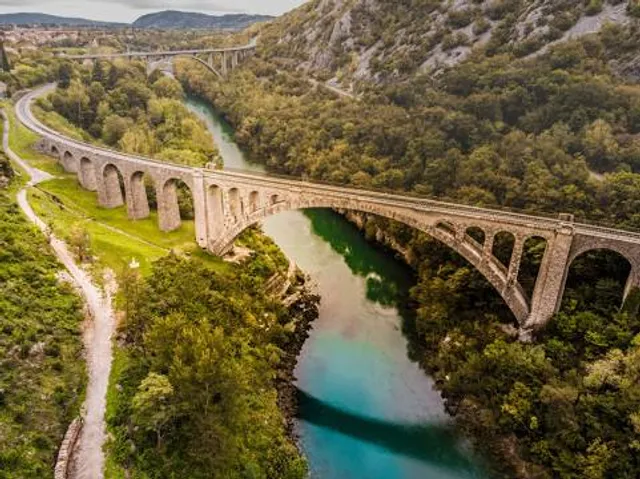
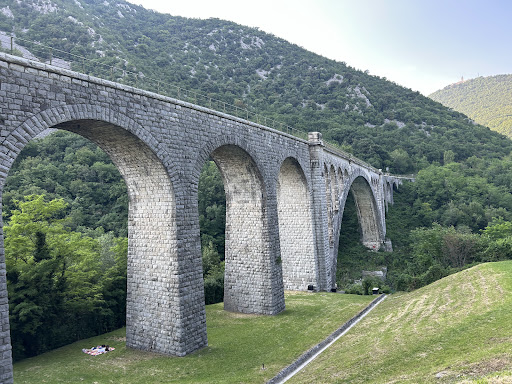
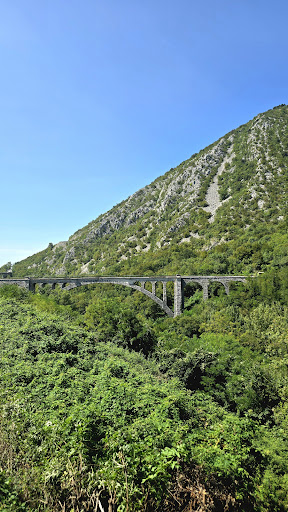
The Solkan Bridge (Solkanski most) is a remarkable railway bridge located near the town of Solkan, close to Nova Gorica in western Slovenia. It spans the Soča River and is renowned for having the longest stone railway arch in the world.
Key Facts
Construction completed: 1905 Length: 219.7 meters Main stone arch span: 85 meters (the longest among stone railway bridges) Material: Built from over 4,500 stone blocks Architect: Rudolf Jaussner Engineer: Leopold Oerley Rail line: Part of the historical Bohinj Railway, connecting Jesenice (Slovenia) and Trieste (Italy)
Historical Context
The Solkan Bridge was constructed during the Austro-Hungarian Empire to serve the strategic and commercial needs of the region. It was damaged during World War I in 1916 by retreating Austro-Hungarian forces and later rebuilt in its original form between 1925 and 1927 by the Italians, who controlled the territory at the time.
The bridge stands as a symbol of resilience and engineering mastery, surviving not only wars but also the test of time.
Architectural Significance
What makes the Solkan Bridge unique is that it’s entirely built from stone, unlike many other railway bridges that used steel or reinforced concrete. The central arch’s elegant semicircular design combined with its massive scale makes it an architectural masterpiece of the early 20th century.
Tourist Attraction
Today, the Solkan Bridge is both a functional railway bridge and a popular tourist landmark. It’s especially admired for:
Its picturesque setting above the emerald-green Soča River Opportunities for photography, hiking, and sightseeing Nearby adventure activities such as bungee jumping from a newer adjacent bridge
In Summary
The Solkan Bridge is not just a vital piece of railway infrastructure—it's a testament to historical engineering, a witness to war and peace, and a must-see attraction for anyone visiting the Soča Valley or interested in architecture,...
Read moreThe Solkan Bridge The Solkan Bridge is one of the most beautiful and well-known structures along the entire line. Its central span was built by the Reidlich & Berger company, and the end viaducts were built by Gorizia-based Sard & Lenassi. Initially a steel arched bridge was planned at this location, but later they decided to build a stone bridge instead. Construction caused numerous problems for the builders. The ground where the foundations of the bearing arch were to be built was not firm enough to bear such load, so the line of the bridge was slightly shifted. As a result, the span of the arch increased to 85 meters.
A wooden structure first had to be built on the spot where the bridge was planned. To ensure its strength and sufficient bearing capacity, a concrete foundation was built in the middle of the Soča River for an auxiliary pier. 1,161 m3 of wood and 25 tons of iron were used for the wooden part alone. For the central stone section, 1,960 m3 of stone blocks from the Nabrežina Quarry were used. Construction of the entire bridge was estimated at 1,100,000 Austrian crowns. Its fame spread across the entire monarchy, but was overshadowed in a few years by the outbreak of the First World War. In 1917, during the sixth Isonzo Offensive, the bridge was blown up and badly damaged. Italy started renovating it in 1925 and, during renovation, railroad traffic used a makeshift iron structure. During the Second World War, the bridge was blown up again, but fortunately it did not suffer great damage and was finally renovated in 1954. One hundred years later, it remains the world’s largest arched stone bridge. It is an outstanding product of Austrian bridge construction and the last of the large iron bridges built on Austro-Hungarian railroad lines at the beginning of the...
Read moreLa passerella ciclopedonale sull’Isonzo a Salcano è stata finalmente inaugurata, collegando le due sponde del fiume e permettendo a ciclisti e persone di passare dall’area di Gorizia e Nova Gorica a quella del Collio.
La struttura, realizzata dal Gect Go, è pronta da già da oltre un anno. Mancavano però i collegamenti alle piste ciclabili già esistenti per poterla aprire. E finalmente è stata inaugurata il 14 ottobre 2022.
Ora i ponti operativi che collegano le due sponde del corso d’acqua saranno tre sul versante sloveno. E si aggiungono a quello stradale che collega con la Brda e quello ferroviario, il più grande al mondo realizzato con una sola campata in pietra.
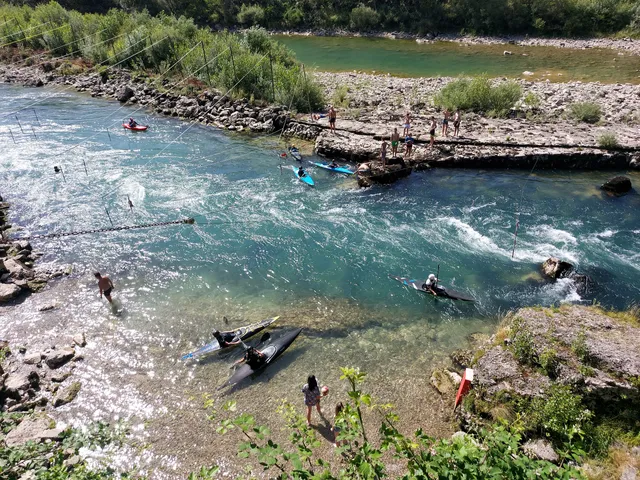
L’opera è stata realizzata all’altezza del Kayak center nell’ambito del progetto Interreg Italia-Slovenia 2014-2020 “Isonzo-Soča”, che ha portato circa 10 milioni di euro sul territorio transfrontaliero, di cui 2 milioni dedicati alla passerella.
L’investimento è stato cofinanziato da Eko Sklad, il Fondo pubblico ambientale sloveno. Attesi anche nuovi collegamenti ciclabili tra le due città, che saranno completati a breve.
Costruendo queste reti in Slovenia e Italia, le città puntano ad acquisire nuove opportunità ricreative per residenti e visitatori. Investendo in una nuova pista ciclabile di collegamento sulla riva destra dell’Isonzo, Nova Gorica ha inoltre consentito la creazione di un collegamento tra la passerella e la pista ciclabile già esistente in direzione di Plave, oltre alla la futura pista ciclabile per San Mauro e quindi Oslavia.
La passerella
Questa novità punta a incentivare il turismo, come rilevato dal sindaco di Gorizia Rodolfo Ziberna:
“Siamo e rimaniamo due città diverse con storie e caratteristiche diverse, che si sono unite per trasformarsi da periferia geografica in entità centrale e protagonista dell’Europa”.
Per l’omologo di Nova Gorica, Klemen Miklavič:
“Non abbiamo un nome, una bandiera, uno stemma comuni ma lavoriamo su progetti che migliorino la vita delle persone lungo il confine”.
Il percorso è lungo 570 metri. Dal Kayak Club di Solkan ora si può procedere fino a Plave sul versante occidentale, percorrendo la ciclabile già esistente, mentre dall’altra si potrà arrivare a Gorizia. Su questo punto, si stanno ultimando gli ultimi punti, sia con opere fisiche che con la...
Read more