HTML SitemapExplore
logo
Find Things to DoFind The Best Restaurants

Marakele National Park — Attraction in Modimolle Local Municipality

Name
Marakele National Park
Description
Marakele National Park is a National Park, part of the Waterberg Biosphere in Limpopo Province, South Africa.
Nearby attractions
Nearby restaurants
Nearby hotels
Related posts
Keywords
Marakele National Park tourism.Marakele National Park hotels.Marakele National Park bed and breakfast. flights to Marakele National Park.Marakele National Park attractions.Marakele National Park restaurants.Marakele National Park travel.Marakele National Park travel guide.Marakele National Park travel blog.Marakele National Park pictures.Marakele National Park photos.Marakele National Park travel tips.Marakele National Park maps.Marakele National Park things to do.
Marakele National Park things to do, attractions, restaurants, events info and trip planning
Marakele National Park
South AfricaLimpopoModimolle Local MunicipalityMarakele National Park

Basic Info

Marakele National Park

Waterberg mountain range, South Africa
4.4(610)
Open until 6:00 PM
Save
spot

Ratings & Description

Info

Marakele National Park is a National Park, part of the Waterberg Biosphere in Limpopo Province, South Africa.

Outdoor
Adventure
Scenic
Family friendly
Pet friendly
attractions: , restaurants:
logoLearn more insights from Wanderboat AI.
Phone
+27 14 777 6929
Website
sanparks.org
Open hoursSee all hours
Sat6 AM - 6 PMOpen

Plan your stay

hotel
Pet-friendly Hotels in Modimolle Local Municipality
Find a cozy hotel nearby and make it a full experience.
hotel
Affordable Hotels in Modimolle Local Municipality
Find a cozy hotel nearby and make it a full experience.
hotel
The Coolest Hotels You Haven't Heard Of (Yet)
Find a cozy hotel nearby and make it a full experience.
hotel
Trending Stays Worth the Hype in Modimolle Local Municipality
Find a cozy hotel nearby and make it a full experience.

Reviews

Get the Appoverlay
Get the AppOne tap to find yournext favorite spots!
Wanderboat LogoWanderboat

Your everyday Al companion for getaway ideas

CompanyAbout Us
InformationAI Trip PlannerSitemap
SocialXInstagramTiktokLinkedin
LegalTerms of ServicePrivacy Policy

Get the app

© 2025 Wanderboat. All rights reserved.
logo

Reviews of Marakele National Park

4.4
(610)
avatar
3.0
3y

Feb 2022. CAUTION - Never take the Rankin or Jan Trichardt Passes to Marakele Nature Reserve if you don’t have a 4x4 vehicle with max ground clearance and the best off-road tires money can buy. The road is in a very bad treacherous condition, especially the Jan Trichardt pass with massive dongas, rocky unmaintained roads with sharp rocks. Overall, we will give the Marakele experience an average of 3 out of 5 stars. Comments: ROADS - worth maybe 1 star You need a 4x4 vehicle with great road clearance and the best tires to drive on the gravel roads inside the park, especially in or after the rainy season. It seems as if road maintenance does not take place. There is 1 tar road to the top of mountain which is good.

ACCOMMODATION at Tlopi tented camp - 3 stars Each unit has a bedroom/bathroom tent and a kitchen tent. Its scenically very beautiful at the camp overlooking a dam with a view of the most beautiful mountains, but if you stay longer than 1 day the cleaning services are below par at the high rates charged. The units only get cleaned at 12, lunchtime, if you are lucky. No tables/chairs or shade on the decks to. The 2 chairs they have are rickety and very low hardly anyone can sit on it. Take with a fold up table and comfy camping chairs for outside use on the deck if you stay at Tlopi Camp more than 1 night. The separate kitchen with a lockable door, to keep out scavenging animals, was well stocked including a microwave, fridge/freezer, crockery, cutlery, pots & pans. The only negative here was a broken chair which was not replaced. I believe the CAMPING area is a very good with good ablutions. The road SIGNS are mostly in a terrible state with grass growing over it and unreadable with no distances indicated or the wrong distances. Most roads didn’t have any signs. The MAP is a disaster, no proper distances and not all roads are indicated on the map which makes trip planning difficult and one can get very lost. After the rains the dongas in the road are soooooo massive that the best 4x4 will not be able to get through, turning around is then the only answer. The topography, SCENERY and sunsets are the best we have ever seen, the Kransberg Mountains are magical. Unfortunately, after the rains with all the grass and Sekelbos growth next to the roads, one can hardly spot the GAME if it’s not walking in the road. We were lucky and saw lots of Rhino's in the road or right next to the road. Our friends saw a leopard, elephant, inyala, kudu, zebra, wildebeest and other small animals. The leopard was feasting on an impala ram hanging in a tree. BE CAREFUL, a female rhino charged out a bush right next to the road and slammed into our friend’s vehicle leaving a big hole and smashed bumper area. Fortunately nobody was hurt. They did not see it coming. The roads are very narrow and there was hardly room to get away. The Lenong DRIVE up the beautiful scenic mountain road to the VULTURE viewpoint was an experience of a lifetime but also scary on the very narrow road. But the driver has no joy having to keep eyes on the road all the time. According to available info there are apparently approximately 800 breading pairs of vultures in those mountains, BUT we saw NO vultures. Suggestion: Lenong viewpoint - Marakele (Sanparks) should consider building a nice safe mountain lookout area, with railings, where anybody can get out their vehicles and have incredible views for miles in all directions. Only the fit and healthy people can currently walk over the huge rocks to see the great view. There are no toilets available or an area to sit, relax and maybe see the vultures and enjoy the...

   Read more
avatar
5.0
24w

Marakele National Park, nestled in the heart of the Waterberg Mountains in Limpopo Province, South Africa, offers a compelling contrast to the country’s more arid or open savannah reserves. A look at the map of Marakele reveals a striking blend of rugged mountain terrain, winding forested valleys, and grassy plains—making it a remarkably diverse and scenic conservation area.

The park is divided into two distinct zones, which the map presents with clarity. The southern sector contains the main reception area and entrance gate (accessible near Thabazimbi), and is where visitors will find most of the self-catering accommodation options such as Bontle Tented Camp and campsites. This area is also where standard 2WD vehicles can comfortably navigate. The road system here, clearly marked on the map, is relatively compact and loops through open savannah and acacia woodlands—prime areas for spotting rhinos, elephants, and antelope.

The northern sector, on the other hand, is accessed via a private, controlled gate and is only reachable by 4x4. The map rightly highlights this difference with separate labeling for 4x4 trails. Here, the terrain becomes steeper and more dramatic as it ascends into the mountainous Waterberg escarpment. The Klipkraal and Tlopi Tented Camps are noted on the map along the Apiesrivier—this stretch of river valley is particularly picturesque, and the camps offer a serene, wild experience.

Perhaps the most iconic feature visible on the map is the Lenong Viewpoint—marked high up in the northern region. It’s one of the park’s most breathtaking lookouts, accessible via a winding 4x4 mountain pass. From here, visitors can take in panoramic views of the park’s undulating landscapes and spot the famous colony of Cape vultures soaring overhead. The road leading to this point is steep and challenging, and the map's elevation lines and terrain markings help convey this dramatic shift in altitude.

Water sources such as rivers, dams, and seasonal waterholes are also represented, and while Marakele is not as waterhole-centric as Kruger or Etosha, the presence of the Apiesrivier and other natural drainage systems adds richness to the ecosystem. The map provides insight into how these features support diverse wildlife and lush pockets of vegetation, even in dry months.

Another useful aspect of the map is the park's boundary with the greater Marataba section, a private concession that is sometimes shown for orientation. While access to Marataba is restricted to lodge guests, its presence on the map helps illustrate the broader conservation area and connectivity with adjacent reserves.

The park’s biodiversity is mirrored in the topographic detail of the map. The dense green areas reflect thick bushveld and forested slopes, while the flatter southern regions are lighter in tone, indicative of savannah and grassland. This visual guide helps visitors anticipate what types of flora and fauna to expect in each zone.

Overall, the map of Marakele National Park offers more than just directional assistance—it’s a window into the park’s natural contrasts. From lowland plains teeming with game to towering peaks that touch the clouds, the map paints a vivid picture of a hidden gem in South Africa’s conservation landscape. Whether you're a self-driver or an off-road adventurer, this map is an essential companion to unlocking Marakele’s...

   Read more
avatar
4.0
9y

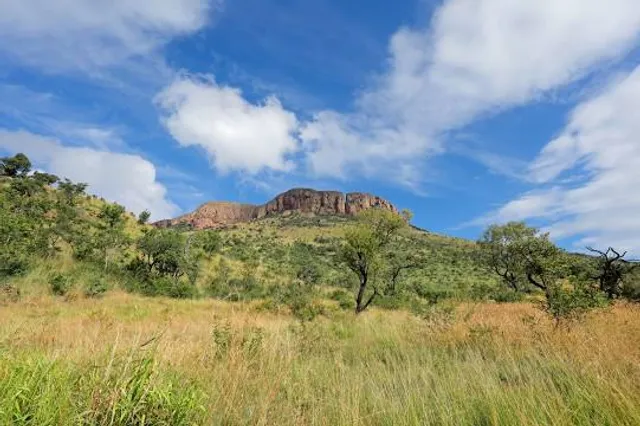
Fantastiese park, dit is nie op die standaard toeriste kaart en definitief die moeite werd om te besoek.

Gigantic park off the beaten track between Ellisras-Vaalwater-Thabazimbi. I was a day visitor since live close by outside Ellisras. Access route to the main gate is via ashphalted road in very good condition. The park is not yet as well developed with roads as the more well known parks (Addo, Pilanesberg, etc). The Lenong viewing point is a must visit, views breathtaking, allow at least 1 hour's drive from the main gate. Roads are in very good condition and the road to the Lenong viewpoint ashphalted and in excellent condition. The road skirting and snaking up the side of the mountain can only accomodate one vehicle, with some awesome views along the way. If you find yourself with an oncoming vehicle you might have to reverse to a dent as the road is too narrow to allow more than one vehicle to pass. There is a vertical drop next to the road, very dangerous if you are not careful.

There is a small kiosk by the main gate, only cold drinks and snacks. There is no shop in the park, so ensure that you arrive with all your food. Entrance fee was dirt cheap, on 28/12/2015 we paid only R260 for three adults + 2 kids under 5. Incredible value,

The change in vegetation is also very prevelant, from the highest pont at 2070 meters is hiugh rainfall rolling hills to the downward slopes with some sub-tropical plants and ferns and then descending further one finds the bone dry savannah. This is a Big 5 park but unfortunately we only saw small game and zebras.

People staying at the tented camps told me that the facilities are top notch, just like all the other SANParks facilites, well maintained. Booking is advised and can be done from the...

   Read more
Page 1 of 7
Previous
Next

Posts

C MollC Moll
Feb 2022. CAUTION - Never take the Rankin or Jan Trichardt Passes to Marakele Nature Reserve if you don’t have a 4x4 vehicle with max ground clearance and the best off-road tires money can buy. The road is in a very bad treacherous condition, especially the Jan Trichardt pass with massive dongas, rocky unmaintained roads with sharp rocks. Overall, we will give the Marakele experience an average of 3 out of 5 stars. Comments: ROADS - worth maybe 1 star You need a 4x4 vehicle with great road clearance and the best tires to drive on the gravel roads inside the park, especially in or after the rainy season. It seems as if road maintenance does not take place. There is 1 tar road to the top of mountain which is good. ACCOMMODATION at Tlopi tented camp - 3 stars Each unit has a bedroom/bathroom tent and a kitchen tent. Its scenically very beautiful at the camp overlooking a dam with a view of the most beautiful mountains, but if you stay longer than 1 day the cleaning services are below par at the high rates charged. The units only get cleaned at 12, lunchtime, if you are lucky. No tables/chairs or shade on the decks to. The 2 chairs they have are rickety and very low hardly anyone can sit on it. Take with a fold up table and comfy camping chairs for outside use on the deck if you stay at Tlopi Camp more than 1 night. The separate kitchen with a lockable door, to keep out scavenging animals, was well stocked including a microwave, fridge/freezer, crockery, cutlery, pots & pans. The only negative here was a broken chair which was not replaced. I believe the CAMPING area is a very good with good ablutions. The road SIGNS are mostly in a terrible state with grass growing over it and unreadable with no distances indicated or the wrong distances. Most roads didn’t have any signs. The MAP is a disaster, no proper distances and not all roads are indicated on the map which makes trip planning difficult and one can get very lost. After the rains the dongas in the road are soooooo massive that the best 4x4 will not be able to get through, turning around is then the only answer. The topography, SCENERY and sunsets are the best we have ever seen, the Kransberg Mountains are magical. Unfortunately, after the rains with all the grass and Sekelbos growth next to the roads, one can hardly spot the GAME if it’s not walking in the road. We were lucky and saw lots of Rhino's in the road or right next to the road. Our friends saw a leopard, elephant, inyala, kudu, zebra, wildebeest and other small animals. The leopard was feasting on an impala ram hanging in a tree. BE CAREFUL, a female rhino charged out a bush right next to the road and slammed into our friend’s vehicle leaving a big hole and smashed bumper area. Fortunately nobody was hurt. They did not see it coming. The roads are very narrow and there was hardly room to get away. The Lenong DRIVE up the beautiful scenic mountain road to the VULTURE viewpoint was an experience of a lifetime but also scary on the very narrow road. But the driver has no joy having to keep eyes on the road all the time. According to available info there are apparently approximately 800 breading pairs of vultures in those mountains, BUT we saw NO vultures. Suggestion: Lenong viewpoint - Marakele (Sanparks) should consider building a nice safe mountain lookout area, with railings, where anybody can get out their vehicles and have incredible views for miles in all directions. Only the fit and healthy people can currently walk over the huge rocks to see the great view. There are no toilets available or an area to sit, relax and maybe see the vultures and enjoy the surroundings.
krraziekrrazie
Marakele National Park, nestled in the heart of the Waterberg Mountains in Limpopo Province, South Africa, offers a compelling contrast to the country’s more arid or open savannah reserves. A look at the map of Marakele reveals a striking blend of rugged mountain terrain, winding forested valleys, and grassy plains—making it a remarkably diverse and scenic conservation area. The park is divided into two distinct zones, which the map presents with clarity. The southern sector contains the main reception area and entrance gate (accessible near Thabazimbi), and is where visitors will find most of the self-catering accommodation options such as Bontle Tented Camp and campsites. This area is also where standard 2WD vehicles can comfortably navigate. The road system here, clearly marked on the map, is relatively compact and loops through open savannah and acacia woodlands—prime areas for spotting rhinos, elephants, and antelope. The northern sector, on the other hand, is accessed via a private, controlled gate and is only reachable by 4x4. The map rightly highlights this difference with separate labeling for 4x4 trails. Here, the terrain becomes steeper and more dramatic as it ascends into the mountainous Waterberg escarpment. The Klipkraal and Tlopi Tented Camps are noted on the map along the Apiesrivier—this stretch of river valley is particularly picturesque, and the camps offer a serene, wild experience. Perhaps the most iconic feature visible on the map is the Lenong Viewpoint—marked high up in the northern region. It’s one of the park’s most breathtaking lookouts, accessible via a winding 4x4 mountain pass. From here, visitors can take in panoramic views of the park’s undulating landscapes and spot the famous colony of Cape vultures soaring overhead. The road leading to this point is steep and challenging, and the map's elevation lines and terrain markings help convey this dramatic shift in altitude. Water sources such as rivers, dams, and seasonal waterholes are also represented, and while Marakele is not as waterhole-centric as Kruger or Etosha, the presence of the Apiesrivier and other natural drainage systems adds richness to the ecosystem. The map provides insight into how these features support diverse wildlife and lush pockets of vegetation, even in dry months. Another useful aspect of the map is the park's boundary with the greater Marataba section, a private concession that is sometimes shown for orientation. While access to Marataba is restricted to lodge guests, its presence on the map helps illustrate the broader conservation area and connectivity with adjacent reserves. The park’s biodiversity is mirrored in the topographic detail of the map. The dense green areas reflect thick bushveld and forested slopes, while the flatter southern regions are lighter in tone, indicative of savannah and grassland. This visual guide helps visitors anticipate what types of flora and fauna to expect in each zone. Overall, the map of Marakele National Park offers more than just directional assistance—it’s a window into the park’s natural contrasts. From lowland plains teeming with game to towering peaks that touch the clouds, the map paints a vivid picture of a hidden gem in South Africa’s conservation landscape. Whether you're a self-driver or an off-road adventurer, this map is an essential companion to unlocking Marakele’s wild beauty.
Liz MorelliLiz Morelli
The Marakele National Park was a real surprise. It is an amazing place! The landscapes are just breath-taking with the added bonus of being in a Big 5 game reserve. We visited the National Park two days ago. It rained a lot and the roads were quite muddy and slippery. You definetely need a high clearance vehicle if you visit during the rainy season. Before entering the reception office you are being asked to go through the screening for Covid-19 at the desk located outside the entrance. The lady at the reception was friendly and we paid R120 for 2 people. Only cards are accepted. A very basic map was given to us without unfortunately pointing out that the Picnic site on the map is closed and a new one has been opened on the Tsessebe loop which we didn't see as we almost got stuck driving there. The Park is divided in 2 sections. The Big 5 are in the furtherest part of the park. You need to drive to a gate, inside the park, press a button for it to open and go through an overpass to enter big 5 territory. There aren't a lot of roads in the park. The most scenic one is the Lenong Drive that takes you up to 2000m to the Lenong View Point. Views are spectacular and you can also admire the endangered Cape Volture colonies. You are allowed to walk to the view point, but always be careful as you are in an area where wild animals live. The road to arrive at the top is quite narrow and steep but paved and tarred. The Tlopi Tended Camp is also located on this side of the reserve, on a dam. What we though it is missing is a picnic site on the Big 5 part of the park. It would have been nice to stop and have a break and have lunch or a coffee not in the car. We didn't see a lot of game. But definetely a must to visit.
See more posts
See more posts
hotel
Find your stay

Pet-friendly Hotels in Modimolle Local Municipality

Find a cozy hotel nearby and make it a full experience.

Feb 2022. CAUTION - Never take the Rankin or Jan Trichardt Passes to Marakele Nature Reserve if you don’t have a 4x4 vehicle with max ground clearance and the best off-road tires money can buy. The road is in a very bad treacherous condition, especially the Jan Trichardt pass with massive dongas, rocky unmaintained roads with sharp rocks. Overall, we will give the Marakele experience an average of 3 out of 5 stars. Comments: ROADS - worth maybe 1 star You need a 4x4 vehicle with great road clearance and the best tires to drive on the gravel roads inside the park, especially in or after the rainy season. It seems as if road maintenance does not take place. There is 1 tar road to the top of mountain which is good. ACCOMMODATION at Tlopi tented camp - 3 stars Each unit has a bedroom/bathroom tent and a kitchen tent. Its scenically very beautiful at the camp overlooking a dam with a view of the most beautiful mountains, but if you stay longer than 1 day the cleaning services are below par at the high rates charged. The units only get cleaned at 12, lunchtime, if you are lucky. No tables/chairs or shade on the decks to. The 2 chairs they have are rickety and very low hardly anyone can sit on it. Take with a fold up table and comfy camping chairs for outside use on the deck if you stay at Tlopi Camp more than 1 night. The separate kitchen with a lockable door, to keep out scavenging animals, was well stocked including a microwave, fridge/freezer, crockery, cutlery, pots & pans. The only negative here was a broken chair which was not replaced. I believe the CAMPING area is a very good with good ablutions. The road SIGNS are mostly in a terrible state with grass growing over it and unreadable with no distances indicated or the wrong distances. Most roads didn’t have any signs. The MAP is a disaster, no proper distances and not all roads are indicated on the map which makes trip planning difficult and one can get very lost. After the rains the dongas in the road are soooooo massive that the best 4x4 will not be able to get through, turning around is then the only answer. The topography, SCENERY and sunsets are the best we have ever seen, the Kransberg Mountains are magical. Unfortunately, after the rains with all the grass and Sekelbos growth next to the roads, one can hardly spot the GAME if it’s not walking in the road. We were lucky and saw lots of Rhino's in the road or right next to the road. Our friends saw a leopard, elephant, inyala, kudu, zebra, wildebeest and other small animals. The leopard was feasting on an impala ram hanging in a tree. BE CAREFUL, a female rhino charged out a bush right next to the road and slammed into our friend’s vehicle leaving a big hole and smashed bumper area. Fortunately nobody was hurt. They did not see it coming. The roads are very narrow and there was hardly room to get away. The Lenong DRIVE up the beautiful scenic mountain road to the VULTURE viewpoint was an experience of a lifetime but also scary on the very narrow road. But the driver has no joy having to keep eyes on the road all the time. According to available info there are apparently approximately 800 breading pairs of vultures in those mountains, BUT we saw NO vultures. Suggestion: Lenong viewpoint - Marakele (Sanparks) should consider building a nice safe mountain lookout area, with railings, where anybody can get out their vehicles and have incredible views for miles in all directions. Only the fit and healthy people can currently walk over the huge rocks to see the great view. There are no toilets available or an area to sit, relax and maybe see the vultures and enjoy the surroundings.
C Moll

C Moll

hotel
Find your stay

Affordable Hotels in Modimolle Local Municipality

Find a cozy hotel nearby and make it a full experience.

Get the Appoverlay
Get the AppOne tap to find yournext favorite spots!
Marakele National Park, nestled in the heart of the Waterberg Mountains in Limpopo Province, South Africa, offers a compelling contrast to the country’s more arid or open savannah reserves. A look at the map of Marakele reveals a striking blend of rugged mountain terrain, winding forested valleys, and grassy plains—making it a remarkably diverse and scenic conservation area. The park is divided into two distinct zones, which the map presents with clarity. The southern sector contains the main reception area and entrance gate (accessible near Thabazimbi), and is where visitors will find most of the self-catering accommodation options such as Bontle Tented Camp and campsites. This area is also where standard 2WD vehicles can comfortably navigate. The road system here, clearly marked on the map, is relatively compact and loops through open savannah and acacia woodlands—prime areas for spotting rhinos, elephants, and antelope. The northern sector, on the other hand, is accessed via a private, controlled gate and is only reachable by 4x4. The map rightly highlights this difference with separate labeling for 4x4 trails. Here, the terrain becomes steeper and more dramatic as it ascends into the mountainous Waterberg escarpment. The Klipkraal and Tlopi Tented Camps are noted on the map along the Apiesrivier—this stretch of river valley is particularly picturesque, and the camps offer a serene, wild experience. Perhaps the most iconic feature visible on the map is the Lenong Viewpoint—marked high up in the northern region. It’s one of the park’s most breathtaking lookouts, accessible via a winding 4x4 mountain pass. From here, visitors can take in panoramic views of the park’s undulating landscapes and spot the famous colony of Cape vultures soaring overhead. The road leading to this point is steep and challenging, and the map's elevation lines and terrain markings help convey this dramatic shift in altitude. Water sources such as rivers, dams, and seasonal waterholes are also represented, and while Marakele is not as waterhole-centric as Kruger or Etosha, the presence of the Apiesrivier and other natural drainage systems adds richness to the ecosystem. The map provides insight into how these features support diverse wildlife and lush pockets of vegetation, even in dry months. Another useful aspect of the map is the park's boundary with the greater Marataba section, a private concession that is sometimes shown for orientation. While access to Marataba is restricted to lodge guests, its presence on the map helps illustrate the broader conservation area and connectivity with adjacent reserves. The park’s biodiversity is mirrored in the topographic detail of the map. The dense green areas reflect thick bushveld and forested slopes, while the flatter southern regions are lighter in tone, indicative of savannah and grassland. This visual guide helps visitors anticipate what types of flora and fauna to expect in each zone. Overall, the map of Marakele National Park offers more than just directional assistance—it’s a window into the park’s natural contrasts. From lowland plains teeming with game to towering peaks that touch the clouds, the map paints a vivid picture of a hidden gem in South Africa’s conservation landscape. Whether you're a self-driver or an off-road adventurer, this map is an essential companion to unlocking Marakele’s wild beauty.
krrazie

krrazie

hotel
Find your stay

The Coolest Hotels You Haven't Heard Of (Yet)

Find a cozy hotel nearby and make it a full experience.

hotel
Find your stay

Trending Stays Worth the Hype in Modimolle Local Municipality

Find a cozy hotel nearby and make it a full experience.

The Marakele National Park was a real surprise. It is an amazing place! The landscapes are just breath-taking with the added bonus of being in a Big 5 game reserve. We visited the National Park two days ago. It rained a lot and the roads were quite muddy and slippery. You definetely need a high clearance vehicle if you visit during the rainy season. Before entering the reception office you are being asked to go through the screening for Covid-19 at the desk located outside the entrance. The lady at the reception was friendly and we paid R120 for 2 people. Only cards are accepted. A very basic map was given to us without unfortunately pointing out that the Picnic site on the map is closed and a new one has been opened on the Tsessebe loop which we didn't see as we almost got stuck driving there. The Park is divided in 2 sections. The Big 5 are in the furtherest part of the park. You need to drive to a gate, inside the park, press a button for it to open and go through an overpass to enter big 5 territory. There aren't a lot of roads in the park. The most scenic one is the Lenong Drive that takes you up to 2000m to the Lenong View Point. Views are spectacular and you can also admire the endangered Cape Volture colonies. You are allowed to walk to the view point, but always be careful as you are in an area where wild animals live. The road to arrive at the top is quite narrow and steep but paved and tarred. The Tlopi Tended Camp is also located on this side of the reserve, on a dam. What we though it is missing is a picnic site on the Big 5 part of the park. It would have been nice to stop and have a break and have lunch or a coffee not in the car. We didn't see a lot of game. But definetely a must to visit.
Liz Morelli

Liz Morelli

See more posts
See more posts