Small but well-laid out cave experience.
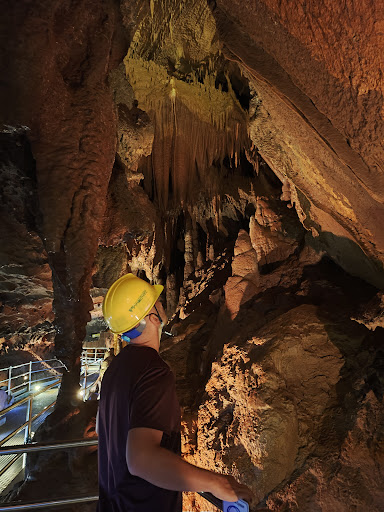
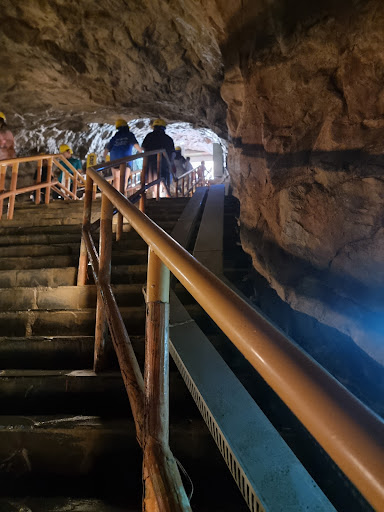
Metal grid walkways and railings: some areas can be slippery with the damp environment. Helmets mandatory and provided - the roof is low throughout but in most places visitors can walk upright. A few areas are tight either horizontally or vertically. Two areas of the cave are listed as more challenging to access, and those over 60 are recommended a short cut alternative route which avoids those areas and shortens the total circle route. One involved a set of steps only about 18 inches wide that had to be descended by sitting and bumping down as the overhead height would not permit of stepping down. One of the party members is plus-size and 5'8", and was able to navigate all tight spots unassisted, but apart from the suggested detours there are no accommodations for mobility-reduced or disabled. Children should be able to ascend stairs, hold handrails, and walk at all times, as the trails are narrow - I would recommend at least 5 years of age to be able to follow directions and enjoy the natural environment.
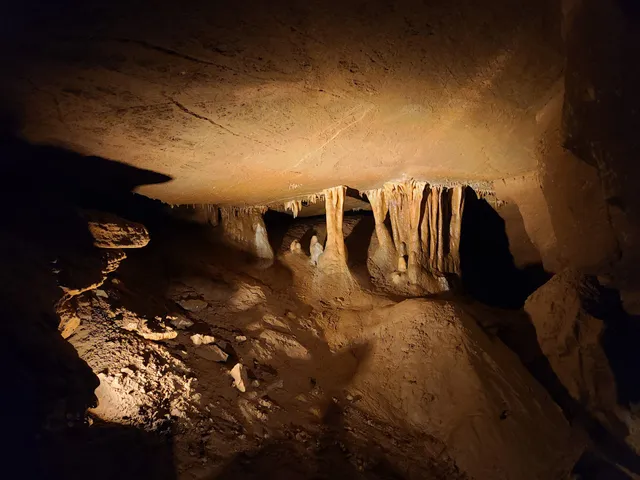
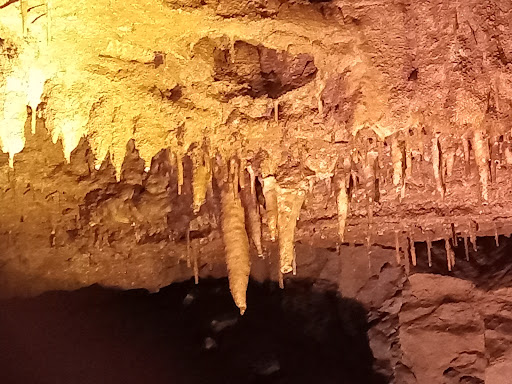
Formations are erratically protected from visitors. In places a metal grid is erected overhead, apparently to dissuade the breaking off of miniature stalactites. In other areas the roof and floor formations are fully within reach and in still others it is unavoidable to pass an area without touching them. The cave does seem to be free of litter or graffiti.
There are name signs for some but not all of the focal features on the map. There are audio tour icons on the signs, but we weren't offered headsets and didn't see other visitors using them. Names are in both English and Korean, but not the details. Maps do come in English, Korean, Chinese, and Russian, to the best of our recollection.
There are, for better or worse, few attempts to 'add value' to the cave. No real bats (apparently very rare) , no videos or zoological displays, little scientific detail, no son-et-luminiere (one twinkle star projector in the largest cavern, of the sort you might buy for your yard at Christmas, and a flickering projector showing the cave logo as you enter), no bat- or geologically- related souvenirs in the gift shop aside from a handful of stone and faux stone jewelry pieces, no costumed mascots or plushies for the tots. No food services on the premises. There is a multimedia 'ride' in the large building above the cave but was closed 'due to COVID' during our visit in August 2021. Admission was inexpensive...around 5000 won for an adult ticket if memory serves.
Summary: if you like caves for themselves, are reasonably mobile, and want to spend a summer afternoon out of the heat doing something that isn't one of Donghae's great beaches, give the...
Read moreCheongok Golden Bat Cave(#천곡황금박쥐동굴) in Donghae is the only natural cave in Korea located in a downtown area. Estimated to have been created 400 to 500 million years ago, the cave is known to serve as a habitat for the endangered golden bats. The cave's total length stretches for 1,510 meters, with only 810 meters of the cave open the public while the rest of cave remains protected for preservation purposes. The cave's unique features provide a grand spectacle for tourists and great speleological samples for...
Read moreThe price of admission is 5000 at the moment, which is excellent value for money. Despite not seeing a bat, the trip was still entertaining.
At the entrance there are free lockers and a helmet is given for protection. The cave is big, well lit and marked with a number of corridors. There are a number of staircases and places where you need to lower your body to cross over. The cave wasn't cold at the time and the short sleeve was enough. Wear good shoes as it might...
Read more