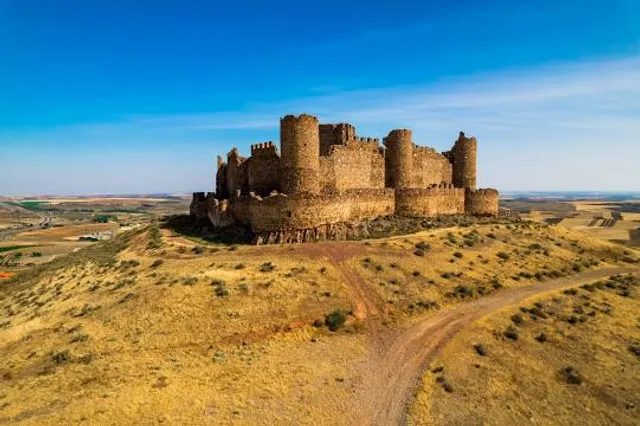
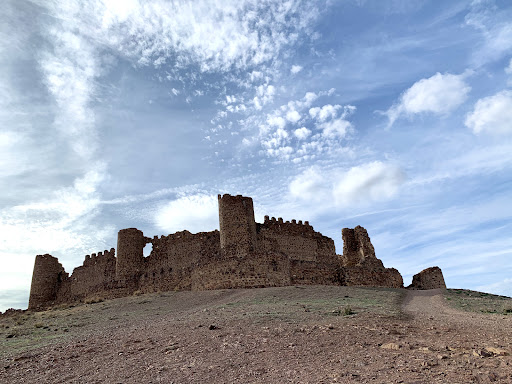
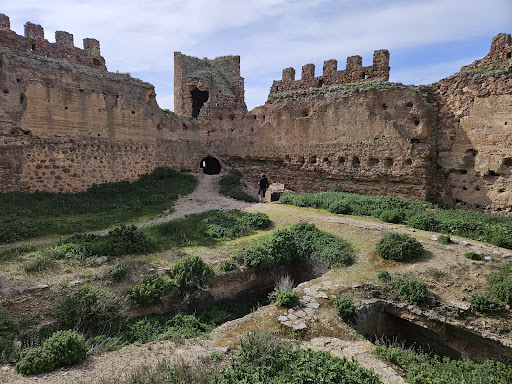
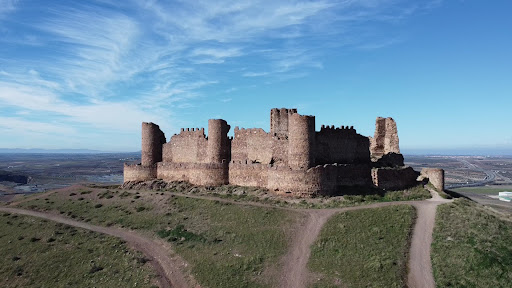
A beautiful castle ruins from the time of the Caliphate of Córdoba. You can drive right up to the castle on an unpaved road from Almonacid de Toledo village and then explore the ruin and its commanding views. At the time it controlled the trade routes from Toledo to Murcia, and it was part of a series of fortifications along the route. The castle is not excavated so many parts of it are partially buried although there are two towers that are partially intact. The place is deserted and that makes the atmosphere special and peaceful, besides the views are lovely. It’s a great pity this beautiful castle is not better kept and restored as I think it could have helped a great deal the poor and neglected village below. However this also means it has escaped much of the “restorations” of many other Spanish castles that destroyed their “history” and charm and replaced it with either a false medieval...
Read moreWe saw this on a hill top south of Toledo as we were driving to Toledo for the night. It was so intriguing, we did a little research and found you could hike up to it. It was about a 30 minute drive to it from Toledo,so the next day we drove back to the ruins. It was worth the trip. We parked at the bottom of the hill just following road signs and google maps. Then hiked up. It was well worth the visit. With a truck you could easily drive up. The start of the road was badly washboarded and the ruts were deep enough I thought I might bottom out my car. After the initial entry, the road up is in good condition. A local pickup drove to the top while we were there. The views were fantastic, and the mooriish castle was incredible even in its decay. As a side note, Napoleon's army won a battle here in a bid their bid to conquer Spain. The name is on the Arc...
Read moreVisita ineludible cogiendo la autovia de los viñedos. En estado de ruina pero visible desde varios kilómetros de distancia. Una pena que no se conserve el patrimonio como se debiera
Su orígen es Islámico, formando parte de las fortalezas que protegían Toledo. Tras la Reconquista de Toledo, en el siglo XI, pasa de Alfonso VI como parte de la dote de Zaida, su esposa e hija del rey moro de Toledo. Posteriormente formara parte de una donación de Alfonso VI a la Catedral de Toledo, siendo reformado en el siglo XIV por mandato del Arzobispo Tenorio (que también manda construir el cercano Castillo de San Servando). Fue entonces utilizado como prisión para nobles, como por ejemplo Don Alfonso, Conde de Gijón y Noreña e hijo bastardo de Enrique II.
El Arquitecto D. Pedro Gumiel la define en el siglo XVI como “Una de las fortalezas buenas de Castilla …”
Su decadencia comienza en el siglo XVIII, pasando a manos de los Condes de Mora. En el año 1809 tuvo lugar su última actividad guerrera, al servir de refugio a las tropas del General Venegas en la lucha contra los franceses en la Batalla de Almonacid, pese a que fue finalmente conquistado por las tropas francesas, que toman y destruyen parte de la fortaleza, quedando abandonada y expuesta al saqueo hasta nuestros días.
El castillo de Almonacid tiene elevados muros de importantes dimensiones aún almenados, protegidos por una barrera exterior y un camino de ronda que aun se puede recorrer en su totalidad. En el interior sólo queda la torre del homenaje, situada en el centro del recinto. castillo almonacid toledo
La torre tiene tres plantas con bóvedas de ladrillo. Existen restos de dos aljibes, en buen estado, un silo y algunas habitaciones. Hay también que destacar sus...
Read more