Shame, shame, such a shame. The once-great wetland, the greatest even, in the Western Mediterranean region, the National Park of Coto Doñana is now a pale and sickly shadow of what it used to be; of what it could still be, in fact, if society and, above all, the regional authorities, ever recovers its senses.
And this in spite of Coto Doñana being UNESCO World Heritage Site since 1994, a listed Ramsar site (wetlands of international importance), a Biosphere Reserve, a Special Protected Area, and more. So what’s happened to lead the IUCN (International Union for the Conservation of Nature) to exclude the Coto Doñana from its green list in 2023 - the first ever park for this to happen to - due to the ongoing freefall in its biodiversity?
The finger points mostly in the direction of the Junta de Andalucía, which is the main body with the authority and responsibility for carrying out measures to halt and reverse the deterioration in the park’s loss of biodiversity. To do a proper job the Junta should be facing full-on the single most important issue on which hinges the survival of the park as such: water.
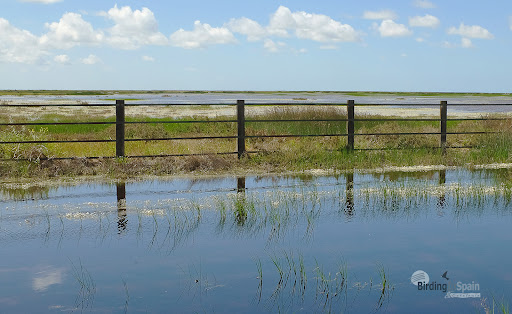
Of course, when it rains a lot, there’s water, almost for everything and for everyone. However, in these times of global warming and climate change, that is rarely the case in Doñana. More often than not drought, or the threat of it, is never far away. In 2023 it was reported that 59 % of the largest lagoons in Doñana had not been filled since at least 2013. What’s more, the three “permanent” lagoons which never dried out in the summer have gone ahead and dried out in the summer.
The main problem is not that there isn’t water; it’s where the available water is going, namely (1) intensive agriculture, with irrigation for crops such as rice, cotton and strawberries (the latter covering almost 6,000 hectares), largely extracted from the aquifer illegally and (2) tourist developments and their unsustainable demand for water, especially in the summer (Matalascañas, for example, has a summer population of 150, 000 people).
Nevertheless, when there’s water in the lagoons there are good times to be had by visiting birders. We at Birding In Spain have been organizing birding tours with 2 or 3-day stays in the park since 2011. And there have been many great days of birding for us from then to now. Greater Flamingos are common and very visible, while you’ll have a harder job finding rarer breeders such as White-headed Duck, Red-knobbed Coot, or Marbled Teal, and of course it helps to know where to concentrate your efforts to locate these specialties.
There are beautiful Black-necked Grebes in breeding plumage, handsome Red Crested Pochards, passage Garganey, herons, including Squacco Heron, Purple Heron and Little Bittern, Black Stork, Whiskered Terns, delightful Collared Pratincoles, exotic Black-headed Weavers and Common Waxbills, Penduline Tits, Savi’s, Great Reed and Isabelline Warblers, Black-winged Kites and Lesser Kestrels, Calandra, Mediterranean and Greater Short-toed Larks, the Spanish Imperial Eagle, Red-necked Nightjar …
So let’s just hope that not all is lost, and that determined action will be taken to reverse the disastrous processes of the last decades and to restore the National Park of Coto Doñana to its...
Read more
 Learn more insights from Wanderboat AI.