The National Park of Ordesa and Monte Perdido is one of the most beautiful natural areas in the whole of the Pyrenees, and even in Spain itself.
There are high mountains for trekkers and climbers, vast forested slopes and mountain pastures, frondant valleys with fast-flowing streams or rivers.
The main entrance is via a bus from Torla, but you can also drive along the Pineta valley on the eastern side of the park, or to the Revilla balconies, or take a drive along the spectacular Añisclo gorge, or explore the Bujaruelo valley to the southwest.
There are well-marked paths for the excursionists and plenty of accommodation and restaurants in the villages that border the Spanish side of the park.
Ordesa was one of the first places I visited in Spain, back in early April 1984 with the UEA bird club. Then we had most of the place to ourselves, as we followed the River Arazas valley as far as the Cola de Caballo waterfall and back again. As birders we were delighted with what we saw, with Wallcreeper, Black Woodpecker and Lammergeier being the most memorable.
Nowadays, I don't get to the park that often, as we centre most of our birding tours closer to our home in Lleida, although in the last ten years or so I've had reason to go along most of the entrance points mentioned above. Wallcreepers are easier to see in the non-breeding season, and in a place such as the Añisclo gorge you may get lucky, as I have. The forests of the Pineta valley are good for Black Woodpecker, Bullfinch, Goldcrest and other forest birds, perhaps Ring Ouzel too, while the site par excellence for the Lammergeier (Bearded Vulture) must be the "miradores" of Revilla. Here you may see double figures of Lammergeiers as well as other birds of prey and...
Read more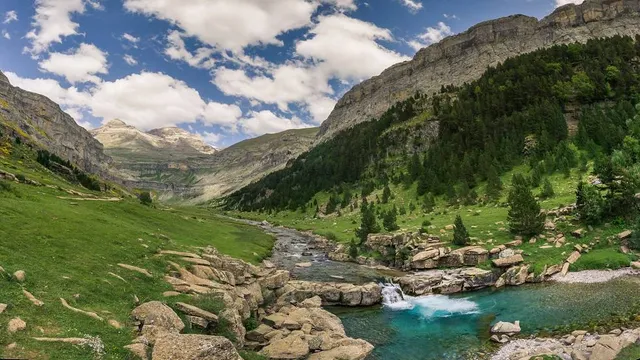
 Learn more insights from Wanderboat AI.