HTML SitemapExplore
logo
Find Things to DoFind The Best Restaurants

Loarre Castle — Attraction in Loarre

Name
Loarre Castle
Description
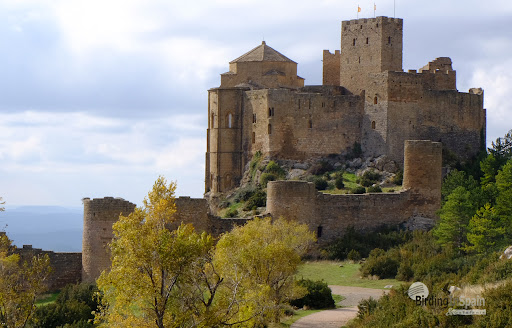
The Castle of Loarre is a Romanesque Castle and Abbey located near the town of the same name, Huesca Province in the Aragon autonomous region of Spain. It is one of the oldest castles in Spain.
Nearby attractions
Nearby restaurants
Castillo de Loarre
22809 Loarre, Huesca, Spain
Nearby hotels
loarre camping castle
Carretera del castillo, s/n, 22809 Loarre, Huesca, Spain
Related posts
Keywords
Loarre Castle tourism.Loarre Castle hotels.Loarre Castle bed and breakfast. flights to Loarre Castle.Loarre Castle attractions.Loarre Castle restaurants.Loarre Castle travel.Loarre Castle travel guide.Loarre Castle travel blog.Loarre Castle pictures.Loarre Castle photos.Loarre Castle travel tips.Loarre Castle maps.Loarre Castle things to do.
Loarre Castle things to do, attractions, restaurants, events info and trip planning
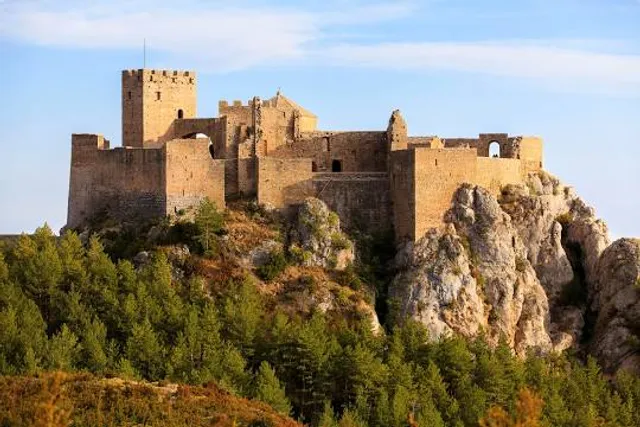
Loarre Castle
SpainAragonLoarreLoarre Castle

Basic Info

Loarre Castle

Castillo de Loarre, 22809 Loarre, Huesca, Spain
4.6(5.7K)
Open until 7:00 PM
Save
spot

Ratings & Description

Info

The Castle of Loarre is a Romanesque Castle and Abbey located near the town of the same name, Huesca Province in the Aragon autonomous region of Spain. It is one of the oldest castles in Spain.

Cultural
Outdoor
Family friendly
attractions: , restaurants: Castillo de Loarre
logoLearn more insights from Wanderboat AI.
Phone
+34 974 94 21 80
Website
castillo-loarre.es
Open hoursSee all hours
Tue10 AM - 7 PMOpen

Plan your stay

hotel
Pet-friendly Hotels in Loarre
Find a cozy hotel nearby and make it a full experience.

hotel
Affordable Hotels in Loarre
Find a cozy hotel nearby and make it a full experience.

hotel
The Coolest Hotels You Haven't Heard Of (Yet)
Find a cozy hotel nearby and make it a full experience.

hotel
Trending Stays Worth the Hype in Loarre
Find a cozy hotel nearby and make it a full experience.

Reviews

Things to do nearby

Presentación último libro Graziella Moreno
Sat, Dec 13 • 6:30 PM
4 Avenida de Martínez de Velasco, 22005 Huesca
View details

Nearby restaurants of Loarre Castle

Castillo de Loarre

Castillo de Loarre

Castillo de Loarre

4.2

(62)

Click for details
Get the Appoverlay
Get the AppOne tap to find yournext favorite spots!
Wanderboat LogoWanderboat

Your everyday Al companion for getaway ideas

CompanyAbout Us
InformationAI Trip PlannerSitemap
SocialXInstagramTiktokLinkedin
LegalTerms of ServicePrivacy Policy

Get the app

© 2025 Wanderboat. All rights reserved.
logo

Reviews of Loarre Castle

4.6
(5,689)
avatar
5.0
5y

The castle's location on a rocky outcrop affected the layout; it was not possible to have one unified structure, and like many castles, Loarre was a collection of buildings bounded by curtain walls. Originally the internal plan included two towers and a chapel behind several curtain walls. Towards the end of the 11th century, an additional chapel was built in Romanesque style just outside the castle walls. The outermost walls of the castle and their eight towers were erected in the 13th or 14th century. The church and castle have been the subject of numerous restorations, a major one in 1913 and subsequent ones, particularly during the 1970s, have resulted in the rebuilding of many walls and towers that had fallen into disrepair. At least three towers, two of which survive, the keep (Torre del Homenaje) and the "Tower of the Queen" (Torre de la Reina), as well as a chapel dedicated to Saint Mary of Valverde and connecting walls are attributed to this campaign. The keep was built in an isolated position in front of the fortifications, to which it was connected by a wooden bridge. It contained a basement and five floors. The Torre de la Reina, comprising a basement and three floors, is particularly noteworthy for three sets of twin-arched windows, with columns of exaggerated entasis and trapezoidal capitals that have been related to both Lombard and Mozarabic architectural forms. The chapel is composed of a single-cell nave with an eastern apse covered by a semicircular vault. The original timber roof of the nave was replaced by a vault at the end of the...

   Read more
avatar
4.0
20w

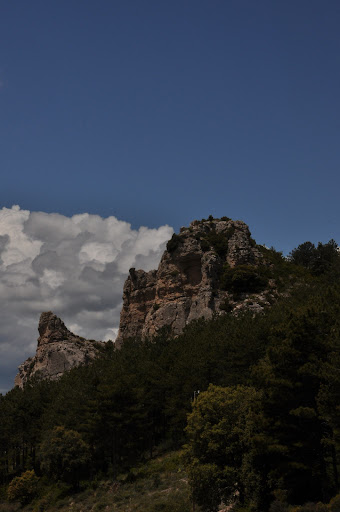
Loarre castle is set in a superb location in the south-facing, rocky Pre-Pyrenees, commanding stunning views over the lowlands to the south. Not only that, the castle itself has been restored to create a memorable visual impact on any visitor approaching it from the road that winds up from the village of Loarre.

I have visited the castle surrounds many times now, although I have only done the audio-guided visit a couple of times. It's an interesting story and background, so if you're in the region it's worth your while to go to the visitor centre and to get geared up for the guided visit.

However, my main reason for visiting Loarre castle is, as usual, the birds. I have incorporated a visit to Loarre castle as a component of our November Winter Wallcreeper tours, not for the chances of seeing a Wallcreeper, which are very slim (never seen one here), but for other birds, in particular the Citril Finch and Rock Bunting. In the pinewoods you can find Crested Tit, Firecrest, Short-toed Treecreeper and more, and if you keep your eyes on the skies you have a small chance of spotting a Lammergeier. If you're there in early March then the Common Crane passage can be quite...

   Read more
avatar
3.0
21w

This is an amazing castle, especially from the outside, that turned out to be a disappointing visit in the end. The main problem is the lack of information provided. If you are unable to take the guided tour, unfortunately it didn't work with my schedule on the day I went, then you are left with the daunting task of trying to make sense of what you are seeing, especially inside. It's almost like a labrynth, which makes it intriguing, but it also makes it tough to know what is what. You can tell that there used to be information panels that have been removed. They should be put back. And the audio guide is short and insufficient. In the end they suggest you take the guided tour for more information. I am all for guided tours, but that's not always possible, and there should be a quality alternative available. Most places offer that alternative, but sadly that's not the case here. I left after seeing an incredible piece of Aragonese heritage, but knew little more about it than before I arrived. It's frustrating. I think the solutions are easy: making the sudio guide a little better and providing information panels to help you understand what...

   Read more
Page 1 of 7
Previous
Next

Posts

Ngo Hai AnhNgo Hai Anh
The castle's location on a rocky outcrop affected the layout; it was not possible to have one unified structure, and like many castles, Loarre was a collection of buildings bounded by curtain walls. Originally the internal plan included two towers and a chapel behind several curtain walls. Towards the end of the 11th century, an additional chapel was built in Romanesque style just outside the castle walls. The outermost walls of the castle and their eight towers were erected in the 13th or 14th century. The church and castle have been the subject of numerous restorations, a major one in 1913 and subsequent ones, particularly during the 1970s, have resulted in the rebuilding of many walls and towers that had fallen into disrepair. At least three towers, two of which survive, the keep (Torre del Homenaje) and the "Tower of the Queen" (Torre de la Reina), as well as a chapel dedicated to Saint Mary of Valverde and connecting walls are attributed to this campaign. The keep was built in an isolated position in front of the fortifications, to which it was connected by a wooden bridge. It contained a basement and five floors. The Torre de la Reina, comprising a basement and three floors, is particularly noteworthy for three sets of twin-arched windows, with columns of exaggerated entasis and trapezoidal capitals that have been related to both Lombard and Mozarabic architectural forms. The chapel is composed of a single-cell nave with an eastern apse covered by a semicircular vault. The original timber roof of the nave was replaced by a vault at the end of the 11th century.
Steve WestSteve West
Loarre castle is set in a superb location in the south-facing, rocky Pre-Pyrenees, commanding stunning views over the lowlands to the south. Not only that, the castle itself has been restored to create a memorable visual impact on any visitor approaching it from the road that winds up from the village of Loarre. I have visited the castle surrounds many times now, although I have only done the audio-guided visit a couple of times. It's an interesting story and background, so if you're in the region it's worth your while to go to the visitor centre and to get geared up for the guided visit. However, my main reason for visiting Loarre castle is, as usual, the birds. I have incorporated a visit to Loarre castle as a component of our November Winter Wallcreeper tours, not for the chances of seeing a Wallcreeper, which are very slim (never seen one here), but for other birds, in particular the Citril Finch and Rock Bunting. In the pinewoods you can find Crested Tit, Firecrest, Short-toed Treecreeper and more, and if you keep your eyes on the skies you have a small chance of spotting a Lammergeier. If you're there in early March then the Common Crane passage can be quite a spectacle!
Fernando PataconaFernando Patacona
El castillo de Loarre fue construido a principios del siglo XI por orden de Sancho III el Mayor, rey de Pamplona, como bastión contra posibles avances musulmanes en la Hoya de Huesca. A finales del siglo XI es Sancho Ramírez, rey de Aragón, el que ordena la ampliación del castillo quedando definido tal y como se encuentra en la actualidad. Tras la conquista de las tierras de la hoya oscense a finales del siglo XI por parte de Pedro I de Aragón, el castillo deja su función militar y pasa a tener una función monástica durante unos pocos años. Es por esta razón que en el castillo hay una iglesia (dedicada a San Pedro) y una pequeña capilla. En los siguientes siglos el castillo deja definitivamente su función militar y religiosa pasando a convertirse en castillo-palacio propiedad de distintos nobles de la zona hasta que finalmente es abandonado en el siglo XVI. El castillo está levantado sobre un gran promontorio rocoso lo que le hacía más fuerte y mejor defendido al no poder entrar los atacantes mediante túneles a través de sus murallas. Así se puede ver que en algunos tramos de pasillos el suelo es la propia roca. Actualmente el castillo se encuentra en buen estado de conservación y está considerado como el castillo de estilo románico mejor conservado de Europa. Ha sido escenario de diversas películas como El Reino de los Cielos del director Ridley Scott. Antes de llegar al castillo hay que dejar el coche en un amplio aparcamiento gratuito y a partir de aquí solo se puede acceder andando hasta el castillo que se encuentra a unos 400 metros. La entrada general cuesta 6 euros/pax y hay que comprarla en la tienda que encontramos a mitad del propio camino. En las puertas de acceso a las murallas hay un código QR con el que nos podemos descargar una audio-guía en pdf a través del móvil. También se puede hacer la visita con un guía por 2 euros más. Con la entrada se puede, también, visitar la iglesia de san Esteban en Loarre y la colegiata de Bolea. No es recomendable la visita a personas con movilidad reducida o con carritos ya que hay bastantes escaleras y algún acceso algo más complicado. Visita imprescindible.
See more posts
See more posts
hotel
Find your stay

Pet-friendly Hotels in Loarre

Find a cozy hotel nearby and make it a full experience.

The castle's location on a rocky outcrop affected the layout; it was not possible to have one unified structure, and like many castles, Loarre was a collection of buildings bounded by curtain walls. Originally the internal plan included two towers and a chapel behind several curtain walls. Towards the end of the 11th century, an additional chapel was built in Romanesque style just outside the castle walls. The outermost walls of the castle and their eight towers were erected in the 13th or 14th century. The church and castle have been the subject of numerous restorations, a major one in 1913 and subsequent ones, particularly during the 1970s, have resulted in the rebuilding of many walls and towers that had fallen into disrepair. At least three towers, two of which survive, the keep (Torre del Homenaje) and the "Tower of the Queen" (Torre de la Reina), as well as a chapel dedicated to Saint Mary of Valverde and connecting walls are attributed to this campaign. The keep was built in an isolated position in front of the fortifications, to which it was connected by a wooden bridge. It contained a basement and five floors. The Torre de la Reina, comprising a basement and three floors, is particularly noteworthy for three sets of twin-arched windows, with columns of exaggerated entasis and trapezoidal capitals that have been related to both Lombard and Mozarabic architectural forms. The chapel is composed of a single-cell nave with an eastern apse covered by a semicircular vault. The original timber roof of the nave was replaced by a vault at the end of the 11th century.
Ngo Hai Anh

Ngo Hai Anh

hotel
Find your stay

Affordable Hotels in Loarre

Find a cozy hotel nearby and make it a full experience.

Get the Appoverlay
Get the AppOne tap to find yournext favorite spots!
Loarre castle is set in a superb location in the south-facing, rocky Pre-Pyrenees, commanding stunning views over the lowlands to the south. Not only that, the castle itself has been restored to create a memorable visual impact on any visitor approaching it from the road that winds up from the village of Loarre. I have visited the castle surrounds many times now, although I have only done the audio-guided visit a couple of times. It's an interesting story and background, so if you're in the region it's worth your while to go to the visitor centre and to get geared up for the guided visit. However, my main reason for visiting Loarre castle is, as usual, the birds. I have incorporated a visit to Loarre castle as a component of our November Winter Wallcreeper tours, not for the chances of seeing a Wallcreeper, which are very slim (never seen one here), but for other birds, in particular the Citril Finch and Rock Bunting. In the pinewoods you can find Crested Tit, Firecrest, Short-toed Treecreeper and more, and if you keep your eyes on the skies you have a small chance of spotting a Lammergeier. If you're there in early March then the Common Crane passage can be quite a spectacle!
Steve West

Steve West

hotel
Find your stay

The Coolest Hotels You Haven't Heard Of (Yet)

Find a cozy hotel nearby and make it a full experience.

hotel
Find your stay

Trending Stays Worth the Hype in Loarre

Find a cozy hotel nearby and make it a full experience.

El castillo de Loarre fue construido a principios del siglo XI por orden de Sancho III el Mayor, rey de Pamplona, como bastión contra posibles avances musulmanes en la Hoya de Huesca. A finales del siglo XI es Sancho Ramírez, rey de Aragón, el que ordena la ampliación del castillo quedando definido tal y como se encuentra en la actualidad. Tras la conquista de las tierras de la hoya oscense a finales del siglo XI por parte de Pedro I de Aragón, el castillo deja su función militar y pasa a tener una función monástica durante unos pocos años. Es por esta razón que en el castillo hay una iglesia (dedicada a San Pedro) y una pequeña capilla. En los siguientes siglos el castillo deja definitivamente su función militar y religiosa pasando a convertirse en castillo-palacio propiedad de distintos nobles de la zona hasta que finalmente es abandonado en el siglo XVI. El castillo está levantado sobre un gran promontorio rocoso lo que le hacía más fuerte y mejor defendido al no poder entrar los atacantes mediante túneles a través de sus murallas. Así se puede ver que en algunos tramos de pasillos el suelo es la propia roca. Actualmente el castillo se encuentra en buen estado de conservación y está considerado como el castillo de estilo románico mejor conservado de Europa. Ha sido escenario de diversas películas como El Reino de los Cielos del director Ridley Scott. Antes de llegar al castillo hay que dejar el coche en un amplio aparcamiento gratuito y a partir de aquí solo se puede acceder andando hasta el castillo que se encuentra a unos 400 metros. La entrada general cuesta 6 euros/pax y hay que comprarla en la tienda que encontramos a mitad del propio camino. En las puertas de acceso a las murallas hay un código QR con el que nos podemos descargar una audio-guía en pdf a través del móvil. También se puede hacer la visita con un guía por 2 euros más. Con la entrada se puede, también, visitar la iglesia de san Esteban en Loarre y la colegiata de Bolea. No es recomendable la visita a personas con movilidad reducida o con carritos ya que hay bastantes escaleras y algún acceso algo más complicado. Visita imprescindible.
Fernando Patacona

Fernando Patacona

See more posts
See more posts