HTML SitemapExplore
logo
Find Things to DoFind The Best Restaurants

San Pedro Fiz do Hospital — Attraction in O Incio

Name
San Pedro Fiz do Hospital
Description
Nearby attractions
Nearby restaurants
Nearby hotels
Related posts
Keywords
San Pedro Fiz do Hospital tourism.San Pedro Fiz do Hospital hotels.San Pedro Fiz do Hospital bed and breakfast. flights to San Pedro Fiz do Hospital.San Pedro Fiz do Hospital attractions.San Pedro Fiz do Hospital restaurants.San Pedro Fiz do Hospital travel.San Pedro Fiz do Hospital travel guide.San Pedro Fiz do Hospital travel blog.San Pedro Fiz do Hospital pictures.San Pedro Fiz do Hospital photos.San Pedro Fiz do Hospital travel tips.San Pedro Fiz do Hospital maps.San Pedro Fiz do Hospital things to do.
San Pedro Fiz do Hospital things to do, attractions, restaurants, events info and trip planning
San Pedro Fiz do Hospital
SpainGaliciaO IncioSan Pedro Fiz do Hospital

Basic Info

San Pedro Fiz do Hospital

Torre do Hospital, 27347 O Incio, Lugo, Spain
4.8(79)
Open 24 hours
Save
spot

Ratings & Description

Info

Cultural
Scenic
attractions: , restaurants:
logoLearn more insights from Wanderboat AI.
Website
turgalicia.es

Plan your stay

hotel
Pet-friendly Hotels in O Incio
Find a cozy hotel nearby and make it a full experience.
hotel
Affordable Hotels in O Incio
Find a cozy hotel nearby and make it a full experience.
hotel
The Coolest Hotels You Haven't Heard Of (Yet)
Find a cozy hotel nearby and make it a full experience.
hotel
Trending Stays Worth the Hype in O Incio
Find a cozy hotel nearby and make it a full experience.

Reviews

Get the Appoverlay
Get the AppOne tap to find yournext favorite spots!
Wanderboat LogoWanderboat

Your everyday Al companion for getaway ideas

CompanyAbout Us
InformationAI Trip PlannerSitemap
SocialXInstagramTiktokLinkedin
LegalTerms of ServicePrivacy Policy

Get the app

© 2025 Wanderboat. All rights reserved.
logo

Posts

Javier Delgado EstebanJavier Delgado Esteban
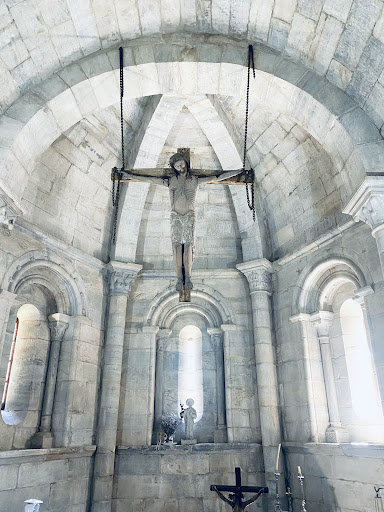
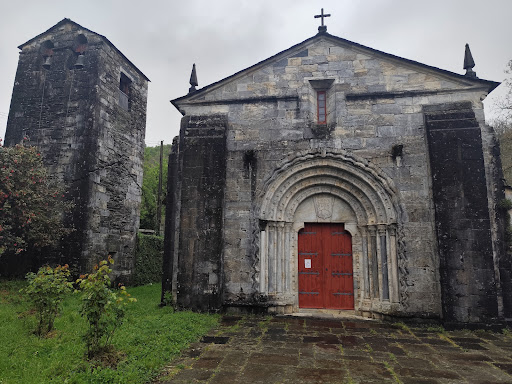
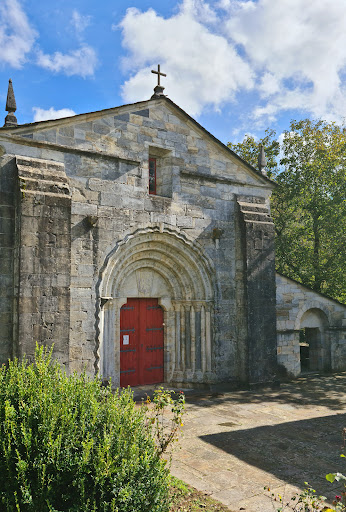
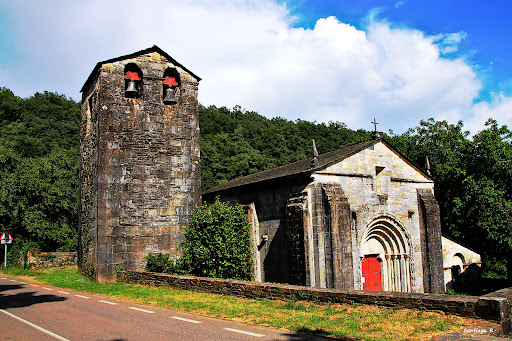
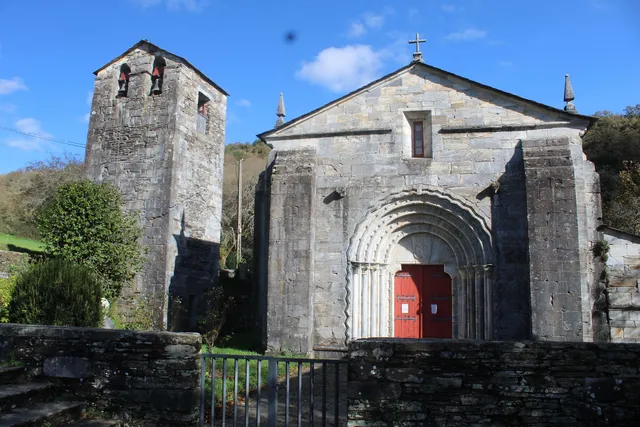
San Pedro Fiz do Hospital is a hidden gem located in the parish of Hospital, in O Incio, Lugo, Galicia. You usually have to call a number posted on the door to get access, but we were lucky to find the sacristan there on Saint James Day, the patron of Galicia, who kindly showed us around. The church is one of the most unique examples of Romanesque architecture in Spain. Built at the end of the 12th or early 13th century by the Order of Saint John of Jerusalem (later known as the Order of Malta), it served both spiritual and defensive purposes, offering shelter and care for pilgrims on a secondary route of the Camino de Santiago. What makes it truly special is that it was constructed almost entirely from local bluish marble, making it the only Romanesque church in Spain built in this material. Its elevated setting offers wide views of the surrounding Courel mountains. The western portal features four beautifully decorated semicircular archivolts and a carved tympanum with the Maltese cross. The apse is semi-hexagonal rather than semicircular, a rare design feature, and is vaulted with ribbing resting on sculpted columns. Inside, the space is simple but filled with historic detail. A Gothic-style marble tomb from the 15th century contains the remains of Don Álvaro de Quiroga, a commander of the order. A crucified Christ figure with four nails, likely from the 14th century, hangs above the altar. According to local legend, disturbing the tomb would bring the church down. During restoration work in the 1980s, workers discovered a sculptural slab showing a crucifixion scene with early Christian symbols, including the sun and moon and two devout figures—evidence of pre-Romanesque or even earlier Christian presence on the site. The bell tower, made of the same distinctive marble, is a repurposed defensive structure from the original complex, which once included a fort and a hospital. This is a site of great spiritual, historical, and artistic value. Visitors are strongly encouraged though not asked to leave a donation to help preserve this remarkable example of Galician heritage.
jb garciajb garcia
Románica,pertenecía a la orden hospitalaria, antes pasaba un camino de Santiago , fue hospital, fortaleza y hospedería, todavia se conserva una de las dos torres que tenía y que ahora es campanario, la otra está incompleta dentro se puede ver una cadena llamada del perdón o derecho de asilo, entrada principal realizada con mármol blanco y azul de canteras de la zona, interior de una sola planta con un cristo crucificado con cuatro clavos, una virgen de la leche y una tumba de un caballero de la orden San Juan. Para visitarla es necesario llamar al Ayuntamiento aunque en la puerta había un letrero con teléfonos, no apto para discapacitados, hay poco lugar para estacionar
juan carlos Rias Altasjuan carlos Rias Altas
Preciosa Iglesia románica con retoques góticos, la única en España construida en mármol de unas canteras cercanas. Fue hospital de peregrinos y perteneció a la Orden de Malta. Pequeño pero impresionante conjunto arquitectónico. Incluso tiene un mausoleo de los Quiroga cuyo pazo está enfrente. El castaño milenario ronda los 500 años. Atiende vuestra llamada telefónica Antonio quien os abre esa joya y explica amablemente con una donación voluntaria. Medidas antocovid adecuadas. Aparcamiento en arcén. Visita obligada a la aldea muy rústica con bellas edificaciones.
See more posts
See more posts
hotel
Find your stay

Pet-friendly Hotels in O Incio

Find a cozy hotel nearby and make it a full experience.

San Pedro Fiz do Hospital is a hidden gem located in the parish of Hospital, in O Incio, Lugo, Galicia. You usually have to call a number posted on the door to get access, but we were lucky to find the sacristan there on Saint James Day, the patron of Galicia, who kindly showed us around. The church is one of the most unique examples of Romanesque architecture in Spain. Built at the end of the 12th or early 13th century by the Order of Saint John of Jerusalem (later known as the Order of Malta), it served both spiritual and defensive purposes, offering shelter and care for pilgrims on a secondary route of the Camino de Santiago. What makes it truly special is that it was constructed almost entirely from local bluish marble, making it the only Romanesque church in Spain built in this material. Its elevated setting offers wide views of the surrounding Courel mountains. The western portal features four beautifully decorated semicircular archivolts and a carved tympanum with the Maltese cross. The apse is semi-hexagonal rather than semicircular, a rare design feature, and is vaulted with ribbing resting on sculpted columns. Inside, the space is simple but filled with historic detail. A Gothic-style marble tomb from the 15th century contains the remains of Don Álvaro de Quiroga, a commander of the order. A crucified Christ figure with four nails, likely from the 14th century, hangs above the altar. According to local legend, disturbing the tomb would bring the church down. During restoration work in the 1980s, workers discovered a sculptural slab showing a crucifixion scene with early Christian symbols, including the sun and moon and two devout figures—evidence of pre-Romanesque or even earlier Christian presence on the site. The bell tower, made of the same distinctive marble, is a repurposed defensive structure from the original complex, which once included a fort and a hospital. This is a site of great spiritual, historical, and artistic value. Visitors are strongly encouraged though not asked to leave a donation to help preserve this remarkable example of Galician heritage.
Javier Delgado Esteban

Javier Delgado Esteban

hotel
Find your stay

Affordable Hotels in O Incio

Find a cozy hotel nearby and make it a full experience.

Get the Appoverlay
Get the AppOne tap to find yournext favorite spots!
Románica,pertenecía a la orden hospitalaria, antes pasaba un camino de Santiago , fue hospital, fortaleza y hospedería, todavia se conserva una de las dos torres que tenía y que ahora es campanario, la otra está incompleta dentro se puede ver una cadena llamada del perdón o derecho de asilo, entrada principal realizada con mármol blanco y azul de canteras de la zona, interior de una sola planta con un cristo crucificado con cuatro clavos, una virgen de la leche y una tumba de un caballero de la orden San Juan. Para visitarla es necesario llamar al Ayuntamiento aunque en la puerta había un letrero con teléfonos, no apto para discapacitados, hay poco lugar para estacionar
jb garcia

jb garcia

hotel
Find your stay

The Coolest Hotels You Haven't Heard Of (Yet)

Find a cozy hotel nearby and make it a full experience.

hotel
Find your stay

Trending Stays Worth the Hype in O Incio

Find a cozy hotel nearby and make it a full experience.

Preciosa Iglesia románica con retoques góticos, la única en España construida en mármol de unas canteras cercanas. Fue hospital de peregrinos y perteneció a la Orden de Malta. Pequeño pero impresionante conjunto arquitectónico. Incluso tiene un mausoleo de los Quiroga cuyo pazo está enfrente. El castaño milenario ronda los 500 años. Atiende vuestra llamada telefónica Antonio quien os abre esa joya y explica amablemente con una donación voluntaria. Medidas antocovid adecuadas. Aparcamiento en arcén. Visita obligada a la aldea muy rústica con bellas edificaciones.
juan carlos Rias Altas

juan carlos Rias Altas

See more posts
See more posts

Reviews of San Pedro Fiz do Hospital

4.8
(79)
avatar
5.0
19w

San Pedro Fiz do Hospital is a hidden gem located in the parish of Hospital, in O Incio, Lugo, Galicia. You usually have to call a number posted on the door to get access, but we were lucky to find the sacristan there on Saint James Day, the patron of Galicia, who kindly showed us around.

The church is one of the most unique examples of Romanesque architecture in Spain. Built at the end of the 12th or early 13th century by the Order of Saint John of Jerusalem (later known as the Order of Malta), it served both spiritual and defensive purposes, offering shelter and care for pilgrims on a secondary route of the Camino de Santiago.

What makes it truly special is that it was constructed almost entirely from local bluish marble, making it the only Romanesque church in Spain built in this material. Its elevated setting offers wide views of the surrounding Courel mountains.

The western portal features four beautifully decorated semicircular archivolts and a carved tympanum with the Maltese cross. The apse is semi-hexagonal rather than semicircular, a rare design feature, and is vaulted with ribbing resting on sculpted columns.

Inside, the space is simple but filled with historic detail. A Gothic-style marble tomb from the 15th century contains the remains of Don Álvaro de Quiroga, a commander of the order. A crucified Christ figure with four nails, likely from the 14th century, hangs above the altar. According to local legend, disturbing the tomb would bring the church down.

During restoration work in the 1980s, workers discovered a sculptural slab showing a crucifixion scene with early Christian symbols, including the sun and moon and two devout figures—evidence of pre-Romanesque or even earlier Christian presence on the site.

The bell tower, made of the same distinctive marble, is a repurposed defensive structure from the original complex, which once included a fort and a hospital.

This is a site of great spiritual, historical, and artistic value. Visitors are strongly encouraged though not asked to leave a donation to help preserve this remarkable example of...

   Read more

avatar
5.0
9y

Su construcción se realizó con sillares de piedra caliza y mármol, procedente de una cantera cercana, característica esta última que la hace única en España.

Es una de las más importantes construcciones gallegas realizadas en torno al último cuarto del siglo XII y primera década del XIII. Su construcción obedece a un templo-fortaleza y todo el conjunto fue hecho a base de buena sillería de piedra caliza y mármol de la zona. El frontis está formado por una portada decorada por dos robustas pilastras, con arco abocinado y cuatro arquivoltas tóricas y funiculares; los plintos son ligeramente cuadrados decorados con ajedrezados, entrelazados y lonsanges. Cierra el conjunto un tímpano monolítico y en él a modo de blasón una cruz de Malta coronada. Encima un amplio ventanal con derrame interior y abocinado por la parte exterior. La nave es de planta rectangular, y, el ábside es más reducido que la nave y tiene un primer cuerpo recto, mientras que el segundo es semihexagonal, y está delimitado por tres semilienzos con su respectivo ventanal. Cuatro columnas encastradas en el muro y rematadas con motivos decorativos vegetales y tranzados se elevan hasta la cornisa. El arco triunfal es de medio punto doblado, soportado por semi-columnas que rematan en distintos motivos decorativos. Dentro del templo destaca la bóveda de cañón, tripartita en la cabecera. En uno de sus muros se conserva un arcosolio ojival con estatua yacente de comendador de fray Álvaro de Quiroga que, según dice la leyenda, el día que alguien levante su tapa de mármol se caerá la iglesia. También en el pavimento hay varias laudas sepulcrales. Con respecto a las imágenes albergadas en el interior del templo, hay una talla medieval de Nuestra Señora y otra del Cristo Crucificado de estilo gótico, al igual que los herrajes de la puerta principal. En el frontis se pueden apreciar dos contrafuertes y en medio la puerta principal de estilo románico con cuatro arquivoltas, hay un tímpano adintelado decorado con escudo con la cruz de Malta, columnas de fustes monolíticos y capiteles vegetales. Apartadas del templo quedan dos torres cuadradas que pertenecieron a la fortaleza. Una es hoy campanario y la otra fue convertida en panteón de los señores de Quiroga en el siglo XVI. El castaño que preside el contorno es...

   Read more
avatar
4.0
33w

Románica,pertenecía a la orden hospitalaria, antes pasaba un camino de Santiago , fue hospital, fortaleza y hospedería, todavia se conserva una de las dos torres que tenía y que ahora es campanario, la otra está incompleta dentro se puede ver una cadena llamada del perdón o derecho de asilo, entrada principal realizada con mármol blanco y azul de canteras de la zona, interior de una sola planta con un cristo crucificado con cuatro clavos, una virgen de la leche y una tumba de un caballero de la orden San Juan. Para visitarla es necesario llamar al Ayuntamiento aunque en la puerta había un letrero con teléfonos, no apto para discapacitados, hay poco lugar...

   Read more
Page 1 of 7
Previous
Next