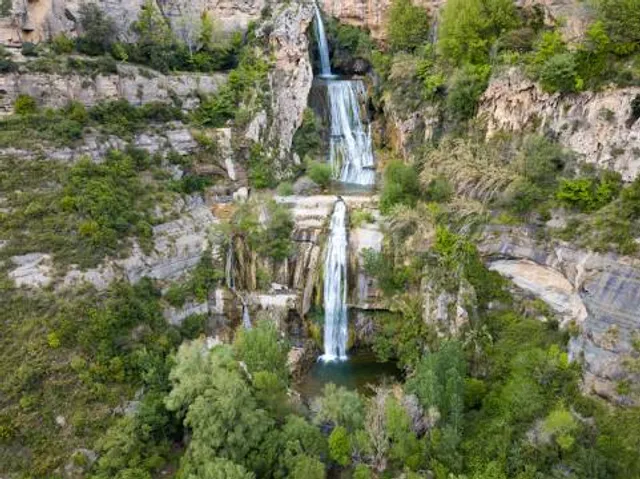
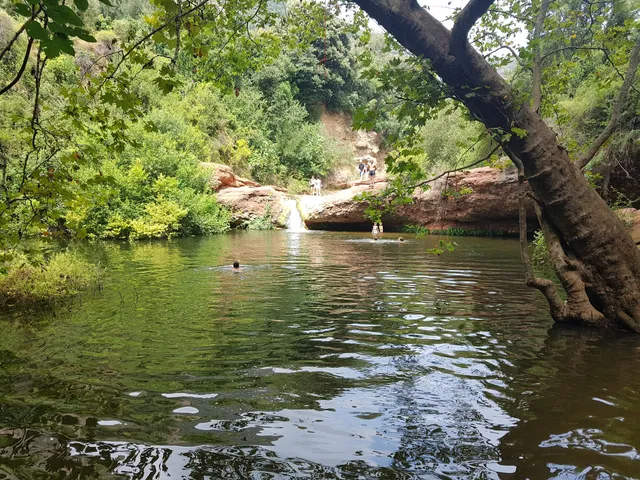
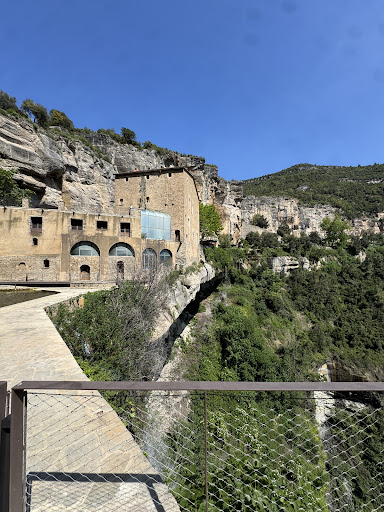
I was absolutely thrilled by Sant Miquel del Fai—it’s truly a magical hidden gem! Nestled about 50 km from Barcelona in the cliffs of the Cingles de Bertí, this former 11th‑century Benedictine monastery seems to hang dramatically off the rocky canyon walls, complemented by caves, waterfalls, and meandering streams.
Here are some fascinating details that impressed me:
*Troglodyte chapel: The church is built directly inside a cave—the largest rock‑roofed church in Spain—with a Romanesque doorway from the 10th century. *Striking architecture: Opposite the chapel is the Prior’s 15th‑century Gothic house, and nearby stands the tiny 10th‑century hermitage of Sant Martí. *Stalactites & sub‑terranean lake: Nearby caves formed by limestone feature stalactites, stalagmites, and even a small underground pool. *Waterfall experience: A spectacular waterfall of the Tenes River dramatically cascades over 100 metres, and there’s even a path that takes you behind the cascade for an up‑close, refreshing view. *Rich history: Founded around 1006 by Gombau de Besora, it was a small monastic community of 5–6 monks; it became a sanctuary in 1567, ceased religious functions in 1936, and is now a protected cultural site.
During my visit, the blend of rugged nature and medieval architecture blew me away. Walking through the Plaça de l’Abadia, with its natural pools from rain and snowmelt, felt almost otherworldly. Paths lead through caves, past the waterfall, and to the little chapel, all set in a tranquil forest valley—perfect for exploring and taking photos.
If you love nature, history, or just want spectacular views, Sant Miquel del Fai is a must-see. I was absolutely mesmerized, and I can’t...
Read moreThis church with caves is very old - dated back to yr997. Very satisfied that we took the trouble to come here. Allocate around 3 hours for a slow stroll around and explore, especially the caves open there for tourists. There is a 10th century church in a grotto - not much to look but it is immeasurably ancient. The caves are more interesting to explore, and interesting rock formations, pisoliths and even a small subterranean lake. They close at 5PM, so make the necessary adjustments. Bring sturdy shoes. 8Euros per entry. The restaurant wasn't opened when we were there, so to be on the safe side bring some snacks, or picnic basket. Very quiet and serene place with breathtaking landscape views. Lots of photographers exploring...
Read moreUno de los espacios únicos de Catalunya, espectacular. ahora esta cerrado, en reformas, por seguridad desde hace 3 años, esperando que se abra, lugar para hacer caminatas, super recomendable la zona. El monasterio fue fundado por Gombau de Besora, señor entre otras tierras del castillo de Montbui en Caldas. En 997, Gombau compró las tierras a Ramón Borrell. Se desconoce la fecha exacta de la fundación del monasterio pero en 1006 ya estaba instalada una comunidad de frailes, siendo su primer abad Guillemund.
Tanto los condes de Barcelona como el propio Gombau dotaron al monasterio de importantes bienes. En 1042, Gombau unió, en calidad de priorato, el monasterio catalán con el de San Víctor de Marsella con el fin de garantizar la continuidad del cenobio después de su muerte.
La comunidad residente en San Miguel fue siempre pequeña, entre cinco y seis monjes. Entró en declive a partir del siglo XIV cuando la comunidad quedó reducida a tres monjes. La vida religiosa en el cenobio finalizó en 1567 cuando se convirtió en una dependencia de la diócesis de Gerona quien se encargó de mantener el culto en el recinto mediante sacerdotes beneficiados. El antiguo monasterio se fue transformando en un santuario al que acudían los vecinos de las localidades cercanas. Tras la desamortización quedó en manos de particulares. Las actividades religiosas se mantuvieron hasta 1936.
A pesar de ser un monasterio de pequeñas dimensiones contó con importantes donaciones. En el Museo Diocesano de Barcelona se conserva una cruz románica de plata repujada, obra única de la orfebrería románica, procedente de San Miguel. En el museo se encuentran también lápidas, sarcófagos y otros artículos de menaje que demuestran la riqueza que un día tuvo...
Read more