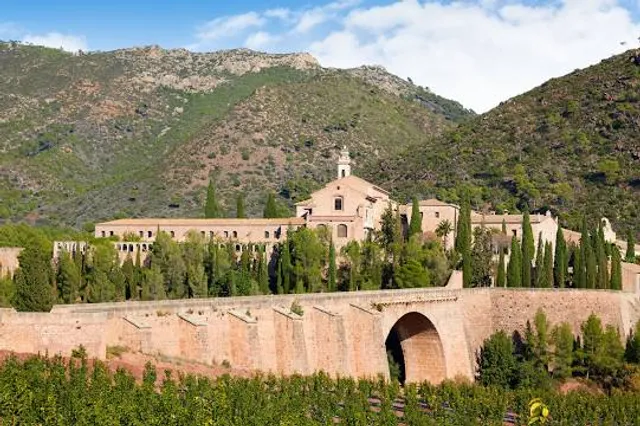
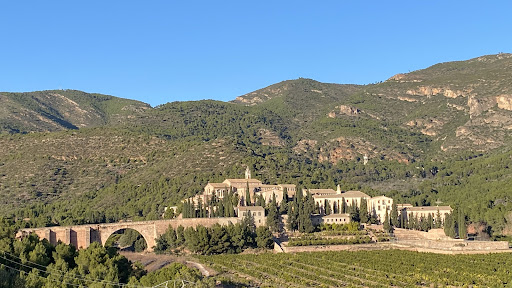
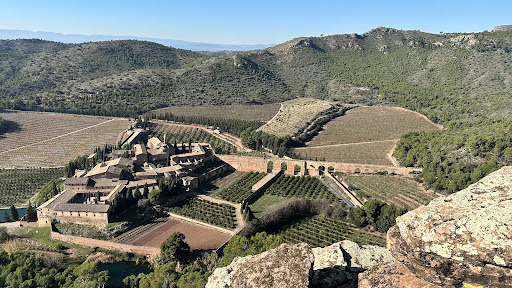
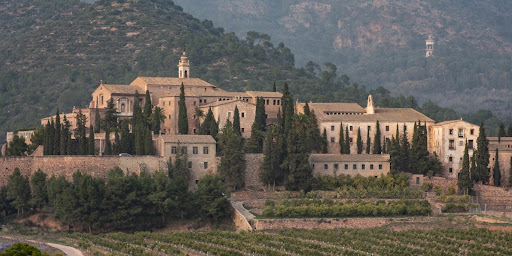
Nestled in the serene Lullén Valley within the Sierra Calderona Natural Park, Porta Coeli Charterhouse (Cartuja de Porta Coeli) is a historic Carthusian monastery that offers a glimpse into monastic life and architectural evolution over centuries.
Founded in 1272 by Andrés Albalat, Bishop of Valencia and confessor to King James I of Aragon, Porta Coeli holds the distinction of being the first Carthusian monastery established in the Kingdom of Valencia. The name "Porta Coeli," meaning "Gate of Heaven," reflects its intended role as a spiritual sanctuary. Throughout its history, the monastery has experienced periods of suppression and restoration, with notable events including its use as a Francoist concentration camp between 1939 and 1941. It was reconsecrated in 1947 and remains an active cloistered men's monastery today.
The monastery's architecture is an eclectic blend of styles, evolving from its original Gothic design through Renaissance, Baroque, and Neoclassical influences. Key features include:
A 14th-century aqueduct with twelve arches, showcasing the monastery's engineering prowess. Divided into two zones—the coenobitic (communal) and eremitical (individual)—reflecting the Carthusian emphasis on solitude and community life.
Monk Cells and Chapels: Surrounding cloisters house individual monk cells, chapels, and communal spaces, adhering to the Carthusian...
Read moreCartuja de Porta Coeli (1272), en el Vall de Lullén (Serra, València), tardogótica y renacentista, ss. XIII-XV, fundado por el dominico catalán fray Andrés de Albalat, obispo de València (1248-76) y canciller del rey Jaime I de Aragón (1213-76), con monjes procedentes de la cartuja tarragonesa de Scala Dei, primera fundación cartuja en el reino de València y la tercera de la corona de Aragón, casa madre de casi todas las demás cartujas de la corona de Aragón y algunas de las de Castilla y Portugal. El acceso, privado porque la regla contemplativa cartuja de San Bruno (1084) implica estricta clausura, se libra por un gran puente. Cuatro claustros -dos góticos y dos renacentistas-, acueducto -que trae agua de La Fuente de la Hoya-, iglesia gótica (1385-1400) con reforma neoclásica. Con la desamortización de Mendizábal (1836), la comunidad fue exclaustrada y la cartuja y sus dominios subastados, pasando a manos del comerciante, banquero y político liberal don Vicente Bertrán de Lis Thomas (1772-1857); embargada por Hacienda a uno de sus descendientes y vendida luego a don Lino Alberto Reig (1872). Hospital de tuberculosos (1898). La Diputación Provincial la compró en 1943 y al año siguiente regresaron los cartujos desde la Cartuja de Miraflores (Burgos). En 2011, los cartujos abandonaron Aula Dei y se trasladaron a Porta Coeli, siendo con Miraflores y Montealegre, las tres únicas cartujas activas en España. Cerca de la cartuja, en una cueva vivió doña Inés de Moncada (1388-1428), anacoreta expulsada del monasterio al descubrirse que era mujer. El presidente Manuel Azaña, que se alojó en la finca La Pobleta, cuando el gobierno de la II República se trasladó a València, reflejo de la calma del lugar, escribió: "En este campo, silencio absoluto, sol mediterráneo, olor a flores. Parece que no ocurre nada en el mundo". Campo de concentración franquista (1939-56) -donde está el Hospital Doctor Moliner-. Fue reacondicionado por el ejército, se hizo el embalse y fue devuelta a la comunidad, de la que no debiera haber salido nunca, en 1946. Propiedad privada, sin...
Read moreBeautifully maintained 13th century charter house and monastery. It is tucked away in a valley about 20 miles north of Valencia and about 5 miles past Betera. A good, though narrow, road will get you there. It’s a popular cycling route so mind the cyclists. It doesn’t appear that you can get on the grounds but you can hike to a great vantage point in a few minutes from the road. Driving farther up you can park and hike past the aqueduct that is still there, orange groves, kiwi tree orchards and more. Combined with a hike to the spring up the hill about a mile this makes fir a fun outing they most tourists will miss. Take time to smell the rosemary and thyme that...
Read more