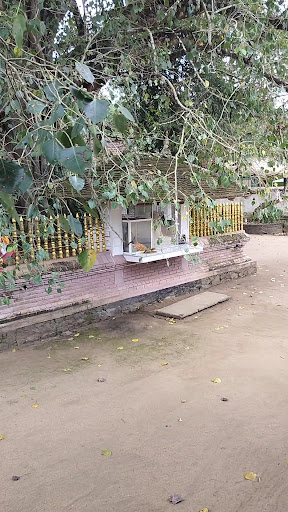
In the Udu Nuwara area of the Kandy district lies a temple with a history of over six centuries. Built during the reign of King Wickremabahu III (1371-1394AD) who ruled in the Kingdom of Gampola, the temple is practically covered in wood carvings. The woodwork is confirmed by UNESCO as some of the best and most detailed in the world. The temple is dedicated to the god known as ‘Murugan’ by the Hindus and ‘Katharagama deity’ by the Buddhists.
Embekka Devalaya in Sri Lanka: The Story Legend states that the King Vickramabahu III’s consort; Henakanda Biso Bandara woke from a strange dream in which the god appeared and asked to build a temple for him. On finding that a drummer Rangama had the same dream, they considered it a portent and built a temple together. The original temple was supposed to have been a three story building that unfortunately did not survive the ravages of time.
Embekka Devalaya in Sri Lanka: The Structure The temple consists of three main areas. The first is the Sanctum of Garagha which is the inner sanctum where the statues of the god is located. Next is the Dance Hall or Digge which is representative of the king’s consort Henakanda Bandara, and where dancing events were held in the times of the kings. The final section is the Drummers’ Hall, representing the drummer Rangama and where musical events were once held.
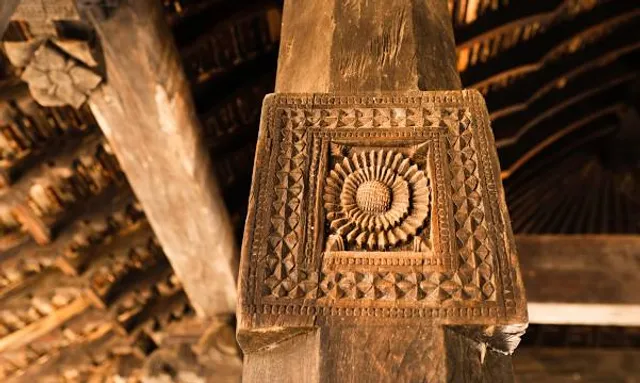
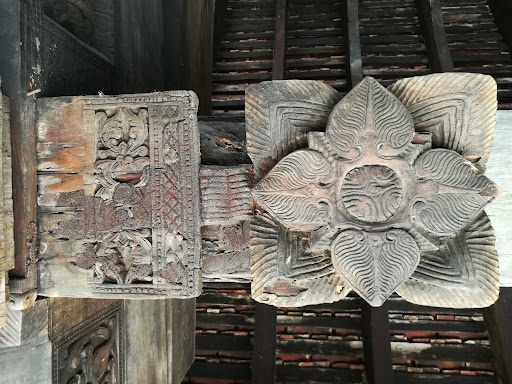
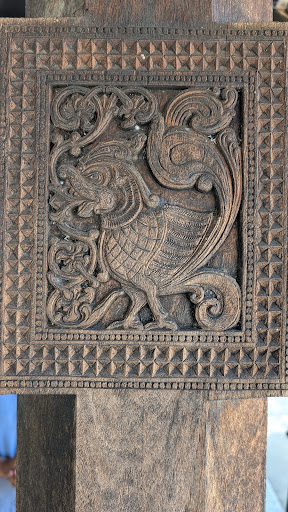
Embekka Devalaya in Sri Lanka: The Woodcraft Except the Sanctum the rest of the temple is made almost entirely of wood. From carved wooden pillars in the Halls which have open sides to the beautifully crafted roof, the entire are is covered in carvings. The bases of the pillars are octagonal in shape while their tops end in the shapes of a four leaves stacked in a square. The pillars have various images carved into the sides of the bases. In addition carvings adorn the beams, rafters and doorframes.
Notable carvings among these masterpieces were those of the entwined swans, double headed eagles, entwined rope designs, breast-feeding image, a soldier fighting on horseback, female dancers, wrestlers, women emanating from a vein, bird-human hybrid, elephant-bull hybrid, elephant-lion hybrid and etc. The carvings of the entire temple include 125 series of decorations, 256 liyawela type designs, and 64 lotus designs, 30 decorative patterns and roof designs, ending up in 514 unique designs.
The roof of the temple is an excellent example of ancient wooden architecture, where the 26 rafters are supported by a single wooden wooden pin.
Embekka Devalaya in Sri Lanka: Related Ruins About an eigth of a mile away from the temple there lays some ruins with a group of stone pillars. The carvings on the pillars are identical to those of the Embekke temple. It is said that once a wooden roof rested on these pillars but now they have fallen into ruin.
Both the Embekke Temple and the nearby ruins are worth visiting for lovers of both history and art. Please contact Lakpura to arrange a tour to these...
Read moreAccording to the legend a Drummer who was residing in Rangama close to Embekka, was suffering from a skin disease. Visiting Kataragama Temple in Ruhuna ( Southern part of Sri Lanka) he prayed for the wellness from the God Kataragama ( God Skandha) and he was duly recovered from his illness. To pay homage to the god for the grace rendered to him, the Drummer every year went to Kataragama and played his drum at Kataragama Devale at Ruhuna as an offering to Kataragama God. This he did until he became quite old and in his last occasion he reached the temple with much effort and told god that he will not be able to come again to pay homage as he is so weak and old. That night in his dreams the God had appeared and told him not to be worried and to return to his home and the god would show a miracle so that the drummer could pay his homage by beating his drum to the God from where he lives. Thus the drummer returned back home with a pacified mind and used to live in his village.
One day at a place near Embekka, a gardener while clearing the undergrowth area cut a Kaduru Tree with his tool. Instead of the usual white milky liquid coming out of the tree, a blood like red liquid had come out from the tree. No sooner the news had spread around the villages nearby, people had gathered to the place. The Drummer hearing the news had come to this place and realised that this is the miracle power shown by the God Kataragama as in his dream , related his story to the people gathered there.
After that a small Devalaya with a thatched roof had been put up at that place. The drummer had gone to meet the King ( Vickramabahu III ) and related the story and the King had been impressed by the successive incidents. Later the King visited this place, and the Devalaya was built where the Kaduru tree was, by the order of the King which was called as Embekke Devalaya. King also had got the God's statues built at the Devalaya and had donated surrounding land to the temple for its upkeep.
A poet by the name Delgahagoda Mudiyanse living at that era had written a poetical work on this occasion and presented to the King which was titled as "Embekke Varnanawa"
On Kandy - Colombo main road turning to right from Pilimatalawa Junction one has to proceed along Dawulagala road to reach Embekka Devalaya. Dawulagala is about 5 km from Peradeniya town. Along this road one passes the the other two famous temples, namely Gadaladeniya Raja Maha Viharaya and the Lankatilaka Viharaya before reaching Embekke Devalaya. One can see the "Ambalama" (an ancient resting place for the traveller) ruins on a flat rock. The stone pillars have similar carvings as Embekke Temple and this dates back before the Temple, and also had been built by King...
Read moreEmbekka Dewalaya: A Sacred Sanctuary of Sri Lankan Artistry
Nestled amidst the lush greenery of Sri Lanka's Central Province, Embekka Dewalaya stands as a testament to the island's rich cultural heritage and skilled craftsmanship. This ancient temple, located near the town of Kandy, is not just a place of worship; it is a living masterpiece of traditional Sri Lankan art and architecture.
Embekka Dewalaya, also known as Embekka Devale, dates back to the 14th century during the Gampola Kingdom era. It was built by King Vikramabahu III as a tribute to the guardian deities of the land. What sets this temple apart is its remarkable wooden architecture, a rare and exquisite example of the island's traditional craftsmanship.
The highlight of Embekka Dewalaya is its "drumming hall" or "hevisi mandapaya," a unique structure adorned with intricate wood carvings. As visitors enter this hall, they are greeted by a mesmerizing display of wooden pillars, each meticulously carved with elaborate designs depicting stories from Buddhist mythology, folklore, and nature. The craftsmanship is so detailed and precise that it leaves visitors in awe of the skill and dedication of the artisans who created these masterpieces centuries ago.
Among the carvings, one can find depictions of elephants, lions, dancers, and mythical creatures, all intricately intertwined in a harmonious blend of art and spirituality. The wooden roof of the drumming hall is another marvel, with its elaborate patterns and motifs that seem to tell a story of their own.
Apart from the drumming hall, Embekka Dewalaya also houses a shrine dedicated to the deity Kataragama, a revered figure in Sri Lankan folklore. The temple complex includes other structures such as the main sanctum, where devotees offer prayers and rituals, surrounded by serene gardens and ancient trees.
Embekka Dewalaya not only serves as a place of worship but also as a living museum of Sri Lankan artistry. It offers visitors a glimpse into the island's rich cultural heritage and the skill of its craftsmen. Each carving, each detail, is a testament to the creativity and devotion of the artists who left their mark on this sacred sanctuary.
In conclusion, Embekka Dewalaya stands as a shining example of Sri Lanka's cultural splendor. Its exquisite wood carvings, steeped in history and tradition, continue to captivate visitors and serve as a reminder of the island's rich artistic legacy. As a sacred sanctuary and a masterpiece of craftsmanship, Embekka Dewalaya remains a cherished treasure, preserving the beauty and artistry of a bygone era for...
Read more