Let's pay the Mahaweli Maha Seya
Work on the Kotmale reservoir commenced on February 4, 1979. Kothmale was the main gateway to the Sinhalese Maya. According to folklore, Prince Dutugemunu who united the Sinhalese Sinhalese and lived with his father in the same manner, stayed at the farmer's home at Kotagepitiya, Urupelassa. He also hid his bridal sword in the Kotmale area. There are many historically important inscriptions in the area. Accordingly, the Kotmale reservoir, which has a proud history of over two thousand years, is still being talked about with the commencement of work on the Kotmale reservoir.
With the commencement of the construction of the Kothmale reservoir, the people of a thousand villages lost their lands. There were sixteen temples under the Kotmale reservoir. It was the late Gamini Dissanayake who was the Minister of Land Development and Mahaweli Development at that time. His ancestral home also fell into the Kotmale reservoir. But they all saw a large area of Sri Lanka that was dark in the near future. The Kotmale Reservoir was declared open on August 24, 1985.
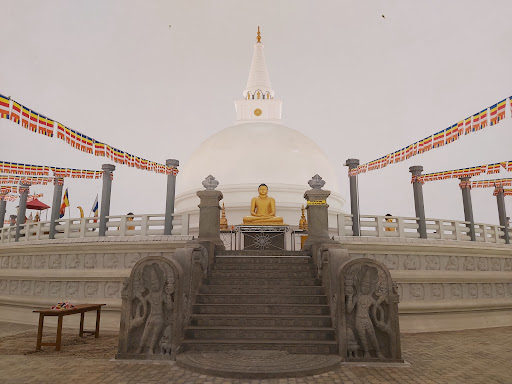
Later, Gamini Dissanayake came to mind that a monument should be erected to commemorate the people who lost their homes in the thousand temples and villages that were lost in the Kotmale reservoir. Finally, he had the idea of constructing a huge dagoba near the Kotmale reservoir. 1700 years after Sirilaka's last irrigation and dagaba art. It was time to restore the prosperity that existed in the Sinhala king's day. On the 20th of March 1983, a massive project devoted to the wellbeing of the Sambuddha Sasana was launched to mark the completion of a great stupa named “Kothmale Mahaweli Maha Seya Project” to fulfill the great stupa that was previously lacking in the Kandyan Kingdom. The location of Kadadora on the Kotmale Reservoir was chosen to create that stupa.
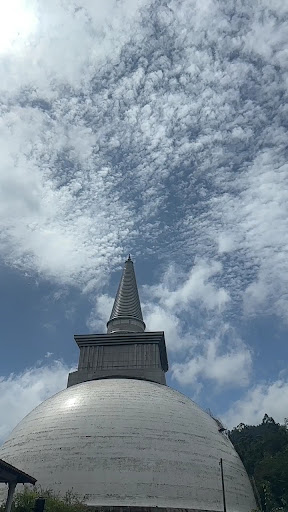
The height of the Mahaweli Maha Stupa is 289 feet. At the outset it was proposed that the Seya should be built to the size of the Ruwanweli Maha Seya. However, the late Chairman of the Mahaweli Cultural Foundation, the late Vidyajyothi, who played a major role in the field of engineering, was also present. The Mahaweli Stupa was built by Mr. Kulasinghe, 2 feet below the Ruwanweli Maha Seya. Elle Gunawansa Thera's support and assistance extended to him by Gamini Dissanayake cannot be forgotten.
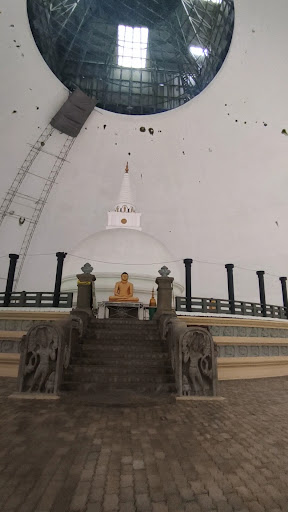
The Mahaweli Maha Seya is built on thirty two concrete pillars. The pillars had sunk to 90 feet below the ground. The width of the concrete cover of the Mahaweli Maha Seya is 11 inches. It was 200 feet in diameter. In order to minimize costs, Dr. Kulasinghe's guidance was made using thin concrete pallets of one inch thick. It was also proposed to install polished ceramics for external security. Inside the stupa is a completely empty area and it was proposed to paint various stages of Buddha's character and Jataka stories.
Construction of the Mahaweli Maha Stupa had to be halted in 1992 while the work was being done up to the rectangular fort. The restoration work of the Mahaweli Maha Seya was commenced in the year 2003 under the patronage of the then Minister of Mahaweli Development, Maithripala Sirisena.
The Mahaweli Cultural Foundation Trust was established on 14th October 2003 under the Ministry of Irrigation and Water Management for the development activities of the Mahaweli Maha Seya Project of Kotmale. The Government Gazette issued on July 30, 2004 declared it to be a charitable institution free from income tax. All arrangements have been made to establish Mahaweli Cultural Foundation Trust as a legal entity by a Parliament Act.
Eng. B. The Mahaweli Cultural Foundation Trust, comprising 20 members, is responsible for the administration of the Kotmale Mahaweli Maha Seya complex.
After the restoration of the rest of the work in 2000, a small amount of money was received, and in late 2004, the then Prime Minister of Sri Lanka, the then President...
Read more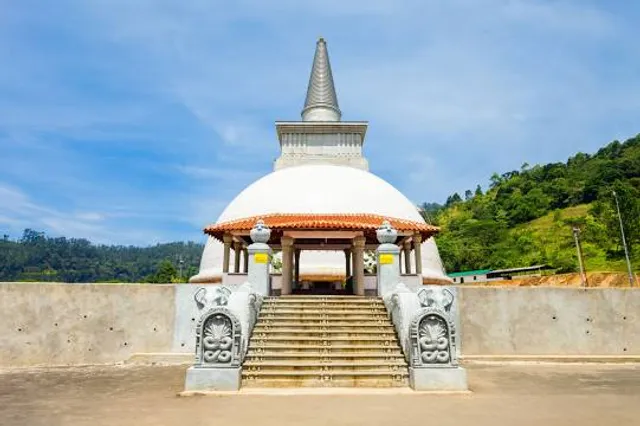
 Learn more insights from Wanderboat AI.