HTML SitemapExplore
logo
Find Things to DoFind The Best Restaurants

Nalanda Gedige (Central point of Sri Lanka) — Attraction in Central Province

Name
Nalanda Gedige (Central point of Sri Lanka)
Description
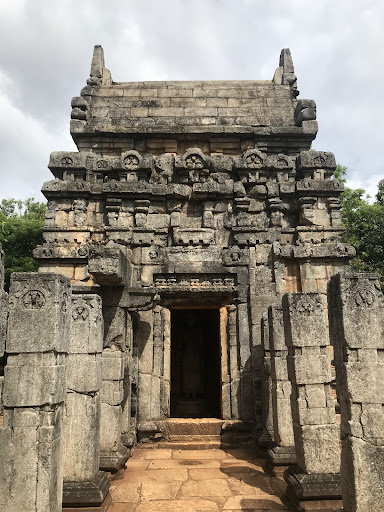
Nalanda Gedige is an ancient complete stone temple near Matale, Sri Lanka and its original site is considered the geographical centre of Sri Lanka. The building was constructed between the 8th and 10th centuries with dravidian architecture in and is believed to have been used by Buddhists.
Nearby attractions
Nearby restaurants
Nearby hotels
Related posts
Keywords
Nalanda Gedige (Central point of Sri Lanka) tourism.Nalanda Gedige (Central point of Sri Lanka) hotels.Nalanda Gedige (Central point of Sri Lanka) bed and breakfast. flights to Nalanda Gedige (Central point of Sri Lanka).Nalanda Gedige (Central point of Sri Lanka) attractions.Nalanda Gedige (Central point of Sri Lanka) restaurants.Nalanda Gedige (Central point of Sri Lanka) travel.Nalanda Gedige (Central point of Sri Lanka) travel guide.Nalanda Gedige (Central point of Sri Lanka) travel blog.Nalanda Gedige (Central point of Sri Lanka) pictures.Nalanda Gedige (Central point of Sri Lanka) photos.Nalanda Gedige (Central point of Sri Lanka) travel tips.Nalanda Gedige (Central point of Sri Lanka) maps.Nalanda Gedige (Central point of Sri Lanka) things to do.
Nalanda Gedige (Central point of Sri Lanka) things to do, attractions, restaurants, events info and trip planning
Nalanda Gedige (Central point of Sri Lanka)
Sri LankaCentral ProvinceNalanda Gedige (Central point of Sri Lanka)

Basic Info

Nalanda Gedige (Central point of Sri Lanka)

MJ9W+V8X, Gedige Rd, Matale, Sri Lanka
4.7(830)
Open 24 hours
Save
spot

Ratings & Description

Info

Nalanda Gedige is an ancient complete stone temple near Matale, Sri Lanka and its original site is considered the geographical centre of Sri Lanka. The building was constructed between the 8th and 10th centuries with dravidian architecture in and is believed to have been used by Buddhists.

Cultural
Scenic
Family friendly
Off the beaten path
attractions: , restaurants:
logoLearn more insights from Wanderboat AI.

Plan your stay

hotel
Pet-friendly Hotels in Central Province
Find a cozy hotel nearby and make it a full experience.
hotel
Affordable Hotels in Central Province
Find a cozy hotel nearby and make it a full experience.
hotel
The Coolest Hotels You Haven't Heard Of (Yet)
Find a cozy hotel nearby and make it a full experience.
hotel
Trending Stays Worth the Hype in Central Province
Find a cozy hotel nearby and make it a full experience.

Reviews

Things to do nearby

See Sigiriya by boat at sunrise or sunset
Thu, Dec 11 • 4:30 PM
Dambulla, Central Province 10250, Sri Lanka
View details
Get the Appoverlay
Get the AppOne tap to find yournext favorite spots!
Wanderboat LogoWanderboat

Your everyday Al companion for getaway ideas

CompanyAbout Us
InformationAI Trip PlannerSitemap
SocialXInstagramTiktokLinkedin
LegalTerms of ServicePrivacy Policy

Get the app

© 2025 Wanderboat. All rights reserved.
logo

Reviews of Nalanda Gedige (Central point of Sri Lanka)

4.7
(830)
avatar
5.0
6y

This building made was 1000 years ago. This was a period of great turmoil on the island with South Indian kings establishing themselves in the wake of the decline of the Sinhalese monarchy. It is possible that Nalanda Gedige was a bold attempt at a fusion of Sinhalese cultures.

History of Nalanda Gedige as an archaeological site began in 1893, when, according to then Archaeological Commissioner, H. C. P. Bell, "land was acquired round this little-known and solitary shrine of granite construction, popularly styled gedige. It is situated on raised ground in paddy fields, picturesquely surrounded by low hills and wooded hamlets. In 1911 a small gang was detached from the labor force at Sigiriya to thoroughly root out all the jungle growth upon and around the ruin besides cutting still further back the earth silt hiding the bold stylites upon which the fane stands. Very special importance attaches to this unique temple, as it is the sole example yet discovered in Ceylon of composite styles of architecture judiciously blended to form a delightfully homogeneous edifice."[4]

Bell had significant plans for the restoration of the Nalanda Gedige - involving its dismantlement and relocation - as is apparent from his report of 1912: "It will be necessary to gradually extend the open space to the north and east of the gedige ruin, so far as practicable, in reasonable expectation of discovering other buried members of the structure, before it is partially dismantled with a view to correct reconstruction. For this fine edifice cannot be allowed to remain in its present semi-deceptive elevation, when all stones on the ground have been recovered from the earth."

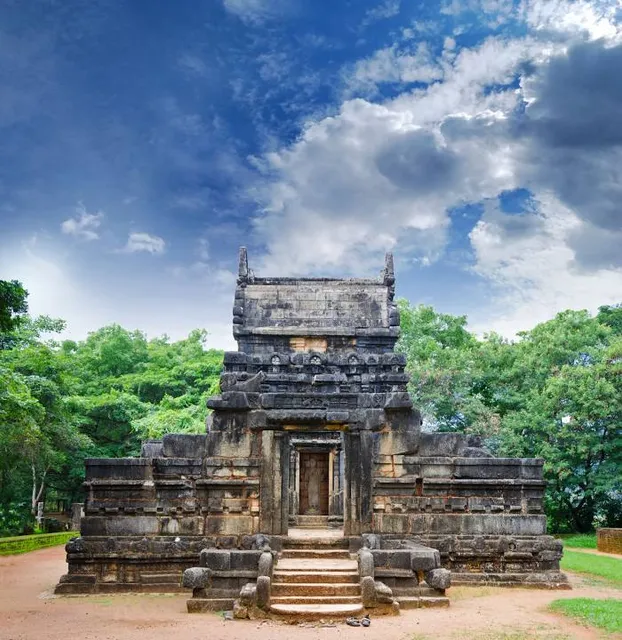
However, nothing transpired until much later, in the 1980s, when the shrine was threatened with inundation by the waters of the newly created Bowatenne Tank. The opportunity was taken to dismantle the ruin and rebuild it on the bund(retaining wall) of the tank, high above the waters. It stands now reconstructed beside the tank, and is approached by a flower-edged causeway with a magnificent backdrop of tree-clad hills.

Nalanda Gedige is a curious hybrid of Buddhist and Hindu architecture. Some of the design elements are distinctly Hindu, such as the mandapam or hall of waiting. Yet there is no sign of Hindu gods. There are erotic but eroded Tantric Buddhist carvings, much like the famous ones at Khajuraho in India. The richly decorated façade sections are in the 7th century style which flourished at Madras, South India. However, the southern section has a semi-circular niche containing in high relief a squat figure of Kuvera, the god of wealth, seated on a lotus plinth - an image that is only found in Sri Lanka.

Roland Raven-Hart, writing in Ceylon: History in Stone (1964) describes this hybridisation: "Elsewhere there are plenty of Hindu buildings, and plenty of Buddhist ones, and some muddled mongrels; but here the styles are interwoven. The ground-plan is Buddhist, the vestibule pure Hindu and so is the little windowless shrine: the plain moonstone and crocodile balustrade and rivers of dwarfs and architrave of the doorway are Sinhalese, and jambs Tamilian; even the sculptures are fairly shared. The whole effect is charming and for me unexpectedly classical, nor did I find the exterior "over-richly decorated" as did Bell, though it is crowded with pilasters and horseshoe false windows and more jolly dwarfs. And the dome must have been a worthy climax when all its four faces were present, each with horseshoe niche and statue, instead of the one only...

   Read more

avatar
5.0
4y

Nalanda Gedige

Nalanda Gedige is an ancient and mysterious edifice near Matale that has confounded researchers with its strange mix of Hindu and Buddhist architecture. Believed to be at least a thousand years old the structure; the structure was rediscovered in 1893 by the Archaeological Commissioner of Sri Lanka at the time, H. C. P. Bell. History According to what historians and archaeologists have discovered about Nalanda Gedige; the structure was created between the 8th and 10th century AD. This was a turbulent period for olden day Ceylon, with South Indian kings establishing themselves in the wake of the declining Sinhalese monarchy. Some historians conjecture that Nalanda Gedige was a bold attempt at a fusion of Tamil and Sinhalese cultures; while others say the structure started out as a Hindu Temple constructed in the Pallava style, which was later used by Buddhists. Either way, at an unknown point in time, Nalanda Gedige was abandoned and forgotten; its mystery unsolved. The forest took over the region, swallowing the sanctum into its deep, dark embrace. Many centuries later in 1893, while the British were trying to discover the mysteries of tropical Ceylon; H. C. P. Bell, who was the Archaeological Commissioner at the time, found the edifice in a patch of deep jungle close to a village. Realising its historical importance; he then made a concentrated effort to research it, and acquired the surrounding land for that sole purpose. One of his journals stated the following: "land was acquired round this little-known and solitary shrine of granite construction, popularly styled gedige. It is situated on raised ground in paddy fields, picturesquely surrounded by low hills and wooded hamlets. In 1911 a small gang was detached from the labor force at Sigiriya to thoroughly root out all the jungle growth upon and around the ruin besides cutting still further back the earth silt hiding the bold stylites upon which the fane stands. Very special importance attaches to this unique temple, as it is the sole example yet discovered in Ceylon of composite styles of architecture judiciously blended to form a delightfully homogeneous edifice." Bell also had plans to dismantle and relocate the entire structure to a more viable location. He felt that the temple was in a precarious location; an elevated area that might become unstable at any moment, causing Nalanda Gedige irretrievable damage. However his plans did not achieve fruition until many years later, when he had long since moved on from the position of Archaeological Commissioner. In the 1980s, the waters of the newly created Bowatenne Tank threatened to flood the shrine. Therefore, researchers took the opportunity to dismantle the ruin and rebuild it on the retaining wall of the tank, high above the waters. It was reconstructed beside the tank, and can now be approached by a flower-edged causeway with a magnificent backdrop of tree-clad hills. Architecture Nalanda Gedige was designed in the standard framework of a Hindu temple; with a mandapams or halls used for events, an entrance passage which was originally roofed, a main central shrine, and an ambulatory round this...

   Read more
avatar
5.0
4y

Nalada Gedige the Centre of Sri Lanaka, Archeological Department Rebuilt it Stone By Stone.

Nalanda Gedige is small but has a charm of its own. It is an ancient complete stone building of Hindhu temple and the main deity was Sri Vishnu. It is located in Nalanda in the Matale district little off the main road of Dambulla Matale. This ancient Hindu Temple was constructed in between 7th to 10th century with the dravidian architecture with pallawa style (Koil) and then used by Buddhists also. The location is considered as the centre of Sri Lanka. The address of the Nalanda Gedige is Gedige Rd, Nalanda and it is open in all the 24 hours. It is managed by the archaeological department of Sri Lanka. Little forest cover near and around it, is noted. You hear the sounds of insects and birds. Two and half sides of the stone temple is covered by water of the Nalanda tank/ lake. The water in it is used for irrigating agriculture. It has nice views onto the tank. There is a notice to say not to go down to the tank from there, meaning not to bathe in it. It is a quiet, peaceful and lonely place and one could stay for a while for relaxation. The time I went a tourist bus just took off and arrived a bus of school children. Schools are obligatory to take children on a picnic during the first term as specified by the department of Education for them to get to know important places of Sri Lanka. It also gives them enjoyment and be off from routine schedule. You can feel the breeze and the place is cooling even during hot sun as the place is covered by canopy of the trees around the place. It’s a beautiful place and couples would call it as romantic also. The Indian Kama Sutra carvings are also found. There was a carving of two men in sexual position with an animal suspected to be a lion. It is managed by the Archeological department of Sri Lanka presently. They only elevated 9 meters from the level of the tank and rebuilt the temple stone by stone. The place is the centre of Sri Lanka and for marking it, this temple must have been built. Inside the temple is beautiful too. There is no entrance fee. The entrance path has a stone carved rectangular structure and the path leading to it is decorated with stone carvings.

The architecture is mainly from South India but some mix up of Sinhala ones are also found. No history of the Nalanda Gedige is known. However it is believed that the Hindhu Temple was built in 7...

   Read more
Page 1 of 7
Previous
Next

Posts

Malinda WijesooriyaMalinda Wijesooriya
This building made was 1000 years ago. This was a period of great turmoil on the island with South Indian kings establishing themselves in the wake of the decline of the Sinhalese monarchy. It is possible that Nalanda Gedige was a bold attempt at a fusion of Sinhalese cultures. History of Nalanda Gedige as an archaeological site began in 1893, when, according to then Archaeological Commissioner, H. C. P. Bell, "land was acquired round this little-known and solitary shrine of granite construction, popularly styled gedige. It is situated on raised ground in paddy fields, picturesquely surrounded by low hills and wooded hamlets. In 1911 a small gang was detached from the labor force at Sigiriya to thoroughly root out all the jungle growth upon and around the ruin besides cutting still further back the earth silt hiding the bold stylites upon which the fane stands. Very special importance attaches to this unique temple, as it is the sole example yet discovered in Ceylon of composite styles of architecture judiciously blended to form a delightfully homogeneous edifice."[4] Bell had significant plans for the restoration of the Nalanda Gedige - involving its dismantlement and relocation - as is apparent from his report of 1912: "It will be necessary to gradually extend the open space to the north and east of the gedige ruin, so far as practicable, in reasonable expectation of discovering other buried members of the structure, before it is partially dismantled with a view to correct reconstruction. For this fine edifice cannot be allowed to remain in its present semi-deceptive elevation, when all stones on the ground have been recovered from the earth." However, nothing transpired until much later, in the 1980s, when the shrine was threatened with inundation by the waters of the newly created Bowatenne Tank. The opportunity was taken to dismantle the ruin and rebuild it on the bund(retaining wall) of the tank, high above the waters. It stands now reconstructed beside the tank, and is approached by a flower-edged causeway with a magnificent backdrop of tree-clad hills. Nalanda Gedige is a curious hybrid of Buddhist and Hindu architecture. Some of the design elements are distinctly Hindu, such as the mandapam or hall of waiting. Yet there is no sign of Hindu gods. There are erotic but eroded Tantric Buddhist carvings, much like the famous ones at Khajuraho in India. The richly decorated façade sections are in the 7th century style which flourished at Madras, South India. However, the southern section has a semi-circular niche containing in high relief a squat figure of Kuvera, the god of wealth, seated on a lotus plinth - an image that is only found in Sri Lanka. Roland Raven-Hart, writing in Ceylon: History in Stone (1964) describes this hybridisation: "Elsewhere there are plenty of Hindu buildings, and plenty of Buddhist ones, and some muddled mongrels; but here the styles are interwoven. The ground-plan is Buddhist, the vestibule pure Hindu and so is the little windowless shrine: the plain moonstone and crocodile balustrade and rivers of dwarfs and architrave of the doorway are Sinhalese, and jambs Tamilian; even the sculptures are fairly shared. The whole effect is charming and for me unexpectedly classical, nor did I find the exterior "over-richly decorated" as did Bell, though it is crowded with pilasters and horseshoe false windows and more jolly dwarfs. And the dome must have been a worthy climax when all its four faces were present, each with horseshoe niche and statue, instead of the one only which was found."
Pathum NonisPathum Nonis
must visit place Nalanda is peculiar because of its scant history and hybrid style of architecture, which includes Hindu elements and Tantric Buddhist carvings. Nalanda is situated one km to the east of the A9 route 20km north of Aluvihare. It is one of a number of remarkable archaeological sites in Sri Lanka that receive few tourists through no limitations of their own. The reasons for this anomaly are various. Sometimes it has to do with geography and ease of access, although this is not the case with Nalanda. Often, however, it is a case of the beaten tourist track prevailing over good sense. A visit to Nalanda Gedige – gedige is an image house – is strongly recommended, because it exhibits a composite style of architecture unique in Sri Lanka, and an extraordinary fusion of Hinduism and Buddhism. To cap it all, this remarkable shrine occupies an extremely picturesque – if not original – location. Nalanda Gedige #The carving of two men in a sexual position with a lion, A unique and an out of place carving at Nalanda Gedige #Carvings on the roof #Faces carved on the granite wall above the main entrance #Carved pillars between the main entrance and the Image house Named after the great Buddhist University at Nalanda in India, it has been said that Nalanda Gedige is “one of those fortunate places that have no history.” The surprising lack of knowledge regarding this shrine, and why it was located at Nalanda thwarts those who wish to delve into its past. Even estimates of its date of construction vary from the 7th to 11th centuries AD. This was a period of great turmoil on the island, with South Indian kings establishing themselves in the wake of the decline of the Sinhalese monarchy. It is possible that Nalanda Gedige was a bold attempt at a fusion of Tamil and Sinhalese cultures. Nalanda Gedige is a curious hybrid of Buddhist and Hindu architecture. Some of the design elements are distinctly Hindu, such as the mandapam or hall of waiting. Yet there is no sign of Hindu gods. There are erotic but eroded Tantric Buddhist carvings, much like the famous ones at Khajuraho in India. The richly decorated façade sections are in the 7th century style which flourished at Madras, South India. However, the southern section has a semi-circular niche containing in high relief a squat figure of Kuvera, the god of wealth, seated on a lotus plinth – an image that is only found in Sri Lanka.
Sampath DissanayakeSampath Dissanayake
This building made was 1000 years ago. This was a period of great turmoil on the island with South Indian kings establishing themselves in the wake of the decline of the Sinhalese monarchy. It is possible that Nalanda Gedige was a bold attempt at a fusion of Sinhalese cultures.[citation needed] History of Nalanda Gedige as an archaeological site began in 1893, when, according to then Archaeological Commissioner, H. C. P. Bell, "land was acquired round this little-known and solitary shrine of granite construction, popularly styled gedige. It is situated on raised ground in paddy fields, picturesquely surrounded by low hills and wooded hamlets. In 1911 a small gang was detached from the labor force at Sigiriya to thoroughly root out all the jungle growth upon and around the ruin besides cutting still further back the earth silt hiding the bold stylites upon which the fane stands. Very special importance attaches to this unique temple, as it is the sole example yet discovered in Ceylon of composite styles of architecture judiciously blended to form a delightfully homogeneous edifice."[4] Bell had significant plans for the restoration of the Nalanda Gedige - involving its dismantlement and relocation - as is apparent from his report of 1912: "It will be necessary to gradually extend the open space to the north and east of the gedige ruin, so far as practicable, in reasonable expectation of discovering other buried members of the structure, before it is partially dismantled with a view to correct reconstruction. For this fine edifice cannot be allowed to remain in its present semi-deceptive elevation, when all stones on the ground have been recovered from the earth."[4] However, nothing transpired until much later, in the 1980s, when the shrine was threatened with inundation by the waters of the newly created Bowatenne Tank. The opportunity was taken to dismantle the ruin and rebuild it on the bund(retaining wall) of the tank, high above the waters. It stands now reconstructed beside the tank, and is approached by a flower-edged causeway with a magnificent backdrop of tree-clad hills.[4]
See more posts
See more posts
hotel
Find your stay

Pet-friendly Hotels in Central Province

Find a cozy hotel nearby and make it a full experience.

This building made was 1000 years ago. This was a period of great turmoil on the island with South Indian kings establishing themselves in the wake of the decline of the Sinhalese monarchy. It is possible that Nalanda Gedige was a bold attempt at a fusion of Sinhalese cultures. History of Nalanda Gedige as an archaeological site began in 1893, when, according to then Archaeological Commissioner, H. C. P. Bell, "land was acquired round this little-known and solitary shrine of granite construction, popularly styled gedige. It is situated on raised ground in paddy fields, picturesquely surrounded by low hills and wooded hamlets. In 1911 a small gang was detached from the labor force at Sigiriya to thoroughly root out all the jungle growth upon and around the ruin besides cutting still further back the earth silt hiding the bold stylites upon which the fane stands. Very special importance attaches to this unique temple, as it is the sole example yet discovered in Ceylon of composite styles of architecture judiciously blended to form a delightfully homogeneous edifice."[4] Bell had significant plans for the restoration of the Nalanda Gedige - involving its dismantlement and relocation - as is apparent from his report of 1912: "It will be necessary to gradually extend the open space to the north and east of the gedige ruin, so far as practicable, in reasonable expectation of discovering other buried members of the structure, before it is partially dismantled with a view to correct reconstruction. For this fine edifice cannot be allowed to remain in its present semi-deceptive elevation, when all stones on the ground have been recovered from the earth." However, nothing transpired until much later, in the 1980s, when the shrine was threatened with inundation by the waters of the newly created Bowatenne Tank. The opportunity was taken to dismantle the ruin and rebuild it on the bund(retaining wall) of the tank, high above the waters. It stands now reconstructed beside the tank, and is approached by a flower-edged causeway with a magnificent backdrop of tree-clad hills. Nalanda Gedige is a curious hybrid of Buddhist and Hindu architecture. Some of the design elements are distinctly Hindu, such as the mandapam or hall of waiting. Yet there is no sign of Hindu gods. There are erotic but eroded Tantric Buddhist carvings, much like the famous ones at Khajuraho in India. The richly decorated façade sections are in the 7th century style which flourished at Madras, South India. However, the southern section has a semi-circular niche containing in high relief a squat figure of Kuvera, the god of wealth, seated on a lotus plinth - an image that is only found in Sri Lanka. Roland Raven-Hart, writing in Ceylon: History in Stone (1964) describes this hybridisation: "Elsewhere there are plenty of Hindu buildings, and plenty of Buddhist ones, and some muddled mongrels; but here the styles are interwoven. The ground-plan is Buddhist, the vestibule pure Hindu and so is the little windowless shrine: the plain moonstone and crocodile balustrade and rivers of dwarfs and architrave of the doorway are Sinhalese, and jambs Tamilian; even the sculptures are fairly shared. The whole effect is charming and for me unexpectedly classical, nor did I find the exterior "over-richly decorated" as did Bell, though it is crowded with pilasters and horseshoe false windows and more jolly dwarfs. And the dome must have been a worthy climax when all its four faces were present, each with horseshoe niche and statue, instead of the one only which was found."
Malinda Wijesooriya

Malinda Wijesooriya

hotel
Find your stay

Affordable Hotels in Central Province

Find a cozy hotel nearby and make it a full experience.

Get the Appoverlay
Get the AppOne tap to find yournext favorite spots!
must visit place Nalanda is peculiar because of its scant history and hybrid style of architecture, which includes Hindu elements and Tantric Buddhist carvings. Nalanda is situated one km to the east of the A9 route 20km north of Aluvihare. It is one of a number of remarkable archaeological sites in Sri Lanka that receive few tourists through no limitations of their own. The reasons for this anomaly are various. Sometimes it has to do with geography and ease of access, although this is not the case with Nalanda. Often, however, it is a case of the beaten tourist track prevailing over good sense. A visit to Nalanda Gedige – gedige is an image house – is strongly recommended, because it exhibits a composite style of architecture unique in Sri Lanka, and an extraordinary fusion of Hinduism and Buddhism. To cap it all, this remarkable shrine occupies an extremely picturesque – if not original – location. Nalanda Gedige #The carving of two men in a sexual position with a lion, A unique and an out of place carving at Nalanda Gedige #Carvings on the roof #Faces carved on the granite wall above the main entrance #Carved pillars between the main entrance and the Image house Named after the great Buddhist University at Nalanda in India, it has been said that Nalanda Gedige is “one of those fortunate places that have no history.” The surprising lack of knowledge regarding this shrine, and why it was located at Nalanda thwarts those who wish to delve into its past. Even estimates of its date of construction vary from the 7th to 11th centuries AD. This was a period of great turmoil on the island, with South Indian kings establishing themselves in the wake of the decline of the Sinhalese monarchy. It is possible that Nalanda Gedige was a bold attempt at a fusion of Tamil and Sinhalese cultures. Nalanda Gedige is a curious hybrid of Buddhist and Hindu architecture. Some of the design elements are distinctly Hindu, such as the mandapam or hall of waiting. Yet there is no sign of Hindu gods. There are erotic but eroded Tantric Buddhist carvings, much like the famous ones at Khajuraho in India. The richly decorated façade sections are in the 7th century style which flourished at Madras, South India. However, the southern section has a semi-circular niche containing in high relief a squat figure of Kuvera, the god of wealth, seated on a lotus plinth – an image that is only found in Sri Lanka.
Pathum Nonis

Pathum Nonis

hotel
Find your stay

The Coolest Hotels You Haven't Heard Of (Yet)

Find a cozy hotel nearby and make it a full experience.

hotel
Find your stay

Trending Stays Worth the Hype in Central Province

Find a cozy hotel nearby and make it a full experience.

This building made was 1000 years ago. This was a period of great turmoil on the island with South Indian kings establishing themselves in the wake of the decline of the Sinhalese monarchy. It is possible that Nalanda Gedige was a bold attempt at a fusion of Sinhalese cultures.[citation needed] History of Nalanda Gedige as an archaeological site began in 1893, when, according to then Archaeological Commissioner, H. C. P. Bell, "land was acquired round this little-known and solitary shrine of granite construction, popularly styled gedige. It is situated on raised ground in paddy fields, picturesquely surrounded by low hills and wooded hamlets. In 1911 a small gang was detached from the labor force at Sigiriya to thoroughly root out all the jungle growth upon and around the ruin besides cutting still further back the earth silt hiding the bold stylites upon which the fane stands. Very special importance attaches to this unique temple, as it is the sole example yet discovered in Ceylon of composite styles of architecture judiciously blended to form a delightfully homogeneous edifice."[4] Bell had significant plans for the restoration of the Nalanda Gedige - involving its dismantlement and relocation - as is apparent from his report of 1912: "It will be necessary to gradually extend the open space to the north and east of the gedige ruin, so far as practicable, in reasonable expectation of discovering other buried members of the structure, before it is partially dismantled with a view to correct reconstruction. For this fine edifice cannot be allowed to remain in its present semi-deceptive elevation, when all stones on the ground have been recovered from the earth."[4] However, nothing transpired until much later, in the 1980s, when the shrine was threatened with inundation by the waters of the newly created Bowatenne Tank. The opportunity was taken to dismantle the ruin and rebuild it on the bund(retaining wall) of the tank, high above the waters. It stands now reconstructed beside the tank, and is approached by a flower-edged causeway with a magnificent backdrop of tree-clad hills.[4]
Sampath Dissanayake

Sampath Dissanayake

See more posts
See more posts