Fort Fredrick , also known as Trincomalee Fort or Fort of Triquillimale, is a fort built by the Portuguese at Trincomalee, Eastern Province, Sri Lanka, completed in 1624 CE, built on Swami Rock-Konamamalai from the debris of the world famous ancient Hindu Koneswaram temple (Temple of a Thousand Pillars). The temple was destroyed by the Portuguese colonial Constantino de Sá de Noronha under Phillip III, occupier of the Jaffna kingdom and Malabar country on the island. On the Konamalai cape was also built a new village of Portuguese and Tamil people, 50 Portuguese soldiers and inside the fort, a church named after "Nossa Senhora de Guadalupe". The Fort of Triquillimale was dismantled and rebuilt by the Dutch in 1665, renamed Fort Fredrick.
Several Hindu shrines in the Tamil country were destroyed during the occupation, particularly under Philip II, when Trincomalee became the scene of naval battles during Europe's Thirty Years' War. King Ethirimana Cinkam of the Jaffna kingdom had resisted a call by D. Jerónimo de Azevedo in 1612 to aid the latter in building a fortress in Trincomalee. The enterprise was abandoned.With the defeat of King Cankili II, all of the territory of the kingdom of Jaffna, comprising Trincomalee and Batticaloa, was assigned to the "spiritual cures of the Franciscans." This decision was taken by the bishop of Cochin, fray Dom Sebastião de S. Pedro. By the end of 1619, a small Danish fleet had arrived at Trincomalee; in May 1620, the Danes occupied Koneswaram temple and began works for the fortification of the peninsula before being defeated.
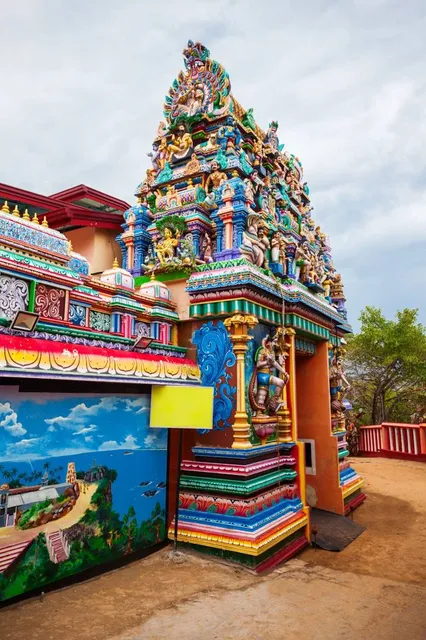
The shrine was attacked and destroyed on April 14, 1622 CE, the Tamil New Years Day, by the Portuguese general Constantino de Sá de Noronha (who called it the Temple of a Thousand Pillars). The main statue was taken out to town during the 'ther' (chariot or car) procession, during which time Portuguese soldiers entered the temple dressed as Iyer priests and began robbing it. In an act of religious zeal, the temple was then levered over the edge into the sea. Fleeing priests buried some of the temple's statues in the surrounding area. Temple stones and its carved pillars were used to construct Fort Fredrick to strengthen the colonists' influence over the eastern seaboard of the island against other invading European armies, including the Dutch navy during the Dutch–Portuguese Wars. An extensive campaign of destruction of five hundred Hindu shrines, the Saraswathi Mahal Library and forced conversion in the Tamil country was conducted by the Portuguese upon their arrival to the island and conquest of the Jaffna kingdom; the temple had been paying protection fees of 1280 fanams a year to the Portuguese. Trincomalee witnessed several naval battles of Europe's Thirty Years' War under Phillip II's man Filipe de Oliveira. Between 1639–1689 CE, the Ati Konanayakar temple was built in nearby Thampalakamam to house the idols on procession that survived. The destruction of the Konesar temple is historically viewed as the biggest loot of one of the richest temples of Asia. Gold, pearls, precious stones and silks collected for more than 1000 years were robbed within a few hours. A site plan by De Queiroz states: "On the first rise to the summit of the rock was a Pagoda, another at mid-ascent, and the principal one of them all at the highest eminence, visited by a concourse of Hindus from the whole of India." In his dispatch to Philip III, King of Portugal, Constantino described: "The land of the Pagoda is 600 fathoms long and 80 feet at its broadest, narrowing to 30 feet." The final monument of the temple complex was destroyed two years later. Regarding a prophetic Tamil inscription de Noronha found at the site, he added "When I went there to make this Fort, I found engraved on the Pagoda, among many other inscriptions, one that ran thus: Kulakottan has built...
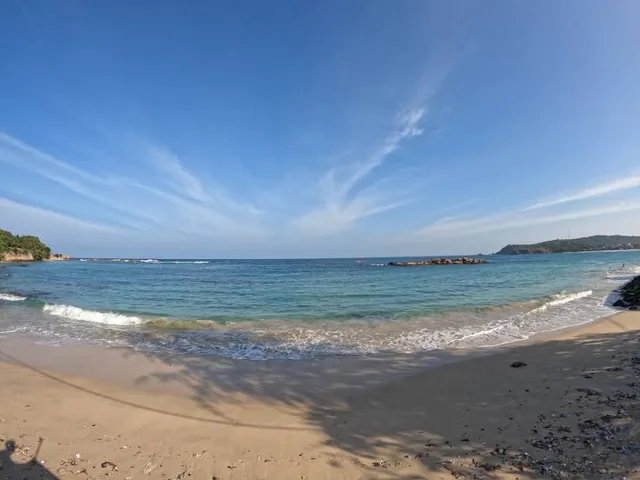
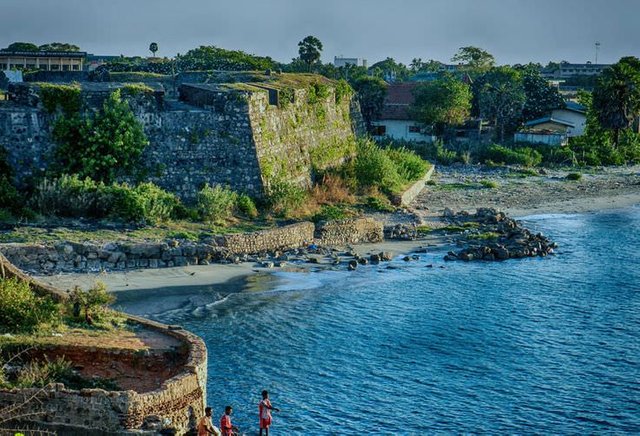
Read moreA beautifully fascinating slice of history, architecture, culture, and wildlife, all in one spot, with stunning panoramic views over the near by beaches of Back Bay and the Bay of Bengal. Or at least it could be a beautifully fascinating site of archaeological interest!
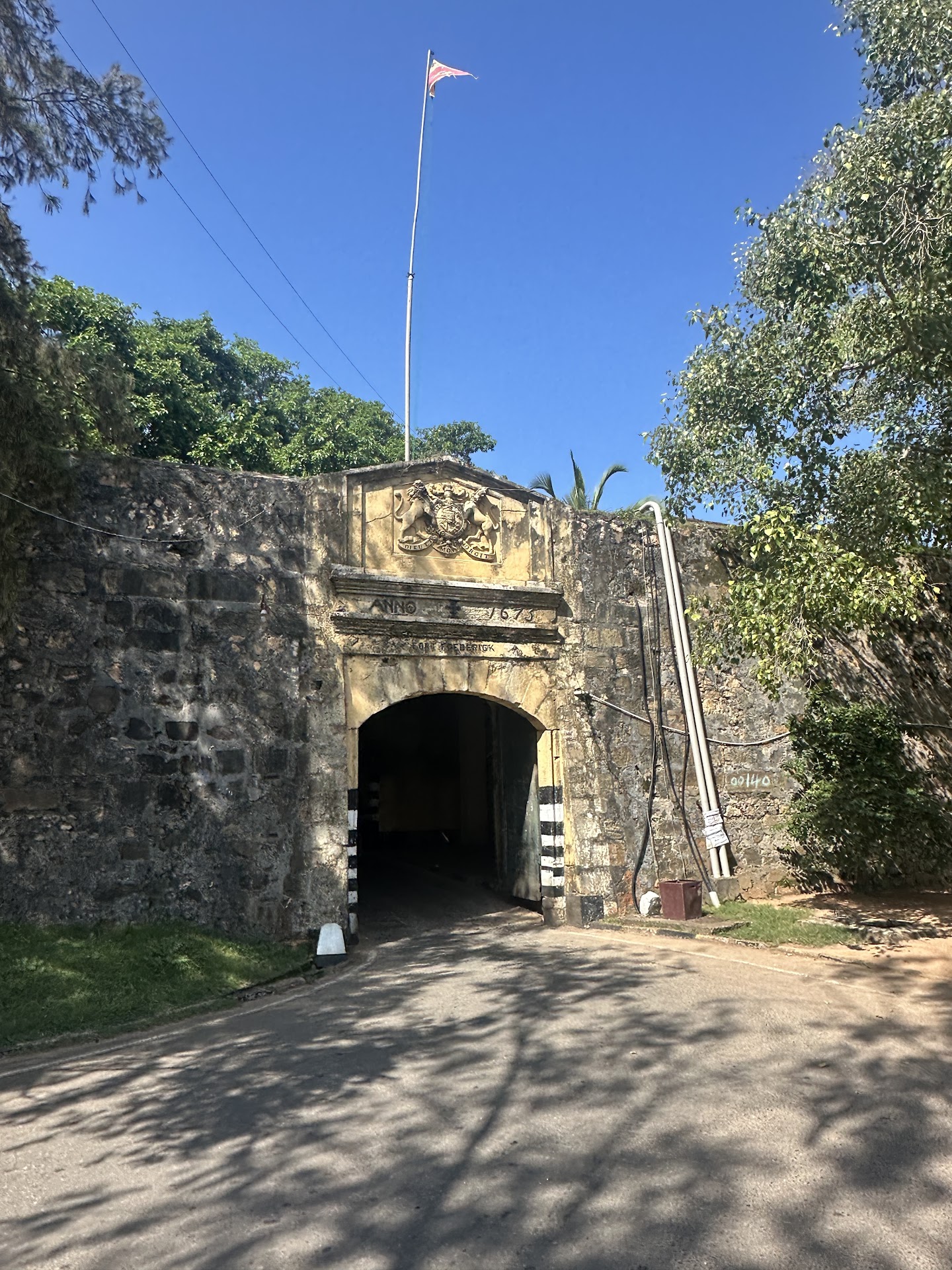
The fort wall and entrance way to the southwest of the site are impressively imposing and generally well preserved. Other than that, there is not much else in terms of historic buildings or ruins to explore, as most of the other buildings are election offices, police offices, and/or army buildings, which are generally run down, heavily fenced off, and not open to the public. There are no other historic Fort walls or ramparts to explore around the site, and there is no public access to the top of the only Fort wall or inside the entrance tower – only through it. There are however some historic ammunition bunkers, bastion ruins and a rock bunker to explore. But, there are no tourist information signs anywhere so you often have no idea what you are looking at or the history behind it. The rock bunker does offer fantastic views though!
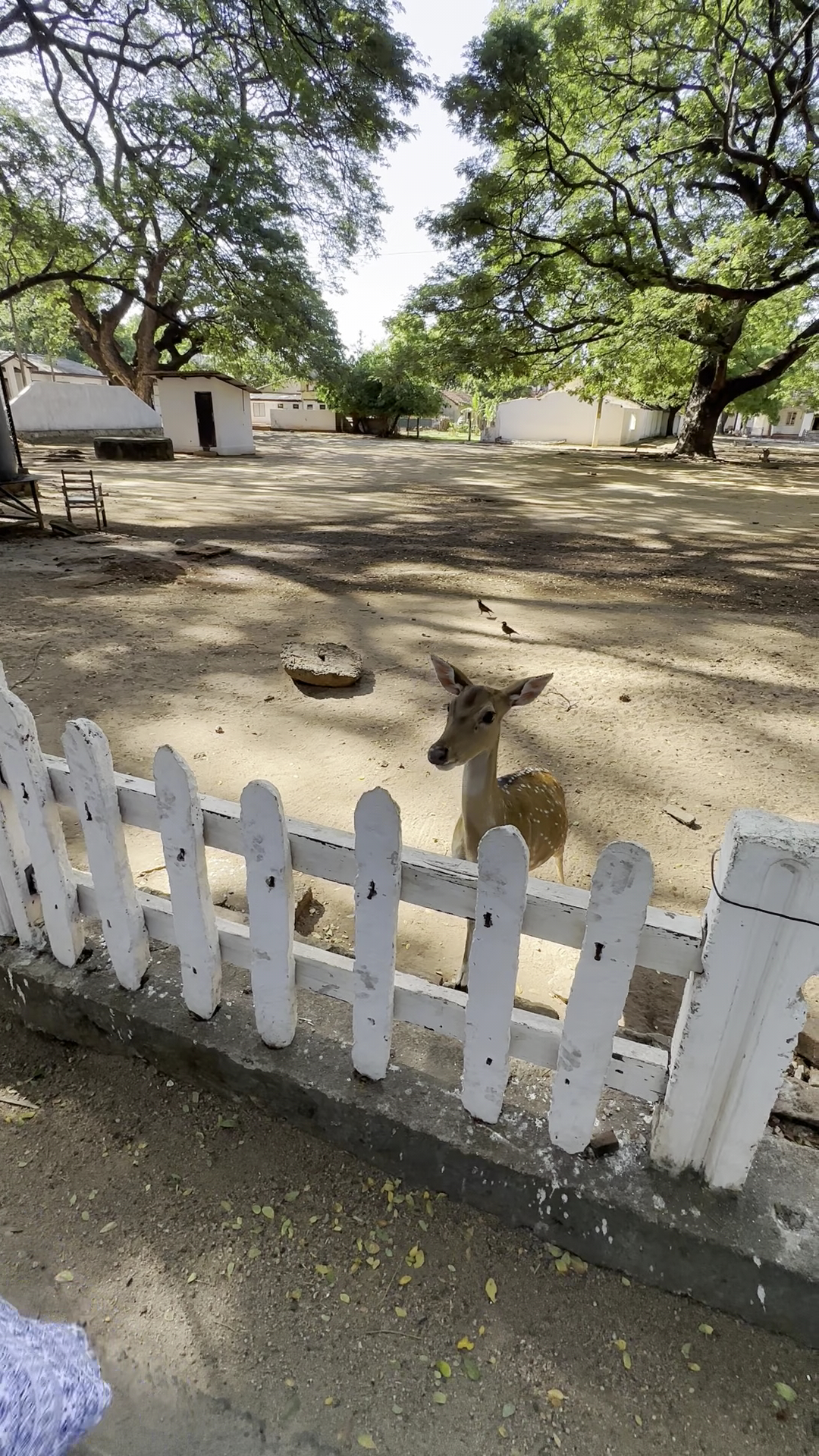
Whilst exploring the Fort, we saw Grey langur monkeys, eagles, Small palm squirrels, Sri Lankan axis deer, dogs, and a variety of birds. There are also several magnificent mature trees, such as the massive-girthed Arjuns’ (Marutu in Tamil or Kumbuk in Sinhala) and the impressive but parasitic Banyan, aka, Strangler figs. Unfortunately though, there is a lot of waste/litter spread everywhere, which gets a lot worse as you venture up through the stalls on route the headland.
There is ample parking inside or outside the Fort for tuktuks – as they can generally park anywhere – but parking outside the Fort allows the chance to walk up through the arch entrance and up the drive past the military buildings. Tickets are accessible once inside the Fort. A ticket costs 1,788.00 Rs (£4.79) per person, which is a lot when locals pay almost 100% less than tourists and there is no clear and obvious evidence of any maintenance or general management. What actually does the admission fee go towards? Whilst £9.58 is not usually a lot of money spent for two people here in the UK, 3,576.00 Rs is a lot of money when you are trying to short-term live in Sri Lanka where food, fuel, and accommodation also needs to be budgeted for. It is not relative or even reasonable in the slightest. As someone else wrote in an older review, “walking wallets”.
One thing to note if staying in the Trinco area and you’re trying your bit at speaking the local dialect – which in Trinco is Tamil – is the Fort is run by the Sri Lankan military – who are Sinhala, so will only speak and/or respond in Sinhalese! Don’t make the same mistake we did!!
Overall, there is a very confused feel about this site, as in, is it trying to be an archaeological museum or a military base with some public access? The tourist admission fee is too expensive and well out of touch for what is being offered, there is not a great deal to actually look at or to explore around in terms of historic ruins, the tourist information signage is non-existent, both to and around the site, and there is a general lack of care and basic maintenance – like litter picking. This is not a privileged westerner’s whine, but a view of a traveller that would appreciate slightly better value for money. This said, we still found the site interesting to walk around and explore, and we genuinely had a great time.
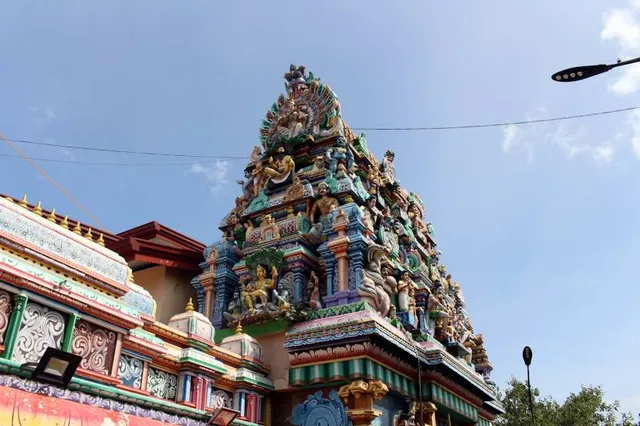
We would still recommend Fort Frederick as a site to visit when in Trinco, even if it is just for the views of the bays on a sunny day – you just have to look past the litter in places. Fort Frederick is also worth visiting if you want to go and explore the Thirukoneswaram Kovil at the headland! See our review for that site too.
Fort Frederick visited...
Read moreFort Fredrick (Tamil: திருகோணமலை கோட்டை, romanized: Tirukōṇamalai Kōṭṭai; Sinhala: ත්රිකුණාමලය බලකොටුව, romanized: Thrinkunamalaya Balakotuwa), also known as Trincomalee Fort or Fort of Triquillimale, is a fort built by the Portuguese at Trincomalee, Eastern Province, Sri Lanka, completed in 1624 CE, built on Swami Rock-Konamamalai from the debris of the world-famous ancient Hindu Koneswaram temple (Temple of a Thousand Pillars).[1] The temple was destroyed by the Portuguese colonial Constantino de Sá de Noronha under Phillip III, occupier of the Jaffna kingdom and Malabar country on the island. On the Konamalai cape was also built a new village of Portuguese and Tamil people, 50 Portuguese soldiers and inside the fort, a church named after "Nossa Senhora de Guadalupe". The Fort of Triquillimale was dismantled and rebuilt by the Dutch in 1665, renamed Fort Fredrick. Several Hindu shrines in the Tamil country were destroyed during the occupation, particularly under Philip II, when Trincomalee became the scene of naval battles during Europe's Thirty Years' War. King Ethirimana Cinkam of the Jaffna kingdom had resisted a call by D. Jerónimo de Azevedo in 1612 to aid the latter in building a fortress in Trincomalee. The enterprise was abandoned.[2] With the defeat of King Cankili II, all of the territory of the kingdom of Jaffna, comprising Trincomalee and Batticaloa, was assigned to the "spiritual cures of the Franciscans." This decision was taken by the bishop of Cochin, fray Dom Sebastião de S. Pedro.[3] By the end of 1619, a small Danish fleet had arrived at Trincomalee; in May 1620, the Danes occupied Koneswaram temple and began works for the fortification of the peninsula before being defeated.[4] This fort was captured by a Dutch fleet under Antonie Caan in 1639 and in 1665 a new fort was built here by the Dutch to defend against the advancements of the British and the French. In 1672, the year when the Dutch Republic was attacked by France, Britain, and two German states, the French tried to establish a base for the French East-India Company in nearby Kottiyar Bay, but they were soon forced to leave.[17] Trincomalee was important for its large all-season secure harbor. In late 18th century Trincomalee traded hands once more with the British capturing it during the Fourth Anglo-Dutch War, the French taking it from the British and handing it back to the Dutch East India Company (VOC) at the Peace of Paris in 1784. In 1795, when the French had occupied the Dutch Republic during the War of the First Coalition, it was again taken over by the British, who renamed it Fort Fredrick. It remained a British garrison till 1948. Duri Coastal artillery guns were added during the two World Wars. Today it remains garrisoned by a detachment of the Gajaba Regiment, Sri Lanka Army, but accessible to visitors.
Arthur Wellesley, later 1st Duke of Wellington visited whilst a Colonel in the British East India Company, the bungalow he resided in is known as Wellesley Lodge which is inside Fort Fredrick and now is the officer's mess of the 2nd (Volunteer) battalion of the Gajaba Regiment of the Sri...
Read more