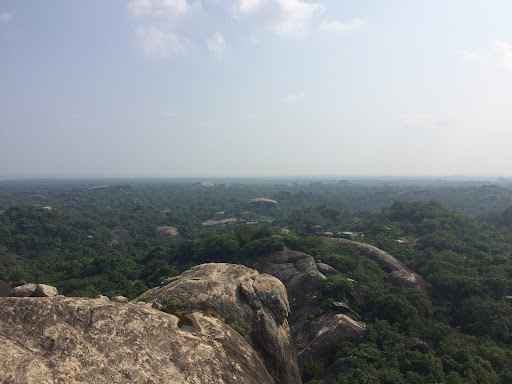
Kudumbigala Sanctuary / Kudumbigala
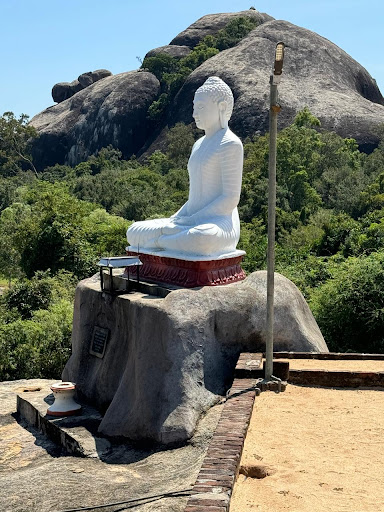
Kudumbigala is an abandoned sanctuary and a monastery complex located in a range of rocks in Ampara Sri lanka.
Located in Lahugala Divisional Secretariat Division of Ampara District. The highlands of the Mt.
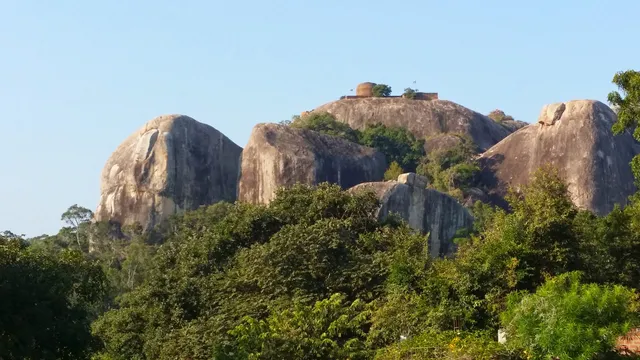
The area is surrounded by thick forests, made of huge rock formations and rock formations. It has a cylindrical shape and is similar to the Dharmarajika Stupa in India. There is a cave inscription of Nandimitrage, a mighty king among the ten giants of King Dutugemunu.
Large caves with cave domes have been found in some places. Brahmi inscriptions of the age of 2-5 years. On some stone slabs, remnants of buildings and the remains of ancient paintings can be identified.
Kudumbigala, the largest rock in the country, contains the remains of the Dagoba and the natural stone blocks used to hold water. Kudumbigala, with archaeological ruins spread over 700-800 acres, is another well-known archeological site in the Eastern Province.
Other than that it is a sacred groove. Close to it is Kumbukkan oya and Yala National Park. Kudumbigala is also known as Chethiya Pabbatha. The hermitage was found and established in 1954 by a devotee named Mathree.
Since it was rediscovered it was hidden in the thick jungle. Upasaka maithree was a Catholic. But he came to Kudumbigala and cleaned and safeguarded it. Therefore we must be grateful to him for this historic place.
Thoughts is a historically valuable destination built by King Devanampiya Tissa in the 2nd century B.C. This is the first refuge made for Bhikku. He is the founder of Buddhism in Sri Lanka. The Kudumbigala monastery complex is located on a land of 600 acres. Kudumbigala can be easily reached from Panama (11 miles from Panama and 17 from Kumana village). There are over 200 cave reservations.
The caves were carved with drip ledgers (in Kattarama code) to protect the order from the caves. The cave of the inner walls are plastered and painted with enthusiastic paintings and frescoes. Rather than other archeological sites, Kudumbigala is a cave sand building of an untouched complex. Kudumbigala Viharaya is one of the few monks in the world who are imitating meditations today. Constantly there are no human accommodations near this silently standing landmark. But they were never harmed by wild beasts in the nearby jungle. The biggest cave is called Maha Sudharshana cave. Inside the Cave You Can See A Brahmin Inscription. The inscription proclaims that it was donated by the Warrior of Nandika to the army of King Dutugemunu.
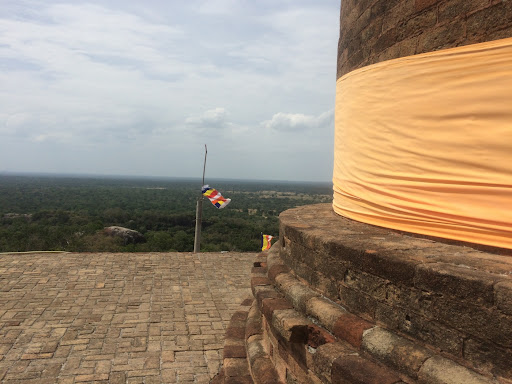
The second largest cave is the Giant, where another inscription has been erected. It is said that this cave was donated by Deva, another General of the Army. Kudumbigala was a hermitage in the pre-Christian era. A Cylindrical Dagoba is Surviving in the Hermitage. It was purposefully built to provide reservation and accommodation services to the Arahant bhikkus of Anuradhapura. This hermitage was consisted of ponds carved into a rock, columns and pillars. The surroundings and the environment are very...
Read moreLocated close to the Kumana National Park in Sri Lanka, Kudumbigala Sanctuary is a place enriched with natural beauty. Engulfed in lush greenery and verdant trees, the sanctuary is home to a variety of birds and animals. This wilderness area places you right at the heart of nature. It also has a Buddhist Monastery perched at the top of a hill. The path leading to the monastery is quite steep but provides an opportunity for a challenging hike. However, it is all worth the efforts since you are greeted by panoramic views upon reaching the top. A great place to escape the bustle of the city, visit the Kudumbigala Sanctuary to spend some time closer to nature.
Make your visit suitable to your interest, use Palatupana trip planner for personalization.
You won't miss your home when in Palatupana, hotels in Palatupana like Blue Turtle Hotel, Lake Wind Hotel and Yala Villa offer some of the best places to stay in the city.
Explore the best Palatupana vacation packages that will take to you important landmarks of the city! For getting in, check out how to reach Palatupana.
The Kudumbigala Sanctuary is 4,403 hectares in extent. It was declared a sanctuary on September 28, 1973. Despite it being a sanctuary, a little private ownership is allowed where villagers from Panama own land within the area. There was a period when they were driven away by terrorists but now they have reclaimed their land and are living a happy farming life.
While on a trip to the Kudumbigala Sanctuary, you can see the Helawa lagoon in its majesty and tranquility. Fishing in the lagoon is permitted and this is a practice that had been going on for many years before the area was declared a sanctuary.
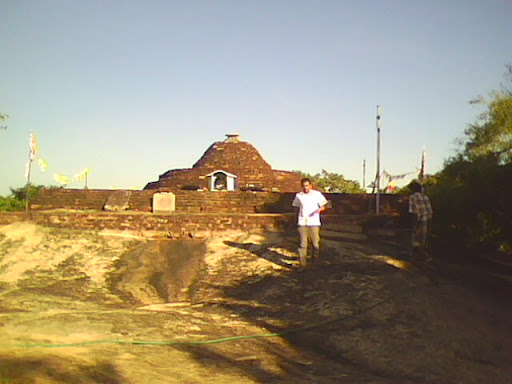
Towards the interior is a large complex of rock ridges and big granite boulders where somewhere in the second century B.C., one of the earliest cave dwelling hermitages of bhikkhus was located.
Traces of this ancient hermitage are seen even today with prominent Brahmin inscriptions under the drip-ledges...
Read moreThe "Kudumbigala Forest Hermitage" located in the middle of the Pottuvil Great Forest. There are drip caves, inscriptions and ancient dagobas in the forest which reveal that there was a Buddhist revival in the area during the early Rohana dynasty of Anuradhapura. Some caves are inhabited by the monks of the present forest. There are 50 drip-lined caves with 5 rocks located here.
Did you know there is a story associated with this place? Around 1942 a wonderful devotee had come through this great forest. That is the Maitreya devotee. He was a pagan by birth, converted to Buddhism and came to this great forest alone. Later, at the invitation of that gentleman, Thambugala Anandasiri Thero, the forerunner of the present revival of Kudumbigala, was brought in. If you want to know the wonderful experience that he had in this forest, you have to read the book written by him as a biography of twenty five years. Initially, the walls of about 10 caves were built and the meditation was started by digging into chambers. More than 10 pre-Christian inscriptions are found here. Eight ruined dagobas can be seen in the Kudumbigala forest. A hall has been built here for the monks of the forest to come outside and stay for the alms-givers. There are several natural springs in this area which are wonderfully located. Mammals such as elephants, leopards, leopards, leopards, wild boars, deer, deer, bears and scorpions, which can be found in the dry zone, are still found in this forest. From Colombo via Pottuvil, Moneragala. M. This Kudumbigala forest is located at a distance of...
Read more