Velgam Vehera (also known as Vilgam Rajamaha Viharaya) (Sinhalese: වෙල්ගම් වෙහෙර) is a historical Buddhist temple situated in Kanniya, Trincomalee District, Sri Lanka. It also known to Hindus as Natanar Kovil. Historically Velgam Vehera was one of important Buddhist temples in the country, worshiped by both Sinhala and Tamil Buddhists.
This temple is believed to be built during the reign of King Devanampiyathissa (307–267 BC) with later renovations haven been undertaken by King Bathiya I, Agkbo II, Vijayabahu I and Parakramabahu I. An inscription found in the temple was written during the reign of King Bhatika Tissa (141-165 AD). The inscription mentions revenue from certain fields to the Abagara Vihara (Velgam Vihara) and Velgama by the king's commander, Abaya. Following the collapse of the Anuradhapura and Polonnaruwa Kingdoms the population migrated to the southern part of country, which resulted in the temple being abandoned and falling into ruin.
With the invasion of Cholas from India in 993 AD, many of Buddhist shines was destroyed in the country. Velgam Vihara however managed to survive unscathed. The Cholas instead renovated the temple, adding their own structures and renamed it Rajarajaperumpalli, after King Rajaraja I. Some of Tamil inscriptions found in the temple record donations to the temple made during the reigns of King Rajaraja and Rajendradeva.
In 1929 the ruins of Velgam Vehera were discovered by the Sri Lanka Archaeological Department and in 1934 the site was declared as an archaeological protected reserve.
Ruins
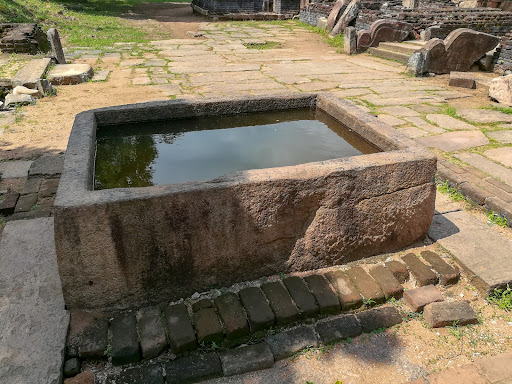
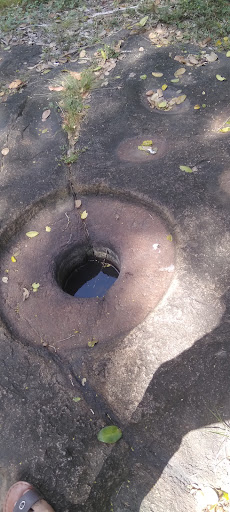
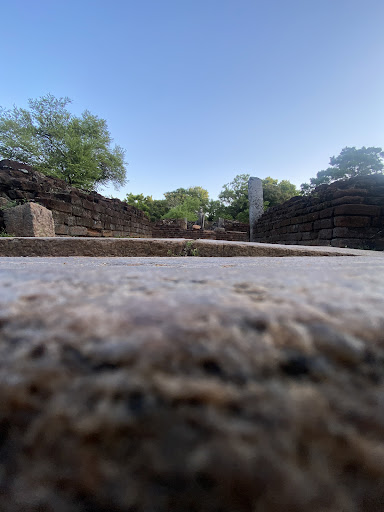
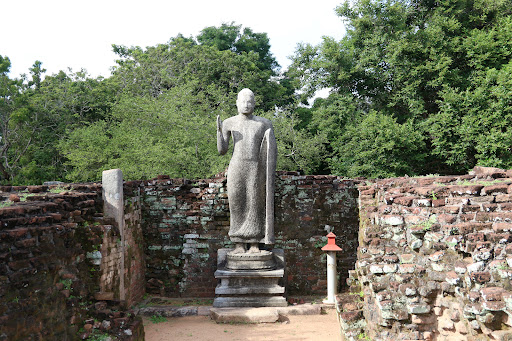
Some of ruins have been scattered throughout the temple premises, these include stone inscriptions, brick dagobas, parts of the image houses, korawak gal (balustrades) and plain mura gal (guard stones) and Moon stones.
Civil war
During the Sri Lanka civil war the temple was attacked several times by the LTTE separatists. A shell, that stuck the temple's Bodhi tree can still can be seen in the temple grounds. The Nayaka Thero who were there at the time of attack, is still in the temple. Thero can explain well the situation of war. Still no one can understand how or why the mortor from LTTE did not explode when it hit to the sacred tree. If it exploded, all the buildings in the premises and all living beings would have...
Read more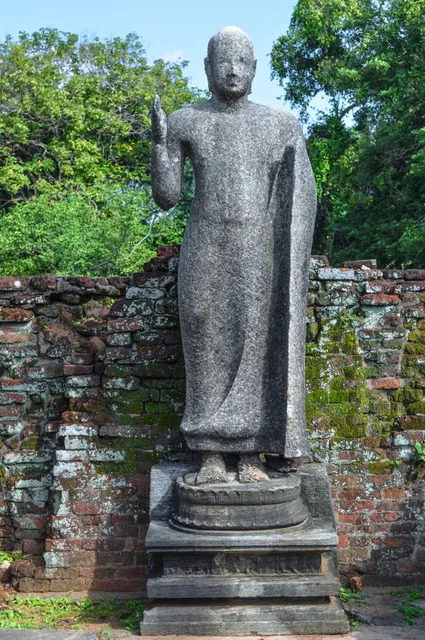
 Learn more insights from Wanderboat AI.