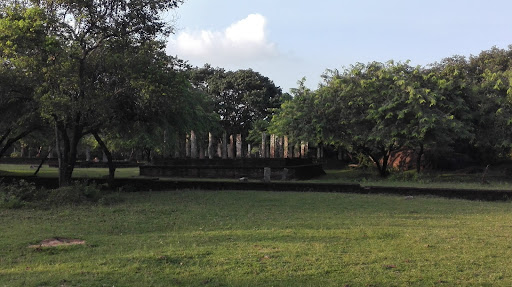
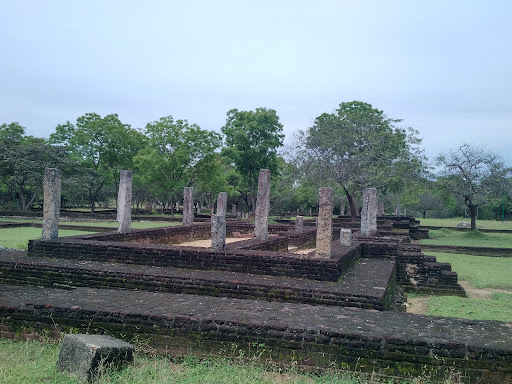
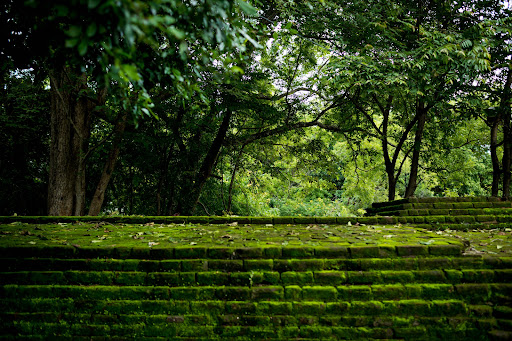
The Alahana Parivena is a significant monastic complex located in the ancient city of Polonnaruwa, Sri Lanka. It is one of the key historical and archaeological sites in Polonnaruwa and holds religious and cultural significance. Here's what you should know about the Alahana Parivena:
Historical Background: The Alahana Parivena is believed to have been established during the Polonnaruwa period, which spanned from the 11th to the 13th century. This period was known for its architectural and cultural achievements.
Monastic Complex: The Alahana Parivena was a monastic complex and a place of Buddhist worship and meditation. It was a center for monastic life and a hub for religious activities.
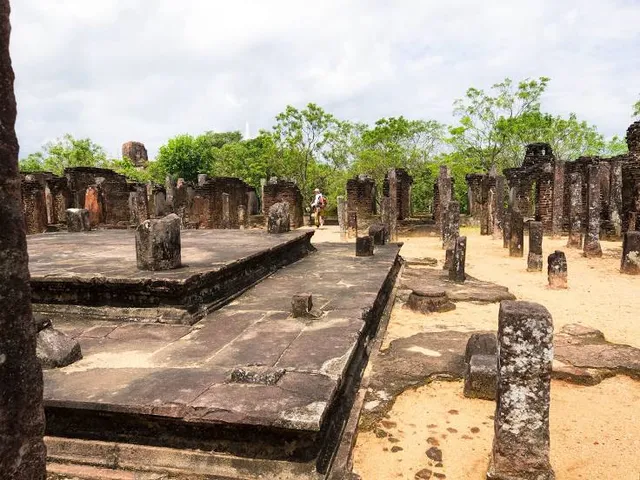
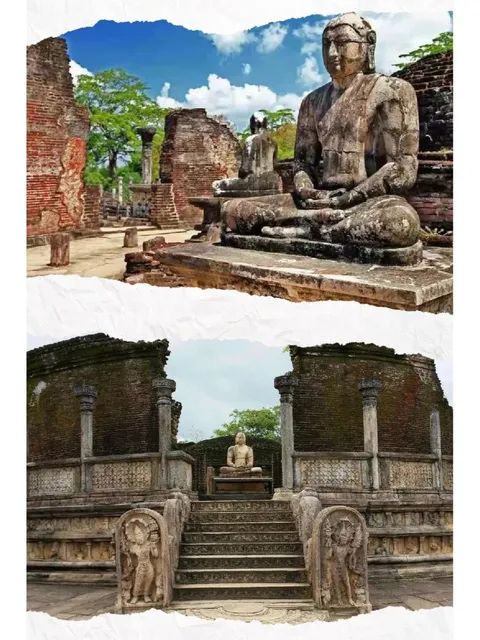
Architectural Elements: The complex includes several key architectural elements, such as stupa ruins, image houses, and other structures that were used for religious and educational purposes. The site includes the Kiri Vihara, a stupa known for its milk-white appearance, and several other buildings with historical and architectural significance.
Religious Significance: As a Buddhist monastic complex, the Alahana Parivena played a crucial role in the religious and cultural life of Polonnaruwa during its heyday. It served as a place for both religious practices and education.
Location: The Alahana Parivena is situated in close proximity to the main archaeological area of Polonnaruwa, making it a convenient stop for visitors exploring the ancient city.
Preservation: Efforts have been made to preserve and protect the historical and archaeological value of the Alahana Parivena, recognizing its importance in Sri Lanka's cultural heritage.
The Alahana Parivena stands as a testament to the rich history and religious life of Polonnaruwa. It is a popular site for tourists and history enthusiasts who visit the ancient city to appreciate its cultural and architectural...
Read moreIf you have been to Polonnaruwa, you would know what a rush it is. So many ruins cramped together. When you purchase the entrance ticket to see the ruins, typically the temptation is to see all that is to be seen and this in fact is the folly of it all. On many of our previous visits we were guilty of the same crime – for it is indeed a crime not to see, visualize and drink deeply of the splendor of our ancients. In the hot sun we would pant from one ruined building to another only taking time to quench our thirst, and at the end of the day tramp back to our hotel to relax.
However, changing our modus operandi this time when we visited Polonnaruwa we were determined to visit, study and relax over just one of the many groups of ruins. So after a holiday lunch (which means you have license to over eat), and an afternoon siesta (luxury) and a fine cup of tea (wake up call), we made our way to the Alahana Pirivena Monastery site...
Read moreAlahana Pirivena è tra i più grandi e famosi complessi piriveni antichi dello Sri Lanka. Appartiene al regno del re Parakramabahu I di Polonnaruwa, che regnò tra la metà e la fine dell'XI secolo d.C. Alahana stessa si distingue come uno dei luoghi storici più singolari dello Sri Lanka, essendo costruita su una serie di terrazze rocciose in una campagna della zona asciutta piuttosto idilliaca, anche se è ancora più umida della regione di Anuradhapura quando piove. Alcuni degli edifici del complesso Alahana comprendono il famoso Baddhaseema Pasada, la sala capitolare in mattoni per i monaci. Ora è in rovina, ma deve essere stato enorme nel suo periodo di massimo splendore. Alahana era praticamente il centro principale degli studi buddisti durante l'era altomedievale, durante il quale il regno di Polonnaruwa era più potente.
Non c'è solo una grande sala capitolare, ma molte sulle numerose terrazze che compongono l'entroterra di Alahana. Alcune camere sono più grandi di altre e potrebbero essere state ben arredate. Queste grandi stanze potrebbero aver ospitato il più importante dei monaci residenti. Uno di questi ha una pietra lunare all'ingresso. È rettangolare, non un semicerchio come è normale per questo tipo di intaglio. È abbastanza minimalista ma unico nel design, senza immagini di mammiferi ma una fila di cigni, oltre a un loto in piena fioritura non un'immagine semi-formata.
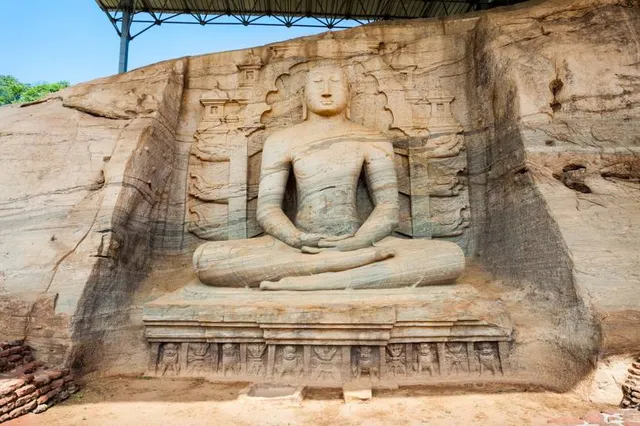
Uno degli edifici più impressionanti di questo complesso è la Lankathilleke Image-House. Contiene una massiccia immagine del Buddha in piedi, alta oltre quaranta piedi. Lo stesso Lankathilleke è uno dei più grandi del suo genere nel paese. Piccoli affreschi dominano le pareti di Lankathilleke, mentre il tetto era una grande cupola, ora persa nel tempo. Lo Stupa di Rupavati si trova a nord della Lankathilleke Image-House. Fu fatto sotto il patronato della regina Subadhra, una delle...
Read more