Minneriya Wewa, an ancient reservoir nestled in the cultural heartland of Sri Lanka, stands as a testament to the island's historical prowess in hydraulic engineering and water management. Located near the town of Polonnaruwa, Minneriya Wewa plays a multifaceted role in sustaining agriculture, regulating water supply, and contributing to the ecological diversity of the region.
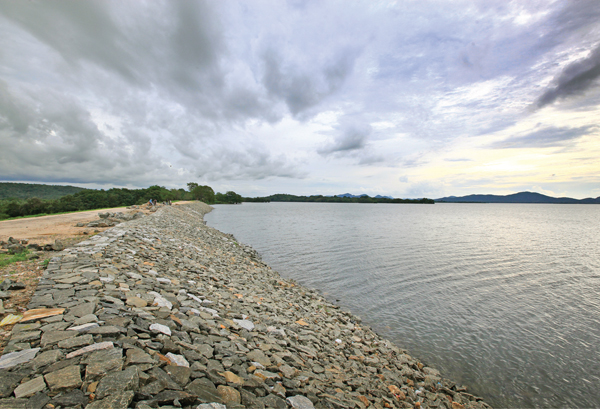
Constructed over a thousand years ago during the reign of King Mahasena (3rd century AD), Minneriya Wewa exemplifies the advanced engineering skills of ancient Sri Lankan civilizations. The reservoir, built with an extensive earthen embankment, was designed to capture water from the Minneriya River and ensure a reliable water supply for the surrounding agricultural lands. The sheer scale and meticulous planning of Minneriya Wewa reflect the ambition of ancient rulers to harness water resources for the benefit of their communities.
The primary purpose of Minneriya Wewa was to facilitate irrigation in the region, enabling the cultivation of rice and other crops. The stored water, released strategically through an intricate network of canals, reached farmlands downstream, fostering agricultural productivity and supporting the livelihoods of local communities. The reservoir played a pivotal role in sustaining the ancient city of Polonnaruwa, contributing to its economic prosperity and cultural development.
Beyond its utilitarian role in agriculture, Minneriya Wewa has ecological significance. The reservoir and its surrounding lands provide a habitat for diverse flora and fauna, creating a thriving ecosystem. The lush vegetation around the reservoir attracts a variety of bird species, making it a popular destination for birdwatchers. The interconnectedness of water management and ecological diversity highlights the holistic approach of ancient Sri Lankan civilizations to their environment.
Minneriya Wewa also holds cultural and historical importance. The reservoir is surrounded by archaeological sites, including ancient temples, monastic complexes, and inscriptions that provide insights into the religious and cultural practices of the ancient inhabitants. The remnants of ancient settlements and infrastructure reflect the prosperity and cultural vibrancy that Minneriya Wewa contributed to the region.
In recent times, Minneriya Wewa gained international recognition for the annual gathering of elephants known as the "Minneriya Elephant Gathering." During the dry season, the receding waters of the reservoir expose lush grasslands, attracting a large number of wild elephants. This natural spectacle has become a major tourist attraction, drawing visitors from around the world to witness the awe-inspiring sight of hundreds of elephants congregating near the reservoir.
Conservation efforts have been undertaken to preserve the historical, cultural, and ecological aspects of Minneriya Wewa. These efforts recognize the reservoir's role as a heritage site and a crucial component of the region's environmental balance.
In conclusion, Minneriya Wewa stands as a monumental achievement of ancient Sri Lankan civilization, showcasing the island's ability to harness water resources for sustainable development. Its historical, cultural, and ecological significance makes it a valuable heritage site and a living testament to the enduring impact of hydraulic engineering on the landscape and culture...
Read moreMinneriya Wewa: An Ancient Reservoir in Polonnaruwa, Sri Lanka
Introduction: Sri Lanka, with its remarkable historical and natural landscapes, is home to numerous sites of historical and cultural significance. Among these, Minneriya Wewa, located in Polonnaruwa, is a testament to the island's ancient irrigation systems and their vital role in sustaining life and agriculture. This essay explores the history, purpose, ecological significance, and cultural importance of Minneriya Wewa.
Historical Background: Minneriya Wewa, also known as Minneriya Tank, is an ancient reservoir situated in the Polonnaruwa district of Sri Lanka. Its history can be traced back to the third century BC, during the reign of King Mahasen. The reservoir was constructed to store water for agricultural purposes, and it has been a vital part of Sri Lanka's irrigation system for centuries.
Purpose and Irrigation System: Minneriya Wewa was created to fulfill several essential functions. Its primary purpose was to store rainwater during the wet season and provide a steady supply of water for agricultural activities during the dry months. The intricate irrigation network connected to the reservoir allowed water to be channeled to the fields, sustaining the region's agriculture. This engineering marvel played a pivotal role in the prosperity of Polonnaruwa and its environs.
Ecological Significance: Apart from its role in sustaining agriculture, Minneriya Wewa is a haven for wildlife and a critical part of Sri Lanka's biodiversity. The reservoir and the surrounding Minneriya National Park are famous for the annual gathering of wild elephants. During the dry season, elephants from various parts of the region congregate at the reservoir to quench their thirst and forage on the lush grass along its shores. This natural spectacle has made Minneriya Wewa a prime location for wildlife enthusiasts and photographers.
Cultural and Religious Significance: Minneriya Wewa is not only an engineering marvel but also holds cultural and religious significance in Sri Lanka. The reservoir area features ancient inscriptions and ruins, bearing testament to the historical importance of the site. Additionally, the surrounding temples and monasteries have provided a spiritual connection to the site for centuries. Devotees and visitors often pay homage to these religious sites and witness the harmonious coexistence of nature and culture.
Conservation Efforts: Preservation of Minneriya Wewa is a matter of paramount importance. Sri Lankan authorities, in collaboration with environmental organizations, have taken measures to protect the reservoir and its fragile ecosystem. Conservation efforts include controlling pollution, safeguarding the natural habitat, and ensuring the sustainable use of water resources.
Conclusion: Minneriya Wewa, with its rich history, intricate irrigation system, ecological significance, and cultural importance, is a symbol of Sri Lanka's ancient wisdom in managing its resources. It serves as a reminder of the island's ability to create sustainable systems that harmonize with the environment. Furthermore, the reservoir's role in sustaining agriculture and as a haven for wildlife underscores its multifaceted significance. A visit to Minneriya Wewa not only offers a glimpse into Sri Lanka's past but also allows us to appreciate the interplay between human ingenuity and the...
Read moreMinneriya tank is a reservoir in Sri Lanka made by an old civilisation; the Anuradhapura Kingdom. King Mahasena ordered a dam build across the Minneriya River, which made the lake. The tank covered 4,670 acres (18.9 km2).
The Minneriya Tank was built by the great tank builder, King Mahasen (276–303) who ruled in Anuradhapura. This tank occupied 4670 acres and its strong 13-meter-tall dam running along a distance of 2 km held over 20 billion gallons of water. The water arrived from Amban River,a main tribunary of Mahaveli River, 48 km away, along the Elahara canal built by the King Vasabha (65–109) before his time.
This, along with other reservoirs created an irrigation paradise in the east. It was this growth in agriculture that opened up the massive trade with South East Asia through the Trincomalee harbour. From then onwards, Trincomalee harbour became one of the busiest in the region.
In 1820 AD, British Inland Revenue Officer Ralf Bachaus recorded that the whole area can be irrigated if this reservoir is restored. In 1856, British Governor Henry Ward recorded that it must have been an amazing reservoir which had been built very strong. They recorded the beauty of the vegetation, the wildlife which surrounded the reservoir.
The Mahavamsa, chronicle of Sri Lanka, states that Mahasen constructed sixteen large tanks and two irrigation canals. The largest among these is the Minneriya tank about which Henry Ward, a governor of Sri Lanka in a British crown...
Read more