The Thivanka Image House, also known as Thivanka Pilimage, is a historically and artistically significant structure located in the ancient city of Polonnaruwa, Sri Lanka. It is renowned for its exceptional stone carvings and the well-preserved images of the Buddha. Here are some key details about the Thivanka Image House:
Historical Background: The Thivanka Image House was constructed during the Polonnaruwa period, a significant era in Sri Lankan history that extended from the 11th to the 13th century. It was built during the reign of King Parakramabahu I (1153-1186 AD), known for his contributions to the city's cultural and architectural heritage.
Architectural Style: The Image House follows the traditional Sinhalese architectural style of the Polonnaruwa period. It features a rectangular structure with a pyramidal roof. The exterior is adorned with intricate stone carvings, and the interior houses several images of the Buddha.
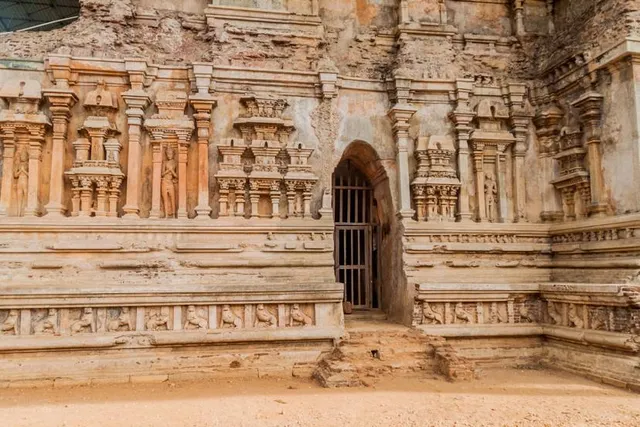
Stone Carvings: The Thivanka Image House is renowned for its exceptionally detailed and fine stone carvings, which depict various scenes from Buddhist mythology, including the life of the Buddha and other significant events. The carvings are considered masterpieces of Sinhalese art.
Images of the Buddha: Inside the Image House, there are three large and beautifully crafted images of the Buddha. The main image is a standing Buddha statue, flanked by two smaller images. These images are well-preserved and are significant objects of veneration for Buddhists and visitors.
Historical Significance: The Thivanka Image House serves as a historical and cultural treasure that provides insights into the art, religion, and history of Polonnaruwa during the Polonnaruwa period.
Location: The Image House is situated within the Polonnaruwa archaeological site, near other important historical structures and sites.
Preservation: Ongoing efforts have been made to preserve and protect the Thivanka Image House, recognizing its historical and artistic value.
The Thivanka Image House is not only an architectural gem but also a site of religious and cultural significance. It attracts tourists, art enthusiasts, and history buffs who visit Polonnaruwa to explore the rich heritage of the ancient city and appreciate the artistic and spiritual importance of this...
Read moreThis magnificent temple was buried when found and its believed that the kings of Polonnaruwa buried these temples when they fled under continuous attacks of south Indian invaders. This temple is most preserved one we can see in Polonnaruwa today. There are many aspects one needs to observe when you visit there. There is a mural depicting lord buddhas decent from heaven after discourse of "Abidharma Pitaka" the core teachings of "Nirvana Marga" the path to break and end the circle of life and pain to the assembly of gods. One of the figures in this drawing wears a helmet very similar to the ones the astronauts wear today. How this came about is a mystery. Also there is a meditation passage between inner and outer passages of the temple. The entry to this passage is of normal height allowing one to enter the passage to meditate with ease. At the end of the meditation one has to exit from a short door facing the statue of lord buddha the purpose is to pay respects to buddha for teachings which allows one to attain calming and peacefulness. There is a very narrow stair case which allows entry to a platform allowing devotees do "Sheersha Vandhana" paying respects to buddhas head. The purpose narrow stairs is to make people to accent and decent facing buddha statue. The outside walls of this image house is constructed to look like a hindu kovil. Historians have two options on this one being the kings of Polonnaruwa era being married to Indian princess made the outside to look like kovil so while the king prayed inside queens can pray outside. The opinion is that this is done to deceive the Indian invaders where they would leave the image house alone thinking it's a hindu kovil. The outer walls of this image house has a lot of unique statues and murals so take your time to fully...
Read moreKing Parakramabahu (1153-1186) constructed Thivanka Pilimage as part of the Jethavanarama Complex. This has been provided the name “Thivanka,” which literally implies three curves, since the big picture of Buddha was curved in 3 locations. This is too constructed with bricks including the statue, like most other constructions of this age.
Thivanka Pilimage or Image House is located in Polonnaruwa, Sri Lanka and is a part of the country’s rich heritage.
The Buddha statue at the Thivanka Pilimage is about 8 meters high, but today it has demolished the portion of the statue above the head. The statue is 6.6 meters tall today. The building is 67.6 “wide and 133 feet long. The walls are 7-12 feet thick, which makes the building’s inner size much smaller. The buildings ‘ inside walls were decorated with frescoes showing the Jataka Stories (prior births of Buddha before enlightenment) although most of the masonry was destroyed, the colorful drawings can still be seen in the areas where the masonry is intact.
There are two guard stones and two “Korawak Gala” entrances to the building. The house of the image is built with bricks. It has Gedige’s architecture, just like the other two main image houses found in Polonnaruwa, Lankathilaka and Thuparama. The entire structure can be seen in the picture house of Thuparama. The walls are dense from 7-12 feet. The picture house’s exterior wall is adorned with sculptures of Vamana (dwarf), heaven-like Vimana.
Paintings of the Polonnaruwa Era are found in this Image House. Many of the paintings are well preserved even today, thanks to the efforts of the authorities.
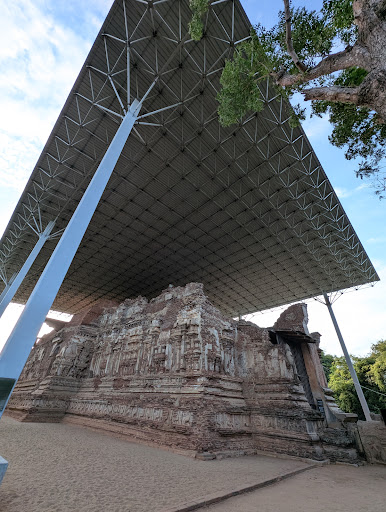
The external restoration of this image house took place very slowly for the last 15 years and was covered by shuttering...
Read more