HTML SitemapExplore
logo
Find Things to DoFind The Best Restaurants

Ridi Viharaya රිදි විහාරය — Attraction in North Western Province

Name
Ridi Viharaya රිදි විහාරය
Description
Ridi Viharaya or Silver Temple is a 2nd-century BCE Theravada Buddhist temple in the village of Ridigama, Sri Lanka.
Nearby attractions
Nearby restaurants
Nearby hotels
Ridi Vihara Pilgrims Rest
GFPQ+HCF, Ridigama, Sri Lanka
Related posts
Keywords
Ridi Viharaya රිදි විහාරය tourism.Ridi Viharaya රිදි විහාරය hotels.Ridi Viharaya රිදි විහාරය bed and breakfast. flights to Ridi Viharaya රිදි විහාරය.Ridi Viharaya රිදි විහාරය attractions.Ridi Viharaya රිදි විහාරය restaurants.Ridi Viharaya රිදි විහාරය travel.Ridi Viharaya රිදි විහාරය travel guide.Ridi Viharaya රිදි විහාරය travel blog.Ridi Viharaya රිදි විහාරය pictures.Ridi Viharaya රිදි විහාරය photos.Ridi Viharaya රිදි විහාරය travel tips.Ridi Viharaya රිදි විහාරය maps.Ridi Viharaya රිදි විහාරය things to do.
Ridi Viharaya රිදි විහාරය things to do, attractions, restaurants, events info and trip planning
Ridi Viharaya රිදි විහාරය
Sri LankaNorth Western ProvinceRidi Viharaya රිදි විහාරය

Basic Info

Ridi Viharaya රිදි විහාරය

Rideevihara, Rideeviharaya, Rideegama, New Road, Rideegama 60040, Sri Lanka
4.7(794)
Open 24 hours
Save
spot

Ratings & Description

Info

Ridi Viharaya or Silver Temple is a 2nd-century BCE Theravada Buddhist temple in the village of Ridigama, Sri Lanka.

Cultural
Family friendly
attractions: , restaurants:
logoLearn more insights from Wanderboat AI.
Phone
+94 77 505 0670
Website
rideeviharaya.lk

Plan your stay

hotel
Pet-friendly Hotels in North Western Province
Find a cozy hotel nearby and make it a full experience.
hotel
Affordable Hotels in North Western Province
Find a cozy hotel nearby and make it a full experience.
hotel
The Coolest Hotels You Haven't Heard Of (Yet)
Find a cozy hotel nearby and make it a full experience.
hotel
Trending Stays Worth the Hype in North Western Province
Find a cozy hotel nearby and make it a full experience.

Reviews

Things to do nearby

Take a trip through Polonnaruwas ancient city
Tue, Dec 9 • 6:30 AM
Kandy, Central Province 20000, Sri Lanka
View details
Get the Appoverlay
Get the AppOne tap to find yournext favorite spots!
Wanderboat LogoWanderboat

Your everyday Al companion for getaway ideas

CompanyAbout Us
InformationAI Trip PlannerSitemap
SocialXInstagramTiktokLinkedin
LegalTerms of ServicePrivacy Policy

Get the app

© 2025 Wanderboat. All rights reserved.
logo

Reviews of Ridi Viharaya රිදි විහාරය

4.7
(794)
avatar
5.0
3y

☸ඓතිහාසික රිදී විහාරය

RIDI VIHARAYA

more details FB page SL Tours Cab

Ridi Viharaya lies about 20 kilometers away from the ancient kingdom of Kurunegala in a small village called Ridi Gama. This temple is said to be built by King Dutugemunu in the 2nd century BC as a memorial to the place where he found a silver (ridi)

After defeating the kingdom's grasping Elara, he began the construction of the Ruwanvelisaya, also known as the "Great Stupa", one of the tallest monuments built before the 20th century. Among other materials, silver was needed for the stupa's basement.

Meanwhile, some traders were traveling from the central highlands of Sri Lanka to the then capital of the country; Anuradhapura. According to the chronicles, they saw some ripe jackfruits in Ridigama. I thought of cutting it and offering the first half to the Buddhist monks. Four Arhat monks appeared at their discretion and accepted the alms. Then four more monks came and accepted the alms. The last monk, Arhat Indragupta, after eating jackfruit, directed the traders to a cave with silver ore. After they reached Anuradhapura, they informed the king that they had found them. He was very happy to hear the news. The ore provided the amount of silver needed for construction. In gratitude, he built a temple complex on silver ore, employing 300 masons and 700 others, including his master craftsman Viswakarma Prathiraja.

There are approximately twenty-five caves around the temple, which are considered to be inhabited by Arhat monks, since the arrival of Arahat Mahinda in 3rd century BCE.

The temple was revived in the 18th century CE, during the reign of Kirti Sri Rajasinha of Kandy (1746-1778 CE). Uda Viharaya was added to the complex during this period. Several affiliated devalas: Kumara Bandara Devalaya and Paththini Devalaya were also established. Ridi Viharaya now falls under the Malwatte chapter of Buddhist temples in Sri Lanka.

Maha Viharaya

Passing this you would enter the Main Vihara complex which is divided in to two. The lover one is called the ‘Maha Vihare’ ( the main temple) or ‘Pahala Vihare’ ( lower temple) and the upper is called the ‘Uda Vihare’ ( the upper temple). The Maha Vihare was constructed by the king Dutugemunu in the 2nd centaury BC and the Uda Vihare has been constructed by King Kirthi Sri Rajasainha (1747 – 1781) .

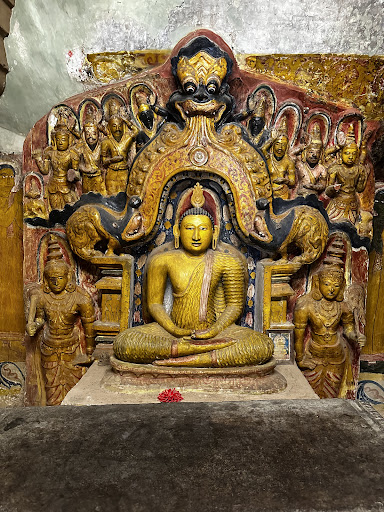
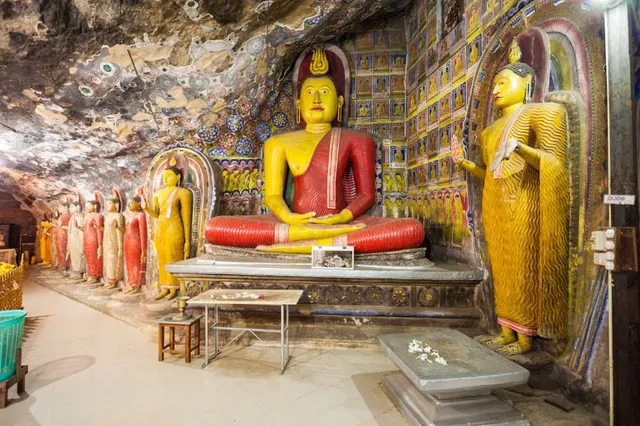
The maha vihare is located inside a spacious rock cave and contains a 9m recumbent Buddha image and the original gold plated Buddha Image donated by King Dutugemunu. At the feet of recumbent Buddha image there is a statue of Ananda Thero, a statue of a Maithree Bodhi Sattva and then statues of some Devatha. It is believed that the last statue of Devatha is actually a statue of King Dutugemunu. After these is a row of 5 buddha statues which is said to have been originally gold plated.

The flower pedestal of the recumbent Buddha image also has a very curious feature. It is decorated with about two hundred 18th centaury Dutch tiles portraying the life of Christ popularly known as bible tiles. These are believed to have been presented to King Kirthi Sri Rajasainha (1747 – 1781) by a Dutch Governor who in turn donated it to the temple. From the way these tiles are are arranged, the tiler seems to be clueless of the pictures on the tiles.

The roof of the cave is plastered and painted with various patterns. During the poson season of 2008, a large area of this plaster has fallen off due to heat generated by the large number of pilgrims inside of the cave.

Travel Directions to Ridi Viharaya

The Ridi Vihara is about 20 km from the Kurunegala Town. Travel on the Kandy Road from Kurunegala up to Mallawapitiya junction. This is about 5km form the Kurunegala town. Turn off to Keppitigala Road and Travel another 15 km along this road. You will come across the junction where route to the Viharaya is clearly marked. Travel about 1 1/2 km along this road to reach the Temple.

Special thank 🙏 for article Amazing lanak 📜& 📚SL...

   Read more
avatar
5.0
5y

Ridi Viharaya (Sinhala: රිදී විහාරය) or Silver Temple is a 2nd-century BCE Theravada Buddhist temple in the village of Ridigama, Sri Lanka. Built during the reign of Dutthagamani of Anuradhapura, the temple is considered as the place where the silver ore, which provided silver to complete Ruwanwelisaya; one of the largest stupa in Sri Lanka, was discovered. According to the chronicles Mahavamsa and Thupavamsa, the Ridi Viharaya complex was built in gratitude for helping him cherish his dream of completing Ruwanwelisaya.

Location

Approximately 18 kilometres northeast of Kurunegala, Ridi Viharaya is located in the city of Ridigama. Kurunegala is located 94 kilometres northeast of Colombo, the capital of Sri Lanka. The temple is approximately 10 kilometres from Ibbagamuwa, in the A6 highway, which connects Kurunegala and Dambulla.

History

Uda Viharaya and adjacent stupa.

Dutthagamani of Anuradhapura, a Sinhalese king of ancient Sri Lanka, known for his campaign that defeated and overthrowed the usurping Tamil prince Ellalan of Chola Kingdom, reigned from 161 BCE to 137 BCE in the Anuradhapura Kingdom. Upon his victory over Elara, he initiated construction of Ruwanwelisaya, also known as the "Great Stupa", one of the tallest monuments built before the 20th century. Among other materials, silver was required for the basement of the stupa.

In the meantime, some merchants were travelling from the central highlands of Sri Lanka, to the then capital of the country; Anuradhapura. According to the chronicles, they saw some ripe jackfruit in the Ridigama area; cut it and thought of offering the first half to Buddhist monks as a ritual. Four Arhat monks appeared according to their wish and accepted the Dāna. Then four more monks came and accepted the Dāna. The last monk, known as Arhat Indragupta, after partaking the jackfruit, directed the merchants to a path which led to a cave with a silver ore. They informed the monach of their finding after arriving in Anuradhapura. He was much elated upon hearing the news. The ore provided the required amount of silver for the construction work. In gratitude, he built a temple complex on the silver ore, employing 300 masons and 700 others including his chief artisan Vishwakarma Prathiraja.

There are approximately twenty-five caves around the temple, which are considered to be inhabited by Arhat monks, since the arrival of Arhat Mahinda in 3rd century BCE. The temple was revived in the 18th century CE, during the reign of Kirti Sri Rajasinha of Kandy (1746-1778 CE). Uda Viharaya was added to the complex during this period. Several affiliated devalas: Kumara Bandara Devalaya and Paththini Devalaya were also established. Ridi Viharaya now falls under the Malwatte chapter of Buddhist temples in Sri Lanka.

Associated buildings, structures and locations

Serasum Gala

A rock to the right of the entrance, which is believed to be the place where the initial temple was built. It is also considered that this was the place where king Dutthagamani dressed prior to worshipping the temple. A small stupa is located on top of this rock.

Waraka Welandu Viharaya

Waraka Welandu Viharaya at Ridi Viharaya.

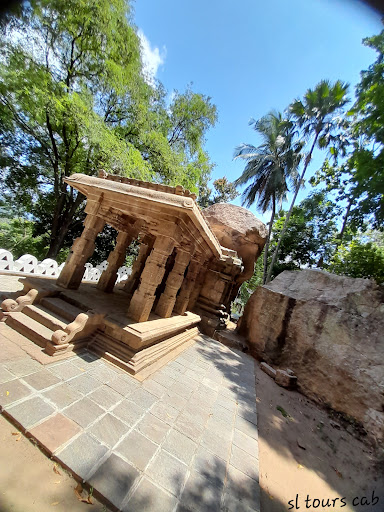
Waraka Welandu Viharaya is a Polonnaruwa era building, considered as the place where the Arhat monks accepted jackfruit from the merchants. The name "Waraka Welandu Viharaya" (temple which the jackfruit was consumed) implies this notion. This small Gedige-type building of the size of a room, is built in stone and contains a number of Kandyan era paintings. Its stone roof rests on eight stone pillars, which are decorated on all four sides. Hindu influence can be observed in the carvings of female dancers, which are usually not found in Buddhist temples.

Hevisi Mandapaya

Located in front of the Maha Viharaya, the Hevisi Mandapaya (or the drummers' pavilion) contains a rice bowl and other objects of historical value. A centuries-old Pallakkiya, which was used to carry elderly monks, can also be seen hung...

   Read more
avatar
5.0
31w

A Spiritual and Historical Gem – Ridee Viharaya, Kurunegala

Tucked into the scenic hills of Kurunegala, Ridee Viharaya (Silver Temple) is one of Sri Lanka’s most revered ancient temples, offering a perfect blend of serenity, history, and natural beauty. Often overshadowed by more prominent sites like Dambulla Cave Temple or Aluvihara Temple in Matale, Ridee Viharaya deserves equal recognition for its spiritual richness and historical importance.

Peaceful Surroundings and Meditative Ambience

From the moment you arrive, you’re greeted by a calm, peaceful environment that invites introspection and reverence. The temple is nestled amidst lush greenery and rocky outcrops, making it an ideal setting for quiet contemplation or a meditative walk. The sounds of nature—the rustling leaves, chirping birds, and the soft chants from within the temple—create a soothing backdrop rarely found in more crowded tourist destinations.

The setting is somewhat reminiscent of Dambulla and Aluvihara, both of which also feature cave-style temples tucked into rocky hillsides. However, Ridee Viharaya stands out for its intimate charm and quieter atmosphere, as it remains less commercialized and less crowded, making the experience more personal and spiritual.

Historical Significance and Ancient Architecture

Ridee Viharaya is not just a religious site; it’s a monument of historical value. The temple dates back to the Anuradhapura period, and it is closely tied to the story of King Dutugemunu, who is said to have received silver from this very location to fund the construction of the Ruwanwelisaya in Anuradhapura.

The temple complex features ancient cave shrines, beautifully preserved frescoes, statues of the Buddha, and intricate carvings that reveal the architectural mastery of ancient Sri Lankan artisans. One can spend hours exploring these sacred spaces, each one offering insight into a different era of Buddhist devotion and artistic expression.

A highlight of the visit is the Makara Thorana (Dragon Archway)—an exquisitely detailed sculpture that rivals those found in larger heritage sites. There are also inscriptions, ancient stupa remains, and even natural stone basins believed to have been used by monks centuries ago.

Accessibility and Facilities

Ridee Viharaya is located about 20–25 km from central Kurunegala, and the road to the temple, though winding and hilly, is scenic and well worth the journey. The area is well-maintained and respectful of its heritage, with minimal modern alterations that could detract from its authenticity.

There are ample parking spaces, clean facilities, and friendly temple custodians who are often willing to share the history of the site with interested visitors. Unlike some more commercial temples, there is no aggressive push for donations or souvenirs, which makes the experience feel more genuine and respectful.

A Must-Visit for Spiritual and Cultural Travelers

Ridee Viharaya may not boast the scale of Dambulla or the crowds of Kandy, but in many ways, this is its strength. Its quiet dignity, deep historical roots, and spiritual calm make it a standout destination for those seeking more than just a photo opportunity. It’s a place to slow down, learn, reflect, and appreciate the continuity of Sri Lankan Buddhist tradition.

Pros: • Calm, meditative environment • Rich historical and cultural value • Similar charm to Dambulla and Aluvihara, but with fewer crowds • Beautiful natural surroundings and cave architecture

Cons: • Slightly remote; requires private transport or organized tour • Limited food options nearby, so plan accordingly

Final Thoughts

If you’re exploring the Kurunegala region, Ridee Viharaya is an absolute must-visit. Whether you’re a history enthusiast, a practicing Buddhist, or simply a traveler in search of a meaningful experience, this temple offers a journey into Sri Lanka’s spiritual and architectural heritage that is both enriching...

   Read more

Page 1 of 7
Previous
Next

Posts

SL Tour's CabSL Tour's Cab
☸ඓතිහාසික රිදී විහාරය RIDI VIHARAYA more details FB page SL Tours Cab Ridi Viharaya lies about 20 kilometers away from the ancient kingdom of Kurunegala in a small village called Ridi Gama. This temple is said to be built by King Dutugemunu in the 2nd century BC as a memorial to the place where he found a silver (ridi) After defeating the kingdom's grasping Elara, he began the construction of the Ruwanvelisaya, also known as the "Great Stupa", one of the tallest monuments built before the 20th century. Among other materials, silver was needed for the stupa's basement. Meanwhile, some traders were traveling from the central highlands of Sri Lanka to the then capital of the country; Anuradhapura. According to the chronicles, they saw some ripe jackfruits in Ridigama. I thought of cutting it and offering the first half to the Buddhist monks. Four Arhat monks appeared at their discretion and accepted the alms. Then four more monks came and accepted the alms. The last monk, Arhat Indragupta, after eating jackfruit, directed the traders to a cave with silver ore. After they reached Anuradhapura, they informed the king that they had found them. He was very happy to hear the news. The ore provided the amount of silver needed for construction. In gratitude, he built a temple complex on silver ore, employing 300 masons and 700 others, including his master craftsman Viswakarma Prathiraja. There are approximately twenty-five caves around the temple, which are considered to be inhabited by Arhat monks, since the arrival of Arahat Mahinda in 3rd century BCE. The temple was revived in the 18th century CE, during the reign of Kirti Sri Rajasinha of Kandy (1746-1778 CE). Uda Viharaya was added to the complex during this period. Several affiliated devalas: Kumara Bandara Devalaya and Paththini Devalaya were also established. Ridi Viharaya now falls under the Malwatte chapter of Buddhist temples in Sri Lanka. Maha Viharaya Passing this you would enter the Main Vihara complex which is divided in to two. The lover one is called the ‘Maha Vihare’ ( the main temple) or ‘Pahala Vihare’ ( lower temple) and the upper is called the ‘Uda Vihare’ ( the upper temple). The Maha Vihare was constructed by the king Dutugemunu in the 2nd centaury BC and the Uda Vihare has been constructed by King Kirthi Sri Rajasainha (1747 – 1781) . The maha vihare is located inside a spacious rock cave and contains a 9m recumbent Buddha image and the original gold plated Buddha Image donated by King Dutugemunu. At the feet of recumbent Buddha image there is a statue of Ananda Thero, a statue of a Maithree Bodhi Sattva and then statues of some Devatha. It is believed that the last statue of Devatha is actually a statue of King Dutugemunu. After these is a row of 5 buddha statues which is said to have been originally gold plated. The flower pedestal of the recumbent Buddha image also has a very curious feature. It is decorated with about two hundred 18th centaury Dutch tiles portraying the life of Christ popularly known as bible tiles. These are believed to have been presented to King Kirthi Sri Rajasainha (1747 – 1781) by a Dutch Governor who in turn donated it to the temple. From the way these tiles are are arranged, the tiler seems to be clueless of the pictures on the tiles. The roof of the cave is plastered and painted with various patterns. During the poson season of 2008, a large area of this plaster has fallen off due to heat generated by the large number of pilgrims inside of the cave. Travel Directions to Ridi Viharaya The Ridi Vihara is about 20 km from the Kurunegala Town. Travel on the Kandy Road from Kurunegala up to Mallawapitiya junction. This is about 5km form the Kurunegala town. Turn off to Keppitigala Road and Travel another 15 km along this road. You will come across the junction where route to the Viharaya is clearly marked. Travel about 1 1/2 km along this road to reach the Temple. Special thank 🙏 for article Amazing lanak 📜& 📚SL Tours Cab 📸
Madura BandaraMadura Bandara
A Spiritual and Historical Gem – Ridee Viharaya, Kurunegala Tucked into the scenic hills of Kurunegala, Ridee Viharaya (Silver Temple) is one of Sri Lanka’s most revered ancient temples, offering a perfect blend of serenity, history, and natural beauty. Often overshadowed by more prominent sites like Dambulla Cave Temple or Aluvihara Temple in Matale, Ridee Viharaya deserves equal recognition for its spiritual richness and historical importance. Peaceful Surroundings and Meditative Ambience From the moment you arrive, you’re greeted by a calm, peaceful environment that invites introspection and reverence. The temple is nestled amidst lush greenery and rocky outcrops, making it an ideal setting for quiet contemplation or a meditative walk. The sounds of nature—the rustling leaves, chirping birds, and the soft chants from within the temple—create a soothing backdrop rarely found in more crowded tourist destinations. The setting is somewhat reminiscent of Dambulla and Aluvihara, both of which also feature cave-style temples tucked into rocky hillsides. However, Ridee Viharaya stands out for its intimate charm and quieter atmosphere, as it remains less commercialized and less crowded, making the experience more personal and spiritual. Historical Significance and Ancient Architecture Ridee Viharaya is not just a religious site; it’s a monument of historical value. The temple dates back to the Anuradhapura period, and it is closely tied to the story of King Dutugemunu, who is said to have received silver from this very location to fund the construction of the Ruwanwelisaya in Anuradhapura. The temple complex features ancient cave shrines, beautifully preserved frescoes, statues of the Buddha, and intricate carvings that reveal the architectural mastery of ancient Sri Lankan artisans. One can spend hours exploring these sacred spaces, each one offering insight into a different era of Buddhist devotion and artistic expression. A highlight of the visit is the Makara Thorana (Dragon Archway)—an exquisitely detailed sculpture that rivals those found in larger heritage sites. There are also inscriptions, ancient stupa remains, and even natural stone basins believed to have been used by monks centuries ago. Accessibility and Facilities Ridee Viharaya is located about 20–25 km from central Kurunegala, and the road to the temple, though winding and hilly, is scenic and well worth the journey. The area is well-maintained and respectful of its heritage, with minimal modern alterations that could detract from its authenticity. There are ample parking spaces, clean facilities, and friendly temple custodians who are often willing to share the history of the site with interested visitors. Unlike some more commercial temples, there is no aggressive push for donations or souvenirs, which makes the experience feel more genuine and respectful. A Must-Visit for Spiritual and Cultural Travelers Ridee Viharaya may not boast the scale of Dambulla or the crowds of Kandy, but in many ways, this is its strength. Its quiet dignity, deep historical roots, and spiritual calm make it a standout destination for those seeking more than just a photo opportunity. It’s a place to slow down, learn, reflect, and appreciate the continuity of Sri Lankan Buddhist tradition. Pros: • Calm, meditative environment • Rich historical and cultural value • Similar charm to Dambulla and Aluvihara, but with fewer crowds • Beautiful natural surroundings and cave architecture Cons: • Slightly remote; requires private transport or organized tour • Limited food options nearby, so plan accordingly Final Thoughts If you’re exploring the Kurunegala region, Ridee Viharaya is an absolute must-visit. Whether you’re a history enthusiast, a practicing Buddhist, or simply a traveler in search of a meaningful experience, this temple offers a journey into Sri Lanka’s spiritual and architectural heritage that is both enriching and humbling.
Aingela AnacondaAingela Anaconda
This place is unique. It was the best decision to come here and stay 3 days. I will never forget this special place!!! The silver temple is not crowded neither is it empty. The wide temple area is perfect to walk around, sit for a while (there are many sitting areas) and enjoy breathtaking views. The five monks living here are welcoming all visitors in a peaceful and open minded way no matter where you from or which religion you have. I planned to stay one night (I requested it via email) but quickly extended one more night in the next by pilgrim rest (2 minutes walk between temple area and pilgrim rest). Also 3 delicious cooked meals per day from the cook Chandana were included. The service host “Mama” at the pilgrim rest has a special place in my heart since he is a shining person and always there for you even though he barely speaks English. My room was basic but it had everything I needed (also en-suite bathroom), the air conditioning also worked very good. During my stay I attended different pujas (Bhuddist ceremonies) and always got included in it, either by the monks or the Singhalese visitors. They let me light candles or put flowers to the Buddha statues. The monk D.M. Showed me around and guided me to some hidden caves where more than 2000 years ago monks meditated. He took the time for long conversations with me and told me a lot about Bhuddism and the live as a monk. What a brilliant teacher and honest person he is while he is also super funny. In the morning I took part in the mediation that was guided by two very young monks. My entire stay was free totally of cost! It is an offer by the monastry to all people that are interested in learning more about Bhuddism or practicing it (e.g. mediation). I was never even asked for a donation from anyone in the place. For me of course it was 100% sure in the end that I will leave a donation right in one of the donation boxes before leaving. A TukTuk from Kurunegala costs 2000 LKR and takes about 30 minutes. From there you can catch buses to Kandy or Dambulla or Anuradhapura for example.
See more posts
See more posts
hotel
Find your stay

Pet-friendly Hotels in North Western Province

Find a cozy hotel nearby and make it a full experience.

☸ඓතිහාසික රිදී විහාරය RIDI VIHARAYA more details FB page SL Tours Cab Ridi Viharaya lies about 20 kilometers away from the ancient kingdom of Kurunegala in a small village called Ridi Gama. This temple is said to be built by King Dutugemunu in the 2nd century BC as a memorial to the place where he found a silver (ridi) After defeating the kingdom's grasping Elara, he began the construction of the Ruwanvelisaya, also known as the "Great Stupa", one of the tallest monuments built before the 20th century. Among other materials, silver was needed for the stupa's basement. Meanwhile, some traders were traveling from the central highlands of Sri Lanka to the then capital of the country; Anuradhapura. According to the chronicles, they saw some ripe jackfruits in Ridigama. I thought of cutting it and offering the first half to the Buddhist monks. Four Arhat monks appeared at their discretion and accepted the alms. Then four more monks came and accepted the alms. The last monk, Arhat Indragupta, after eating jackfruit, directed the traders to a cave with silver ore. After they reached Anuradhapura, they informed the king that they had found them. He was very happy to hear the news. The ore provided the amount of silver needed for construction. In gratitude, he built a temple complex on silver ore, employing 300 masons and 700 others, including his master craftsman Viswakarma Prathiraja. There are approximately twenty-five caves around the temple, which are considered to be inhabited by Arhat monks, since the arrival of Arahat Mahinda in 3rd century BCE. The temple was revived in the 18th century CE, during the reign of Kirti Sri Rajasinha of Kandy (1746-1778 CE). Uda Viharaya was added to the complex during this period. Several affiliated devalas: Kumara Bandara Devalaya and Paththini Devalaya were also established. Ridi Viharaya now falls under the Malwatte chapter of Buddhist temples in Sri Lanka. Maha Viharaya Passing this you would enter the Main Vihara complex which is divided in to two. The lover one is called the ‘Maha Vihare’ ( the main temple) or ‘Pahala Vihare’ ( lower temple) and the upper is called the ‘Uda Vihare’ ( the upper temple). The Maha Vihare was constructed by the king Dutugemunu in the 2nd centaury BC and the Uda Vihare has been constructed by King Kirthi Sri Rajasainha (1747 – 1781) . The maha vihare is located inside a spacious rock cave and contains a 9m recumbent Buddha image and the original gold plated Buddha Image donated by King Dutugemunu. At the feet of recumbent Buddha image there is a statue of Ananda Thero, a statue of a Maithree Bodhi Sattva and then statues of some Devatha. It is believed that the last statue of Devatha is actually a statue of King Dutugemunu. After these is a row of 5 buddha statues which is said to have been originally gold plated. The flower pedestal of the recumbent Buddha image also has a very curious feature. It is decorated with about two hundred 18th centaury Dutch tiles portraying the life of Christ popularly known as bible tiles. These are believed to have been presented to King Kirthi Sri Rajasainha (1747 – 1781) by a Dutch Governor who in turn donated it to the temple. From the way these tiles are are arranged, the tiler seems to be clueless of the pictures on the tiles. The roof of the cave is plastered and painted with various patterns. During the poson season of 2008, a large area of this plaster has fallen off due to heat generated by the large number of pilgrims inside of the cave. Travel Directions to Ridi Viharaya The Ridi Vihara is about 20 km from the Kurunegala Town. Travel on the Kandy Road from Kurunegala up to Mallawapitiya junction. This is about 5km form the Kurunegala town. Turn off to Keppitigala Road and Travel another 15 km along this road. You will come across the junction where route to the Viharaya is clearly marked. Travel about 1 1/2 km along this road to reach the Temple. Special thank 🙏 for article Amazing lanak 📜& 📚SL Tours Cab 📸
SL Tour's Cab

SL Tour's Cab

hotel
Find your stay

Affordable Hotels in North Western Province

Find a cozy hotel nearby and make it a full experience.

Get the Appoverlay
Get the AppOne tap to find yournext favorite spots!
A Spiritual and Historical Gem – Ridee Viharaya, Kurunegala Tucked into the scenic hills of Kurunegala, Ridee Viharaya (Silver Temple) is one of Sri Lanka’s most revered ancient temples, offering a perfect blend of serenity, history, and natural beauty. Often overshadowed by more prominent sites like Dambulla Cave Temple or Aluvihara Temple in Matale, Ridee Viharaya deserves equal recognition for its spiritual richness and historical importance. Peaceful Surroundings and Meditative Ambience From the moment you arrive, you’re greeted by a calm, peaceful environment that invites introspection and reverence. The temple is nestled amidst lush greenery and rocky outcrops, making it an ideal setting for quiet contemplation or a meditative walk. The sounds of nature—the rustling leaves, chirping birds, and the soft chants from within the temple—create a soothing backdrop rarely found in more crowded tourist destinations. The setting is somewhat reminiscent of Dambulla and Aluvihara, both of which also feature cave-style temples tucked into rocky hillsides. However, Ridee Viharaya stands out for its intimate charm and quieter atmosphere, as it remains less commercialized and less crowded, making the experience more personal and spiritual. Historical Significance and Ancient Architecture Ridee Viharaya is not just a religious site; it’s a monument of historical value. The temple dates back to the Anuradhapura period, and it is closely tied to the story of King Dutugemunu, who is said to have received silver from this very location to fund the construction of the Ruwanwelisaya in Anuradhapura. The temple complex features ancient cave shrines, beautifully preserved frescoes, statues of the Buddha, and intricate carvings that reveal the architectural mastery of ancient Sri Lankan artisans. One can spend hours exploring these sacred spaces, each one offering insight into a different era of Buddhist devotion and artistic expression. A highlight of the visit is the Makara Thorana (Dragon Archway)—an exquisitely detailed sculpture that rivals those found in larger heritage sites. There are also inscriptions, ancient stupa remains, and even natural stone basins believed to have been used by monks centuries ago. Accessibility and Facilities Ridee Viharaya is located about 20–25 km from central Kurunegala, and the road to the temple, though winding and hilly, is scenic and well worth the journey. The area is well-maintained and respectful of its heritage, with minimal modern alterations that could detract from its authenticity. There are ample parking spaces, clean facilities, and friendly temple custodians who are often willing to share the history of the site with interested visitors. Unlike some more commercial temples, there is no aggressive push for donations or souvenirs, which makes the experience feel more genuine and respectful. A Must-Visit for Spiritual and Cultural Travelers Ridee Viharaya may not boast the scale of Dambulla or the crowds of Kandy, but in many ways, this is its strength. Its quiet dignity, deep historical roots, and spiritual calm make it a standout destination for those seeking more than just a photo opportunity. It’s a place to slow down, learn, reflect, and appreciate the continuity of Sri Lankan Buddhist tradition. Pros: • Calm, meditative environment • Rich historical and cultural value • Similar charm to Dambulla and Aluvihara, but with fewer crowds • Beautiful natural surroundings and cave architecture Cons: • Slightly remote; requires private transport or organized tour • Limited food options nearby, so plan accordingly Final Thoughts If you’re exploring the Kurunegala region, Ridee Viharaya is an absolute must-visit. Whether you’re a history enthusiast, a practicing Buddhist, or simply a traveler in search of a meaningful experience, this temple offers a journey into Sri Lanka’s spiritual and architectural heritage that is both enriching and humbling.
Madura Bandara

Madura Bandara

hotel
Find your stay

The Coolest Hotels You Haven't Heard Of (Yet)

Find a cozy hotel nearby and make it a full experience.

hotel
Find your stay

Trending Stays Worth the Hype in North Western Province

Find a cozy hotel nearby and make it a full experience.

This place is unique. It was the best decision to come here and stay 3 days. I will never forget this special place!!! The silver temple is not crowded neither is it empty. The wide temple area is perfect to walk around, sit for a while (there are many sitting areas) and enjoy breathtaking views. The five monks living here are welcoming all visitors in a peaceful and open minded way no matter where you from or which religion you have. I planned to stay one night (I requested it via email) but quickly extended one more night in the next by pilgrim rest (2 minutes walk between temple area and pilgrim rest). Also 3 delicious cooked meals per day from the cook Chandana were included. The service host “Mama” at the pilgrim rest has a special place in my heart since he is a shining person and always there for you even though he barely speaks English. My room was basic but it had everything I needed (also en-suite bathroom), the air conditioning also worked very good. During my stay I attended different pujas (Bhuddist ceremonies) and always got included in it, either by the monks or the Singhalese visitors. They let me light candles or put flowers to the Buddha statues. The monk D.M. Showed me around and guided me to some hidden caves where more than 2000 years ago monks meditated. He took the time for long conversations with me and told me a lot about Bhuddism and the live as a monk. What a brilliant teacher and honest person he is while he is also super funny. In the morning I took part in the mediation that was guided by two very young monks. My entire stay was free totally of cost! It is an offer by the monastry to all people that are interested in learning more about Bhuddism or practicing it (e.g. mediation). I was never even asked for a donation from anyone in the place. For me of course it was 100% sure in the end that I will leave a donation right in one of the donation boxes before leaving. A TukTuk from Kurunegala costs 2000 LKR and takes about 30 minutes. From there you can catch buses to Kandy or Dambulla or Anuradhapura for example.
Aingela Anaconda

Aingela Anaconda

See more posts
See more posts