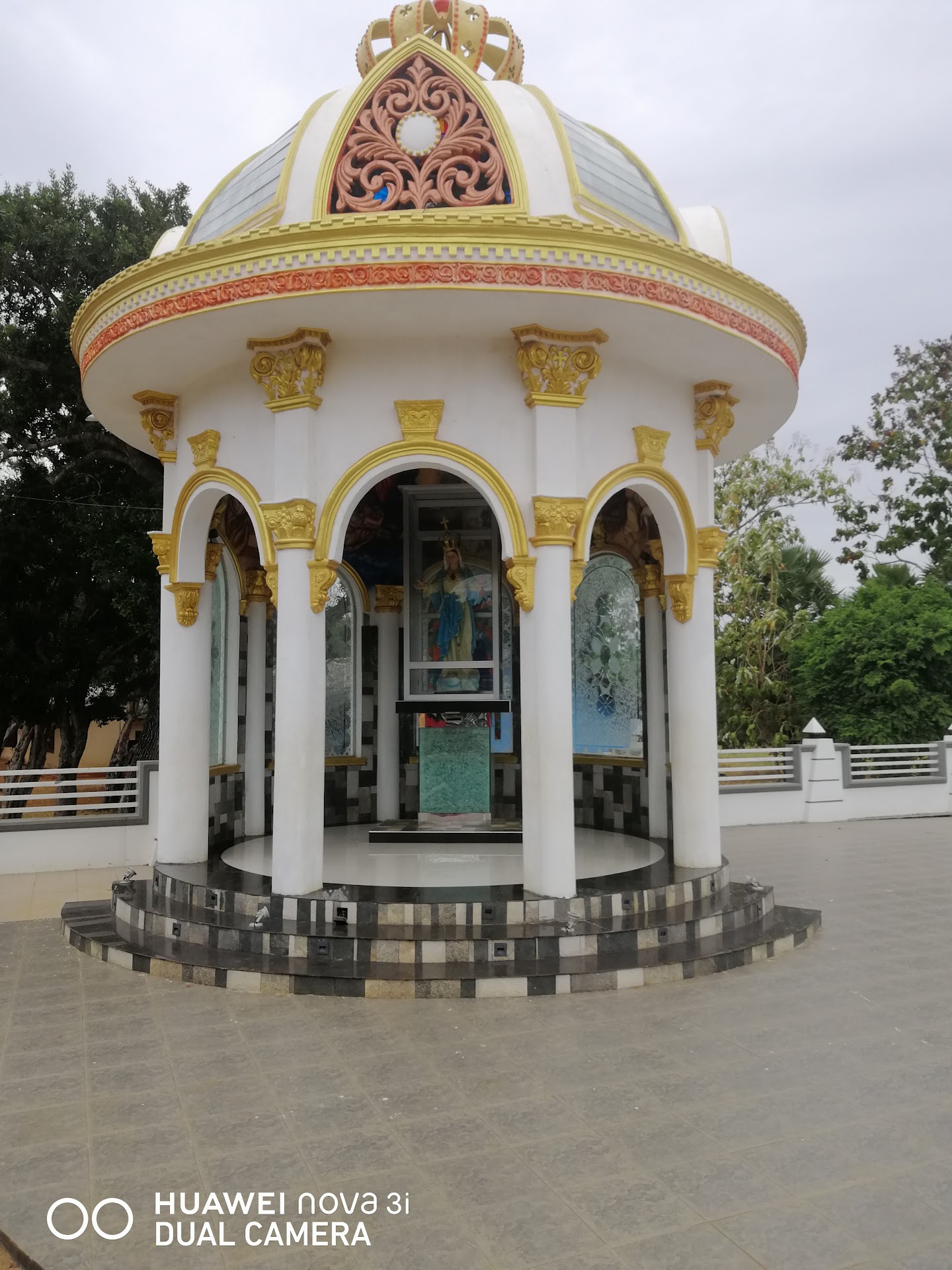
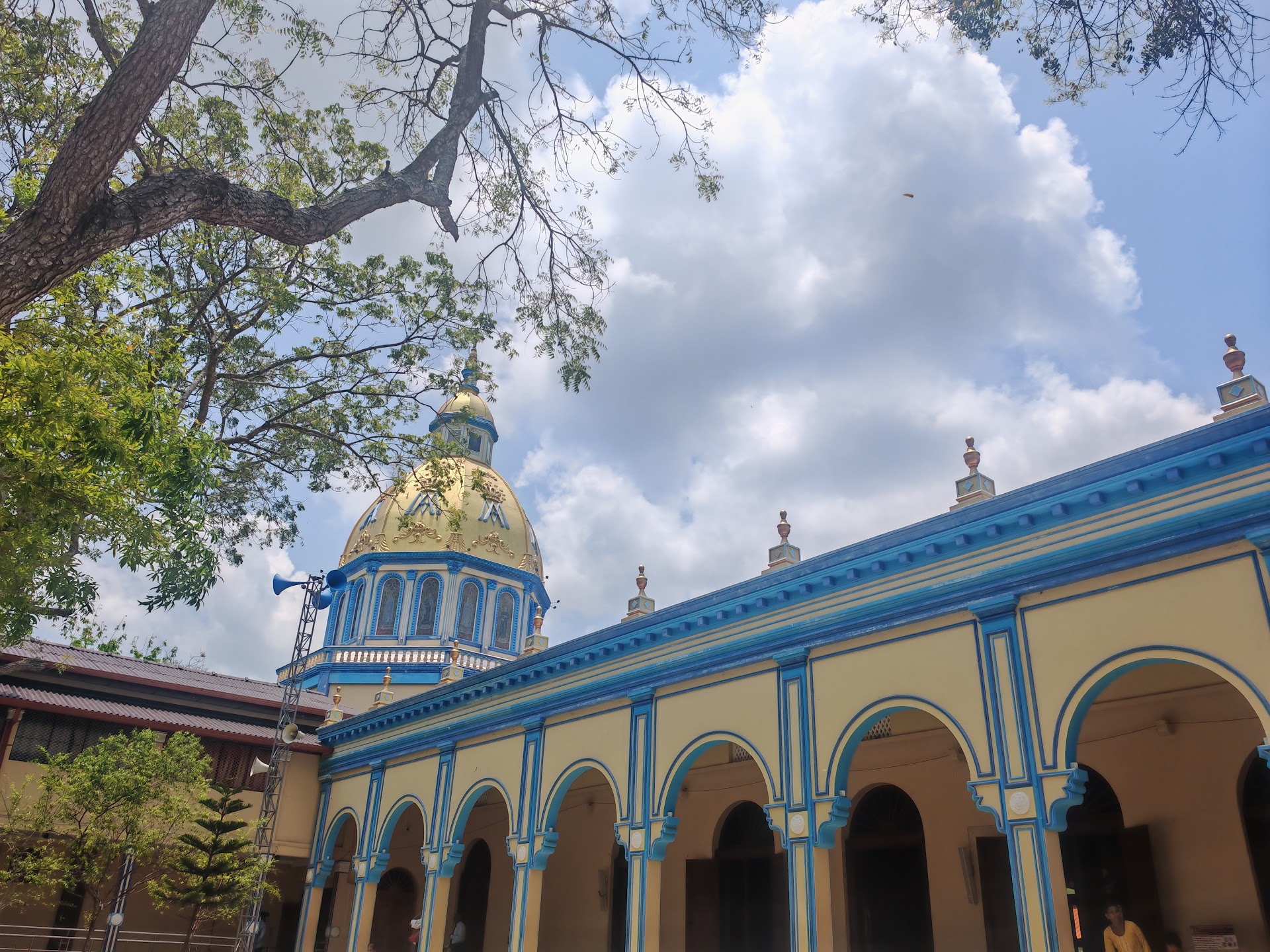
The Shrine of Our Lady of Madhu is a Roman Catholic Marian shrine in Mannar district of Sri Lanka.
With a history of over 400 years, this shrine acts as a center for pilgrimage and worship for Sri Lankan Catholics.
The site is considered as the holiest Catholic shrine in the island and is a well known place of devotion for both Tamil and Sinhalese Catholics.
The church has been a symbol of unity not just between Tamils and Sinhalese, but also between people of different religions, including Buddhists, Hindus and Protestants.
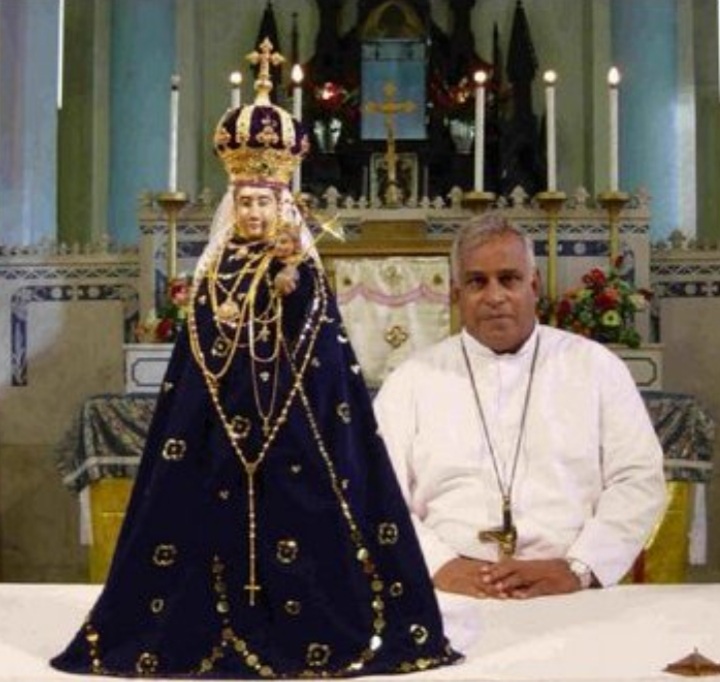
Pope Pius XI granted the image of Our Lady of Madhu a Canonical coronation on 2 July 1924.
Attendance for the August festival at times touched close to a million people before the outbreak of the Sri Lankan Civil War.
Situated in the heart of the conflict zone, pilgrimage to this shrine was dramatically affected by the Civil War with the presence of refugee camps around the shrine complex.
It was shelled a number of times.
Christianity in Sri Lanka is not well known before the 16th century although some local traditions claim that Saint Thomas the Apostle was active in the island.
The Portuguese missionaries from India, especially under the authority of Saint Francis Xavier, are known to have brought Roman Catholicism to the Kingdom of Jaffna, which comprised the northern peninsula of Sri Lanka.
The newly converted Christians were persecuted under both the king of Jaffna and the Dutch.
During this time the Catholics regrouped to form a church in Manthai, installing a statue of Our Lady of Good Health in a shrine.
The Dutch invasion and the persecution of the Catholic Church in 1670 led to 20 Catholic families fleeing from Mantai, along with the statue of Mary in that church, to a safer locale of Madhu.
About the same time another 700 Catholics migrated from Jaffna peninsula into Wanni forests.
When these two communities met in Madhu they installed a new shrine with the statue.
With the revival of Catholic faith by missionaries such as Saint Joseph Vaz, Oratorian priests expanded the small shrine in the late 17th century.
With the arrival of British to the island, the persecution ceased, but the number of Catholics remained small, with just 50,000 members in 1796.
In spite of such a small community the shrine at Madhu started to attract pilgrims from all over the country.
The stifling of Jesuit authority which had started in 1773 in the subcontinent led eventually to the suppression of the Society of Jesus in Madhu by 1834.
The building of the new church was initiated by Bishop Bonjean in 1872 and his successors built a facade, a spacious presbytery, a restful chapel of the Blessed Sacrament and a grotto of Our Lady of Lourdes.
In 1920 Bishop Brault, who was very devoted to Our Lady of Madhu, obtained the Pope's sanction for the historic solemn Canonical Coronation of the Statue of Our Lady of Madhu.
Bishop Brault with the clergy and laity had petitioned the Vatican through the Cardinal Willem Marinus van Rossum, Prefect of the Congregation for the Evangelization of Peoples, and he personally presented the request to the Pope, who in his audience of April 7, 1921, granted the request.
In 1924 the statue was officially crowned by the Papal Legate who came in the name of Pope Pius XI.
The Church was consecrated in 1944 during World War II.
In preparation for the consecration ceremony, a marble altar replaced the old wooden structure and the whole sanctuary was covered with white and blue marble.
In spite of travel restrictions and difficulties in finding conveyance, more than 30,000 people came to the jungle shrine.
The statue of Our Lady of Madhu has been taken for procession thrice to the parishes in Sri Lanka, in 1948, 1974 and in 2001.
The latter was as a spiritual effort to encourage Catholics in Sri Lanka to pray for peace and an end to the civil war.
In the year 1870 the new Bishop arranged an annual festival to be celebrated on July 2nd.
But in recent years the August 15th festival...
Read moreThe Shrine of Our Lady of Madhu or Our Lady Of The Rosary of Madhu is a Roman Catholic Marian shrine in Mannar district of Sri Lanka.
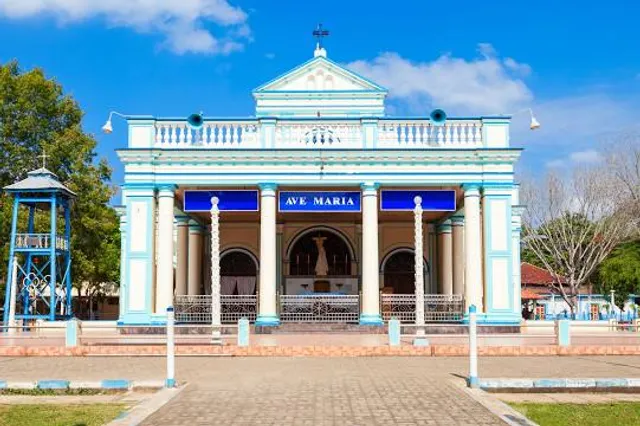
Though : Negambo – Puttam – Thantirimale distance :290 km Travel time : 6 hours
With a history of over 400 years, this shrine acts as a center for pilgrimage and worship for Sri Lankan Catholics.The site is considered as the holiest Catholic shrine in the island and is a well known place of devotion for both Tamil and Sinhalese Catholics. The church has been a symbol of unity not just between Tamils and Sinhalese, but also between people of different religions, including Buddhists, Hindus and Protestants.
History
Christianity in Sri Lanka is not well known before the 16th century although some local traditions claim that Saint Thomas the Apostle was active in the island.The Portuguese missionaries from India, especially under the authority of Saint Francis Xavier, are known to have brought Roman Catholicism to the Kingdom of Jaffna, which comprised the northern peninsula of Sri Lanka.The newly converted Christians were persecuted under both the king of Jaffna and the Dutch.During this time the Catholics regrouped to form a church in Manthai, installing a statue of Our Lady of Good Health in a shrine
The Dutch invasion and the persecution of the Catholic Church in 1670 led to 20 Catholic families fleeing from Mantai, along with the statue of Mary in that church, to the safer locale of Madhu. About the same time another 700 Catholics migrated from Jaffna peninsula into Wanni forests. When these two communities met in Madhu they installed a new shrine with the statue.
Expansions
With the revival of Catholic faith by missionaries such as Saint Joseph Vaz, Oratorian priests expanded the small shrine in the late 17th century.With the arrival of British to the island, the persecution ceased, but the number of Catholics remained small, with just 50,000 members in 1796.In spite of such a small community the shrine at Madhu started to attract pilgrims from all over the country.The stifling of Jesuit authority which had started in 1773 in the subcontinent led eventually to the suppression of the Society of Jesus in Madhu by 1834.The building of the new church was initiated by Bishop Bonjean in 1872 and his successors built a facade, a spacious presbytery, a restful chapel of the Blessed Sacrament and a grotto of Our...
Read moreMadhu is a mystic jungle shrine dedicated to Mother Mary lying in a remote area in Mannar. The church is one of the few churches which are visited by Buddhists as well as Hindus from all over the country.
The history of Madhu is interesting. The Portuguese invaded Sri Lanka in 1505 and missionaries started pouring into the country to convert the Buddhists and Hindus into Catholicism by various means. Many in the coastal region converted to this new religion for favours from the new masters.
Many Tamils from the North too fell into the hands of the catholic missionaries. In 1640 the Dutch took control of the coastal regions and started spreading their form of Christianity in the form of the Dutch Reformed Church.
In 1670, the Dutch took Mannar under their control and some 20 Catholic Tamil families from Mantai fled inwards with a statue of Mary from the coastal town and settled down in an area called Marutha Madu which was then a small village on the Royal Ramessaram-Kandy route and a custom house for the Kandyan King. Later a group of about 700 Tamil Catholics fleeing from Jaffna also joined this group.
During this period, Madhu was a Devale dedicated to Goddess Pattini which probably has been existing since the Anuradhapura Kingdom. Goddess Pattini is worshipped by Sinhalese and Tamils irrespective of the religions in Sri Lanka.
At some point in time, a church was built on the ground of Pattini Devale and the devale disappeared without a trace.
With the invasion of the English and the subsequent defeat of the Dutch from the coastal areas, the Catholic prosecution stopped and the annual possession of Madhu was started in 1870. In 1876 foundation stone of the current church was laid down.
One of the reasons for all faiths to visit Madhu is the belief in the miraculous healing powers of the statue from snake bites.
The Madhu festival, originally held on 2nd July now has 10 festivals during the year. The most popular and the largest is the festival held on 15th August which draws the largest crowd especially since this falls on...
Read more