It is believed that the Dedimunda Deiyo is the guardian deity of the Buddha Sasana. The name of the deity suggests that he was firm, hardhearted with a strong and powerful personality.
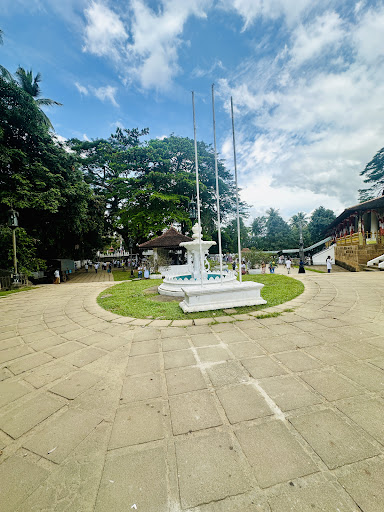
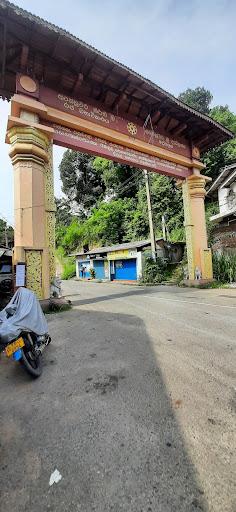
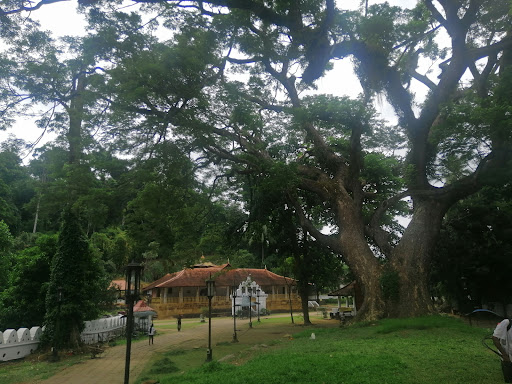
To reach Aluthnuwara Devale one has to travel to Hingula, two miles away from Mawanella on the Kandy-Colombo main road which was once a busy bazaar where people from Aranayake, Rambukkana and Mawanella came daily with their garden produce. They either walked or used bullock carts. Trade was dominated by the Chettiars who bought coffee, pepper, arecanuts and bananas in exchange for provisions. This was the scene before the World War 2. About two miles away from the Hingula bazaar, there is a road to the interior of Aluthnuwara which leads to the shrine of the deity Dedimunda Deiyo. Passing paddy fields and homesteads, one comes to an Ambalama with high stone wall pillars, a resting place for weary travelers in the days gone by. Travelling further, a flight of steps lead to the ‘Maluwa’ (compound). A short distance away is the Aluthnuwara Dedimunda Devale.
This devale is considered a special place of worship. On Kembura days, which are Wednesdays and Saturdays people come to offer pooja and make vows to the deity. People afflicted by illness which they consider is mostly due to evil spirits of Yaksha or Bhutha, have faith that the deity has the power to cure them of their maladies. They come from many parts of the country to seek the blessings of this deity.
Originally, the place of worship was built during the Dambadeniya period. This was situated close to the hillock where Galgane Purana raja Maha Viharaya is mentioned in the Nampotha.
It is believed that when King Parakramabahu II was passing through Aluthnuwara on his way to Sri Pada, he was very impressed with the place. He then decided to donate the property pattu village of his Queen Giriwasa Sunethra Devi, to the temple.
At this time a monk had come to reside here from Galaturumula Viharaya in Devinuwara. The monk was known as Assaddana Pirivenhimi as he founded the Assaddana Pirivena close to the temple. His successors reside at the present Kirthi Sri Raja Maha Viharaya.
It is said that King Parakramabahu II was taken very ill and found it difficult to speak. His chief minister Devapathi Raja visited Devinuwara and made offerings to Upulvan deiyo for the speedy recovery of the King.
In a dream, the chief minister was informed that the king’s illness cannot be cured. He returned to Dambadeniya with the ornaments of the deity and informed the king of his strange experience. The King died. The gods’ King Bhuvanekabahu and the chief monk of the Assaddana Pirivena too had a dream.
A deva had informed them to build a devale for Upulvan Deiyo. Accordingly, a devale was erected close to the cave temple. A statue of Upulvan deiyo was sculptured out of Sapu wood by a famous sculptor and the statue placed in the newly built devale.
The place where the Sapu tree stood came to be known as Sapugathtara. The ornaments of the deity were brought from Devinuwara and deposited in the devale at Aluthnuwara.
Buildings were added on to the devale during the reign of King Panditha Parakramabahu IV. The place was known as Nawatilakapuraya and later it became Aluthnuwara.
Another belief is that a chieftain was defied as Devatha Bandara after his death and was also the chief minister of god Upulvan.
A small devale was built in close proximity to the main devale. Upto the time King Wimaladharmasuriya I of Kandy, kings and chieftains donated lands and other valuable items to maintain the devale.
When the Portuguese invaded Kandy they looted the devale on their way. Hence, for safety the Upulvan deiyo image was housed close to the Sri Dalada Maligawa during King Senarat’s reign. At this time Hindu beliefs and worship became popular.
Thus, Upulvan Devale in Kandy came to be known as Maha Vishnu Devalaya. With the shifting of the Upulvan Devale to Kandy, now only the Dedimunda Devale remains at...
Read moreFirst of all want to inform: Very pleasant and environmentally friendly calm place and as own self discipline important to respect for it. This location looks like ancient Sri Lankan village. But don't believe business people in here (shops owners).
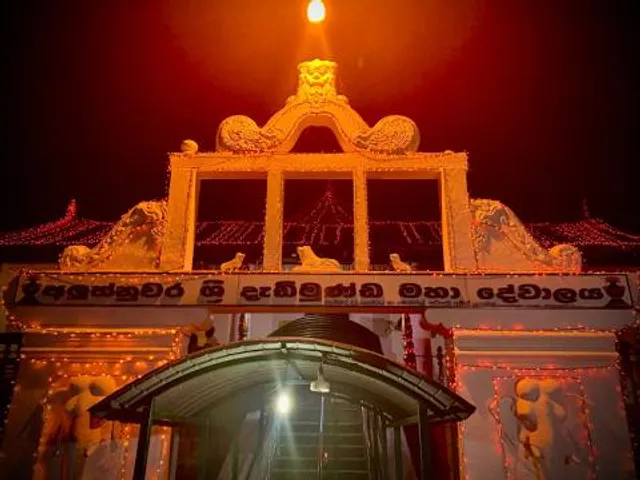
About two miles away from the Hingula bazaar, there is a road to the interior of Aluthnuwara which leads to the shrine of the deity Dedimunda Deiyo. Passing paddy fields and homesteads, one comes to an Ambalama with high stone wall pillars, a resting place for weary travellers in the days gone by. Travelling further, a flight of steps leads to the ‘Maluwa’ (compound). A short distance away is the Aluthnuwara Dedimunda Devale.
About this place legendary story is, Aluthnuwara which leads to the shrine of the deity Dedimunda Deiyo. It is believed that the Dedimunda Deiyo is the guardian deity of the Buddha Sasana. The name of the deity suggests that he was firm and hardhearted with a strong and powerful personality.
People come from many parts of the country to seek the blessings of this deity and before they come avoid liquors become vegetarian as for respect their own behaviours. On Kembura days, which are Wednesdays and Saturdays people come to offer pooja and make vows to the deity.
Travel Directions to the location: To reach Aluthnuwara Devale one has to travel to Hingula, two miles away from Mawanella on the Kandy-Colombo main road which was once a busy bazaar where people from Aranayake, Rambukkana, and Mawanella came daily with their garden produce. They either walked or used bullock carts. Trade was dominated by the Chettiars who bought coffee, pepper, areca nuts, and bananas in exchange for provisions. This was the scene before the World War 2.
A sub location in the Aluthnuwara: About The Aluthnuwara Giruwa Ambalama. Giruwa Ambalama at Aluthnuwara is a historic wayside that rests close to the Aluthnuwara Dedimunda Devalaya in Kegalle District. It is believed that this site was built by Queen Sunethradevi, chief consort of King Parakramabahu II (A.D 1236-1276) and mother of King Bhuvanekabahu I.
Sixteen granite pillars hold the roof of the building. Some of them are perfectly cut square pillars while others are just large vertically placed columns of rocks with no proper shape. It may be that this ambalama was constructed (or reconstructed at some time) using pillars brought from some other site and balance had been quickly cut off a rock with the prime objective of quickly completing the building. It has been conserved by the Archaeological department at least...
Read moreThe Aluthnuwara Sri Dadimunda Dewalaya is a renowned temple located in Aluthnuwara, a village in the Kegalle District of Sri Lanka. The temple is dedicated to Sri Dadimunda, a local deity widely revered by the local community.
The exact historical origins of the Aluthnuwara Sri Dadimunda Dewalaya are not widely documented. However, it is believed to have a rich history dating back several centuries. The temple holds significant cultural and religious importance among the local population.
The primary deity worshipped at the Aluthnuwara Sri Dadimunda Dewalaya is Sri Dadimunda. Sri Dadimunda is considered a guardian deity, believed to protect the village and its inhabitants. Devotees visit the temple to seek blessings, offer prayers, and make offerings to Sri Dadimunda.
The temple features traditional Sri Lankan architecture, characterized by intricate woodwork, vibrant colors, and ornate carvings. While the exact architectural details may vary, Sri Lankan temples often have distinct multi-tiered roofs, elaborate entrance gates, and a central sanctum where the main deity is enshrined.
The Aluthnuwara Sri Dadimunda Dewalaya is particularly renowned for its annual festival, known as the "Dadimunda Perahera." This festival usually takes place during the months of July or August and attracts a large number of devotees and visitors from various parts of the country. The festival involves colorful processions, traditional music and dance performances, and religious rituals.
Visitors to the Aluthnuwara Sri Dadimunda Dewalaya can expect a serene and spiritual atmosphere. The temple offers a tranquil setting for meditation and reflection. It is advisable to dress modestly and remove footwear before entering the temple premises, as is customary in Sri...
Read more